

Let's get one thing straight before we start: the most important piece of triathlon equipment is not your bike. It's your fitness. A properly trained athlete on a $2,000 aluminum steed will destroy an undertrained athlete on a $15,000 superbike. Every time. No exceptions. Physics doesn't care how much you spent at the bike shop.
That said — and we mean this sincerely — a great triathlon bike is worth it. An aero TT frame at 40 km/h saves meaningful time over a road bike with clip-ons. The steep seat-tube angle opens your hip flexors and leaves your running muscles fresher at T2. The integrated storage stops you from being a one-person wind-drag circus with gel packets flapping off your jersey. There is real science here, not just marketing.
The question is: which bike, at which price? We tested and researched the 2026 market front to back so you don't have to wade through fourteen spec sheets and three forums that all contradict each other. Here are the five bikes that actually matter in 2026 — one for every budget and one for every ambition.
What Makes a Triathlon Bike Different (And Why It Matters)
If you're coming from a road bike background, a TT/triathlon bike feels alien at first. The geometry is aggressive, the position is low and forward, and the aerobars put your hands in a place that no road cyclist would recognize. This is entirely by design.
Triathlon bikes are built around three core principles:
- Aerodynamics: At race pace, roughly 80% of your energy goes toward fighting wind resistance. Truncated airfoil tube shapes, hidden cables, integrated storage — every design decision is about reducing your frontal drag profile.
- Seat angle: TT bikes run steep seat-tube angles (typically 76–80°), which rotates your position forward on the saddle. This moves your hips over the pedals, recruits your glutes more efficiently on the bike, and crucially — spares your hamstrings and quads for the run. Your run performance starts with your bike fit.
- Integration: Water bottles, nutrition, tools — all built into the frame or cockpit. Fewer external appendages = less drag = faster.
You'll need a proper bike fit before you ride any TT bike seriously. This isn't a sales upsell — it's genuinely non-negotiable. A poorly fitted TT bike is slower than a road bike with aerobars and causes injury. Budget $200–$400 for a fit from a qualified fitter. It will pay for itself in your first race.
🥇 Best Overall: Canyon Speedmax CFR Di2
Price: ~$11,499 | Category: Premium / Best-in-Class
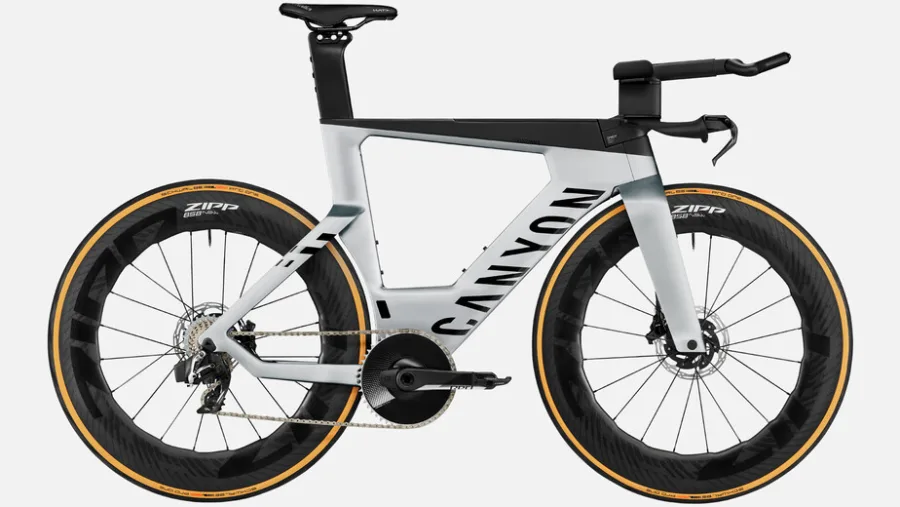
The Canyon Speedmax CFR is the benchmark that every other bike is judged against. Full stop. It has won the IRONMAN World Championship multiple times, has been ridden to world records, and is consistently rated the most aerodynamic production triathlon frame you can buy. The 2026 version uses Toray M40X carbon fibers in the frame layup, weighs 1,573g for the frame alone, and integrates a full race ecosystem: hydration bladder in the downtube, bento box in the top tube, and a BB toolbox hidden in the bottom bracket shell.
It ships with SRAM RED AXS 1x12 electronic shifting with an integrated aero powermeter, DT Swiss ARC 1100 wheels, and a fully faired cockpit system. At 40 km/h in a TT position, nothing in this price bracket is measurably faster in a real-world environment. The Di2 version uses Shimano's Dura-Ace wireless electronic groupset instead — buttery, reliable, and unimpeachably fast.
Best for: Serious age-groupers chasing podiums, anyone planning multiple IRONMAN full-distance events, athletes who've already been fit and know their optimal position. Not for: Anyone still figuring out TT bike geometry — get the position right first, then spend the money.
🥈 Best Mid-Range: Cervélo P-Series 105 Race
Price: ~$5,300 | Category: Mid-Range / Benchmark
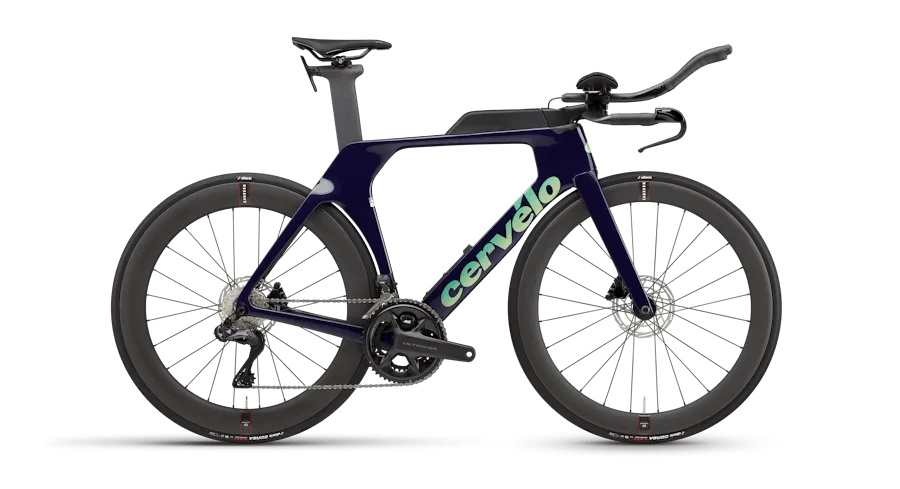
Cervélo has been building triathlon bikes since before most age-groupers knew what a TT bike was, and the P-Series remains their best argument that experience matters. The 2026 P-Series 105 Race features a Cortex carbon frame with Cervélo's proprietary All-Carbon P Fork, 3.5" tire clearance for wider rubber, and an internal storage system that handles tubes, tools, and CO₂. It ships with a Shimano 105 12-speed drivetrain with integrated power meter and Reserve 40|44 carbon wheels.
At $5,300, it's not cheap — but what you're buying is a bike developed by a brand that has won every major triathlon title on earth and refined the same platform across decades of elite feedback. The geometry is accessible, the cockpit is adjustable without specialist tools, and the power meter at this price point is a genuine gift. This is the bike serious triathletes aspire to when they outgrow their first budget TT setup.
Best for: 70.3 and full-distance athletes who have done 2–3 races and are ready to make a real performance investment. The built-in power meter changes how you train immediately. Not for: Pure beginners — the geometry requires proper fitting experience.
🥉 Best Value: Canyon Speedmax CF 7 Disc
Price: $3,799 | Category: Entry-Level / Best Bang for Buck
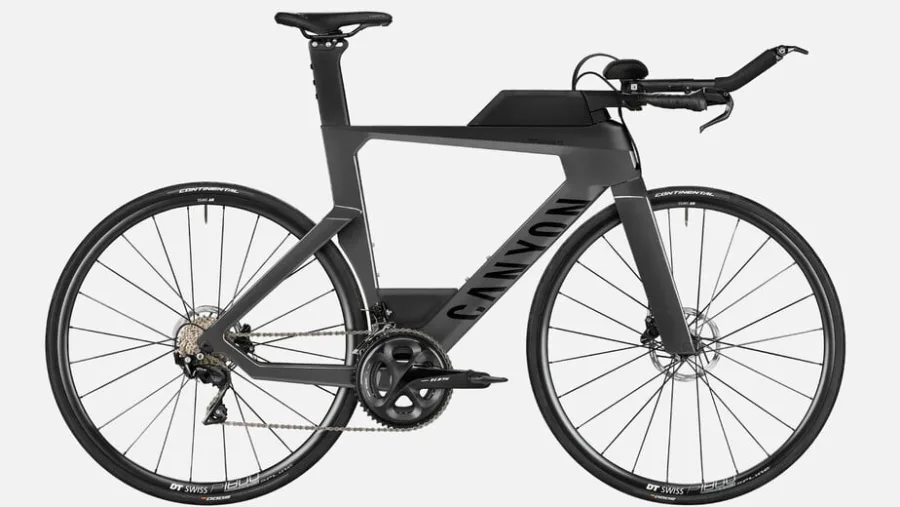
This is the bike that genuinely disrupted the entry-level triathlon market and it is still doing it in 2026. For $3,799, the Speedmax CF 7 Disc gives you a full carbon frame, integrated on-bike storage, hydraulic disc brakes, and SRAM Apex 22-speed mechanical shifting. At this price, competing brands are offering aluminum frames or sub-premium carbon with rim brakes and no storage. Canyon ships it to your door in a box you assemble yourself, which is either fun or horrifying depending on your relationship with hex keys.
The aero is real. Canyon built the Speedmax platform around computational fluid dynamics and wind tunnel testing — the CF 7 uses the same frame architecture as the CFR, just with different carbon grades and component spec. At 40 km/h, it behaves like a $7,000 bike. The SRAM Apex groupset is the weak link, but it's easily upgraded later when your bank account recovers.
Best for: First TT bike buyers, sprint-to-70.3 distance athletes, and anyone who did the math and realized a $3,799 carbon bike objectively beats the value of everything else. Not for: Anyone who needs full dealer support — Canyon's direct sales model means warranty service requires shipping, which can be annoying.
Best Dark Horse: Argon 18 Nitrogen Pro
Price: ~$4,800–$5,500 | Category: Mid-Range / Under the Radar
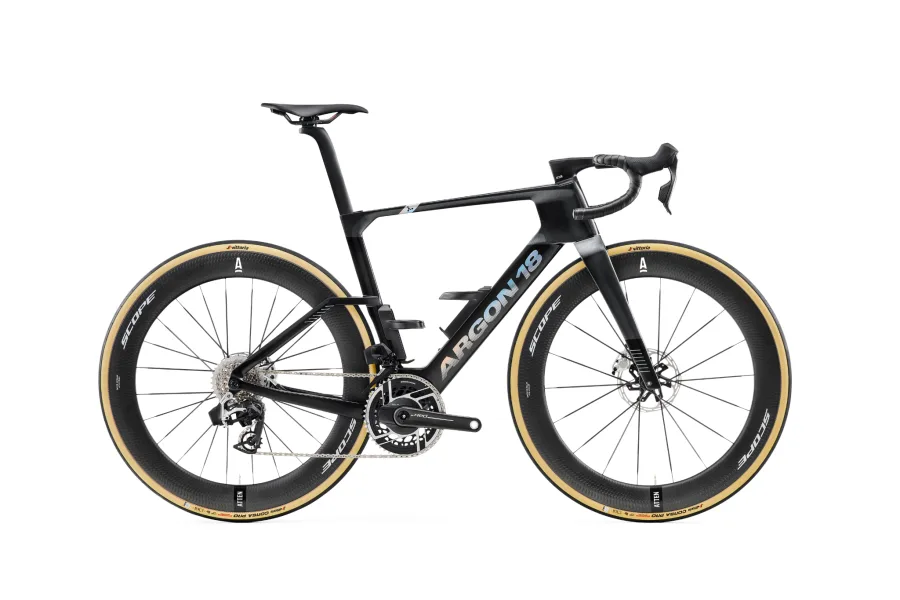
Ask 100 triathletes what the best mid-range TT bike is and 90 will say Cervélo. Ask the same question in a Slowtwitch forum thread at 11pm and you'll find the Argon 18 Nitrogen Pro. The Quebec-based brand has been building aero bikes for decades and the Nitrogen Pro is their best work: a stiff, aggressive, genuinely fast frame with one of the most adjustable cockpit systems in the mid-range category.
The 2026 Nitrogen Pro ships with SRAM Force AXS electronic shifting — which is a legitimately premium drivetrain that typically lives in the $7,000+ price bracket. The frame geometry runs slightly more aggressive than the Cervélo P-Series, which some athletes prefer and others find too demanding without a proper fit. The integrated hydration and storage system is competitive with bikes costing significantly more. Argon 18's Canadian engineering DNA shows in the build quality detail — bolts are actually the right torque spec from the factory, which sounds minor until you've dealt with a bike that wasn't.
Best for: Athletes who've already done a 70.3 and want a proper performance upgrade without the brand tax of the big names. Ideal for athletes who've had a proper bike fit. Not for: Those who need wide dealer availability — Argon 18 has thinner dealer networks in some US regions.
Best Aero Weapon: Specialized S-Works Shiv TT Frameset
Price: From $6,149 (frameset only) | Category: Premium / Pure Speed
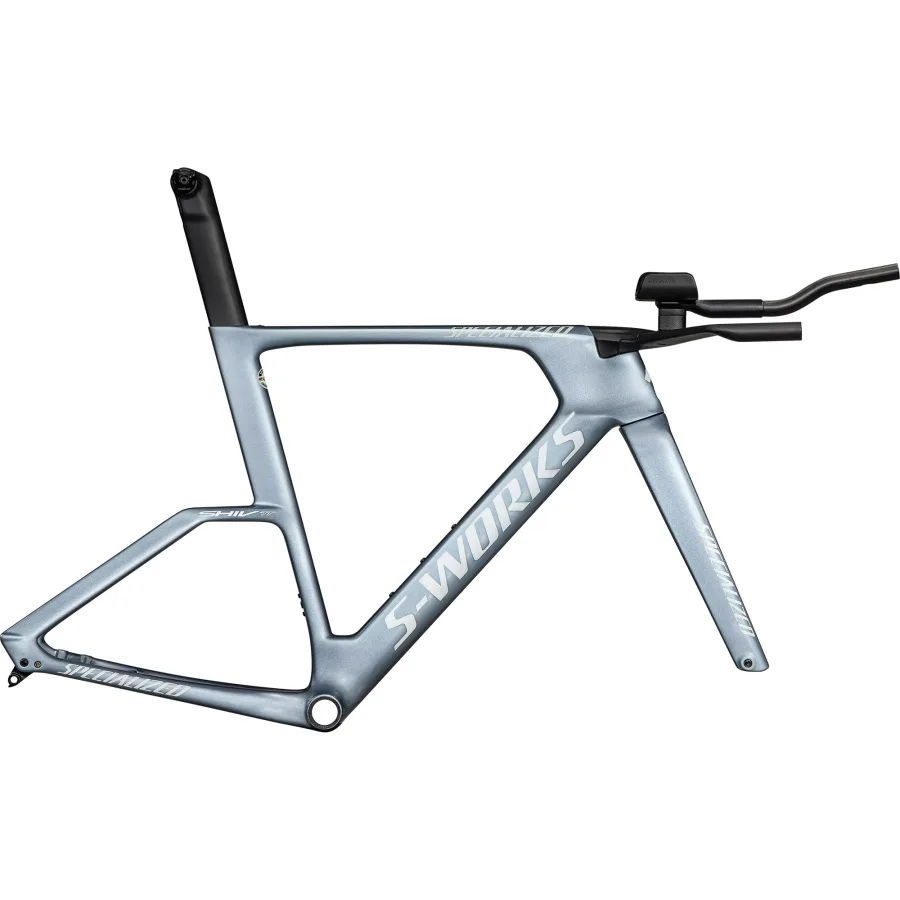
The Shiv TT is the bike Specialized built for athletes who have a position dialed in, a budget for premium components, and zero patience for aerodynamic compromise. The S-Works FACT 11r carbon frame was developed in Specialized's Win Tunnel and is particularly exceptional in crosswind stability — a quality that makes a meaningful difference in real-world race conditions outside of calm-day-perfect-conditions benchmarks. The 2026 version drops slightly in weight from the previous generation while maintaining the frame stiffness that allows higher power outputs without flex-induced power loss.
The S-Works Shiv sells as a frameset, which means you're building it up yourself with the components you choose. That's either an advantage or a massive inconvenience depending on your relationship with bike builds. Factor a full Shimano Dura-Ace Di2 or SRAM RED AXS groupset, aero wheels, and a quality cockpit into the total cost — a complete Shiv build at this level typically runs $12,000–$16,000 all-in. But for athletes who train year-round and race seriously, speccing your own build lets you put every dollar exactly where it matters most for your racing profile.
Best for: Experienced athletes who know exactly what components they want, are comfortable with or have access to professional bike building, and ride in conditions where crosswind stability makes a real difference. Not for: Anyone who wants a complete, ready-to-race package.
How to Pick the Right One for You
Here's the honest truth: most age-groupers will never extract the full performance difference between a $5,000 and an $11,000 triathlon bike. The gap between no TT bike and a proper TT bike is enormous. The gap between a $5,000 TT bike and an $11,000 TT bike is measured in seconds over a 40km ride — seconds that require elite-level fitness to even approach.
So: buy the bike that fits your budget without financial stress, get properly fitted, and train consistently. The Canyon CF 7 is a genuinely excellent racing tool. If you have more budget and are racing seriously, the Cervélo P-Series is the benchmark for a reason. If you're chasing AG podiums and Kona qualification, the Canyon CFR is where you stop looking.
Whatever you buy: get the fit first. The bike is just hardware. You are the engine.


