

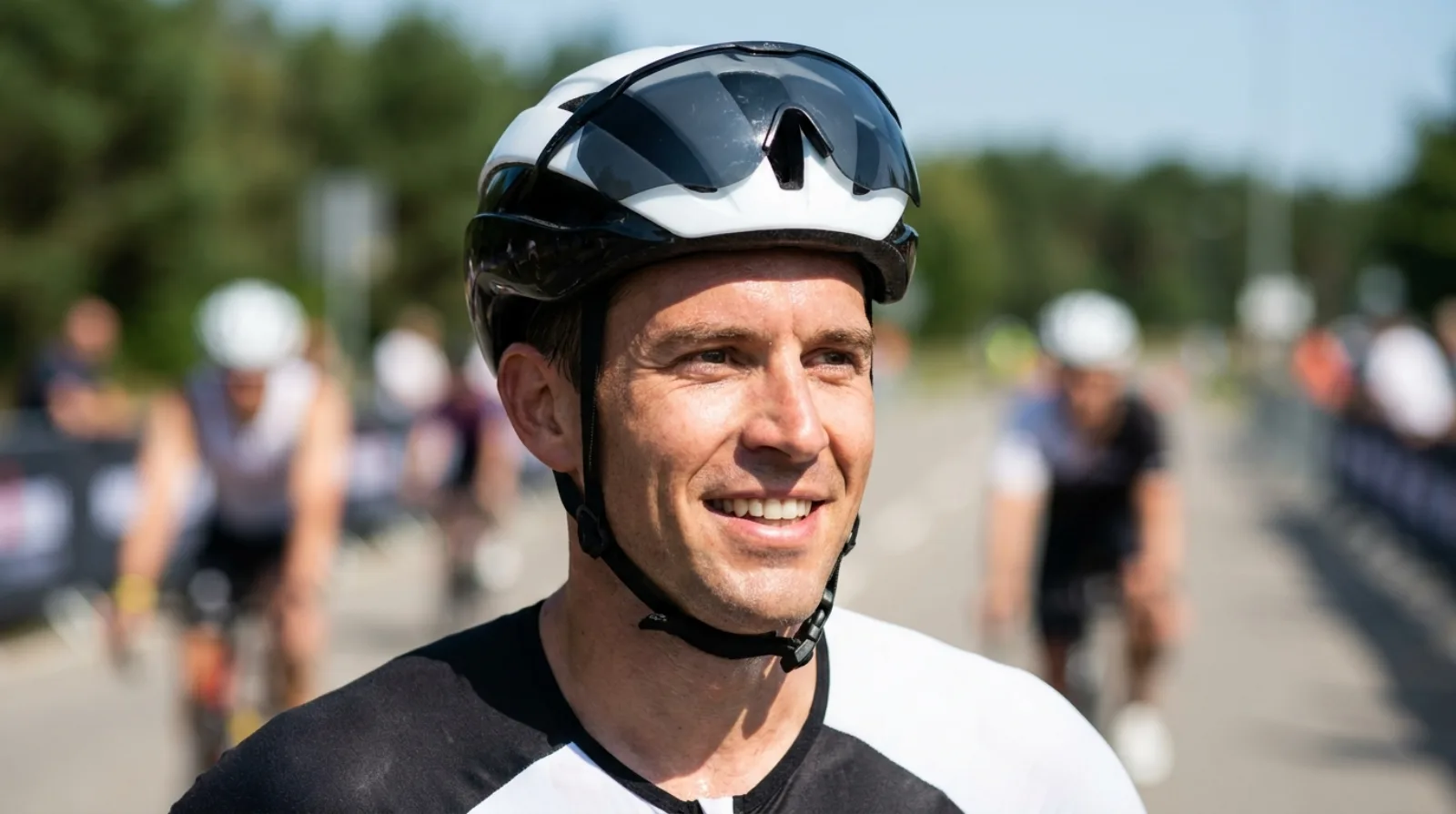
Mile 40 of the Gulf Coast 70.3 bike course. A triathlete is tucked into his aero position, pushing through the final stretch of a race he'd trained months for, when a box truck pulls out in front of him. He has no time to brake. The impact launches him at approximately 25 mph. He lands hard, gets transported to the ICU, and — against the odds of that kind of collision — walks out of the hospital a few days later. The doctors credit one thing above almost everything else: his Rudy Project helmet, which absorbed the blow to his head and held together.
That story should be required reading for every triathlete who's ever thought about skimping on a helmet. And yet, helmet purchases remain one of the most under-researched gear decisions in triathlon. People will spend weeks agonizing over saddle tilt and run with a $600 power meter, then grab whatever $89 helmet happens to be on sale. The Gulf Coast incident is a reminder that this calculus is badly wrong.
Here's what you actually need to know about helmet safety in 2026 — and which lids are worth the extra money.
Why Your Helmet's Certification Number Actually Matters
All helmets sold in the US must meet the CPSC (Consumer Product Safety Commission) standard, which tests for direct impact protection. That's the legal floor. But CPSC certification was designed primarily for single-impact falls, not the lateral rotational forces that occur when a rider's head glances off pavement or an object at speed. Those rotational forces are what cause the most serious traumatic brain injuries — and they're where modern safety tech earns its premium.
MIPS (Multi-Directional Impact Protection System) addresses this with a low-friction layer inside the helmet that allows the shell to rotate slightly around your head on impact — typically 10–15mm. This redirects rotational energy away from your brain. In Virginia Tech's independent STAR helmet rating system (the most rigorous publicly available test), MIPS-equipped helmets consistently outperform comparable non-MIPS models.
WaveCel, developed by Trek/Bontrager, takes a different approach: instead of a slip layer, it uses a collapsible cellular structure that crumples and flexes on impact. WaveCel claims up to 48x better protection against concussion-causing impacts compared to standard foam alone. Independent testing has validated significant improvements, though direct MIPS vs. WaveCel comparisons remain contested — both are meaningfully better than bare EPS foam.
The short version: if your current helmet predates 2020 and doesn't have MIPS or WaveCel, you are wearing outdated safety technology.
The Best Triathlon Helmets for 2026
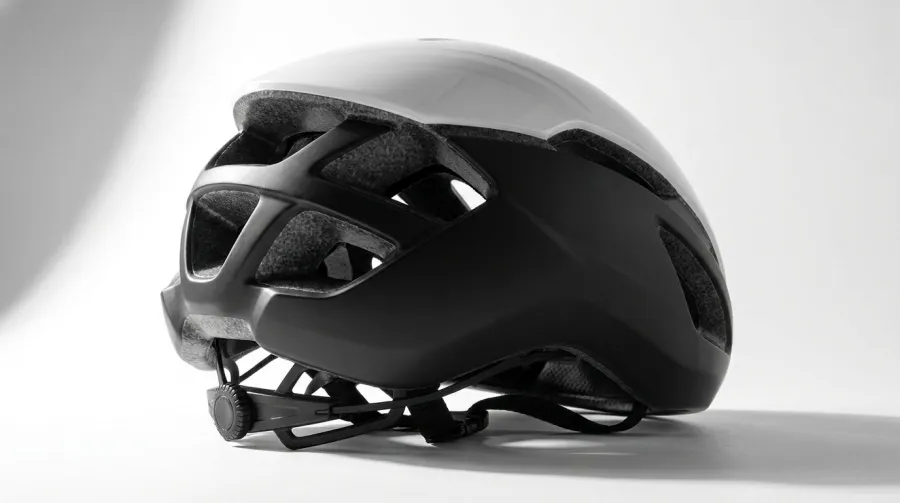
The 2026 aero helmet market has matured considerably. Here's where the money goes well:
Giro Aries Spherical ($350) — The gold standard for road/tri crossover. Uses Giro's Spherical technology (MIPS-derived, integrated as two co-molded shells) with genuinely excellent ventilation for an aero lid. Virginia Tech rated it among the top performers in its category. If you race in variable temperatures and don't want a full aero cocoon, this is the pick.
POC Ventral Air MIPS ($300) — POC has long prioritized safety engineering over marketing gloss, and the Ventral Air reflects that. The MIPS liner is well-integrated, fit adjustability is excellent, and the aerodynamics are competitive without the ventilation penalty of a fully closed aero shell. Strong choice for athletes who run warm.
Kask Protone Icon WG11 ($375) — The WG11 update added Kask's in-house Octo Fit+ retention system and improved impact absorption compared to the original Protone. It's a premium road helmet with strong aero properties and excellent safety ratings. Widely used in the pro peloton, which is about as real-world validation as you can get.
Lazer Vento KinetiCore ($250) — The most interesting value play in the category. KinetiCore is Lazer's own integrated impact protection system (no separate MIPS layer) that uses molded crumple columns directly in the EPS foam. Virginia Tech testing has been strong. At $250, it undercuts the competition significantly while delivering legitimate safety upgrades.
Bell Super Air R MIPS ($230) — Not a dedicated aero lid, but the MIPS certification and Virginia Tech performance make it worth a mention for athletes who prioritize protection over marginal aerodynamic gains. Good choice for training and less-technical courses.
Full Aero Shells: When to Use One (And When Not To)
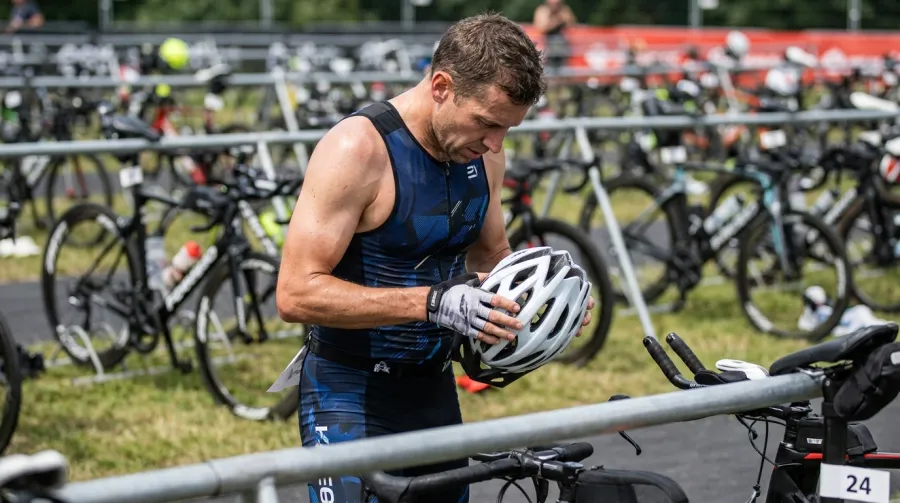
Full aero time trial helmets — the kind with a closed tail section and minimal vents — offer measurable aerodynamic gains in controlled conditions. At 40 km/h, wind tunnel data suggests a good TT helmet saves 15–30 watts compared to a standard road helmet. Over 40km, that's real time.
But there are two serious caveats. First, full aero shells run significantly hotter — if the temperature is above 75°F and you're pushing hard, heat management becomes a genuine performance and safety concern. Second, many full aero lids offer less impact protection than their ventilated counterparts because the shell design limits how much energy-absorbing material can be integrated. Always verify that your race-day TT helmet has MIPS or equivalent certification — some older models do not.
The practical rule: if it's a flat, fast course under 80°F and the bike leg is your strength, a full aero lid earns its place. Otherwise, a well-fitted MIPS road/aero hybrid like the Giro Aries or POC Ventral will serve you better across most race scenarios.
Fit Is the Feature You Actually Control
No safety technology compensates for a poorly fitted helmet. A helmet that shifts on impact — because the retention system was cranked loose or the pads are worn out — loses much of its protective value. The rule is simple: the helmet should sit level on your head, two finger-widths above your eyebrows, with the straps forming a V just below your ears. When you open your mouth wide, you should feel the helmet press down slightly. If it doesn't, it's too loose.
Replace your helmet every five years regardless of visible damage, and immediately after any significant impact. EPS foam doesn't visibly deform on compression — a helmet that looks fine can have compromised structural integrity after a hard fall. If the Gulf Coast crash taught anything, it's that this isn't hypothetical caution. It's the difference between a hospital stay and something far worse.
Buy the best helmet you can justify. Wear it every single ride. Check the fit before every race. The aerodynamic gains are nice. The protection is the point.


