

There is triathlon. And then there is triathlon in San Francisco Bay, in June, with a two-kilometre swim through water that hovers around 14°C, an 80-kilometre bike through the fog-draped Presidio, and an 18-kilometre run that ends — if you can call it that — at the top of a set of wooden steps bolted into a coastal cliff with the Pacific Ocean crashing below you.
The PTO T100 returns to San Francisco this Saturday, June 6, for the fourth stop of the 2026 Race To Qatar tour. The men's field of 21 elite professional triathletes will race the Escape From Alcatraz course — one of the most visually spectacular and logistically punishing venues in the sport. No other triathlon race in the world asks you to sprint off a ferry into open bay water, navigate 80 kilometres of rolling California terrain, and then climb a staircase cut into a coastal bluff before you are allowed to stop running.
It is not just a race. It is a specific kind of suffering served with a Golden Gate Bridge backdrop, which makes it either very beautiful or very cruel depending on where you are in the field.
The Course: Three Disciplines, Zero Mercy
The swim is genuinely unique. Athletes do not start from a beach or a pontoon — they are ferried out into San Francisco Bay and jump off the boat into 14–16°C water, swimming a two-kilometre course back to shore. The bay is tidal, the current is variable, and the water temperature requires a wetsuit and some degree of mental preparation that goes beyond "it will be cold." The cold water shock alone, if you are not acclimated, can trigger the mammalian dive reflex and leave you feeling like your chest is in a vice for the first 200 metres. Experienced Escape From Alcatraz competitors account for this. First-timers often do not.
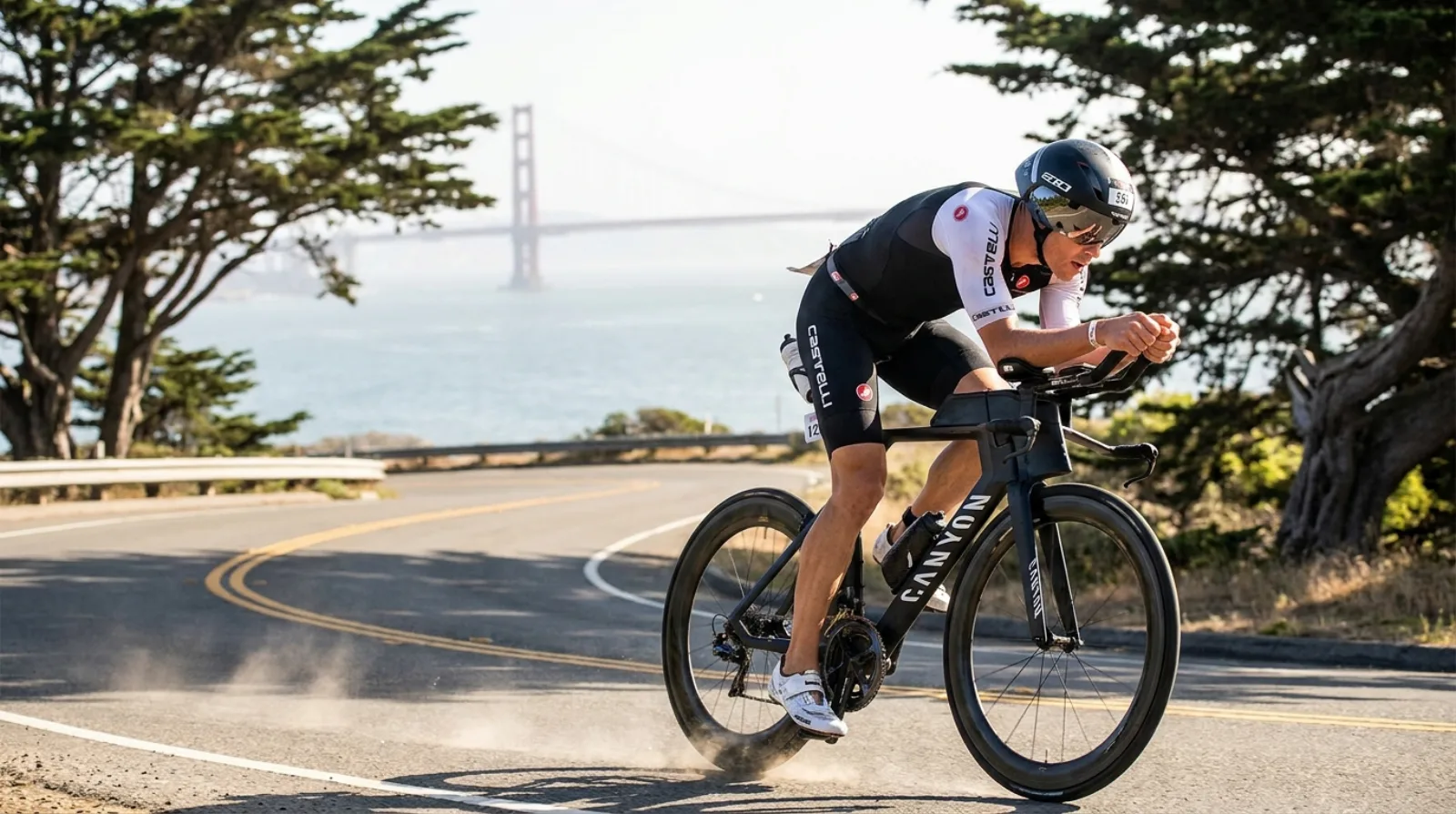
The bike covers 80 kilometres through the Presidio and the coastal Marin Headlands — rolling, technical, and exposed to whatever the Pacific feels like doing with the wind that morning. This is not a power-to-weight TT in the traditional sense. There are descents that punish hesitation, climbs that reveal who saved something on the swim, and corners where 60km/h of blind confidence either makes or loses minutes. The Canyon, Trek, and Cervélo riders who have spent time on this course know which corners to carry speed through. Those arriving without that knowledge learn it during the race, which is expensive.
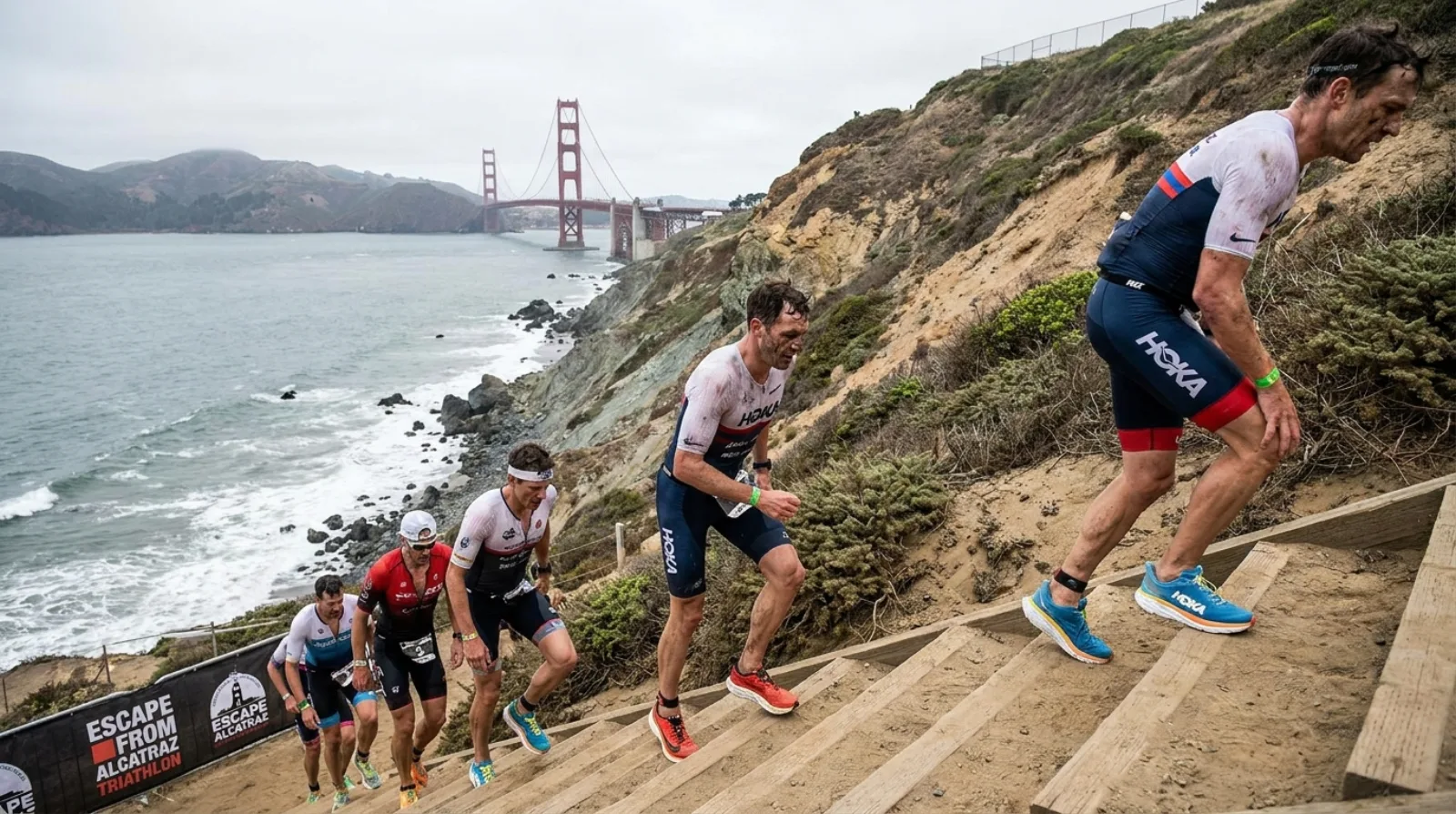
The run is 18 kilometres. That number sounds manageable until you reach kilometre 14 and encounter the Sand Ladder — a 100-plus-step staircase hammered into the coastal bluffs, ascending 30 metres of vertical relief in a space that does not allow for anything resembling running form. You climb it. Your quads, which have been on a bike for 80 kilometres, voice their displeasure. The bay and the bridge are visible behind you. It is simultaneously the most painful and the most photogenic moment in the professional triathlon calendar.
The Field: Who Has What It Takes
Hayden Wilde (NZL) arrives as the clear favourite. The reigning T100 World Champion won the 2026 Singapore T100 and currently leads the Race To Qatar standings. Wilde's profile — explosive swim, relentless bike power, top-tier Olympic-distance speed on the run — maps almost perfectly onto the demands of this course. He will not be intimidated by the cold water start. He will likely lead off the bike. The question is whether his run legs, after the Sand Ladder, hold up against whoever is close enough to challenge him over the final two kilometres.
Rico Bogen (GER) is the defending San Francisco champion. The 2025 winner knows this course in a way that only repetition builds — where to push on the Presidio climbs, how to manage the bay swim current, exactly how much to hold back on kilometre 14 to have something left for the Ladder. Course knowledge in Escape From Alcatraz is not a small thing. The technical demands of the bike and the unusual run terrain reward athletes who have raced here before, and Bogen has raced here and won.
The rest of the 21-man field includes names that will be dangerous if Wilde has an off day: athletes capable of running the final two kilometres at sub-3:30 pace after the Ladder do not announce their intentions in the preview — they announce them at kilometre 17. Watch for whoever exits T2 closest to Wilde with fresh enough legs to actually use them.
Why the T100 Format Matters
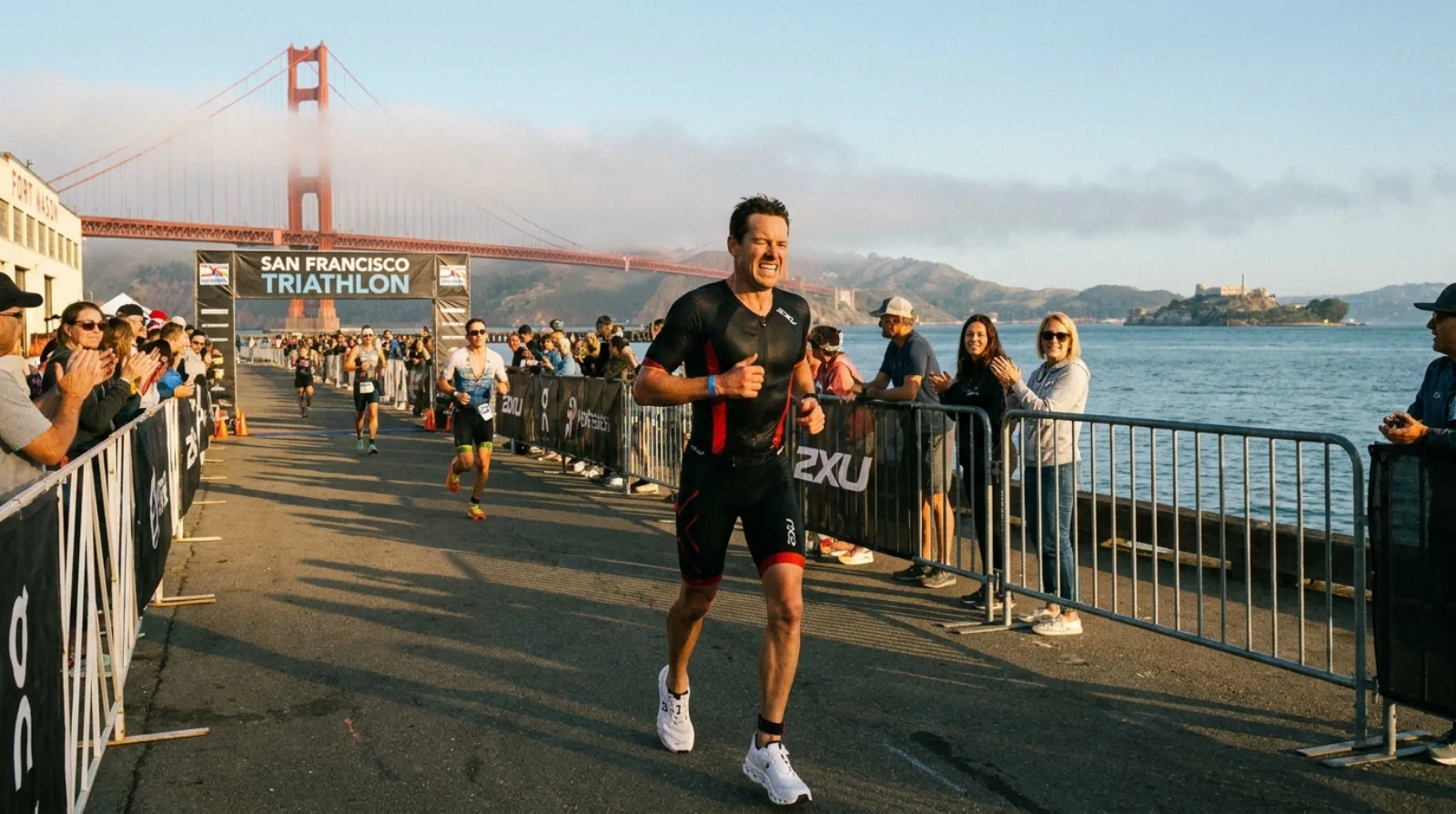
The PTO T100 has been doing something quietly impressive over the past two seasons: building a professional long-course circuit with broadcast quality, prize money that makes the sport viable for athletes outside the top five, and race formats that prioritise compelling racing over safe pacing. The T100 distance — 2km swim, 80km bike, 18km run — is deliberately aggressive. There is not enough buffer for a conservative swim to not cost you the race. There is not enough run to fully recover from a blown bike split. The format exposes athletes who are competent but not exceptional at two of the three disciplines.
The San Francisco edition, specifically, is the hardest course on the tour. Alcatraz is not a fast time trial. It is a technical, tactical, physically demanding race where the environment adds variables that no amount of data from a power meter resolves. You can have the highest FTP in the field and still lose to an athlete who knows where the tailwind disappears on the descent before the Sausalito turn.
How to Watch and What to Expect
The race starts at 06:35 local San Francisco time (09:35 Eastern). Watch live and free at Triathlonlive.tv or on the PTO's YouTube channel. US viewers can also catch it on Max. The T100 Live Data Dashboard provides real-time positioning and split data.
The prediction: Wilde leads off the bike. Bogen is within 90 seconds. The Sand Ladder produces exactly the kind of vivid suffering that makes compelling television. Someone in the top five blows up between the Ladder and the finish that nobody predicted would. The winner crosses the line, looks back at the Golden Gate, and wonders why they do not race here every year.
The answer, of course, is the cold water and the stairs. Which is also precisely why it is unmissable.


