
At some point in every triathlete's journey — usually around the time you've watched your fourth YouTube video on swim technique and are still getting lapped by a 65-year-old woman named Donna — you start wondering if you need a coach.
The question sounds simple. It isn't. The coaching industry for endurance sports is a Wild West of certifications, acronyms, online platforms, social media gurus, and AI apps all claiming they've cracked the code of human performance. And here's the fun part: nobody regulates any of it. Your coach could be a former Kona qualifier with 20 years of experience. They could also be a guy who completed one sprint tri in 2019 and has great Instagram stories. The market doesn't make the distinction for you.
So here's how to actually navigate this — with your wallet and your training plan intact.
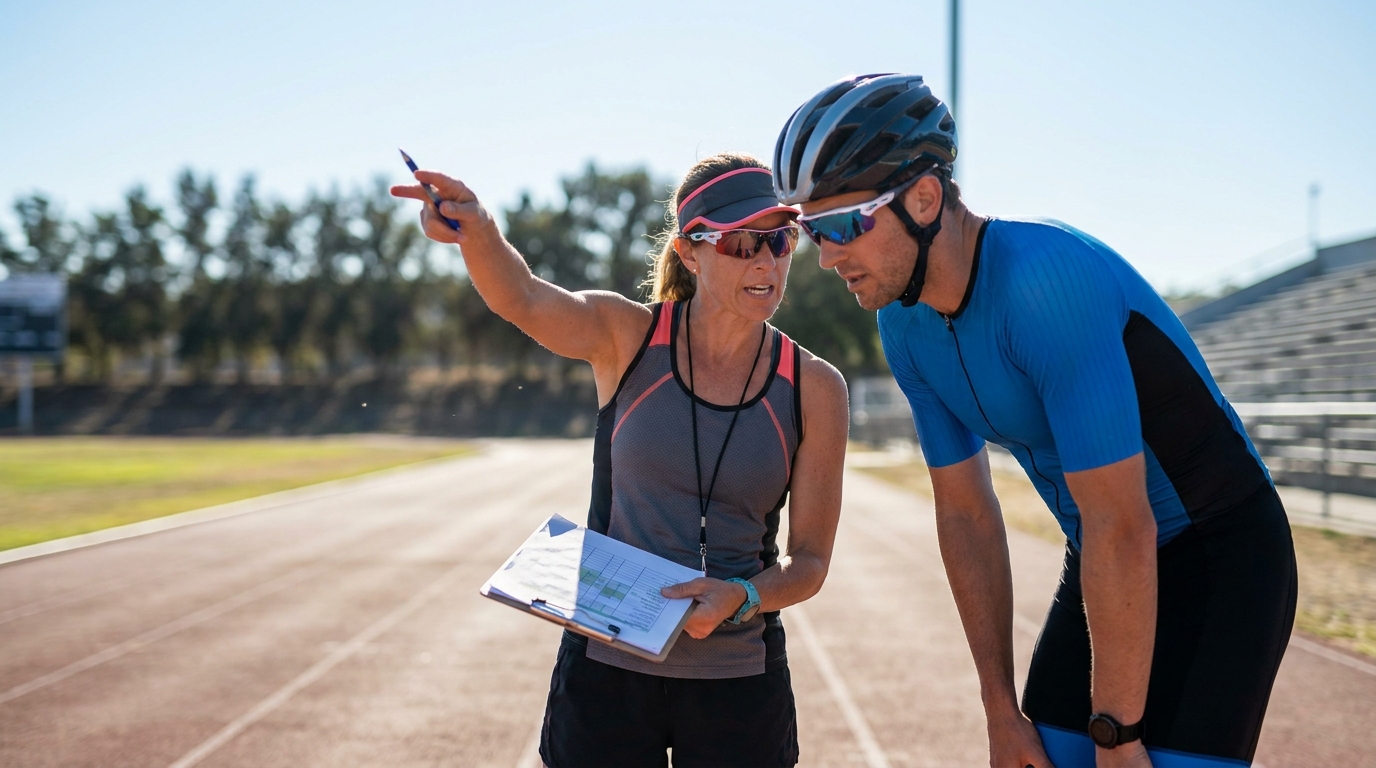
First, Be Honest About Why You're Asking
Before you spend a dollar or even google a coaching service, sit with this question: what problem are you actually trying to solve? There are usually three scenarios, and the answer changes the recommendation completely.
Scenario one: you've plateaued. You've been following a generic training plan and your times have stopped improving. Your swim hasn't moved in six months. Your bike power looks the same whether the session was hard or supposedly easy. You're consistent, you're not injured, you're just... flat. This is actually a good sign. You've built enough of a base that you've maxed out what generic programming can do. What you need now is intelligent periodization — and that's exactly where a coach earns their fee.
Scenario two: you keep breaking down. Something always hurts. You push through it, take time off, come back, and something else breaks. This isn't bad luck. This is a load management problem, and no app is going to diagnose it without someone looking at your full training history and seeing the actual pattern. A coach who has watched 50 athletes blow up the same way will catch it in week two of your plan.
Scenario three: you need accountability. And that's completely valid — but it's also the most expensive solution to what is fundamentally a motivation problem. If you genuinely won't do the sessions unless someone is watching, a coach can help. Just know what you're actually buying. It's not optimization. It's a very expensive commitment device.
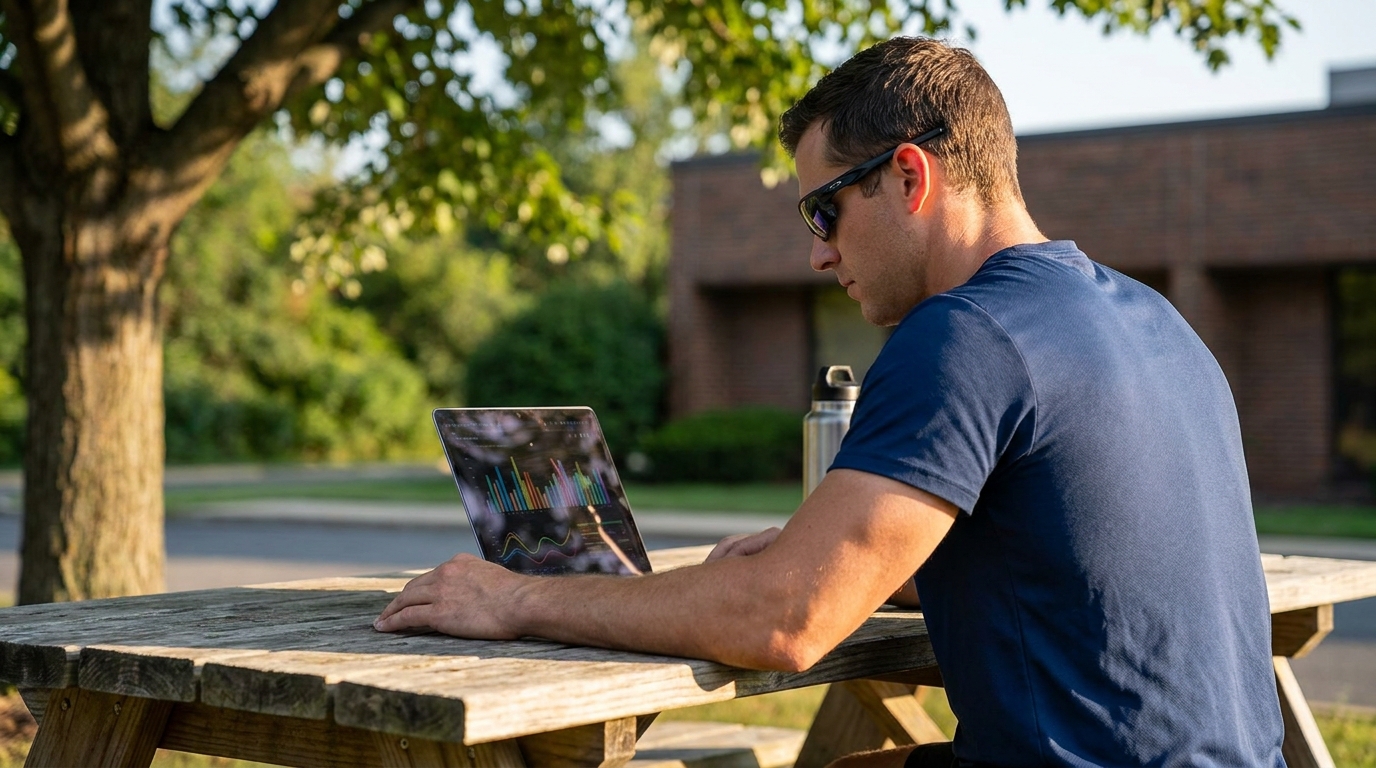
What "Coach" Actually Means in 2026
The word coach covers a huge range of products and humans. Let's be precise about the differences, because they're not interchangeable.
Generic training plans aren't coaching. They're useful — and for brand-new athletes, they're often enough. A 20-week plan from Training Peaks or a program from Joe Friel's books will get you across a sprint or Olympic finish line if you follow it consistently. The limitation is obvious: the plan doesn't know you. If you're exhausted from a brutal work week, it still says "Zone 3 bike, 75 minutes" and doesn't care.
AI platforms like TriDot, Athletica, and AI Endurance sit somewhere between a plan and a real coach. They adapt based on your actual data — HRV, training load, performance trends over time — and they're genuinely impressive for what they do. If you're training with a power meter and a heart rate monitor and actually paying attention to your metrics, these platforms can write you a more intelligent week than most humans would. The gap is the qualitative stuff: they can't hear your voice when you say "I felt off today" and understand what that actually means. They also can't diagnose your aero position or the root cause of your GI issues on the run. They see numbers. Numbers have limits.
Online coaches are real humans who review your data remotely and write personalized plans. The quality range here is enormous — and I mean enormous. Some are former professionals who genuinely understand periodization and will transform your racing within a year. Others are enthusiastic amateurs who completed a weekend certification course and charge accordingly. The price range reflects this: anywhere from $100 to $500 a month depending on experience level and depth of engagement. More on this shortly.
In-person coaches and squad programs exist mostly in urban areas and typically run through triathlon clubs or master swim groups. If you have access to coached group sessions, this is frequently the most underrated option for beginner and intermediate athletes. You pay less, you train with people who push you, and the accountability is built into the structure. The downside is less individual customization — you're working from the same stimulus as everyone else in the group.
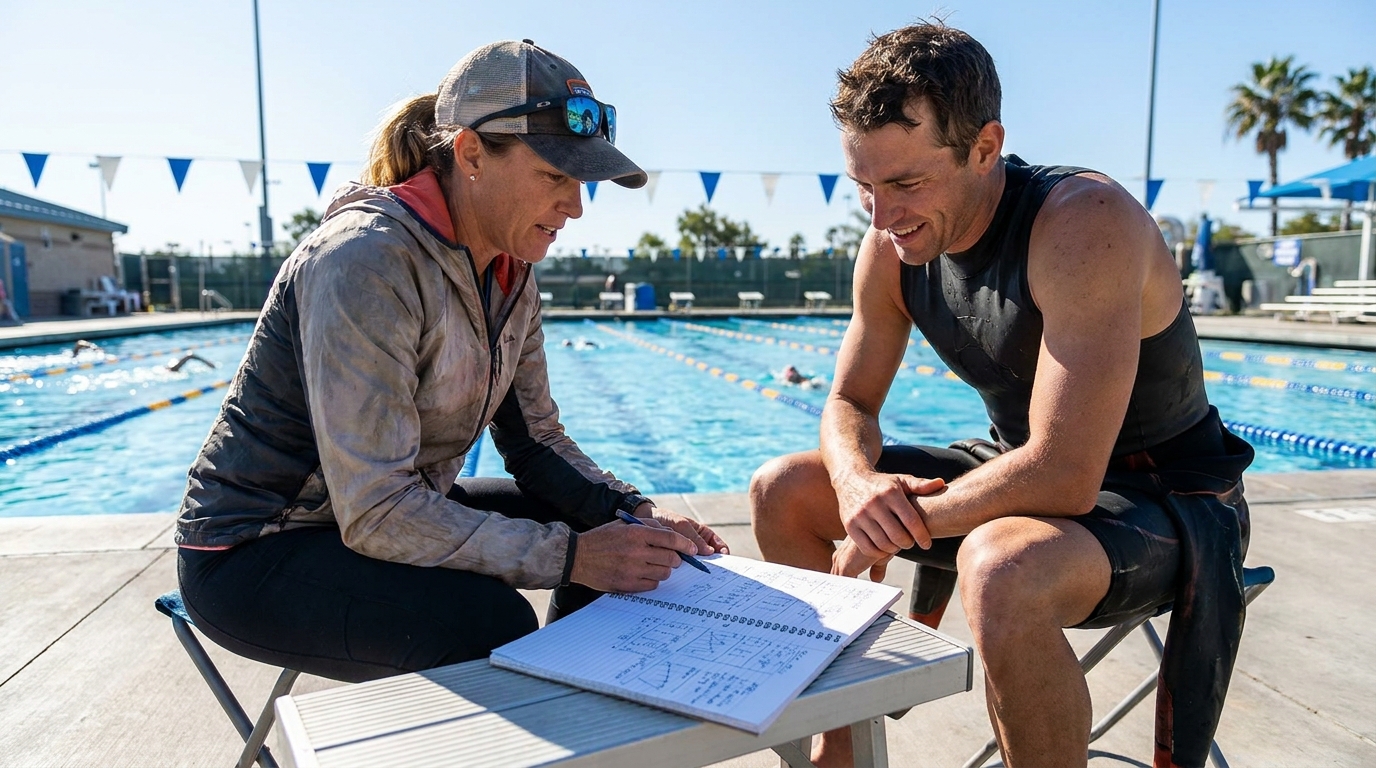
What to Actually Look For When Hiring a Coach
If you've decided online coaching is the direction, here's what genuinely matters — beyond the slick website and testimonials from athletes you've never heard of.
Real credentials from real organizations. USA Triathlon (USAT) offers Level 1 and Level 2 certified coaching programs with actual curriculum and exams. USA Cycling has coach certification levels. The NSCA covers strength and conditioning. A USAT Level 2 certification doesn't guarantee a great coach, but it at least means they sat through a program designed by people who understand endurance physiology. "I've done 14 Ironmans" is great context. It is not a credential. One of those is objective. The other is a story.
Experience with athletes at your level. A coach whose entire roster is sub-9-hour Ironman guys chasing Kona slots is not the right fit for someone training for their first Olympic distance. Ask them directly: what does your current athlete roster look like? What's the typical background of the people you work with? A good coach won't hesitate to answer this. A coach who pivots to their own race results is answering a different question.
Communication expectations, stated clearly upfront. How often do you actually interact? Weekly calls? Monthly check-ins? Does feedback on your sessions happen within 24 hours, or do you upload your data to a void? For beginner athletes especially, the ability to ask questions and get substantive answers is worth more than the elegance of the plan itself. Ask this in the first conversation and pay attention to how specific the answer is.
A trial period or one-month commitment. Any coach worth hiring won't lock you into a six-month contract before you've worked together. If they do, that's your answer.
What to Pay (Without Feeling Like a Mark)
In 2026, online triathlon coaching broadly runs like this:
- $100–$150/month: Plan delivery with minimal personalization, a monthly check-in if you're lucky. You're paying for a smarter template.
- $150–$250/month: The sweet spot for most age-group athletes. A solid experienced coach with regular communication and genuine plan adaptation.
- $250–$400/month: High-touch coaching with regular calls, meaningful customization, and probably some form of video analysis.
- $400+/month: Elite-level programs, often with former pros. Worth it if you're seriously competing for age-group podiums or qualification slots. Overkill for everyone else.
For most athletes reading this, $150–$250 a month is where the value lives. And before you balk at that number: if you have a $4,000 bike, a $250 aero helmet, and a $400 GPS watch, and you're running a $90/month generic plan — you have your priorities genuinely inverted. You've invested heavily in the equipment and almost nothing in the execution. The coach would make every single piece of that gear perform better.
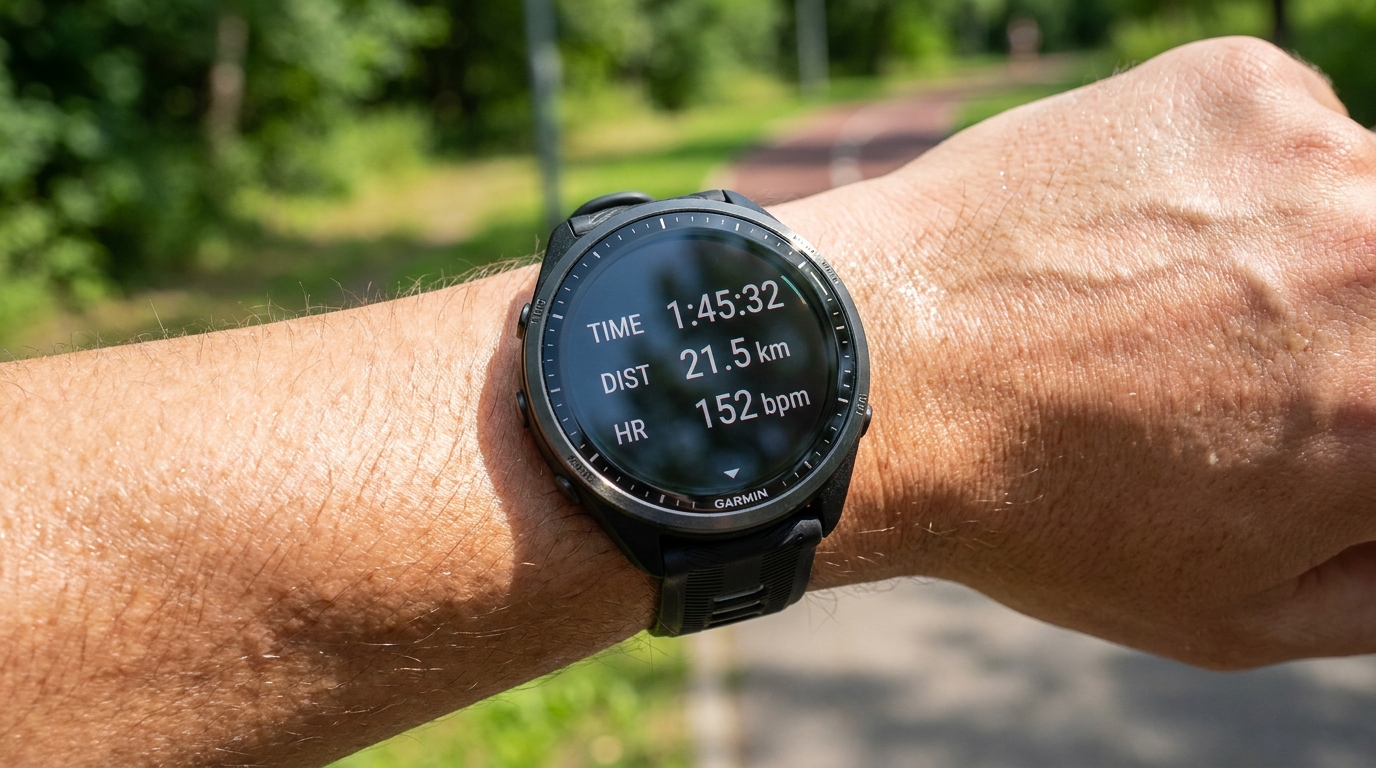
When the App Is Actually Enough
Here's the honest answer, and I want to be real about this: if you're a first-timer training for a sprint or Olympic and you're self-motivated enough to hit your sessions without someone chasing you — a quality AI platform or a well-structured plan is genuinely sufficient. TriDot is strong for data-driven athletes. Athletica works well for those already training with power. Even a well-designed Training Peaks plan from a reputable coach-template library beats an ad hoc approach.
You probably don't need a coach yet if you haven't maxed out what consistent execution of a quality plan can do for you. If you're still improving every training cycle, if you're sleeping reasonably well, staying injury-free, and feeling the progression — a human coach is an optimization, not a necessity.
You should seriously consider a coach if you've been consistent for two-plus years and progress has genuinely stalled. If you keep breaking down. If you have a specific, meaningful goal — a Boston qualifier, a Kona slot, a particular age-group podium — that requires real periodization around your life, not just a template. And if you simply learn better with a human in your corner who knows your history.
Neither answer is wrong. The athletes who burn money on coaching before they're ready to use the feedback — that's one mistake. The athletes who spin their wheels for three years doing the same training cycle because they never got outside their own blind spots — that's a different, quieter mistake. Both are expensive. Just in different currencies.

One Last Thing
Whatever you decide, start documenting your training in real detail. Not just the sessions — the context. How you felt. Sleep quality. Work stress. What the effort actually was versus what the plan said. This habit is free, and it pays enormous dividends whether you ever hire a coach or not. If you do hire one eventually, a year of honest notes is worth more than any test result. If you don't, you've just built the closest thing to self-coaching that actually works.
The right coach — human or algorithm — will make you faster. The wrong one will make you lighter in the wallet and no faster on course. Take the time to figure out which is which before you swipe your card.
Marcus Webb is a Triathlon Universe contributor and athlete. He has completed 13 triathlons across sprint, Olympic, and 70.3 distances, has had three coaches (two good ones), and still believes his swim has more room to improve than his coach will admit to his face.


