
There is no black line at the bottom of a lake. That single fact is responsible for more wasted swim time in triathlon than bad technique, bad fitness, or a bad wetsuit combined. Pool swimmers spend years grooving a stroke that assumes a painted lane line will keep them honest. Open water offers no such mercy — and a swimmer who zig-zags even 15 degrees off course for half a swim leg can add several minutes to a 1.2-mile swim without ever swimming slower per stroke.
Sighting is the skill that fixes this: the ability to check your direction without wrecking your stroke, your rhythm, or your position in the water. It's rarely coached with the same rigor as catch mechanics or kick timing, which is exactly why so many triathletes — including plenty of strong pool swimmers — show up to their first open-water race and swim what amounts to a very expensive scenic tour.
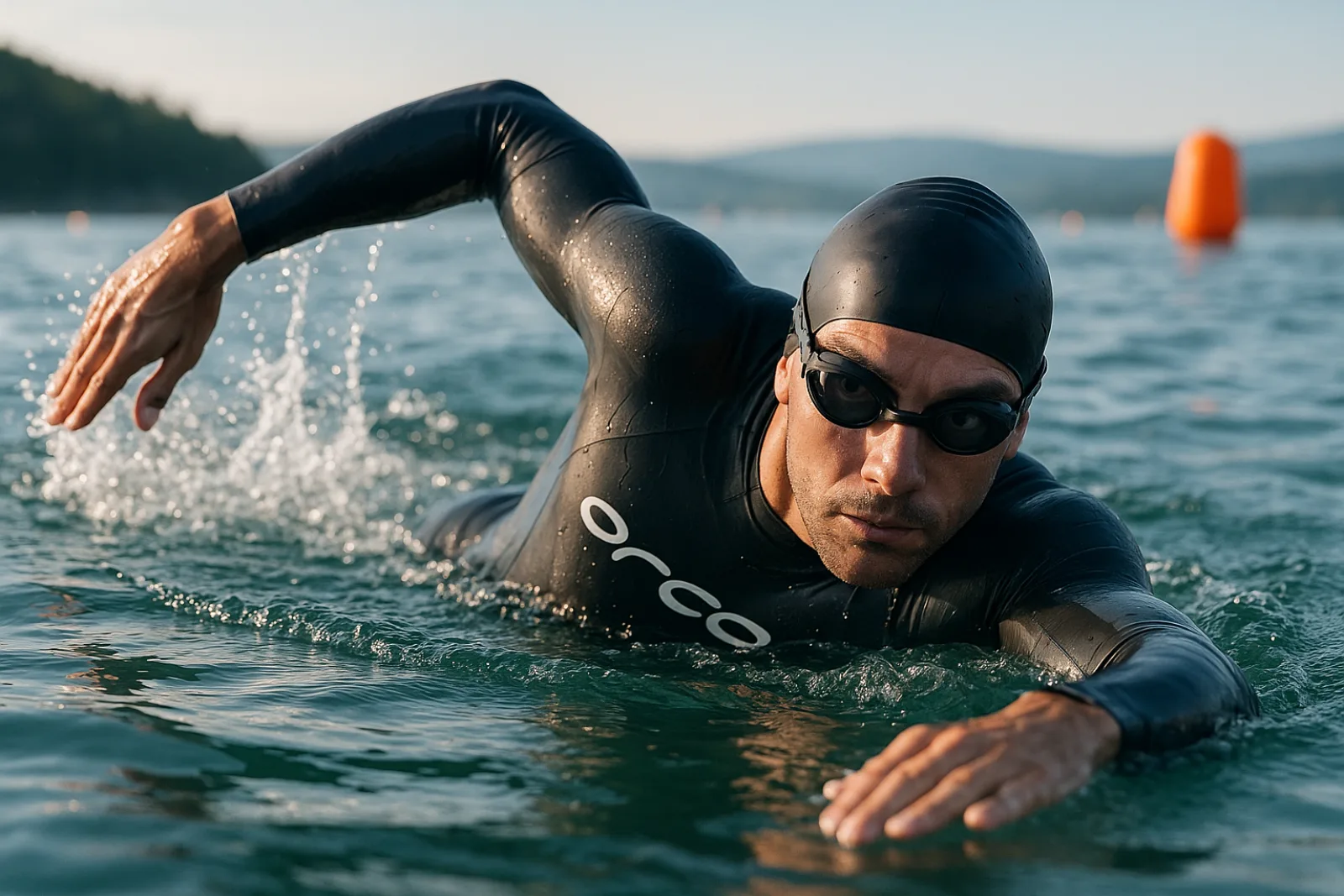
The Technique: Crocodile Eyes
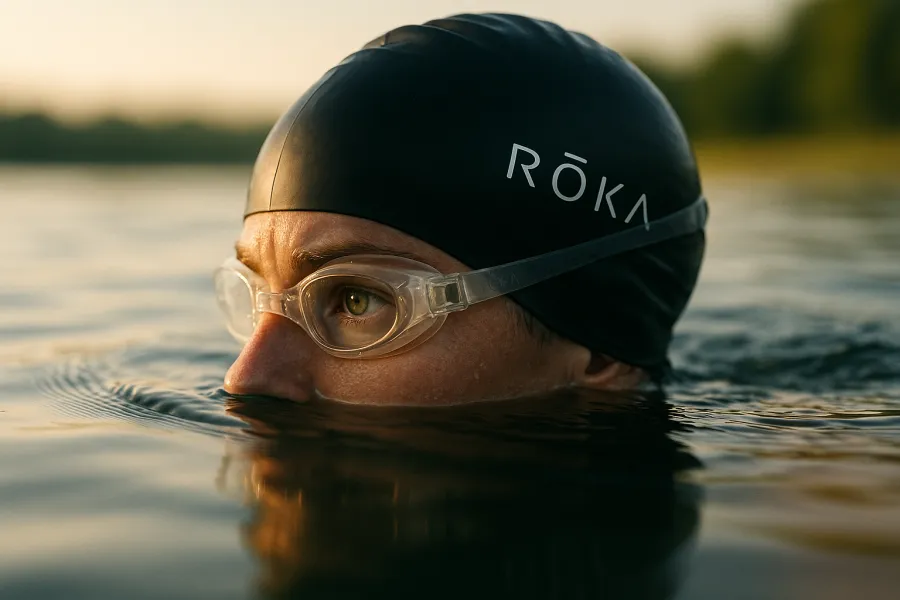
The standard method — sometimes called "crocodile eyes" or "alligator eyes" — is built to minimize the two things that kill your speed when you check your direction: lifting your head too high, and holding it up too long.
- As your lead arm extends forward and begins to press down at the start of the catch, use that slight downward pressure to lift your eyes — just your eyes, not your whole face — above the surface.
- Take one quick look at your target. This should feel like a glance, not a search.
- Drop your face back down and continue directly into your normal breathing rotation to the side.
The whole thing should add almost no time to your stroke cycle. If you can feel your hips or legs dropping when you sight, you're lifting too high — the fix is almost always "lift less," not "lift differently."
Sight, Then Breathe — Never Both at Once
The single most common technical error is trying to combine the sighting glance with an inhale. Do this and you're rotating your head up and to the side simultaneously, which either produces a head position so high your hips sink, or a breath so rushed you come up short on air. Separate the two actions: sight forward with your face low, drop back down, then rotate to the side and breathe on the very next arm cycle. It takes a handful of pool sessions to make this automatic, but once it is, sighting stops costing you anything measurable.
How Often You Actually Need to Sight
There's no single right number, but the working range most coaches and pro athletes land on is every 6 to 10 strokes in calm, clear conditions. A few situational adjustments:
- Choppy or crowded water: sight more often — every 4 to 6 strokes — since waves and other swimmers make it easier to drift off line without noticing.
- Long, straight sections with a clear buoy line: you can space it out toward the 8-to-10-stroke end once you've confirmed you're tracking straight.
- Never rely on sighting only when you feel lost. By the time swimming "feels" off course, you've usually already drifted 10 to 20 meters the wrong way. Sight on a fixed rhythm, not a feeling.
Sighting too frequently has its own cost — it turns your stroke mechanical and starts eating into your rhythm for no navigational benefit. The goal is the minimum frequency that reliably keeps you on line, not the maximum you can tolerate.
Pick a Landmark, Not Just a Buoy
Race buoys are your primary target, but they have real weaknesses: they can drift on their anchor lines, they disappear behind chop or glare, and in a crowded wave start they're sometimes impossible to see over the field of swimmers in front of you. Before you start, identify a large, fixed object on shore that lines up with your direction of travel — a building, a water tower, a distinctive tree line. Buoys confirm you're on the right general line; a fixed landmark confirms it even when you temporarily lose the buoy in a wave or a crowd.
Wave Starts Make This Harder — Plan for It
Reading about sighting in calm, empty water and doing it in a 1,200-person wave start are two different skills. In a crowded field, your sightline to the buoy is frequently blocked by other swimmers, chop kicked up by dozens of bodies makes your target harder to spot even when it's visible, and the temptation to just follow the swimmer in front of you is strong — right up until you realize that swimmer has no idea where they're going either. A few adjustments for race-day crowds:
- Sight slightly more often than you would in clean training water, since your view is more likely to be obstructed on any given glance.
- Don't fully outsource your navigation to the pack. Following the general direction of the field is a reasonable secondary cue, but confirm it against your own sighting and your fixed landmark — packs drift off-course together more often than you'd expect.
- If you find yourself boxed in with no clear view of the buoy, a single full head lift to re-establish your bearings is a legitimate use of that technique, even though it's not your default method.
The Mistake That Costs the Most Time: The Full Head Lift
There's a second, less efficient sighting method — the full head lift, essentially a water-polo-style stroke where you lift your entire face out of the water to get a longer, clearer look. It has a place: genuinely rough conditions, or a moment where you've completely lost the course and need more than a glance to relocate it. Used as your default sighting method, though, it wrecks your body position on every single instance, dropping your hips and legs and creating drag that a quick crocodile-eyes glance never would. Save it for emergencies, not routine navigation.
Drills to Build the Skill Before Race Day
Sighting is a skill you build in the pool, not one you discover for the first time in open water three weeks before your race.
- Pool sighting drill: place a kickboard or cone at the far end of your lane. Swim easy freestyle and sight it every 6 to 8 strokes using the crocodile-eyes technique, focused purely on keeping the head lift minimal.
- Sight-then-breathe isolation: practice the two-part sequence — glance forward, face down, rotate to breathe — slowly and separately until it stops feeling like two competing tasks.
- Steady-set integration: once the motion feels controlled, fold it into a real aerobic set (10 x 100m, for example) and hold your normal pace while sighting on a fixed rhythm. This is where the skill becomes race-useful instead of just technically correct.
- Open-water practice, if you have access to it: nothing replaces sighting an actual buoy in actual chop. If you can get even two or three open-water sessions before race day, use them specifically to rehearse sighting frequency in real conditions, not just to log swim volume.
Common Problems and Quick Fixes
- "I sight and immediately lose the buoy again." You're likely lifting for too short a moment to actually register the target, or looking at the wrong height. Slow the motion down slightly in practice until the glance is long enough to actually process what you saw, then speed it back up as it becomes automatic.
- "My hips drop every time I sight." Classic sign of lifting too high. Focus on lifting only the eyes — using the natural bow wave off your head for a little extra clearance — rather than muscling your whole head up.
- "I swim straight in the pool but veer badly in open water." This usually isn't a sighting problem at all — it's an asymmetric stroke that the pool's lane line was masking for you. Get a coach or a training partner to watch your stroke from directly behind; a lot of "sighting problems" are actually one-sided pulls.
- "I can never find the buoy in the glare." Know your sun angle before the race starts. On the legs where glare is unavoidable, switch to more frequent, shorter glances rather than trying to force one clean look you're not going to get, and lean more heavily on your fixed shoreline landmark instead.
On Race Morning
Walk to the swim start early and actually look at the course. Identify your fixed shoreline landmark before you're in the water surrounded by 800 nervous athletes and can't see past the wave in front of you. If the sun is going to be a factor on a particular leg of the swim, know it in advance — sighting into direct glare is one of the few situations where switching briefly to more frequent, shorter glances beats trying to force a clean look you're not going to get anyway.
The Takeaway
Sighting isn't a talent some swimmers have and others don't — it's a specific, learnable motor pattern, and it responds to deliberate practice exactly like your catch or your kick does. Master the crocodile-eyes glance, separate it cleanly from your breathing, and hold a consistent rhythm of roughly every 6 to 10 strokes, and you'll swim straighter, cover less unnecessary distance, and come out of the water with more in the tank for the two disciplines still ahead of you.


