
Every few weeks someone in my local tri club DMs me the same message with slightly different wording: "okay, I signed up for a full, now what." They've paid the entry fee, told their coworkers, maybe already bought a wetsuit they don't know how to use yet, and the panic is setting in. So this is the article I actually send back. Not a philosophy of suffering, not a sales pitch for a $600 power meter. Just straight answers to the ten questions that come up every single time, in the order people actually ask them.
How Long Does It Take to Train for an IRONMAN?
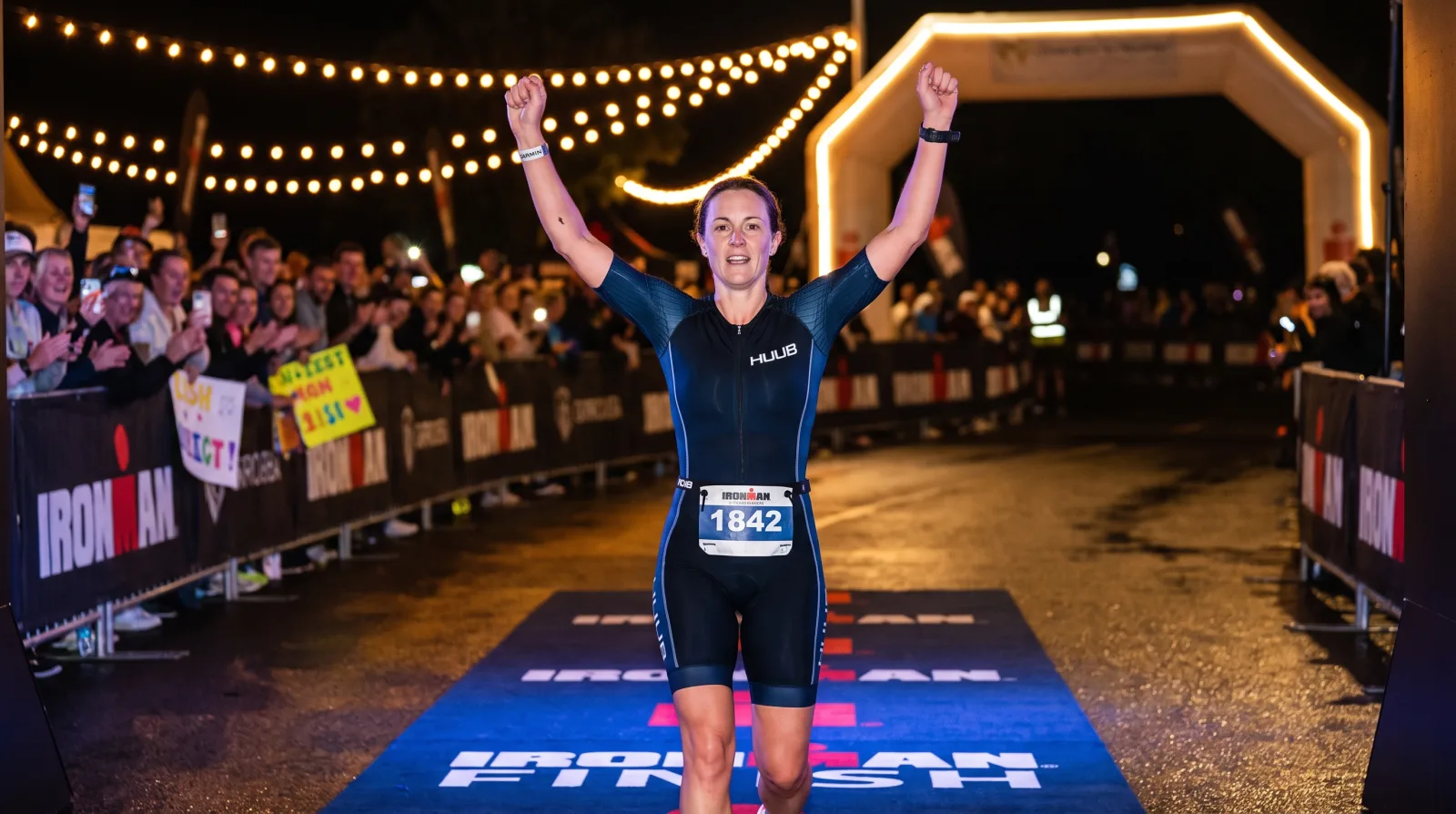
Depends entirely on where you're starting from, and anyone who gives you a single number without asking that first is guessing. If you've already got a 70.3 or two under your belt and a consistent base, a focused 20 to 24 week build is realistic. IRONMAN's own coaching staff calls nine months "the sweet spot" for athletes with some short-course racing behind them, which includes a few months of unstructured off-season before the real block even starts.
If you're coming from zero multisport background, double that runway. Give yourself six months to a year total, with the first chunk spent just building general aerobic fitness across all three disciplines before you ever open a structured Ironman-specific plan. I made the mistake once of compressing a first build into 16 weeks because a race sold out and I didn't want to wait a year. I finished. I also spent the entire taper convinced my left knee was going to end my race, because I'd skipped the base-building that would've let it adapt gradually. Don't do that if you don't have to.
Can a Beginner Complete an IRONMAN?
Yes, and the data backs it up better than you'd expect. First-time finishers complete the race at roughly a 91% rate, only a couple points behind athletes who've done five or more. The honest caveat: that number includes people who trained properly, not people who signed up on a dare and showed up undertrained. IRONMAN's own getting-started guidance is blunt about this: it takes athletes of every shape, size, age, and background, but it takes a realistic timeline and consistent training, not elite genetics.
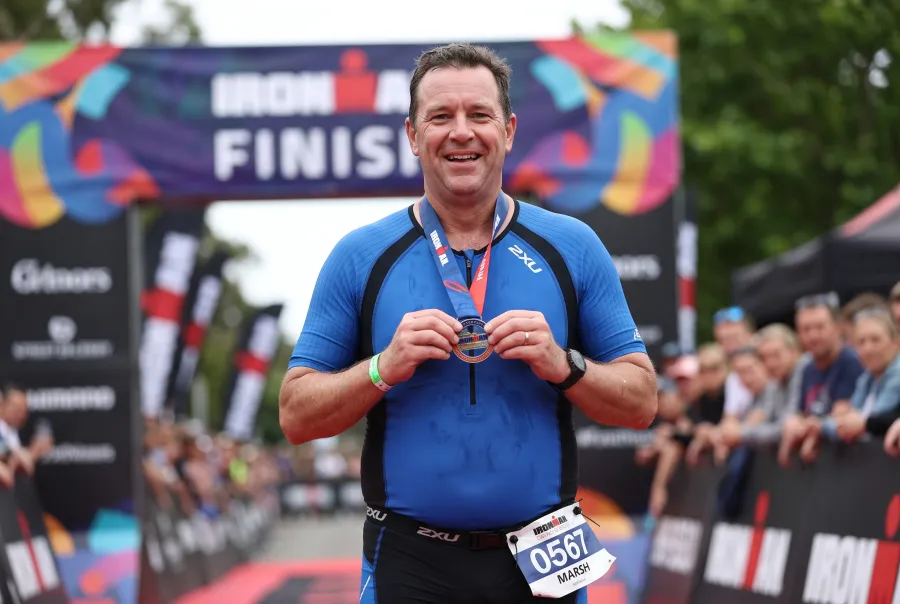
What actually sinks beginners isn't fitness, it's pacing on race day and skipping the training miles that teach your body to run on tired legs. Do the work, respect the taper, and you're statistically more likely to finish than not.
How Many Hours a Week Do You Need to Train?
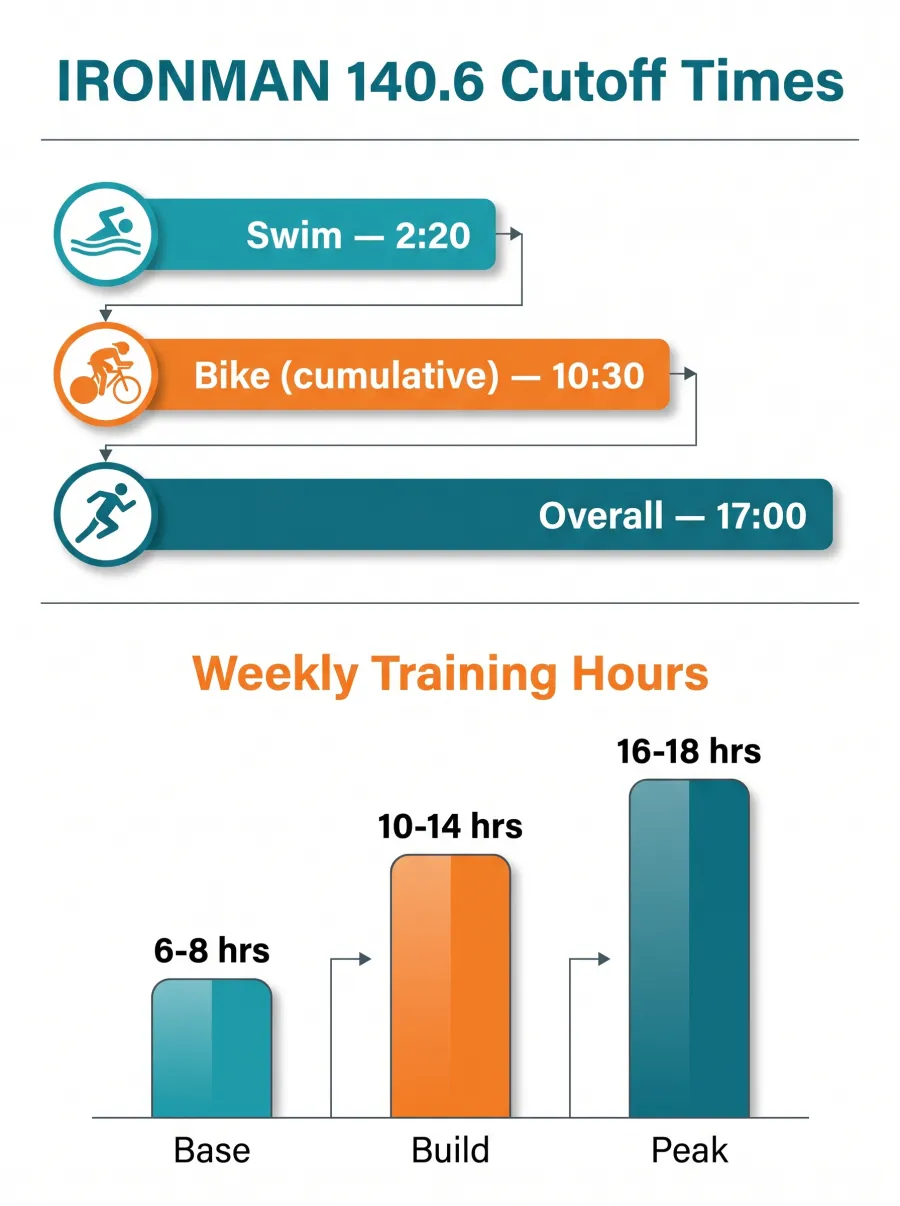
Most first-timers land somewhere in the 8 to 12 hour range for the bulk of the build, climbing to 14 to 18 hours during peak weeks a couple months before race day. That's a real jump from 70.3 training, and it's the single biggest thing people underestimate when they sign up. A time-crunched athlete with a day job can still get there landing around 10 to 12 hours a week if the sessions are smart rather than just long. What you do with the hours matters more than the raw total; a few sharp key workouts and strong running off the bike beat a pile of easy junk miles every time.
If you're starting from scratch, don't jump straight into 10-hour weeks. Build from wherever you're currently at, something like 3 to 6 hours, and ramp gradually. The injuries and burnout that end Ironman builds come from ego, not lack of time.
What Are the IRONMAN Cutoff Times?
Standard cutoffs across most full-distance races: 2 hours 20 minutes for the swim, 10 hours 30 minutes combined for the swim, T1, and the entire bike leg, and 17 hours total for the whole race, measured from your individual swim start. Miss the swim or bike cutoff and you're pulled with a DNF. Finish after 17 hours but before the course technically closes and you get an NC, not classified, no age group award, no Kona slot, but you still get your medal and your story.
A few races run their own numbers. Chattanooga's bike cutoff is 10 hours flat with a 16:30 overall instead of 17. Always check the event-specific athlete guide, not a general article (including this one), before you build your race-day math around any single number.
What Should You Eat During an IRONMAN?
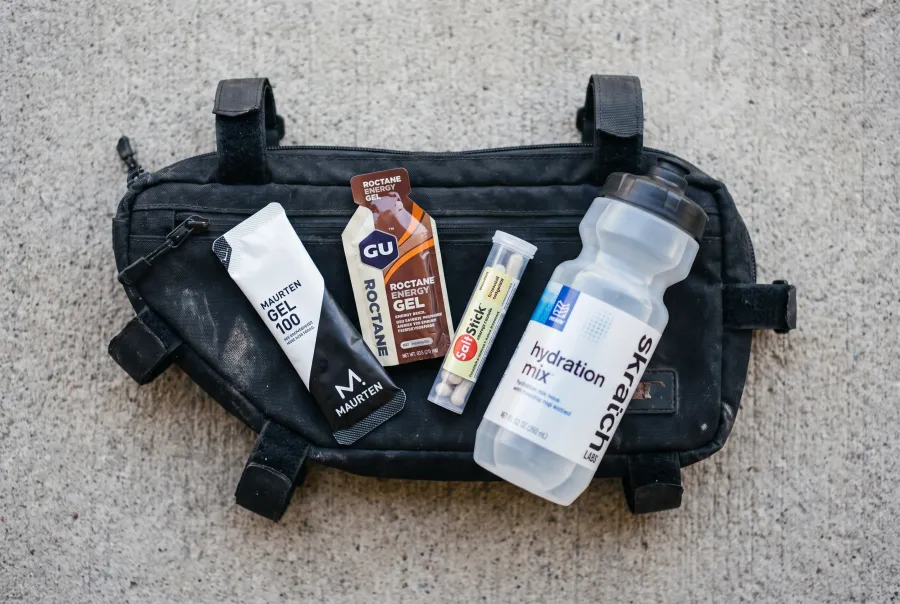
Mostly carbohydrate, mostly in liquid or gel form, started early and kept steady rather than crammed in during a crisis. The practical building blocks are sports drink on the bike for a baseline, gels or chews layered on top to hit your target, and real food (bananas, pretzels, the occasional aid-station donation) if your stomach tolerates solids late in the day. Sodium matters too, somewhere in the 400 to 600mg per hour range depending on how much you sweat and how hot the day is.
Here's the thing nobody tells you until you've bonked once: your race-day nutrition plan has to be a training-day habit first. If the first time you try taking in 70 grams of carb an hour is during the actual race, your gut will let you know exactly how bad an idea that was, usually around mile 80 of the bike. Practice the exact products, the exact timing, on your long rides for months before race day.
How Many Carbs or Calories Do You Need Per Hour?
Most sports nutritionists now land on 60 to 90 grams of carbohydrate per hour for a full-distance race, with 90 grams as a reasonable ceiling for athletes who've trained their gut to handle it. IRONMAN's own nutrition staff suggests starting around 60 to 70 grams if you're new to this and backing off to 40 to 50 if your stomach is sensitive, then building up over months of practice. Above 60 grams per hour you generally need a glucose-fructose blend rather than straight glucose, because a single sugar transporter in your gut saturates right around that number.
In calorie terms, 60 to 90 grams of carb works out to roughly 240 to 360 calories per hour from fuel alone. That's nowhere near what you're actually burning (closer to 600 to 1,000 calories an hour depending on your size and pace), and that's fine. You're not trying to fully replace the deficit in real time. You're trying to keep blood glucose and glycogen available long enough to avoid the wall. Half of r/triathlon will tell you 90g/h is the only way to race; the other half swears by a lower, steadier number with more real food mixed in. Both camps are right for different guts. Figure out which one you have in training, not on race day.
Do You Need a Triathlon Bike?
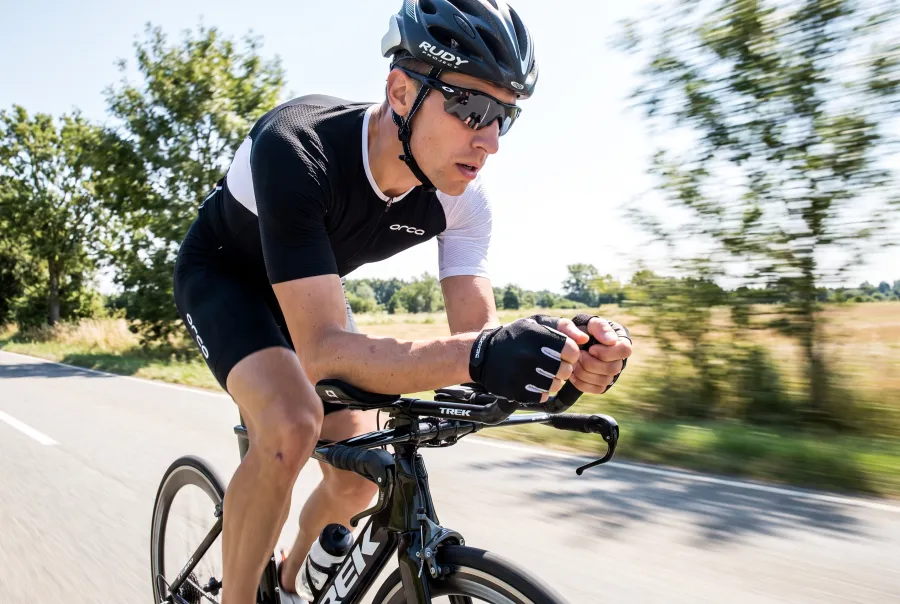
No. A well-serviced road bike with a set of clip-on aero bars will get you to the finish line, and plenty of age-group athletes have raced entire Ironman careers on exactly that setup. What you actually need is a bike that fits you properly, shifts and brakes reliably, and lets you hold some version of an aero position for hours without wrecking your lower back.
A dedicated tri bike is a more defensible purchase at this distance than at a sprint or Olympic race, purely because you're spending five-plus hours in the saddle instead of one. But fit beats frame every time. A $6,000 tri bike with the wrong pad stack and a position you can't hold past mile 40 loses to a well-fitted road bike with $150 clip-ons. If you're buying your first serious bike for this race, spend the money on a proper fit session before you spend it on carbon.
What Should Your Longest Bike Ride and Run Be?
You do not need to ride the full 112 miles or run the full 26.2 before race day, and trying to is a good way to dig a recovery hole you don't climb out of in time. The consensus from coaches who've actually produced first-time finishers: longest ride somewhere around 80 to 100 miles, or 5 to 6 hours by time, done roughly 6 to 8 weeks before the race on a normal training week, not a specially rested one. Longest standalone run caps out around 15 to 20 miles, or 2.5 to 3 hours, with some of that mileage run directly off the bike so your legs learn the specific, concrete-calf fatigue of running after 112 miles rather than running fresh.
Richard Laidlow, who coaches his son and reigning Ironman world champion Sam Laidlow, put it well when asked directly about the 100-mile question: "It's not the distance that I would prescribe, rather time in the saddle." His guidance for most athletes is 4 to 5 hours, sometimes up to 6 depending on the person, built up on a normal training week 8 to 10 weeks out, not a specially rested one. If your race course is flat and your local training terrain is full of climbing, chasing an exact mileage number can actually overtrain you relative to what race day demands. Build the time, not the number on your watch.
What Gear Do You Need for Your First IRONMAN?
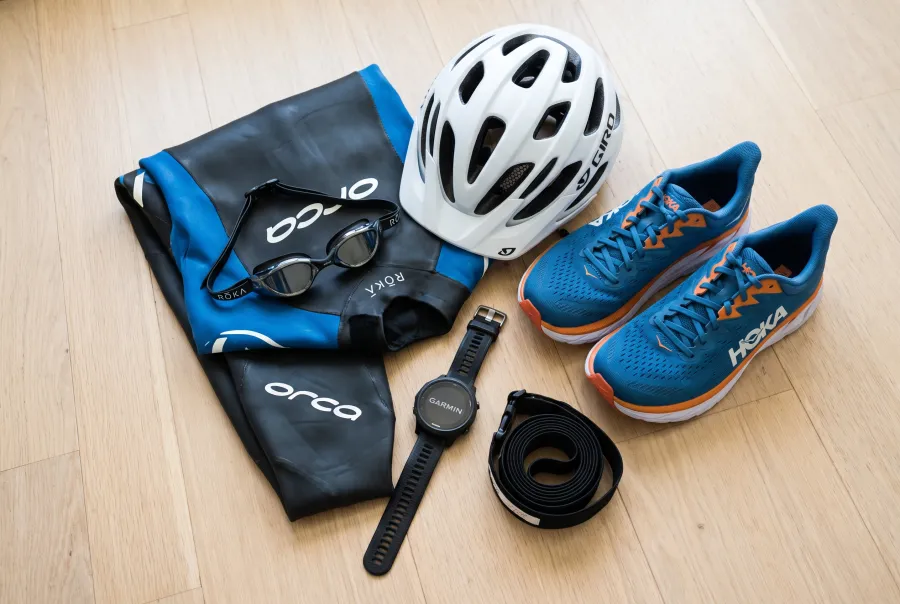
The non-negotiables: a wetsuit if the swim is cold enough to require (or allow) one, goggles that don't leak, a bike in good working order with a helmet, cycling shoes if you're using clipless pedals, running shoes you've already broken in on long runs, and a race belt to hold your bib without pinning holes through your kit. Add a GPS watch for pacing, sunglasses, body glide or an anti-chafe product in every crease you can reach, and whatever nutrition you've already dialed in during training.
- Swim: wetsuit (if wetsuit-legal water temps), goggles, and a backup pair in your bag
- Bike: road or tri bike with aero bars, helmet (mandatory, no exceptions), cycling shoes, spare tubes/CO2, bike computer or watch
- Run: broken-in running shoes, race belt, hat or visor, sunglasses
- Everything: race-day nutrition you've already practiced, electrolyte tablets, body glide, and a dry bag of warm clothes for the finish line
Don't buy any of it the week of the race. Every piece on that list, especially shoes and the bike setup, needs training miles on it before race morning so you're not discovering a hot spot or a saddle problem at mile 60.
How Do You Train for Your First IRONMAN From Scratch?
Start by being honest about where "scratch" actually is. If you can't currently swim 500 meters without stopping, bike for an hour, or run three miles, you're not ready for a 20-week Ironman plan yet, and jumping straight into one is how people get hurt. Spend three to six months first just building general consistency: three swims, a few rides, a few runs a week, nothing heroic, just showing up. Most structured beginner Ironman plans assume you're already training 8 to 10 hours a week before day one.
Once that base exists, a 24 to 36 week structured plan takes you from general fitness into Ironman-specific training: base phase first, building aerobic volume across all three sports; a build phase that adds the long ride, the long run, and brick sessions where you run straight off the bike; then a two to three week taper where you do less and arrive rested, which feels wrong and is correct anyway. Along the way, racing a sprint or Olympic-distance triathlon, and ideally a 70.3, gives you a dress rehearsal for transitions, pacing, and race-day nerves that a training plan alone can't replicate.
I'd rather see someone take 14 months and actually enjoy the process than cram it into five and limp to the start line resentful of the sport. There's no medal for the shortest build.
What's the question you still can't get a straight answer to? Drop it below. If enough of you ask the same thing, that's the next article.


