
IRONMAN 70.3 Oceanside has a reputation, and the reputation is mostly accurate: it's cold, it's hilly, it runs through an active Marine Corps base, and it's traditionally the unofficial kickoff to the North American triathlon season. It's also, according to just about every athlete who's raced it more than once, one of the best-run, most scenic 70.3s on the calendar. Both things are true at the same time, which is exactly why you need a real briefing before you show up in Oceanside, California in March with a wetsuit and a vague sense of optimism.
We pulled the official course data straight from IRONMAN's athlete guides and course pages, then cross-referenced it against race reports spanning the last several years from Triathlon Universe staff, AG first-timers, repeat athletes, and the pros who set the current course records. Here's what actually shows up on race day, not just what's printed on the map.
The Course at a Glance
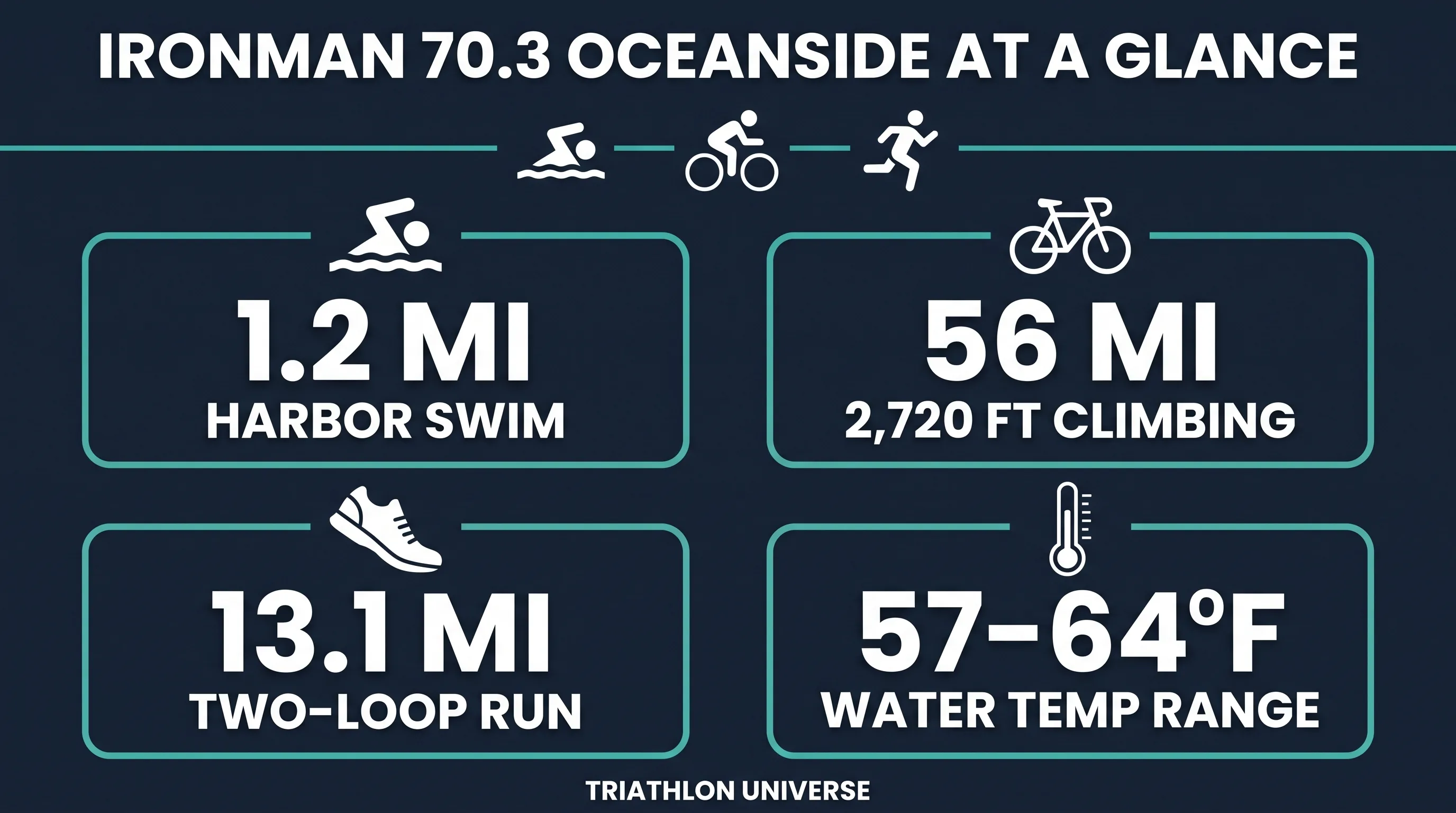
- Swim: 1.2 miles, single loop, counter-clockwise, entirely inside Oceanside Harbor. Rolling start. Cutoff: 1 hour 10 minutes.
- Bike: 56 miles, one loop, through Camp Pendleton Marine Corps Base. 2,720 feet of climbing. A strict 25 mph speed-limit zone on the Basilone Road descent around mile 38 — exceed it and you're disqualified.
- Run: 13.1 miles, two loops, out along The Strand and through coastal neighborhoods, finishing on the Oceanside Pier.
- Water temp: historically 57–64°F, though recent editions have run unusually warm into the low-to-mid 60s. Plan for cold; be pleasantly surprised if it isn't.
- Race weekend: traditionally late March, making it one of the first major North American races of the season.
The Swim: Colder Than the Map Suggests
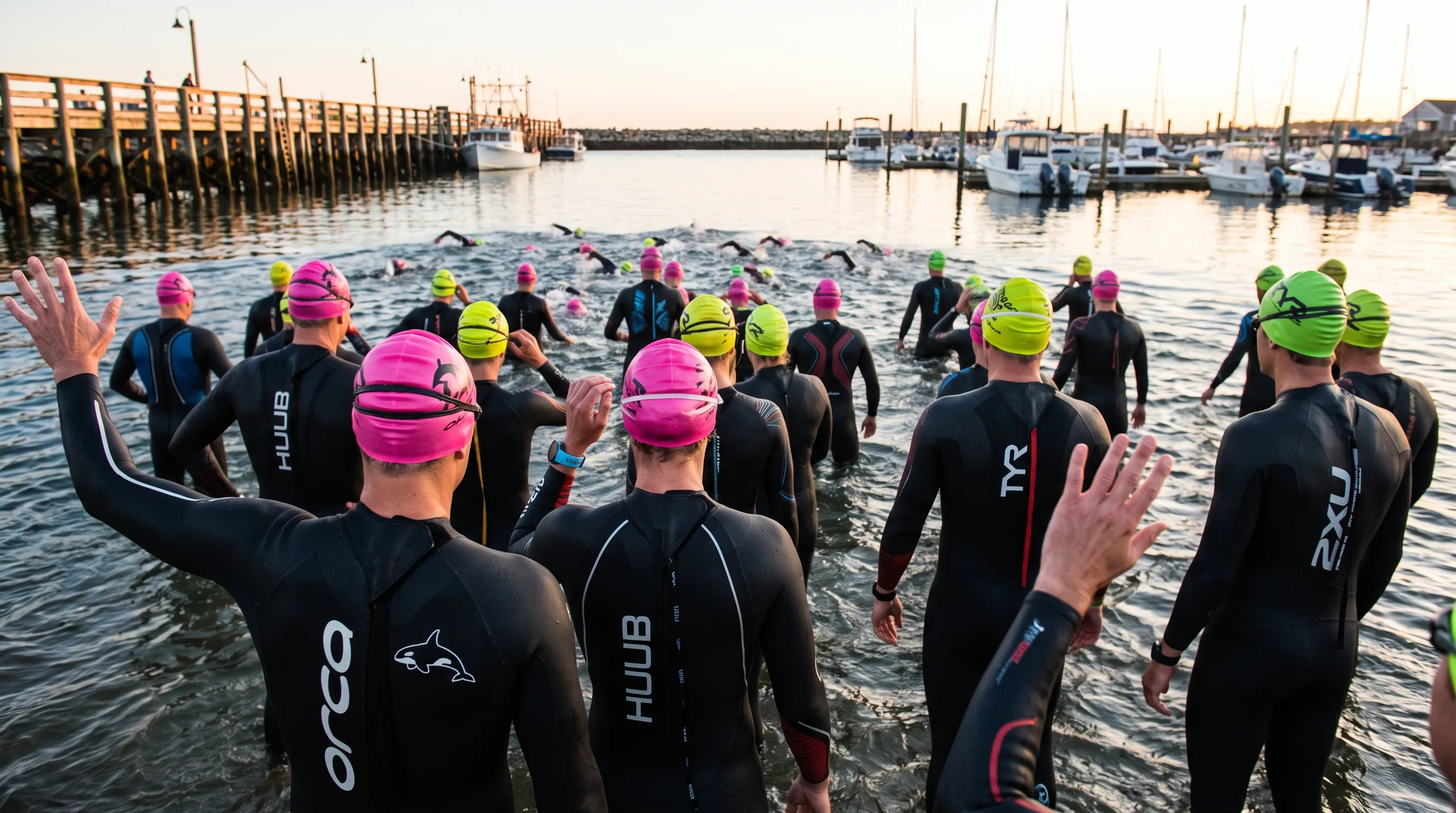
The harbor setup is genuinely one of the friendlier swim venues on the IRONMAN calendar — no ocean swell, no current to speak of, just a sheltered rectangle of water with a rolling start that keeps the usual washing-machine chaos to a minimum. The catch is temperature. Depending on the year, water temps have ranged from the high 50s to the low 60s Fahrenheit, and multiple race reports describe a noticeably colder patch near the far turnaround where the harbor opens toward open water. Bring a thermal or neoprene cap to wear under your race cap; it's the single most repeated piece of advice in first-timer recaps, and for good reason — heat loss through the head is disproportionate, and a $15 accessory is cheap insurance against losing focus 20 minutes into your race.
Pre-race practice swims are limited — IRONMAN doesn't allow athletes to swim the full course beforehand due to harbor boat traffic, though you can typically swim the outbound portion during open swim windows. If you can get in the water at all before race morning, do it, ideally near the actual start time so your body has a real reference point for the temperature and the light. Athletes racing into the sun on the return leg is a recurring theme in race reports — the course orientation puts the morning sun more or less in your eyes on one section, which makes sighting harder than the calm water would suggest. Practice sighting off swim caps and shoulders, not just buoys, for that stretch.
Expect real shivering once you're out. Cold-water swims followed by a 56-mile bike leg mean your transition-one plan matters more here than at most races: dry your feet before socks, have arm warmers or a light vest ready, and consider toe warmers if you run cold — they show up often enough in race reports to be worth the few extra seconds in T1.
The Bike: Camp Pendleton, Hills, and a Speed Trap That's Not a Joke
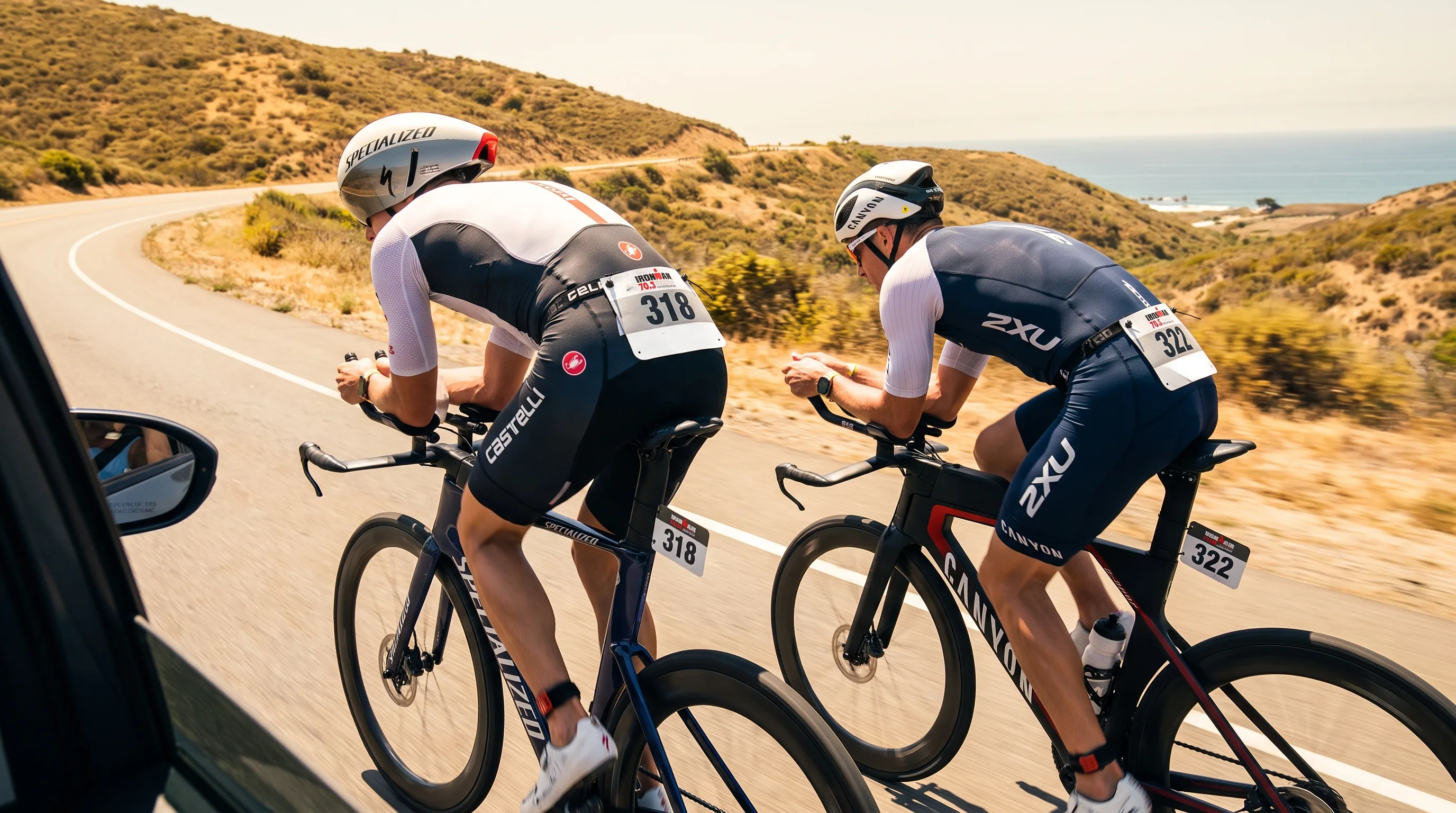
This is where Oceanside earns its "harder than it looks on paper" reputation. The 56-mile course is a single loop through Camp Pendleton, an active Marine base, which means the road surfaces are maintained for military vehicles, not carbon race wheels — multiple race reports flag rougher pavement sections and a higher-than-average rate of flats. Check your tires and tubes the week before, not the morning of.
The first 20 miles roll gently. After that, three real climbs show up in succession, testing riders who paced the flat opening section too aggressively. Then comes the Basilone Road descent around mile 38 — a genuinely fast downhill with a strictly enforced 25 mph speed limit. IRONMAN is serious about this one: exceeding the limit on that section is an automatic disqualification, not a time penalty. It's tempting to let the bike run on a descent like that, but the DQ risk isn't worth whatever thirty seconds you'd save. The final stretch back into town flattens out, but it's frequently met with a headwind, which is a rude surprise if you've been budgeting your effort assuming an easy final 10 miles. Total elevation gain across the loop is about 2,720 feet — not mountainous, but enough rolling terrain that a pure flatland pacing strategy will leave you underprepared for the third climb.
The Run: Flat on Paper, Punchy in Person
The two-loop, 13.1-mile run course starts above the harbor, drops down toward the water, and spends most of its mileage along The Strand and through Oceanside's coastal neighborhoods before finishing at the pier — one of the more photogenic finish lines in the sport. "Flat and fast" is the official description, and it's mostly accurate, but don't read that as pancake-flat: the course moves between beach level and street level more than once per loop, and those short, punchy climbs and descents add up over two laps in a way a single elevation number doesn't fully communicate. Crowd support is consistently rated among the best on the IRONMAN 70.3 calendar, particularly through the final stretch on The Strand, which is worth banking on mentally for the second loop when the day's total effort starts to add up.
What Five Years of Race Reports Actually Say
Beyond the official course notes, the recurring themes across recent editions' athlete write-ups are remarkably consistent:
- The water temperature is unpredictable year to year. Some editions have run into a genuinely warm-for-Oceanside low 60s; more often, it's sub-60°F. Prepare for cold and treat a warm year as a bonus, not the baseline.
- T1 is where the day gets hard, not the swim. Repeated reports describe manageable swims followed by real shivering and fumbling with socks and shoes on the run to transition. Practice a cold-hands T1 in training if you can — gloves off, quick sock strategy, nothing fiddly.
- Flats happen. The Pendleton road surface comes up often enough in recaps that it's not bad luck — it's a known feature of the course. Fresh tires and a practiced quick-change matter more here than at a smooth-pavement race.
- Book lodging near the harbor, and book it early. Race weekend fills the town. Athletes who stayed within walking or short-ride distance of transition consistently report a calmer morning than those who had to drive and park.
- It's genuinely one of the better-run races on the calendar. Even athletes who complain about the cold and the hills tend to say they'd do it again — the Camp Pendleton setting and the pier finish are hard to replicate anywhere else in the sport.
How Fast Is Fast Here: The Pro Benchmark
For context on what a strong day looks like at the sharp end: the current course records stand at 3:40:08 for the men's race and 4:01:39 for the women's, both set in the same recent edition, with winning swim splits in the low-to-mid 22-minute range, bike splits around 2:02–2:05 for the men's field and 2:15–2:17 for the women's, and sub-1:07 to 1:10 run splits off the bike. You're not racing against those numbers, but they're a useful sanity check on the course itself: even at elite fitness, nobody's putting up a flat, easy split here. If the pros are working for their time on this course, budget real effort for yours too.
Race Week Logistics Worth Planning Around
Oceanside sits at the north end of San Diego's North County, a stretch of coast that includes Carlsbad and Del Mar and is, fittingly, close to where the sport of triathlon itself got its start in the 1970s. That history is part of the charm, but it also means the town is small and race weekend brings a real crowd. A few logistics notes that repeat across athlete guides and race reports alike:
- Parking fills up fast near the harbor. Designated lots exist, but arriving with a buffer — 30 to 45 minutes more than you think you need — is the consistent advice from athletes who cut it close and regretted it.
- You can't drive the bike course to preview it beforehand. Camp Pendleton is an active base with restricted access outside race day, so your course knowledge going in will be entirely from maps, elevation charts, and reports like this one — not a practice ride.
- Book lodging within walking distance of the harbor if you can. It's a small town and the good options near transition go early. A short walk to T1 on race morning beats a stressful pre-dawn drive and park every time.
- This is typically a wetsuit-legal race, but bring a plan for both scenarios. Water temperature swings enough year to year that it's worth knowing your non-wetsuit swim plan too, just in case race morning lands on a warm year.
What to Actually Pack
Beyond the standard 70.3 checklist, Oceanside's specific conditions call for a short list of extras that repeatedly show up in athlete recaps as the difference between a comfortable race and a miserable one:
- A thin neoprene or thermal cap to wear under your race cap for the swim — cheap, and the single most repeated cold-water tip in every recap we reviewed.
- Arm warmers or a light vest staged in T1 for the cold, windy start of the bike leg.
- Toe warmers or an extra pair of thin socks if your feet run cold — numb toes 20 minutes into the bike is a common and avoidable complaint.
- A backup tube (or two) and a practiced quick-change, given the Pendleton road surface's reputation for flats.
- Sunglasses with a lens built for glare, not just style — the sun-in-your-eyes stretch on the swim return and the coastal glare on the run both reward proper eyewear.
The Bottom Line
IRONMAN 70.3 Oceanside rewards preparation more than raw fitness. Show up with a cold-water plan, a bike that's been checked for the Pendleton road surface, a pacing strategy that respects the hills after mile 20 and the headwind on the final stretch, and lodging booked close to the harbor — and you'll spend race day dealing with the things you planned for instead of the things that surprised you. It's a genuinely great season-opener, cold water and all. Just don't let the "flat and fast" reputation talk you out of respecting the parts that aren't.


