
You've put in the months. The long rides, the early morning runs, the swim sets that made you question your life choices. Race morning arrives and the temperature is already 82°F at 6:45am, the humidity is thick enough to swim through, and the weather app is cheerfully predicting a high of 96°F by the time you're 45 minutes into the run. The question isn't whether heat will affect your race. It will. The only question is whether you've prepared to manage it — or whether you're about to learn this lesson the hard way in front of several hundred spectators.
Triathlon in summer heat is not a difficulty modifier. It's a fundamentally different physiological event that requires a different race plan, different pacing math, different nutrition strategy, and different decision-making framework than a cool October race. Athletes who treat a hot race like a cool one pay for it with a spectacular run meltdown somewhere between mile five and mile eight. We've all seen it. Many of us have been it.
This is the playbook for getting it right.
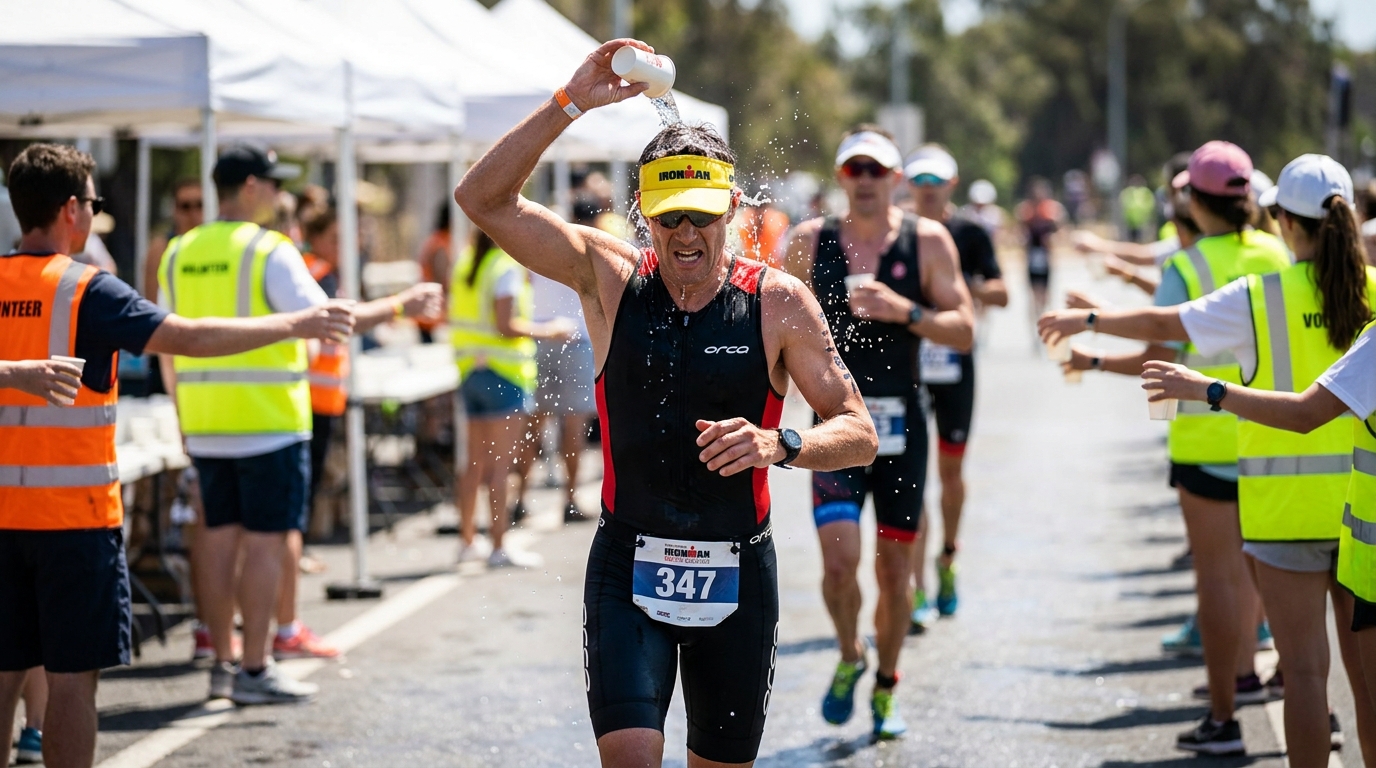
What Heat Actually Does to Your Body (The Honest Version)
Your body produces heat as a byproduct of exercise — a lot of it. At race effort, your working muscles generate roughly 20 times more heat than they do at rest. Under normal conditions, your body handles this through radiation, convection, and sweating. The problem in hot and humid conditions is that all three mechanisms become less effective simultaneously.
When ambient temperature exceeds skin temperature, radiation stops working — you can't shed heat to air that's hotter than you are. When humidity is high, sweat can't evaporate efficiently, which is the primary cooling mechanism your body depends on during exercise. The result is that your core temperature climbs faster and higher than it would in the same effort under cooler conditions.
Here's where the pacing math gets real: for every 1°C rise in core temperature above your threshold (~38.5°C), your body begins systematically diverting blood from working muscles to the skin in an attempt to cool itself. This peripheral circulation increase reduces oxygen delivery to your legs. It also means your heart is working harder to maintain output. You feel this as a perceived effort that creeps upward without any increase in actual pace — the same speed starts requiring more work. And without adjustment, you'll hit cardiovascular drift and bonk-like symptoms well before you've depleted glycogen.
Research consistently shows that running pace in hot conditions (above 80°F) degrades by roughly 3–5% compared to optimal temperature racing, and that number gets significantly worse as temperatures climb into the 90s. For a triathlete targeting a 10K run split of 50 minutes in cool conditions, a hot race day is realistically a 52–54 minute split at the same subjective effort — if you pace correctly. Athletes who don't account for this and push their cool-weather target pace simply crash harder and earlier.
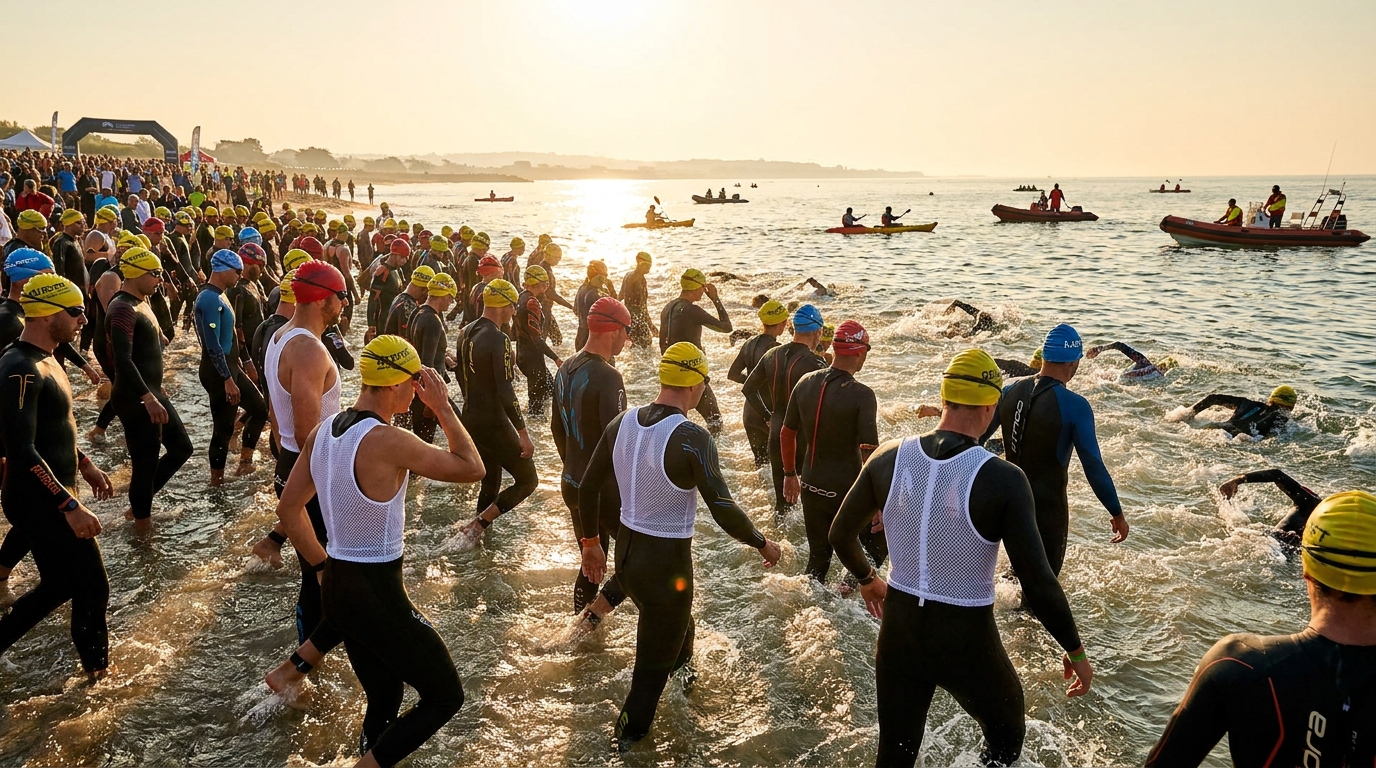
Pre-Race Cooling: What Actually Works
The 30–60 minutes before your race start is your single best opportunity to bank a lower core temperature going into the event. The more you reduce core temperature before the gun, the longer you have before hitting the upper threshold that degrades performance. Here's what the evidence says actually works:
Ice vest pre-cooling is the most practical option and the one most commonly used by professionals racing in heat. Wearing an ice vest or ice-packed mesh vest in the final 30–45 minutes before race start has been shown in multiple studies to reduce core temperature by 0.4–0.7°C and delay the onset of fatigue during the subsequent run. You don't need a $300 vest from a specialist manufacturer — a makeshift ice vest with zip-lock bags of ice sewn or clipped into a mesh shell works just as well. Transition your wetsuit on and use the ice vest over it while you wait.
Cold water immersion — specifically, submerging your forearms and hands up to the elbow in ice water — is effective and extremely accessible. Find a cooler, fill it with ice water, and spend 15–20 minutes doing this while you wait for your wave. The forearms and hands have a high density of blood vessels close to the skin surface, making this an efficient site for heat exchange. If a full forearm immersion isn't practical at your race venue, cold towels on the back of the neck and forearms achieve a partial version of this.
Cold drinks consumed in the 20 minutes before race start also contribute meaningfully. A 16oz slushie or iced drink consumed during pre-race prep has been shown to reduce core temperature slightly and improve perceived exertion during the first 30 minutes of exercise. It's not magic, but combined with the above it adds up.
The Pacing Math: How to Adjust by Temperature
This is where most athletes make their biggest mistake: they refuse to adjust their race-day pacing targets based on conditions. The logic is understandable — you've trained for months for a specific outcome, and voluntarily running slower feels like failure. It isn't. It's physics.
A workable adjustment framework for the run:
- 65–74°F / feels like: minimal adjustment. You can race near your target pace. Watch hydration.
- 75–79°F / feels like: back off 5–8 seconds per mile from your target run pace early. Execute conservatively in the first half and re-assess.
- 80–84°F / feels like: target a 10–15 second per mile reduction from your cool-weather goal pace. This is a meaningful adjustment — accept it now, not at mile six.
- 85°F+ / high humidity: consider a heart rate-based approach rather than pace-based. Pick a ceiling heart rate you won't exceed on the run (typically 80–85% of max) and let pace follow from that. Pace becomes irrelevant if your cardiovascular system is under extreme thermal stress.
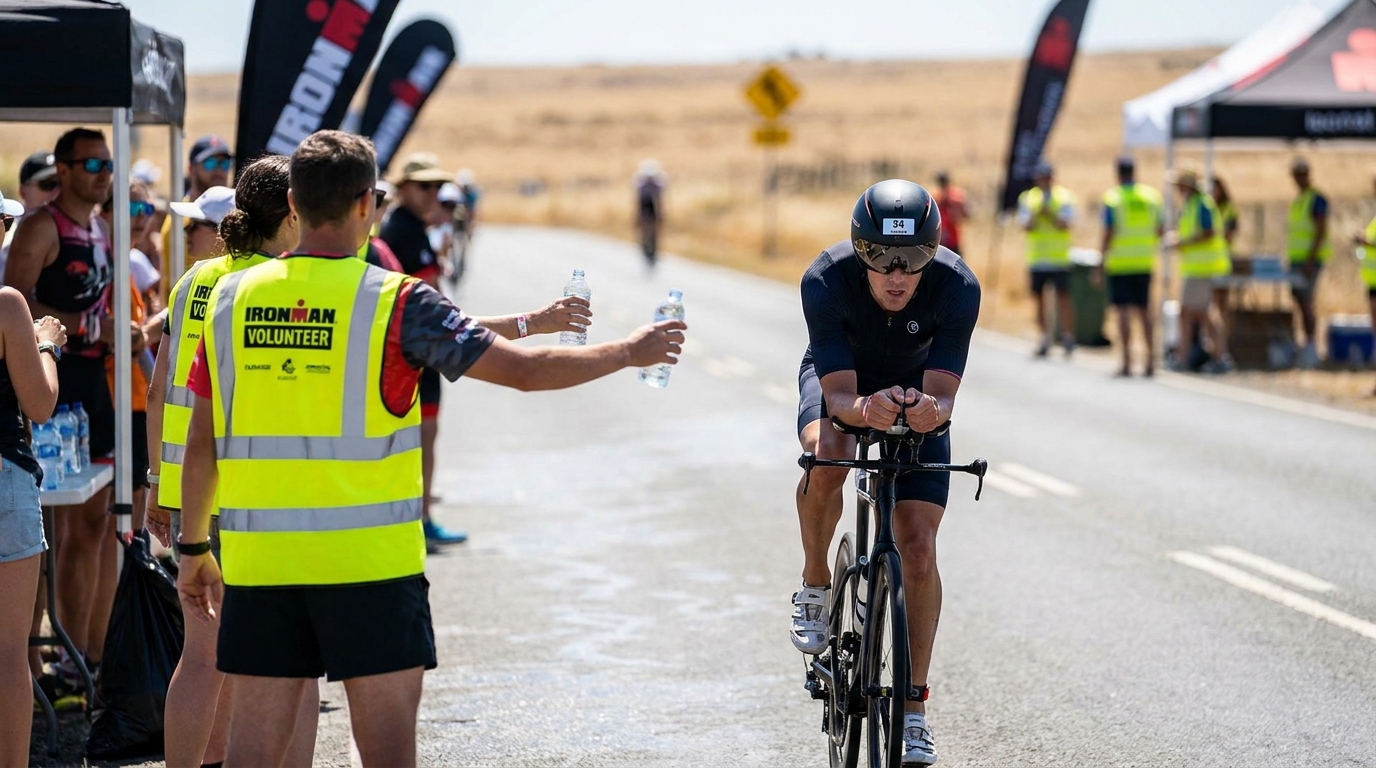
On the bike, heat affects you less dramatically because you generate airflow through movement. The bigger risk on the bike in heat is underestimating fluid loss. You're sweating and losing electrolytes at a faster rate than in cool conditions, and that deficit hits you on the run. Front-load your hydration on the bike. Don't wait until you're thirsty.
On-Course Cooling: Ice Socks, Pour-Over, and the Aid Station Science
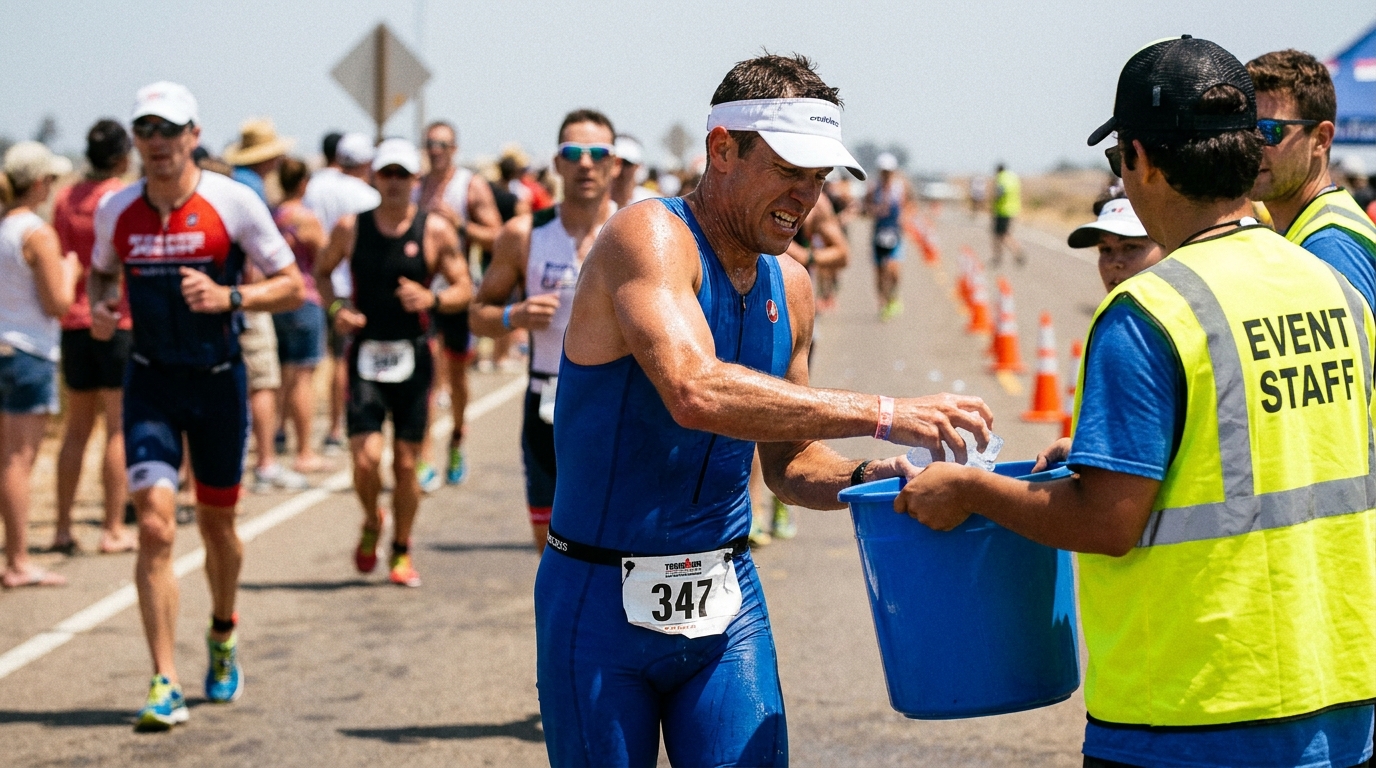
Every aid station on the run course in a hot race is a cooling intervention opportunity. Most athletes treat them as fuel stops. In heat, they're also the mechanism that keeps your core temperature from cresting into the performance-degrading range.
Ice socks — ice stuffed into a cut-off stocking or tube sock and draped around the back of your neck, or placed inside the back of your trisuit — are genuinely effective and not at all embarrassing to use. The neck is a high-blood-flow area with large vessels close to the surface. Direct ice contact here drops blood temperature measurably. This sounds like elite-athlete-only gear. It isn't. A pair of old knee-highs cut to 8-inch tubes takes two minutes to prepare and goes in your T2 bag. Fill them at the first ice station on the run and replace every 1–2 miles in extreme heat.
Pour-over cooling (pouring water over your head, neck, and forearms at aid stations) provides immediate subjective cooling through evaporation. On very humid days, the evaporation benefit is reduced, but the conductive cooling from the water itself still helps. Pour over the back of your neck and forearms specifically — not just your head. Also pour into your hat if you're wearing one.
Drinking vs. pouring: when the choice is one cup of water or ice at a station that's running short, drink it. The thermoregulatory benefit of internal cooling (cold fluids entering your GI system) is greater per volume than external cooling. But when supply is generous — and at most well-run triathlons it is — do both at every opportunity.
Electrolytes: The Strategy Shift Nobody Tells You About
In normal conditions, your sweat rate and electrolyte loss are significant but manageable with standard race-day nutrition. In extreme heat, your sweat rate can double or triple. Sodium loss follows. The result is that athletes who use cool-weather fueling protocols in hot races often end up seriously under-salted by the run — and the consequence of that isn't just cramps. Severe electrolyte depletion causes nausea, disorientation, muscle weakness, and in extreme cases, hyponatremia — a sodium imbalance that is genuinely dangerous and requires immediate medical attention.
The adjustment: increase your sodium intake on the bike substantially in hot conditions. Precision Hydration's H1 tablet or a high-sodium drink like Skratch Hyper Hydration added to your first bottle is a common and effective approach. Plan for 800–1,200mg of sodium per hour in extreme heat, compared to the 500–800mg that might suffice in cooler conditions. Carry salt capsules on the run and take them every 30 minutes proactively, not reactively when you start cramping.
Recognizing the Line: Normal Discomfort vs. Genuine Danger
Racing in heat is uncomfortable. That's not a warning sign. That's triathlon. But there is a line between "this is hard and I want to stop" and "my body is telling me something is wrong" — and knowing the difference could save your race or your health.
Normal heat discomfort: elevated perceived effort, increased sweating, slower pace than target, general fatigue, wanting to slow down. These are your body's appropriate thermal responses. They don't require you to stop. They require you to adjust.
Warning signs that require immediate action: stopping sweating on a hot day (you should be sweating heavily — dry skin in heat is a red flag), confusion or difficulty following simple thoughts, nausea that won't pass, a sense of unreality or detachment, skin that feels hot and dry rather than wet. Any of these signs means stop at the next aid station and tell the medical staff.
There is no finish line time worth a medical emergency. Race directors can reschedule. Your hypothalamus cannot. Every year at summer races, athletes push through genuine heat exhaustion warning signs because they don't want to DNF, and some of them end up in the medical tent for hours or the hospital. The finish line will still be there next year. Race the conditions you have, not the race you planned.
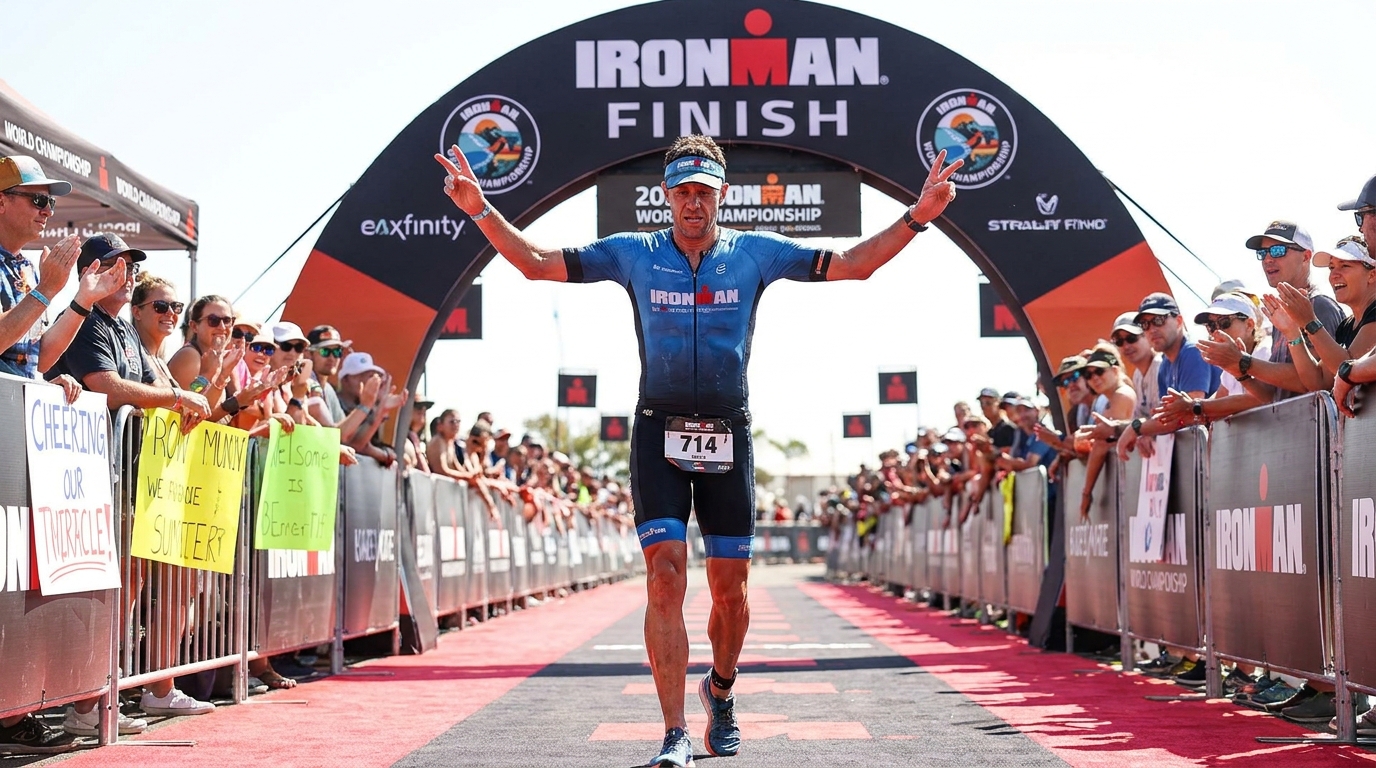
When the Race Director Conditions Change Your A-Race Goal
Some races have heat mitigation protocols — shortened run courses, extra aid stations, wave start changes. Occasionally, extreme conditions result in a race director advisory that suggests adjusting performance expectations for the day. Take this seriously. Race directors don't issue these advisories to ruin your PR attempt. They issue them because the medical data at previous editions told them something important.
If conditions are severe enough that a race director is recommending modified goals, your A-race target is off the table for that day. Your new goal is a safe, controlled execution that gets you across the finish line healthy. That's not a concession. That's racing with intelligence.
Train for the race you want. Execute for the conditions you have. The athletes who do this consistently are the ones who show up at the start line of many races for many years — not the ones who left everything on the course at one miserable race in August and decided triathlon wasn't for them.
Derek Solis is a Triathlon Universe contributor and athlete. He has raced in temperatures ranging from 48°F to 101°F, learned most of these lessons the hard way, and now owns more ice vests than most people own dress shirts. He is not sorry about this.


