

There is a perfectly legal way to slash your swim energy expenditure by up to 30 percent, arrive at T1 with legs that actually function, and potentially drop several minutes off your overall time. It costs nothing. It requires no gear upgrades. It is not a grey area — every major triathlon governing body explicitly permits it. And the majority of age-group triathletes either do it by accident or not at all.
It is swim drafting. And if you are not doing it on purpose, you are leaving the single biggest pile of free speed in the sport sitting on the pool deck while you politely swim by yourself into a headwind that does not exist in open water.
The bike leg has strict drafting rules. The run has none at all. But the swim? The swim is a full-contact, aerodynamics-be-damned, perfectly legal drafting free-for-all. Elite triathletes have known and exploited this for decades. Age-groupers are catching on. This guide will make sure you are one of them before your next race.
Why Swim Drafting Works (And Why the Numbers Are Embarrassingly Good)
Unlike road cycling, where drafting exploits aerodynamic slipstream, swim drafting works by reducing hydrodynamic drag. When a swimmer moves through water, they create a pressure wave ahead of them and a low-pressure turbulent zone directly behind. Slot yourself into that zone at the correct distance and angle, and you are swimming through cleaner, slightly accelerated water instead of fighting the raw resistance of undisturbed lake.
The numbers are not small. Research published in the International Journal of Sports Medicine found that athletes swimming directly behind a lead swimmer experienced a 29 percent reduction in energy cost at the same pace. The hip-draft position — head alongside their hip rather than directly behind their feet — still delivers 20–25 percent energy savings. Even an imperfect, loose trailing position at two body lengths saves 10–15 percent.
For a 70.3 athlete whose swim leg normally burns 25–30 percent of their total energy budget, those savings compound into fresher legs on the bike and a run that does not fall apart at mile 8. You do not get faster in the water. You just spend less energy getting through it — and that currency pays dividends for the next five hours.
The Three Drafting Positions, Ranked by Free Speed
Not all drafting opportunities are equal. Here is the breakdown of what the research and elite coaching actually support:
Position 1: The Feet Draft (Direct Behind — Maximum Savings)
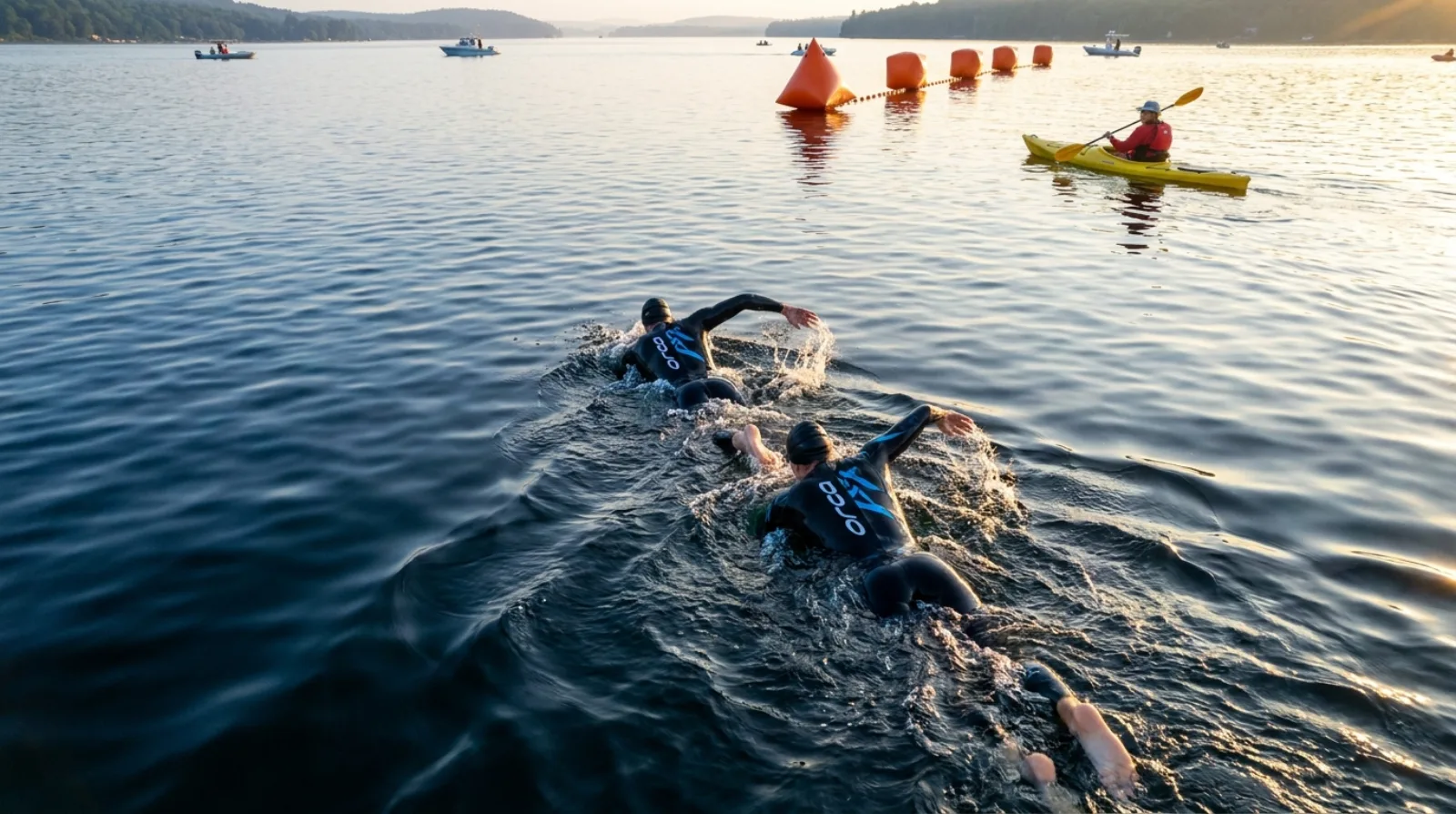
You swim with your head approximately 50–80cm behind the lead swimmer's feet, directly in their slipstream. This is the full 28–30 percent energy savings zone. The tradeoff: you are breathing their bubbles, you will occasionally eat a kick to the goggles (carry a backup pair if you value your orbital bones), and if they decelerate unexpectedly, you will learn what "close quarters" means in a very hands-on way. For shorter, harder-effort distances — sprint and Olympic — this is the aggressive play.
Position 2: The Hip Draft (Head at Hip Level — Smart Savings)
Your head floats level with their hip. Energy savings drop to 20–25 percent, but your sighting improves dramatically: you can look around them to the course ahead instead of swimming blind in their wash. For longer distances — 70.3 and full IRONMAN — the hip draft is often the smarter choice. Most of the energy savings with actual directional awareness. In a 3.8km swim, knowing where you are going turns out to matter.
Position 3: The Extended Trail (Two Body Lengths — Recovery Mode)
Still worth 10–15 percent. Use this when you have lost the first two positions and need to recover before closing the gap. Better than nothing — meaningfully better. But do not confuse trailing at two body lengths with actually drafting. It is more like swimming in a pleasant neighbourhood instead of the nicer one you were aiming for.
How to Actually Get on a Pair of Feet (And Stay There)
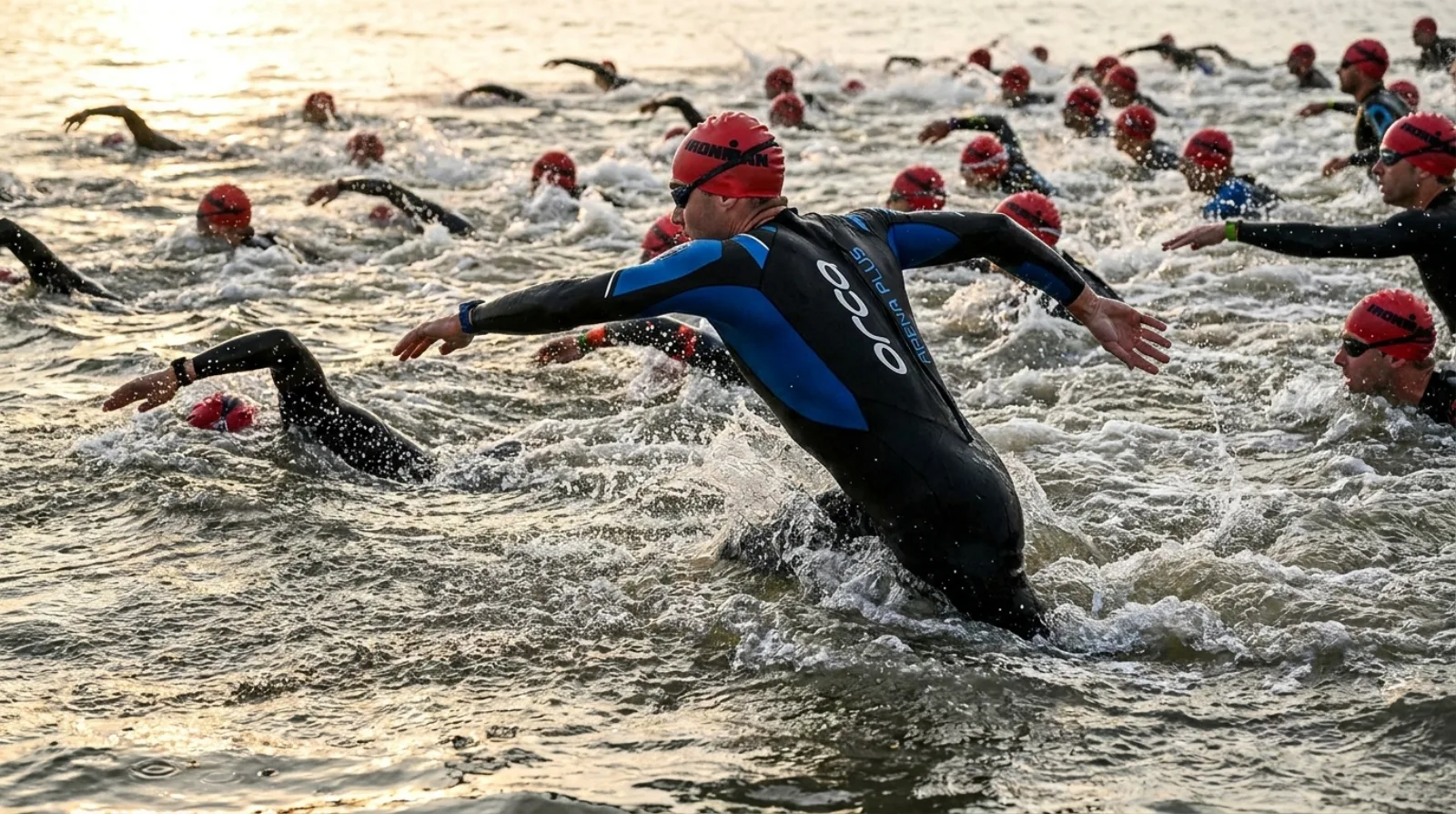
Most guides explain that swim drafting exists without explaining how to execute it when 800 athletes are thrashing toward the same buoy. Here is the protocol that works.
At the Swim Start
Know your real swim pace before race day — not your hoped-for pace, not the one from that one perfect morning in the pool. Your actual pace from recent, honest training. Line up near swimmers who are slightly faster than you. When the gun goes, do not sprint blind into the carnage. Let your target swimmer open a small gap, then go hard for 20–30 seconds to close the distance and settle into position. That initial sprint costs you — accept it. You are buying a draft that pays back for the entire swim leg.
During the Swim
Stay focused on the feet or hip ahead of you, not the buoys. Your lead swimmer is sighting for you — that is part of the arrangement. Breathe to the outside (away from them) to get a clean breath and reduce accidental elbow exchanges. Every 6–10 strokes, do a quick lateral check: are you still aligned, are you drifting? If you are hip-drafting, you can sight around them naturally. If you are feet-drafting, trust their navigation for stretches of 30–50 metres, then pop up to verify.
When You Lose the Feet
Sprint hard for 5–8 strokes to reconnect. If the gap is more than three body lengths and growing, do not chase them into oxygen debt. Look laterally. Other packs are forming around you constantly in a mass start. Find the nearest cluster moving at your target pace and slot in. There is no shame in switching dance partners — only in swimming the whole leg solo because you were too proud to find a new pair of feet.
How to Train Drafting Before Race Day
Drafting is a skill, and like every skill in triathlon, it degrades if you only encounter it during races. Most triathletes swim alone 90 percent of the time and then are surprised when swimming in a moving, kicking, unpredictable pack of strangers is disorienting. This gap is entirely preventable.
Get into group swims: Masters swim groups, open water sessions with a club, any organised swim where you are not the only one in the lane. Aim for at least one group session per week during race build.
The Chase Drill: Swim with a partner who is slightly faster. Have them lead while you practice closing to hip-draft range and holding it for 200–400 metre intervals. Start with rest in between; extend the continuous drafting segments over 4–6 weeks. By race week, holding draft for 800 metres without going aerobic should feel automatic.
Practise buoy turns while drafting: The buoy turn is where most drafting opportunities collapse. Swimmers bunch, slow, and scatter. If you only practise straight-line drafting in a pool, you will lose your partner at every turn on race day. Specific open water sessions around buoys fix this cheaply.
The Bottom Line
Swim drafting is not a trick. It is not taking advantage of anything. It is applied fluid dynamics — the same physics that makes road cycling in a peloton faster than soloing into the wind, legally exploited in the one discipline in triathlon where it is fully permitted. The athletes who do it on purpose, every race, consistently arrive at T1 fresher and race better for it.
If you are exiting the water feeling like you already raced a 10K before you even see your bike, the problem is almost certainly not your swim fitness. It is your positioning. Get on some feet. Stay there. Save your legs for the parts of the race where nobody is allowed to give you a tow.


