
Ironman Arizona doesn't announce itself the way Kona does, or Nice, or any of the races people put on vision boards. It's a lake in the middle of a college town, ringed by a bike path, with a highway turnaround about eighteen miles up the road. And yet it's one of the most beloved, most oversubscribed full-distance races in the country. If you've never done a 140.6 before, there's a real argument this is the smartest place to start.
Some of that is timing. IMAZ lands in mid-November, which for most of the country means it's the last big date on the calendar, the race a whole season gets built around before everyone quietly stops training and eats their way through the holidays. Some of it is the course. Three loops on the bike, three loops on the run, which sounds monotonous until you realize your people get to see you six or eight times instead of twice. And a lot of it, honestly, is just the crowd. Tempe shows up for this race in a way plenty of other host cities don't bother to.
None of that makes it easy. "Flat and fast" gets repeated about IMAZ so often that first-timers sometimes hear it as "forgiving," and that's the exact mistake this guide is here to head off. The course has real teeth. Wind, mostly, plus more climbing than the marketing copy admits to, and a night finish that catches a lot of people off guard who assumed they'd be done in daylight. Here's what actually shows up, leg by leg, for someone racing it for the first time.
The Shape of the Day, Before the Details
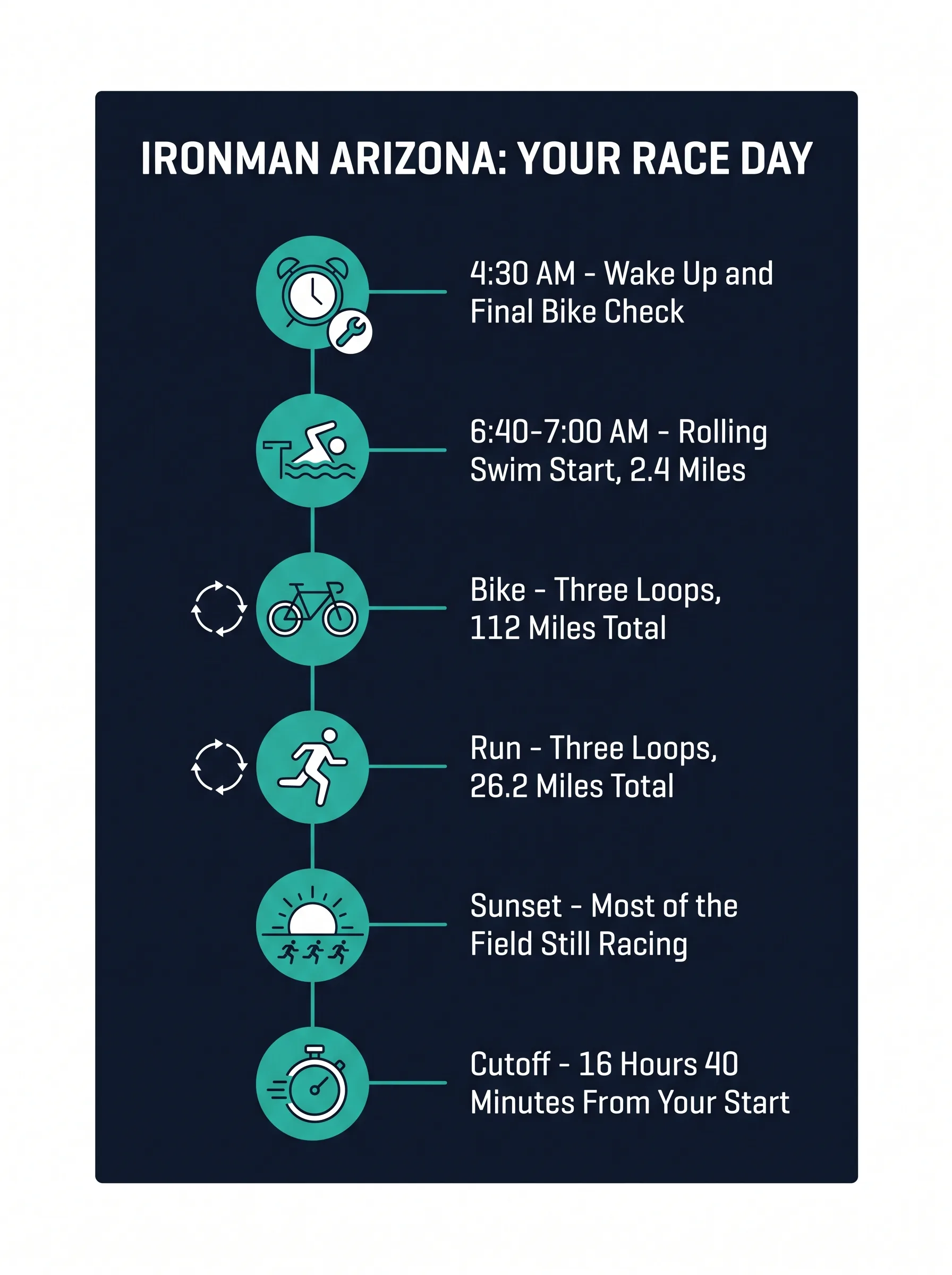
It helps to see the whole thing laid out before diving into each leg, because IMAZ is a long day even by Ironman standards. Wake-up happens well before sunrise. You'll have access to your bike again around 5 a.m., though you can't touch it until the actual start. The swim goes off as a rolling, self-seeded start rather than a mass wave, somewhere in the 6:40 to 7 a.m. window depending on the year. From there it's three bike loops, three run loops, and for a big chunk of the field, a finish that happens well after dark.
The Swim: Cold, Crowded, and Better Than It Sounds
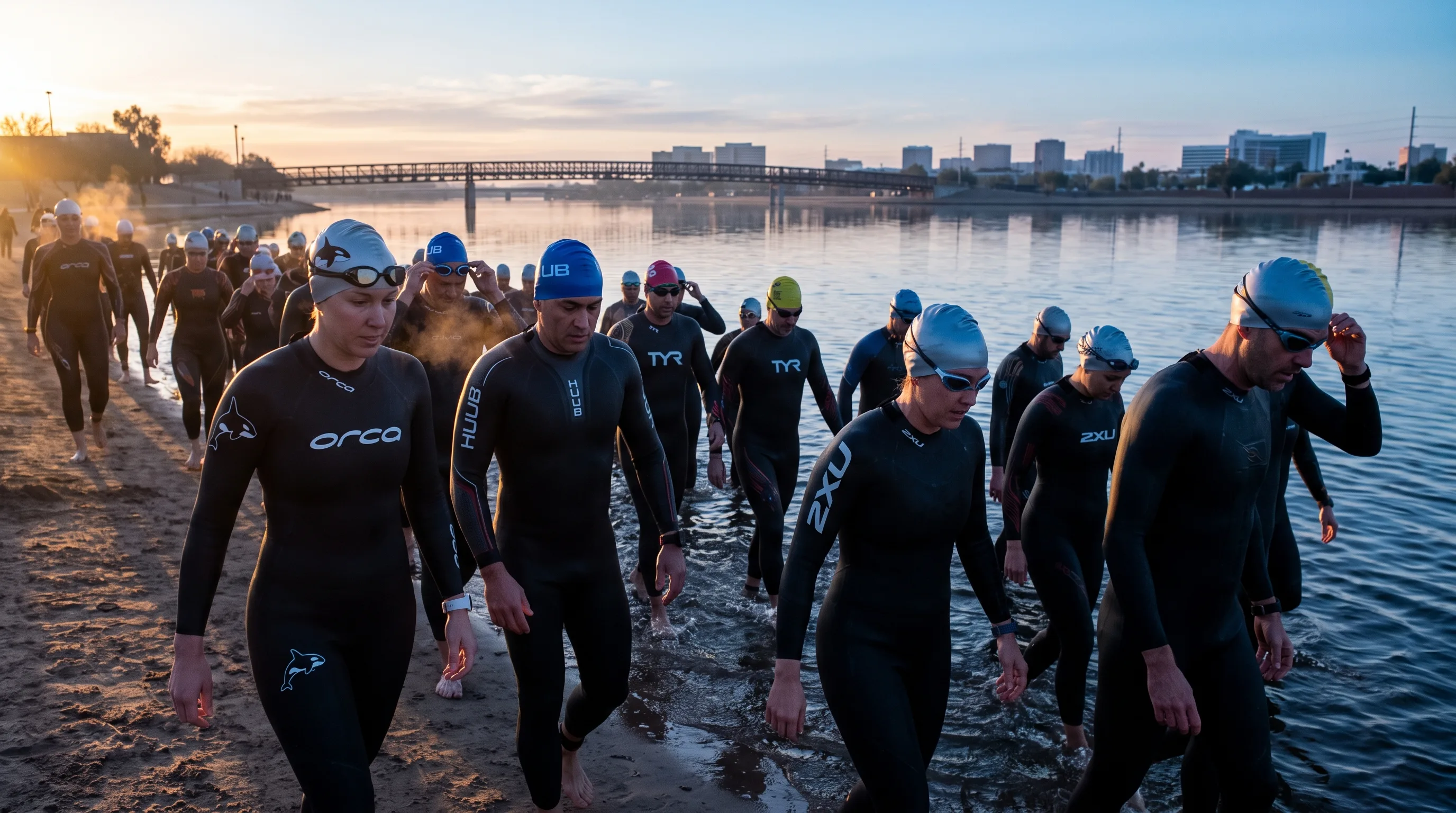
Tempe Town Lake is a dammed stretch of the Salt River shaped like a long rectangle, and the 2.4 miles are a single loop with only a handful of turns. Easy to navigate. What's not easy is the water itself, which runs cold for a desert race, typically in the low 60s, and murky enough that you won't see your hand in front of your face most of the way across. Bring a wetsuit and don't overthink the visibility. Almost nobody can see anything in there, and it genuinely doesn't matter as much as you'd think.
The bigger adjustment for a lot of first-timers is the start format itself. IMAZ doesn't do a mass start anymore. You'll self-seed into a line based on your expected finish time and enter the water in a slow, rolling procession, which means standing around in the cold for longer than you'd like before you ever get wet. Dress warm right up until the last minute. Some people wear old socks over their feet in line and toss them right before entering. It sounds silly standing in your garage in October. It stops sounding silly at 6:15 a.m. in mid-November.
Once you're in, the lake is narrow enough that positioning matters. Seed yourself honestly. If you tell the volunteers you're a 55-minute swimmer and you're actually closer to 75, you're going to spend the next hour getting swum over by faster people who trusted the seeding to work. You've got 2 hours and 20 minutes to get the swim done, which is generous for basically everyone reading this, so there's no need to panic-sprint off the start line. Settle in for the first few hundred yards, find a rhythm, and let the current of bodies around you do some of the sighting for you.
The Bike: What the Beeline Actually Does to People
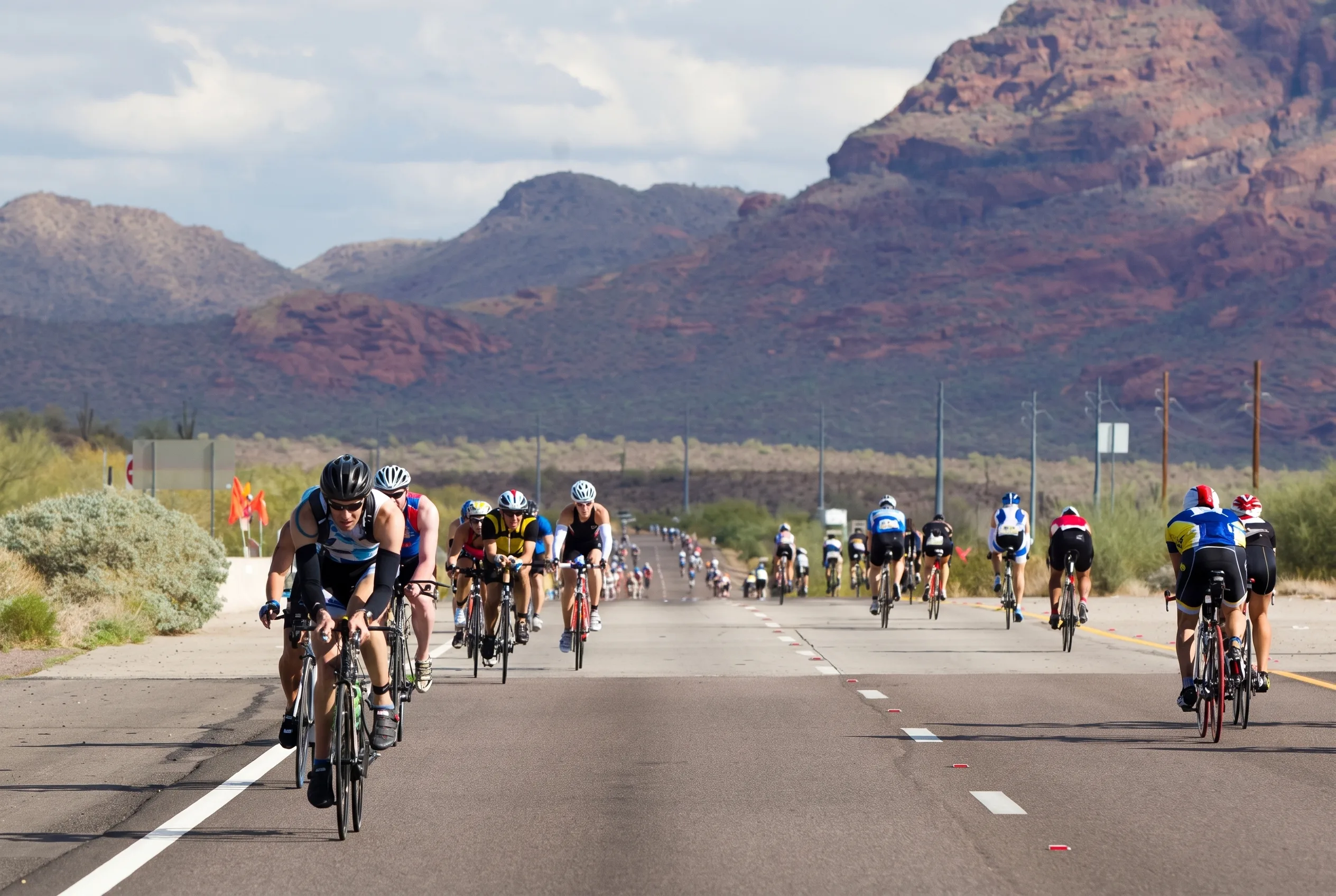
The bike course is 112 miles, three loops, and it takes you out of Tempe through the Salt River Pima-Maricopa Indian Community and onto the Beeline Highway before turning around near Shea Boulevard and bringing you back. Each loop climbs somewhere around 860 feet, which adds up to roughly 2,500 to 2,600 feet across the full ride. That's not mountainous by any stretch, but it's enough of a false-flat grind on the way out that people who go in expecting pancake-flat get an unpleasant surprise.
Here's the trap almost everyone falls into at least a little: loop one feels fantastic. You're fresh, the legs are cooperating, and the return leg back into Tempe often has a tailwind that makes you feel like a much stronger cyclist than you are. Loop three is where the bill comes due. The wind tends to build through the day, the false flat starts to feel less "false" and more just "flat but somehow terrible," and the accumulated fatigue from riding too hard on lap one shows up exactly when you can least afford it. Treat your first loop as conservative even when it doesn't feel like it needs to be. Save the aggression for the third.
Somewhere in the middle of all this, the temperature does a complete flip on you. You started the swim in the cold. By the time you're a couple hours into the bike, Arizona is doing the thing Arizona does in November, which is turn into a genuinely warm, sun-soaked afternoon. Sunscreen matters more than people think it will, and so does staying ahead of your fluids, because dry desert air pulls moisture out of you faster than it feels like it's happening. The course nutrition on the bike, if you want to lean on it, tends to run through Maurten gels and a hydration mix at aid stations spaced roughly every 12 to 15 miles. Know what your stomach tolerates before race day, not during it.
One landmark worth knowing by name: the intersection near Rio Salado Parkway and Mill Avenue, which locals and repeat athletes call the "Hot Corner." It's not on any official course map as a destination, but it's where the biggest cluster of spectators tends to gather, and because of how the loops fold back through town, your crew can plant themselves there and catch you multiple times without moving. Tell whoever's coming to watch you about it in advance. It'll save them a lot of guessing.
Two more things worth knowing that don't show up in the course description. First, the Beeline's pavement isn't glass smooth in every section, and a rough patch at mile 60 of a three-loop course is going to feel rougher than the same pavement would on a training ride. Second, and this one is genuinely specific to this race: there are sections of the course known for goat head thorns, the little puncture-vine seeds that Arizona is famous for among anyone who's ever owned a bike tire there. Run tires with decent flat protection, consider sealant, and pack more than one spare tube. A flat on lap two of an out-and-back highway ride is a bad place to discover you only brought one.
The Run: Three Loops, One Sunset, and a Lot of Dark Miles
The marathon is three loops, mostly along Tempe Town Lake, with a detour across a pedestrian bridge into Papago Park that breaks up the scenery with some genuinely nice desert terrain. Total elevation gain is modest, somewhere around 350 feet for the whole 26.2, so this is a legitimately fast course if your legs have anything left after the bike. Aid stations show up roughly every mile, well stocked, and the crowd support along the lake is some of the best in the sport. You will see your people, and strangers, and volunteers who somehow still have energy at hour twelve of their own long day.
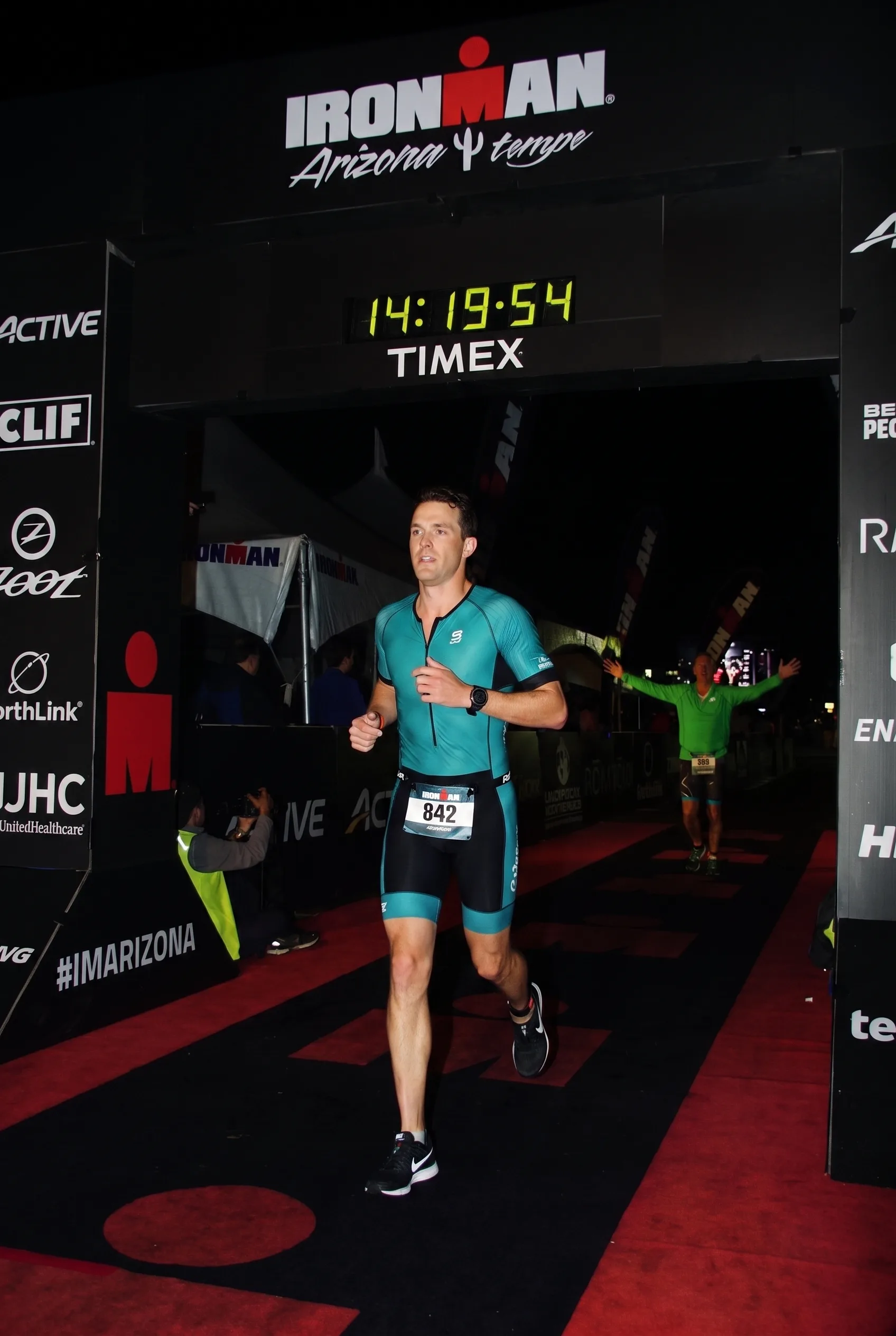
What catches first-timers off guard isn't the course, it's the clock. Because of the rolling swim start and the sheer length of a full-distance day, a huge share of the field is still out there when the sun goes down, usually somewhere in the middle-to-back portion of the run. Nobody warns you how much that changes the experience. The lake goes quiet and pretty in a way it wasn't at noon, your headlamp or the course lighting becomes your whole world, and the energy shifts from "race" to something closer to a shared, slightly delirious group project. Pack a light for your run gear bag even if you're aiming for a fast day. Plans change, and being caught without one on an unlit stretch is worse than carrying the extra few ounces all day.
On pacing, the standard Ironman marathon advice applies here with extra force: don't try to bank time you don't have. Run the first six miles or so easier than feels necessary, get your nutrition rhythm going early, and treat walking through aid stations as a strategy rather than a failure. The athletes who fall apart hardest at IMAZ are almost always the ones who ran loop one like it was a standalone half marathon.
Race Week: What You're Actually Doing Before the Gun Goes Off
Athlete check-in has to be done in person, by you, days before the race. A friend or coach can't grab your packet for you, no matter how convincing their argument is. You'll walk away with a race bib, a timing chip you pick up separately at a dedicated table, and five color-coded gear bags: white for morning clothes, blue for bike gear, orange for bike special needs, red for run gear, and black for run special needs.
Bike and gear check-in is mandatory and happens the Saturday before the race, typically in a window from mid-morning to mid-afternoon at Tempe Beach Park. Once you rack your bike and drop your bags, that's it until race morning. You'll get access back around 5 a.m. to check tire pressure and load bottles, but you can't roll the bike out of transition until the bike leg actually starts. Plan your morning around walking to transition, not driving somewhere and hunting for parking at 5:15 a.m. with a wetsuit half zipped.
Special needs bags, one for the bike and one for the run, get handed off roughly halfway through each leg. They're entirely optional, and plenty of athletes ride and run straight past them without stopping. If you do want one, think about what problem you're actually solving. A caffeine gel and a fresh pair of socks solve real problems. A random assortment of snacks you grabbed at the expo the day before usually just sits in a bag getting warm.
Your morning clothes bag exists because of the same temperature swing that shows up everywhere else in this race. You'll be shivering at the swim start, comfortable by mid-morning, and hunting for warmth again once the sun drops. Pack that bag like you're dressing for three different climates in one day, because functionally, you are. Whatever you wear to walk down to the swim start goes in this bag, it gets retrieved after the race, and you'll be glad to have real clothes waiting for you rather than standing around a finish line in a damp tri suit at 10 p.m.
One logistics quirk that's tripped up more than one traveling athlete: Arizona doesn't observe daylight saving time. If you're flying in from a state that does, and the changeover happens to land near your travel dates, double-check every departure time and registration deadline against actual Phoenix time. More than one person has shown up an hour off from where they thought they'd be.
And on the topic of showing up at all: IMAZ has a long history of selling out fast, sometimes within minutes of general registration opening, and athletes who finish the current year's race get early access to register for the next one on-site. If Arizona is on your radar for a future year, don't assume you'll have weeks to think it over. Decide early, or decide you're comfortable with the foundation-slot price tag.
Mistakes First-Timers Make at IMAZ Specifically
- Confusing "flat" with "easy." The Beeline has real elevation and real wind. Respect it on loop one.
- Underdressing for the swim line. The rolling start means standing around cold for longer than a mass start ever required. Layer up until the very last second.
- Ignoring the goat head thorns. Bring more flat protection than you think you need. This course has a specific, well-known reason for it.
- Packing a run gear bag for a daylight finish only. A big share of the field is still out there after sunset. A light and a warm layer cost you almost nothing to carry and a lot to be without.
- Treating a walk break like a failure. Experienced IMAZ finishers plan for them. You should too.
- Booking travel around the wrong time zone. Arizona's lack of daylight saving time is a small thing that has caused real problems for real athletes.
- Assuming you'll get a normal amount of runway to register. This race doesn't linger on the market. If you want it, move on it.
None of these are exotic mistakes. They're the same handful of things that show up, in some order, in almost every first-timer's post-race debrief. Knowing they're coming is most of the battle.
One Last Thing
If you finish this race for the first time, there's a bell at the line, and it's there so you can ring it. Do it. You earned an entire day in the desert for the privilege.
And since we know a good chunk of you reading this are already deep into IMAZ training and have opinions about all of it: what's the strangest thing you've ever packed in a special needs bag, or heard about secondhand from someone who did? We've heard rumors involving a frozen soda, a full burrito, and at least one inflatable pool toy that served no purpose anyone could explain. Beat those in the comments if you can.


