

Nobody writes a race report about the raw patch under their arm from a wetsuit seam, or the saddle sore that turned mile 80 of the bike leg into a negotiation with their own body. Chafing doesn't make the highlight reel. But ask any age-grouper who's had to walk-run the last 5K because their inner thighs were on fire, and they'll tell you it cost them more time than a bad transition ever could.
Triathlon is uniquely bad for this because you're stacking three separate friction problems on top of each other in one session: a wetsuit rubbing your neck and underarms in the swim, a chamois pad and saddle working your sit bones and inner thighs on the bike, and a soaked kit chafing everywhere on the run. Most anti-chafe products are built for one of those three problems. The good ones survive all three.
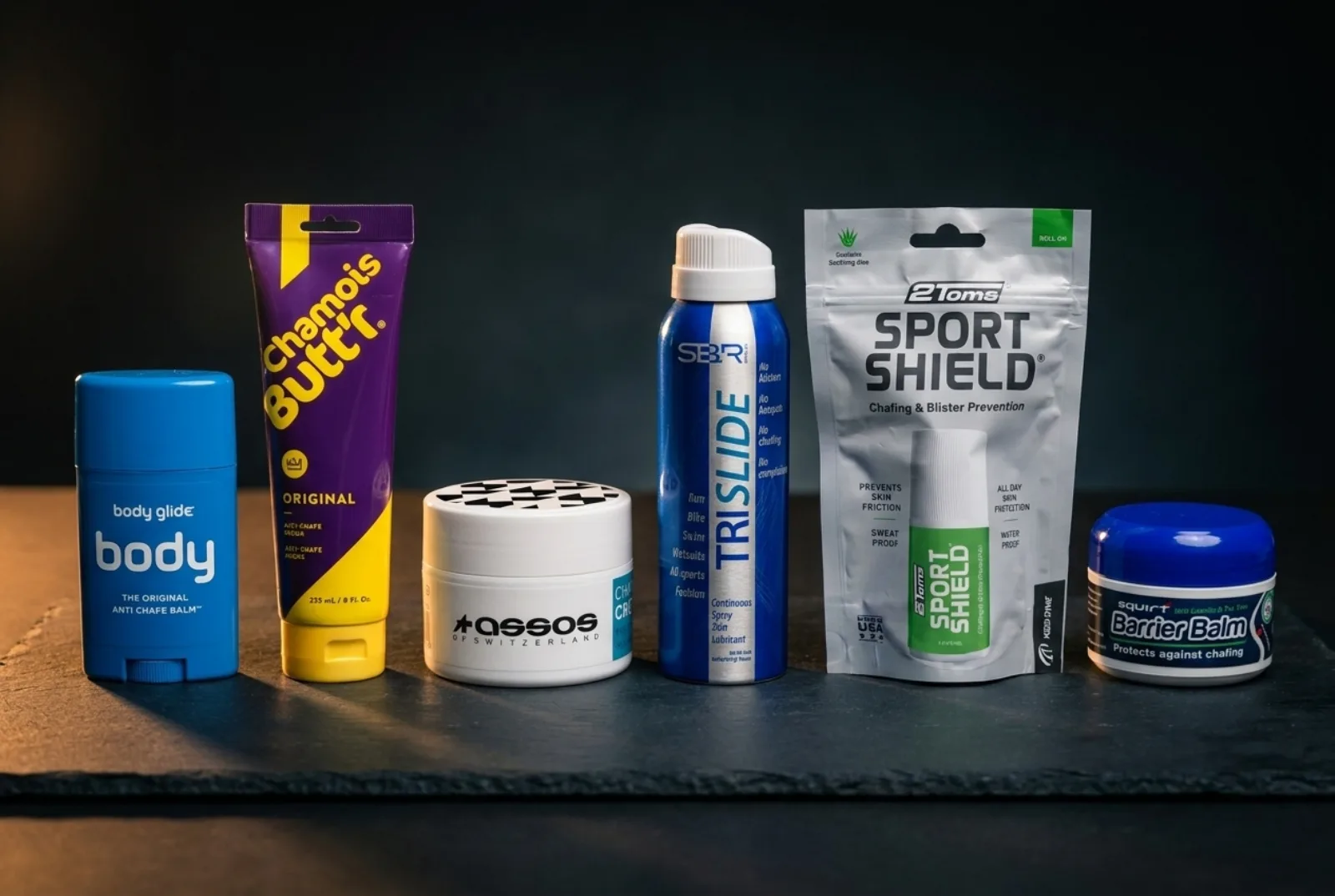
What Actually Matters When You're Buying This Stuff
Before the picks, three things that separate a product that works from one that turns into a mess in your transition bag:
- Waterproof, specifically post-immersion. A chamois cream that washes off during a 1,500-meter swim is useless for the bike leg that follows it. Look for products explicitly marketed for triathlon or open-water swimming, not just road cycling.
- Wetsuit-safe. Silicone- and water-based formulas are fine on neoprene. Petroleum-based products are not — more on that below.
- Application Type matches the job. Sticks and roll-ons are fast and mess-free for pre-race application on skin (neck, underarms, thighs). Thicker creams are better worked into a chamois pad for a five-hour bike leg. Sprays are the odd one out — they're less about all-day chafe prevention and more about slipping in and out of a wetsuit fast.
Skip the Vaseline
Petroleum jelly is cheap, it's in every drugstore, and it will degrade the neoprene in your wetsuit over time — the oils break down the material's flexibility and can void the manufacturer's warranty on a suit that costs more than every product on this list combined. Every option below is either silicone-based, water-based, or a purpose-built anti-chafe formula that's explicitly safe for neoprene, tri-suits, and technical fabric. Save the Vaseline for chapped lips.
Body Glide Original Anti-Chafing Stick — Best Overall
Price: ~$9.99 (1.5 oz) | Type: Solid balm stick
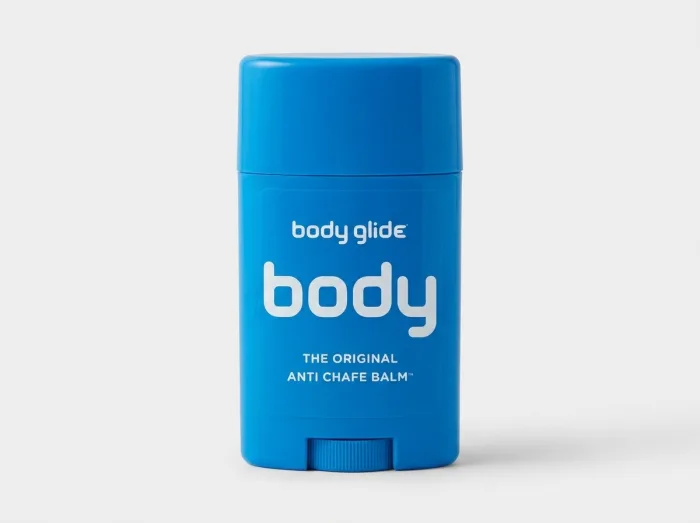
Body Glide has been the default answer to "what do I use to not chafe" for endurance athletes for almost three decades, and it's the default for a reason: it's a stick, which means you can swipe it on your neck, underarms, and inner thighs in about fifteen seconds before you even think about your wetsuit. It's plant-derived, contains no petroleum or lanolin, goes on dry (no greasy residue soaking through a tri-suit), and stays active through sweat and water. It's not the thickest barrier on this list — for a five-plus-hour Ironman bike leg, some athletes layer it with a proper chamois cream — but for swim-to-bike and bike-to-run friction points, it's the one product almost every triathlete has in their bag regardless of what else they're using.
Best for: Neck and underarm chafing from wetsuits, quick pre-race application, sprint and Olympic-distance racing where you don't need a thick chamois barrier.
TRISLIDE Continuous Spray — Best for Faster Wetsuit Transitions
Price: ~$21.98–22.00 (4 oz) | Type: Silicone aerosol spray
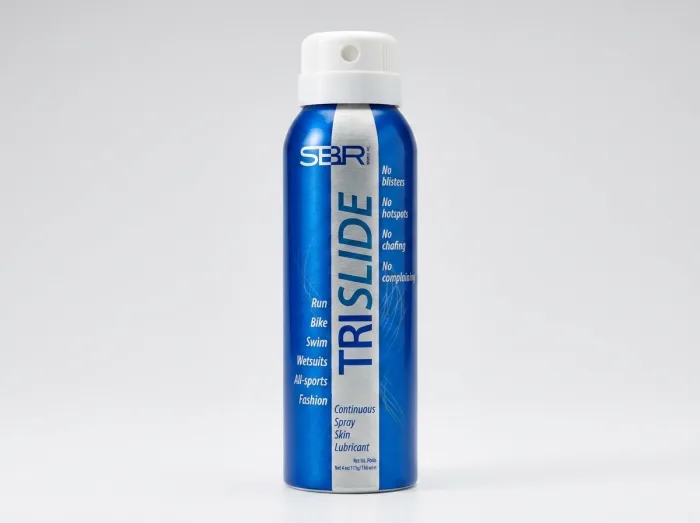
TRISLIDE solves a slightly different problem than the rest of this list: getting a skin-tight wetsuit off your legs in under fifteen seconds without it turning into a wrestling match. Spray it on your calves, ankles, and forearms before you even start swimming, and the neoprene glides off in T1 instead of grabbing at your skin. It also does double duty as a genuine anti-chafe and anti-blister product for the friction points under a wetsuit, and the silicone base is explicitly safe on neoprene, tech suits, and even ski boots if you're the type to cross-train in the off-season. The tradeoff is the application type — it's a spray, so precision application takes a bit more care than a stick, and it can make surfaces genuinely slippery if you overspray near your grip areas.
Best for: Faster T1 wetsuit stripping, athletes who struggle to get wetsuits off quickly, half and full-distance racing where every T1 second counts.
Chamois Butt'r Original — Best Chamois Cream for the Bike Leg
Price: ~$21.99 (8 oz tube) | Type: Non-greasy cream
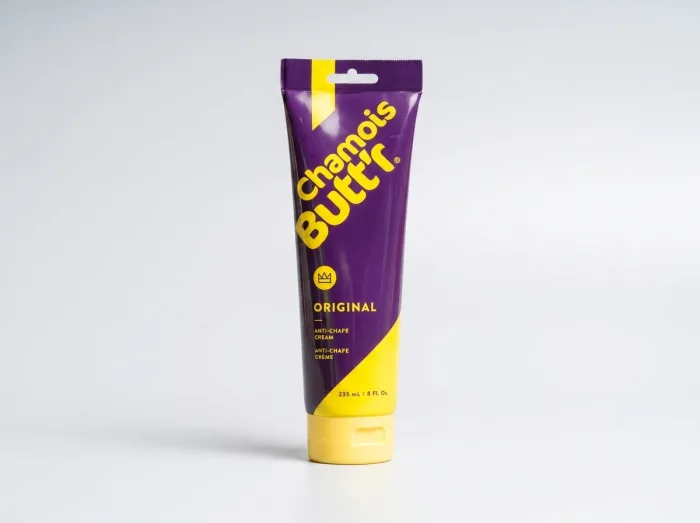
This is the one to work directly into your tri-suit's chamois pad before a long ride, not just swipe on skin. Chamois Butt'r is the cream most pro cyclists and long-course triathletes default to because it rinses out of technical fabric easily (no lingering residue that degrades elastane over repeated washes), contains no parabens or artificial fragrance, and genuinely soothes skin that's already a little irritated from a previous session — useful during a big training block when you're on the bike four times a week. Apply five to ten minutes before you clip in so it has time to work into the pad rather than sitting on top of it.
Best for: The chamois pad specifically, long training rides, triathletes doing back-to-back bike days in a training block.
Assos Chamois Creme — Best Premium Pick for Long-Course
Price: ~$32.95 (200 ml jar) | Type: Antibacterial lubricating cream
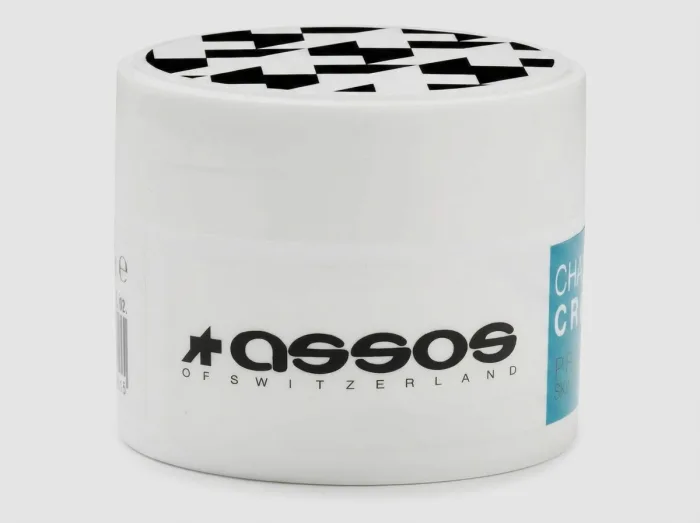
Assos has been making cycling-specific body care for decades, and their chamois cream is the one to reach for if you're spending five-plus hours in the saddle at a full-distance Ironman and saddle sores are a real, recurring problem rather than an occasional annoyance. The antibacterial properties matter more than they sound — sit-bone chafing that gets infected is a genuinely bad way to lose a week of training, and this is one of the few creams explicitly formulated to guard against it. The pH-neutral base is also gentler for extended use than some of the cooling-forward formulas. It's pricier per application than Chamois Butt'r, but a single 200 ml jar realistically lasts most age-groupers an entire season.
Best for: Full-distance and long-course training blocks, athletes prone to recurring saddle sores, anyone who's had a chafing issue turn into a skin infection before.
2Toms SportShield Roll-On — Best Budget All-Day Pick
Price: ~$14.99 (1.5 oz) | Type: Waterproof roll-on
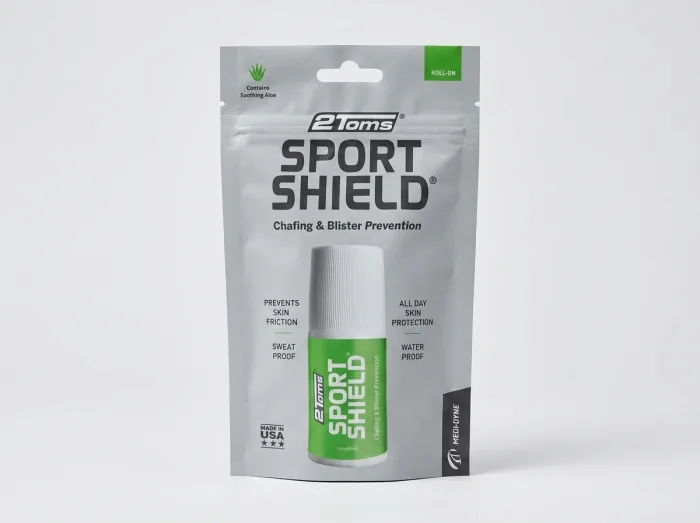
SportShield is the sleeper pick here — it's not as triathlon-branded as TRISLIDE or as ubiquitous as Body Glide, but it's genuinely waterproof (Ultra Running Magazine has named it a top anti-chafe pick, and it holds up through open-water swim legs as well as it does on a rainy run), fragrance-free, and the roll-on applicator means it goes on smoother than a stick without the mess of a cream. It's specifically good for the spots people forget until race day makes them regret it: underarms, sports bra lines, and — no delicate way to put this — the groin and nipple areas that make the "chub rub" conversation universal across genders and distances.
Best for: Budget-conscious athletes, sports bra and groin chafing specifically, anyone who wants one product that covers swim, bike, and run without reapplying.

Squirt Barrier Balm — Best Thick, Waterproof Option
Price: ~$18–24 (varies by size) | Type: Thick waterproof balm
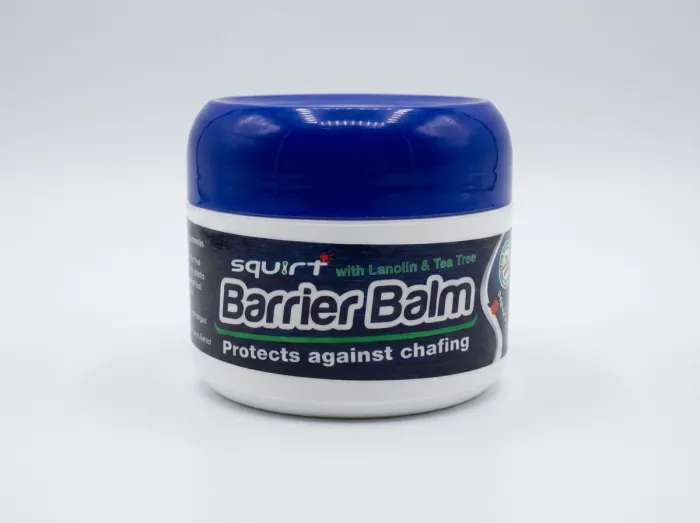
If the other creams on this list feel too thin for how much friction you're actually dealing with, Squirt's Barrier Balm is the answer — it's noticeably thicker and more waterproof than a standard chamois cream, closer to a true barrier than a lubricant. That makes it slower to apply and slightly messier to work in than Chamois Butt'r, but it also means it survives longer under sustained pressure and moisture, which matters if you're the athlete who chafes even with a "good" cream in the mix. It's less of a default first purchase and more of an upgrade for anyone who's already tried a standard chamois cream and found it wasn't enough barrier for their body or their race distance.
Best for: Athletes who chafe even with standard chamois creams, ultra-distance and double-century-style efforts, anyone prioritizing barrier thickness over glide.
Stick, Cream, Spray, or Roll-On — Which Type Do You Actually Need?
These four types aren't interchangeable, and the right answer is usually "more than one, for different jobs":
- Sticks (Body Glide): fastest application, driest finish, best for skin-on-skin and skin-on-fabric friction points you want to treat in under a minute pre-race — neck, underarms, thighs.
- Creams (Chamois Butt'r, Assos, Squirt): designed to be worked into a chamois pad, not just swiped on skin. These are bike-leg specific tools first, general anti-chafe products second.
- Sprays (TRISLIDE): the odd one out — built primarily to speed up wetsuit removal, with anti-chafe as a secondary benefit. Don't buy this expecting it to replace a chamois cream.
- Roll-ons (2Toms SportShield): a middle ground between stick and cream — smoother application than a stick, less mess than a cream, good general-purpose pick if you want one product for the whole race rather than a different tool for each leg.
Most experienced long-course triathletes end up carrying two products: something fast for skin (a stick or roll-on) and something dedicated to the chamois pad for the bike leg. Sprint and Olympic-distance racers can usually get away with just one.
Test Everything Before Race Day — Never for the First Time
This applies to every product on this list without exception: try it on a training day, not on race morning. Skin sensitivity varies, and the worst possible discovery is a mild allergic reaction or an unexpected irritation showing up for the first time three miles into your goal race. Apply a new product on a long training ride or a brick session at least two or three times before you trust it on race day, and pay attention to how it holds up specifically after the swim leg — that's the point where most anti-chafe products actually fail, not on dry land.
Where to Actually Apply It
Chafing shows up in predictable places, and pre-treating them takes under a minute total:
- Neck and underarms: anywhere your wetsuit seam sits against skin — this is the single most common triathlon-specific chafe point and the one most first-timers miss entirely.
- Inner thighs: from swim to bike, and again from bike to run in a wet or sweaty kit.
- Sit bones and chamois pad: apply directly to the pad, not just your skin, five to ten minutes before you start riding.
- Sports bra line and nipples: a genuinely universal problem on the run leg regardless of gender, especially past the two-hour mark.
- Watch strap and race-belt line: easy to forget, brutal by mile 20 of an Ironman marathon if your Garmin strap has been rubbing the same spot for six hours already.
Frequently Asked Questions
Can I use regular deodorant or petroleum jelly instead?
Deodorant is designed for a completely different friction and moisture profile and tends to actually worsen chafing under sustained sweat and water exposure. Petroleum jelly works in a pinch for a short run, but avoid it near anything neoprene — it will slowly degrade wetsuit material over repeated use, and most wetsuit manufacturers explicitly warn against it.
Do I need different products for men and women?
Not strictly. Some brands (Chamois Butt'r Her, women's-specific Assos formulas) adjust pH balance for women, which can matter for anyone prone to irritation, but plenty of female triathletes use "unisex" formulas without any issue. If you've had recurring discomfort with a standard formula, a women's-specific version is worth trying — otherwise it's not a mandatory purchase.
How much should I actually apply?
More than you think, especially on the chamois pad. Under-application is a far more common mistake than over-application — there's essentially no downside to using slightly more than you need, other than going through the tube a little faster.
Does it matter if my chafing is mild versus severe?
Yes. Mild, occasional chafing usually responds fine to a stick like Body Glide applied at the usual friction points. Recurring or severe chafing — the kind that leaves visible irritation or sores after long sessions — is a signal to move to a thicker, purpose-built cream like Assos or Squirt, and potentially to also reassess your bike fit or tri-suit sizing, since a product can only do so much to compensate for a saddle or shorts that don't actually fit you.
The Takeaway
If you only buy one thing off this list, make it Body Glide — it's cheap, it's fast to apply, and it covers the two friction points (wetsuit neck and underarms) that catch the most first-timers off guard. If you're training for anything half-distance or longer, add a real chamois cream like Chamois Butt'r or Assos into the rotation specifically for the bike leg, because a stick balm alone isn't enough barrier for five-plus hours in the saddle. And regardless of what's in your bag, keep the Vaseline in the medicine cabinet where it belongs — your wetsuit's neoprene will thank you.


