

Somewhere around your third triathlon, you notice a specific pattern at every race: a meaningful chunk of the field is running the marathon in what look like knee-high NASA flight socks. This is not a fashion statement, even though it also isn't not one. Graduated compression — tighter at the ankle, progressively looser toward the knee — is one of the few pieces of triathlon gear where the science and the placebo effect actually point the same direction, and once you understand what it does and doesn't do, deciding whether to spend $50 on a pair of calf sleeves gets a lot easier.
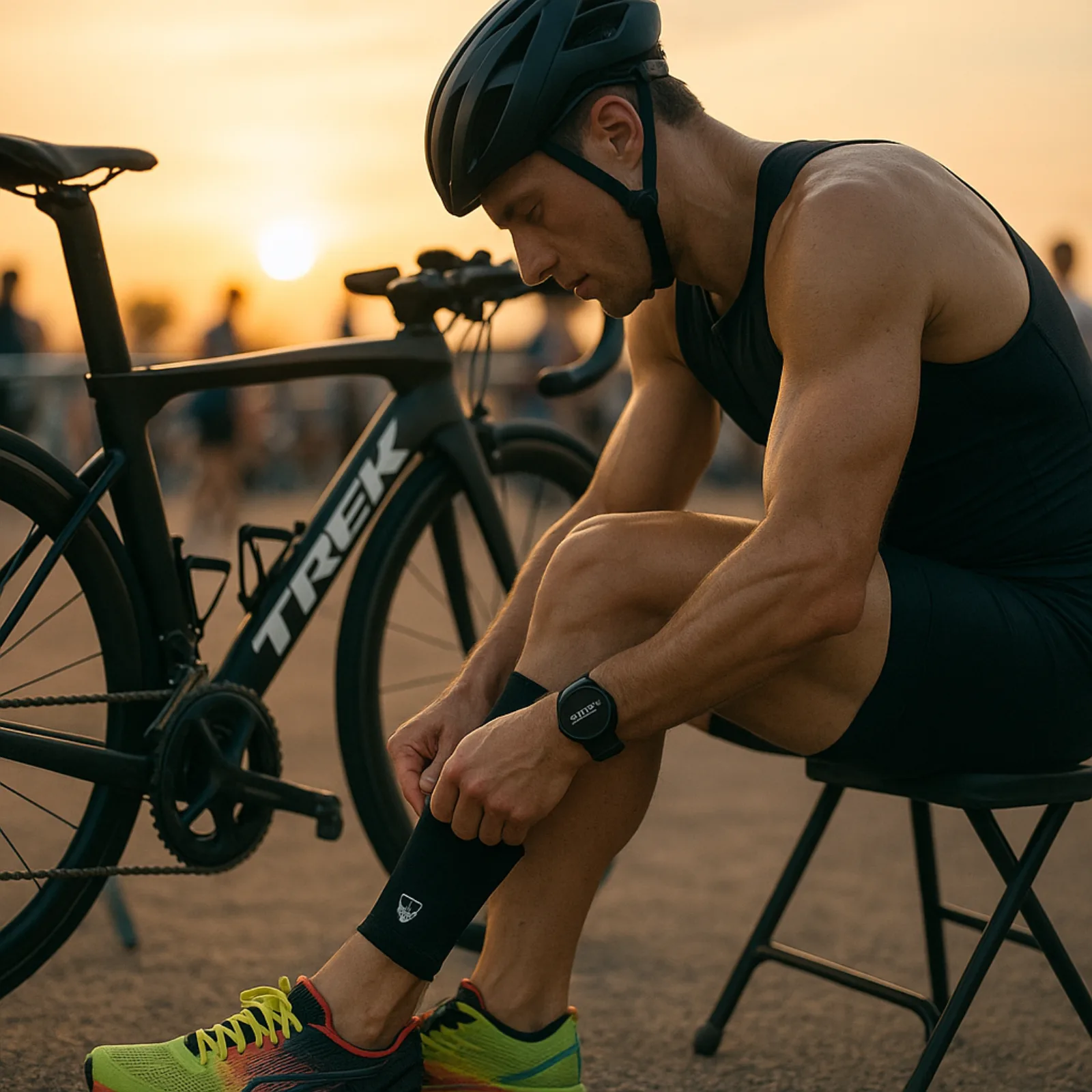
Do Compression Sleeves Actually Do Anything?
Graduated compression improves venous return — it helps blood move back up your leg against gravity — which reduces muscle oscillation (the micro-vibration of your calf muscle with every footstrike) and appears to modestly speed up recovery between hard sessions. Where the evidence gets more honest is in-race performance: the recovery and comfort benefits are real and reasonably well supported, but the in-race speed benefit is smaller than the marketing copy usually implies. Treat compression as a genuine recovery tool and a nice-to-have during racing, not a magic two-minutes-off-your-Ironman device, and you'll get your money's worth without the disappointment.
The one exception is aero-specific sleeves designed and wind-tunnel tested for the bike leg, which is its own, more literal performance claim — more on that below.
Sleeves vs. Full Socks — Which Do You Actually Need?
Calf sleeves cover only the lower leg and are the triathlon-specific choice for a reason: you swim without them, pull them on in T1 or T2 over bare skin or a sockless race shoe, and they add essentially zero transition time. Full compression socks cover the foot as well and are the better call for long training runs, marathon legs of an Ironman where full-foot support matters over hours, and — most usefully for triathletes — the recovery period after you cross the finish line, when you want maximum coverage and don't care about transition speed anymore.
Most serious triathletes end up owning both: sleeves for racing and quality key sessions, tall socks for the flight home and the couch the next day.
How to Choose: mmHg, Sizing, and Durability
Look for a specific mmHg (millimeters of mercury) rating on the product page. Anything without one is a snug athletic sock, not a real compression product. The sweet spot for endurance training and racing is 20–30 mmHg — medical-grade, meaningfully effective, and not uncomfortably tight. Lighter options in the 15–20 mmHg range trade some effect for a softer, more all-day-wearable feel.
Sizing is where most first-time buyers go wrong: measure your calf circumference at its widest point and match it to the brand's specific size chart rather than guessing off your shoe size or general build. A sleeve that's too loose provides essentially none of the intended benefit — it just sits there looking sporty. Expect a good pair to last 60–80 wash cycles before the compression genuinely loosens up; replace them once they feel noticeably less snug at the ankle than they did new.
On care: hand wash or use a mesh laundry bag on a cold, gentle cycle, and air dry. Heat from a dryer breaks down the elastic fibers that create the compression in the first place, which is the single fastest way to turn a $60 sleeve into a $60 regular sock.
Quick Comparison
| Product | Type | Compression | Best For | Price |
|---|---|---|---|---|
| Compressport R2V2 | Calf sleeve | 20–30 mmHg | Race day, all-around | $50–65 |
| Compressport R2 Aero | Calf sleeve | 20–30 mmHg | Bike-leg aero gains | $65–80 |
| CEP Calf Sleeve 2.0 | Calf sleeve | 20–30 mmHg | Best value | $45–55 |
| 2XU Compression Guards | Calf sleeve | ~20 mmHg | Hot weather, under wetsuit | $45–60 |
| Zensah Compression Sleeves | Calf sleeve | 15–20 mmHg | All-day comfort | $40–50 |
| CEP Core Run Tall 5.0 | Full sock | 20–30 mmHg | Post-race recovery, travel | $60 |
Best Overall: Compressport R2V2 Calf Sleeves — ~$50–65
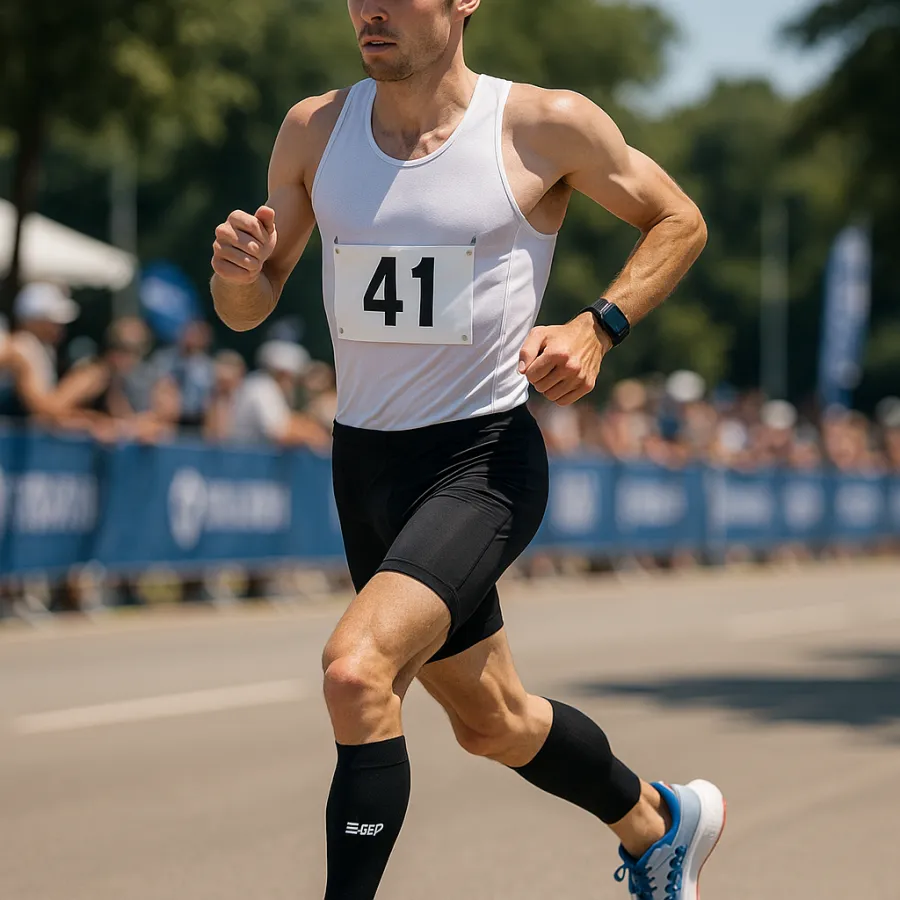
The R2V2 is the industry benchmark, and the sleeve you'll see on more age-group and pro triathletes than any other single model. Compressport's 3D.Dots technology — small circular silicone grips knitted into the inner surface — keeps the sleeve from sliding down over a sweaty, hot run leg, which is the single most common failure point of cheaper sleeves. It delivers a genuine 20–30 mmHg graduated profile, weighs about 32 grams per sleeve (you will not notice it's there), and includes a K-Protect knee tab that dampens shock at the top of the sleeve.
As an Amazon Associate, Triathlon Universe earns from qualifying purchases.
If you race triathlon and want one pair of calf sleeves that just works, this is it. The predecessor R2 model is worth a look too if you want the same Compressport quality at a slightly lower price point — it's a strong buy for athletes who don't need the latest waffle-knit upgrade.
The Aero Exception: Compressport R2 Aero
Remember the "in-race speed benefit is smaller than the marketing" caveat from earlier? This is the one product on this list that gets to skip it. The R2 Aero takes the same R2-series compression platform and adds Aero.Stripes and Aero.Dots surface texturing, developed in a wind tunnel also used by Formula One teams, specifically to disrupt airflow around your calf and cut drag on the bike leg. Compressport's own wind-tunnel testing showed a power gain of roughly 7–8 watts compared to riding bare-legged at the same effort — over a 112-mile Ironman bike leg, that's not a rounding error, it's minutes. It's a bike-specific sleeve rather than an everyday training tool, but if you're chasing a Kona slot and every watt is accounted for, it's worth the upgrade over the standard R2V2.
Best Value: CEP Calf Sleeve 2.0 — ~$45–55
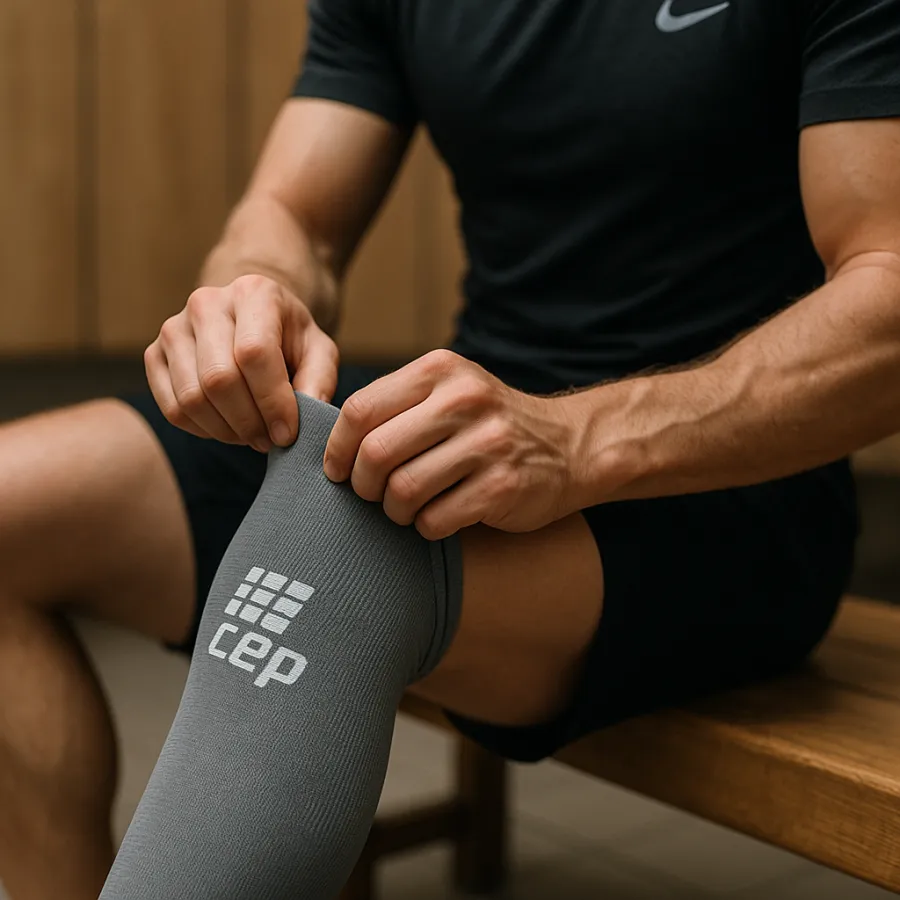
CEP has been in sports compression since 2007, spun out of the German medical compression company medi, and it shows — the Calf Sleeve 2.0 delivers the same medically-proven 20–30 mmHg graduated compression as the pricier options at a more accessible price. The anatomical knitting is genuinely well-engineered rather than just tight fabric, sizing runs consistent across the range, and durability across repeated washing holds up better than most sleeves at this price. It's the sensible starting point if you're new to calf compression and want to find out whether it does anything for you before spending Compressport money.
As an Amazon Associate, Triathlon Universe earns from qualifying purchases.
Best for Hot-Weather Transitions: 2XU Compression Guards — ~$45–60
2XU's Compression Guards sit around 20 mmHg — slightly lighter than the Compressport and CEP flagships — in a moisture-wicking, technical knit that's thin enough to wear under a wetsuit for the swim, which is the party trick that makes these specifically useful for triathlon rather than run-only. Available in seven sizes for a genuinely precise fit, and rated UPF 50+ for anyone racing somewhere the sun has opinions about your calves.
If you want to wear compression through the entire race — swim included — rather than pulling sleeves on in T1, this is the practical pick.
As an Amazon Associate, Triathlon Universe earns from qualifying purchases.
Best for Comfort & Everyday Recovery: Zensah Compression Sleeves — ~$40–50
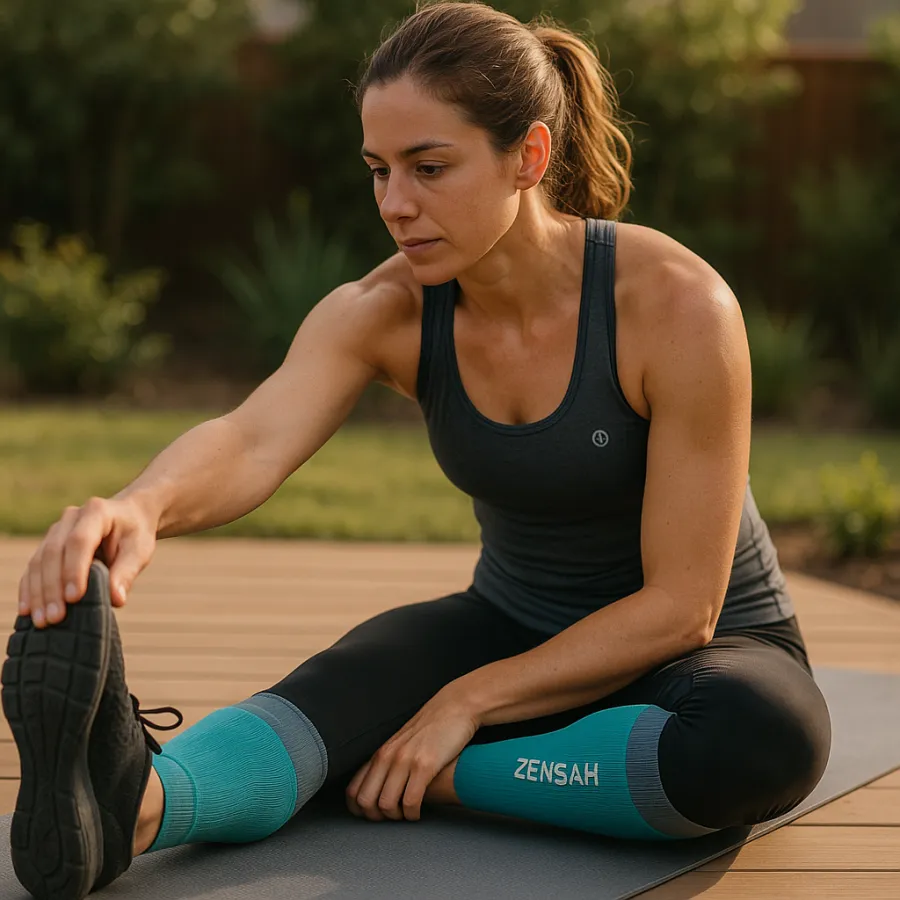
Zensah dials the compression back to 15–20 mmHg, trading some of the firm, race-day squeeze for a sleeve you can genuinely wear all day — during travel, at your desk, or on an easy recovery run — without it feeling restrictive. The seamless knit and raised chevron ribbing on the shin are aimed at shin-splint relief specifically, and it's the option physical therapists reach for when the goal is comfortable, consistent daily support rather than maximum race-day compression.
As an Amazon Associate, Triathlon Universe earns from qualifying purchases.
Best Full-Coverage Recovery Sock: CEP Core Run Tall Compression Socks 5.0 — $60
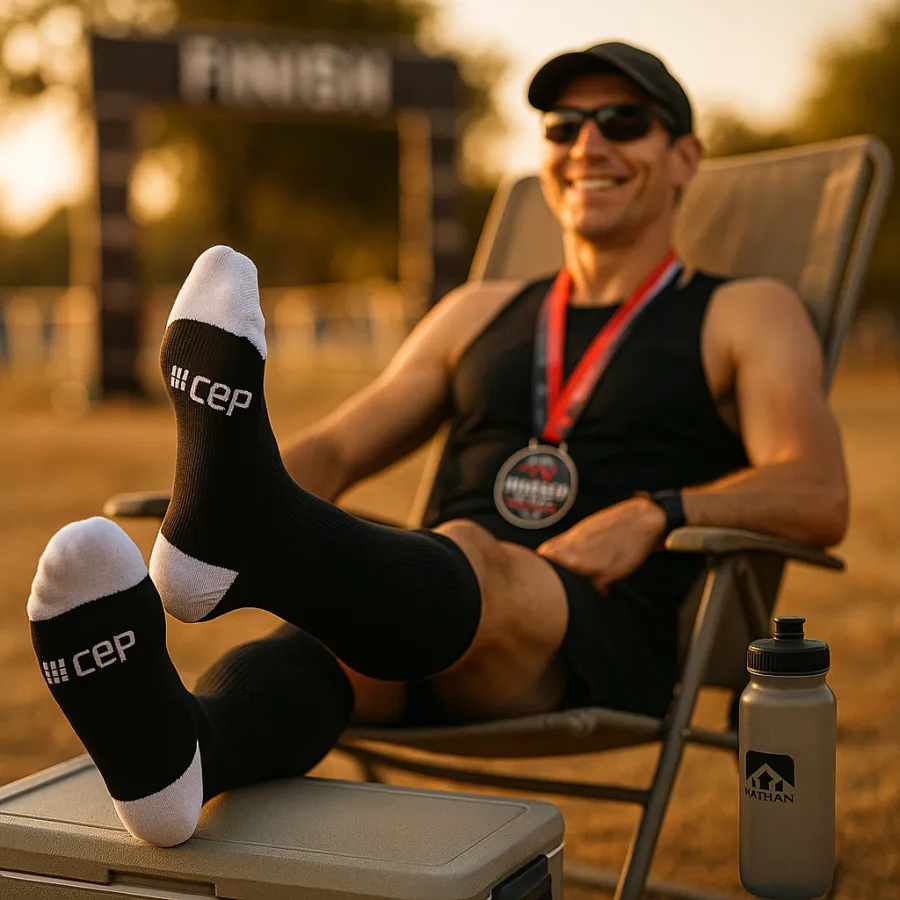
For the period after you cross the finish line — the flight home, the ice bath, the day you spend unable to walk down stairs normally — a sleeve isn't enough. The CEP Core Run Tall 5.0 covers the whole foot and calf with the same 20–30 mmHg graduated compression as CEP's sleeves, plus 3D muscle support zones in the calf and a targeted "Angel Wing" panel built specifically to support the Achilles tendon. Engineered in Germany and the US, they're built for exactly the kind of extended, low-intensity wear that racing and recovery days actually involve.
As an Amazon Associate, Triathlon Universe earns from qualifying purchases.
Do You Even Need These for a Sprint or Olympic-Distance Race?
Honestly — probably not for the racing itself. The recovery and muscle-oscillation benefits of compression scale with duration; over a 5K or 10K run leg, you're done before the effect has much chance to matter. Where sleeves still earn their spot in a shorter-course athlete's bag is the training block leading up to the race — back-to-back brick sessions, a heavy run week, or a training weekend where you're stacking volume you wouldn't normally carry. If you're strictly racing sprint distance and training moderately, a pair of tall recovery socks for after your longest sessions will do more for you than race-day sleeves. Save the race-day sleeve budget for when you're building toward 70.3 or full-distance volume, where hours in motion is exactly the scenario compression is designed for.
Frequently Asked Questions
Are compression sleeves legal to wear during a triathlon?
Yes. Neither USA Triathlon nor the WTC (Ironman's governing body) restricts compression sleeves or socks — they fall under standard apparel, not equipment with a technical advantage that needs regulating, unlike, say, disc wheels in certain draft-legal formats. Wear them anywhere in the race you'd like.
Should you wear compression during the swim?
No need — your wetsuit is already doing a compression-adjacent job on your legs, and neoprene plus a sleeve underneath is a recipe for a fight getting the wetsuit off in T1. Save the sleeves for T2 and the run.
Do compression socks actually help on flights to destination races?
This is genuinely one of the better-supported uses of graduated compression, and it's exactly why CEP and others market tall socks for travel specifically — sitting still for a 5-hour flight to your next 70.3 is a legitimate circulation risk, and 20–30 mmHg tall socks are a sensible, low-effort precaution, not just recovery theater.
Can you wear the same pair for training and racing?
You can, but most athletes who race in Compressport or CEP keep a "race pair" that only comes out on race day and a beaten-up training pair for everything else. Compression fabric degrades gradually and invisibly — you won't notice the day it stops working, so it's worth having a pair you know is still fresh when it actually counts.
The Bottom Line
If you're buying one thing: get a pair of 20–30 mmHg calf sleeves — Compressport R2V2 if budget isn't the deciding factor, CEP Calf Sleeve 2.0 if it is — and pull them on for your run leg or your longest training runs. Add a pair of tall compression socks for recovery days once you've confirmed you actually like how sleeves feel. It's a genuinely low-risk purchase: worst case, you own a slightly expensive pair of comfortable socks. Best case, your legs feel noticeably less wrecked the day after your next long brick.


