

There is a specific kind of triathlete chaos that happens at 5 a.m. in a dark parking lot: a person hunched over the open trunk of a car, headlamp on, frantically patting down a pile of black neoprene and black shoes and black everything, muttering "where is my other goggle" like a prayer. That person owns a great bike and a terrible bag. Don't be that person.
A triathlon transition bag is the least glamorous purchase in the sport and quietly one of the most useful. It's the difference between a calm, methodical race morning and a frantic gear scramble that has you arriving at the swim start already stressed. The right bag holds everything, keeps your wet kit away from your dry kit, protects your helmet from getting crushed, and lets you find your race belt without performing emergency surgery on a duffel.
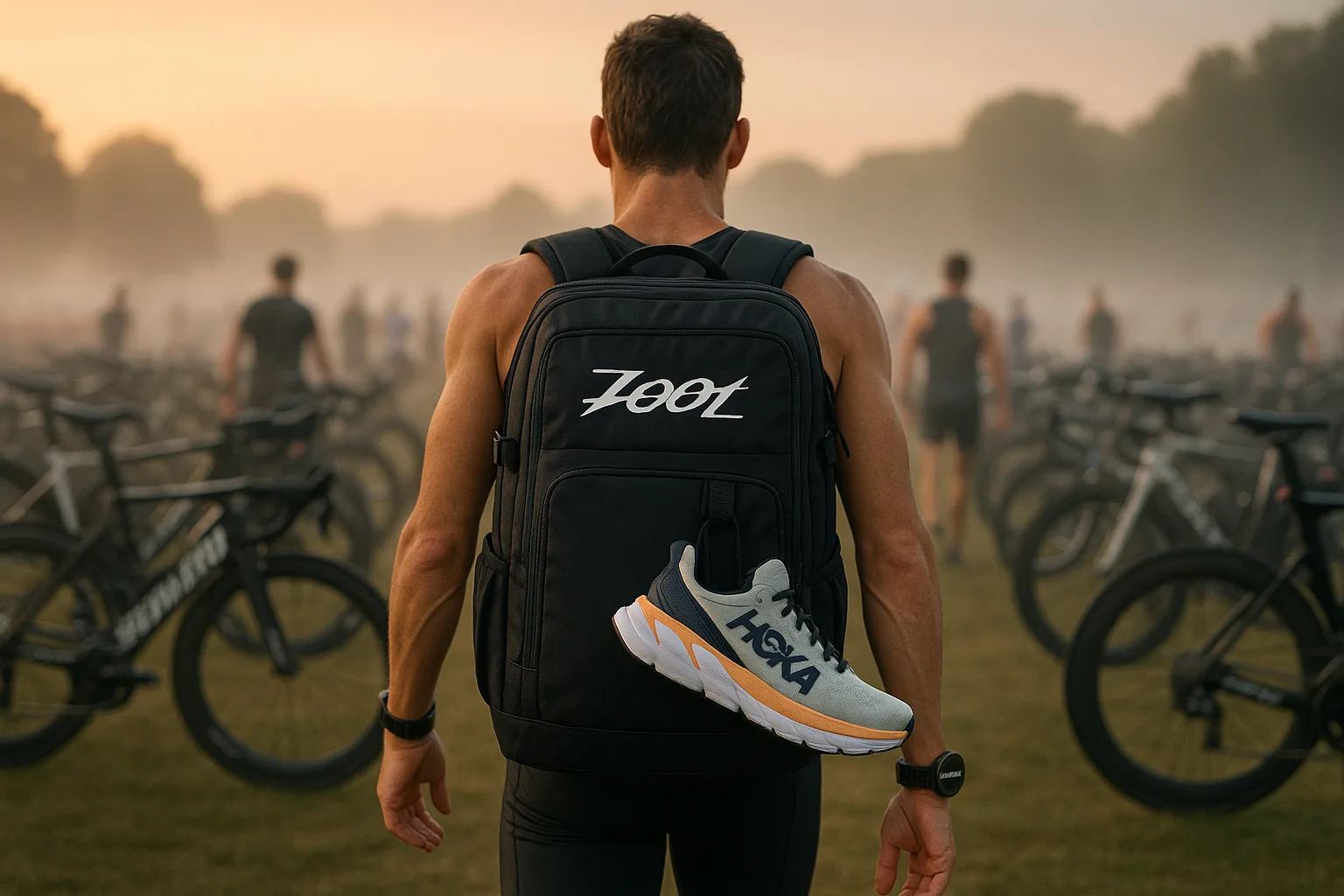
We dug through the testing from 220 Triathlon and the wider triathlon community, weighed real-world athlete feedback, and sorted the genuinely useful bags from the overbuilt suitcases. Prices are USD and approximate — these go on sale regularly, especially at season's end.
What Makes a Great Triathlon Bag
A dedicated wet/dry separation
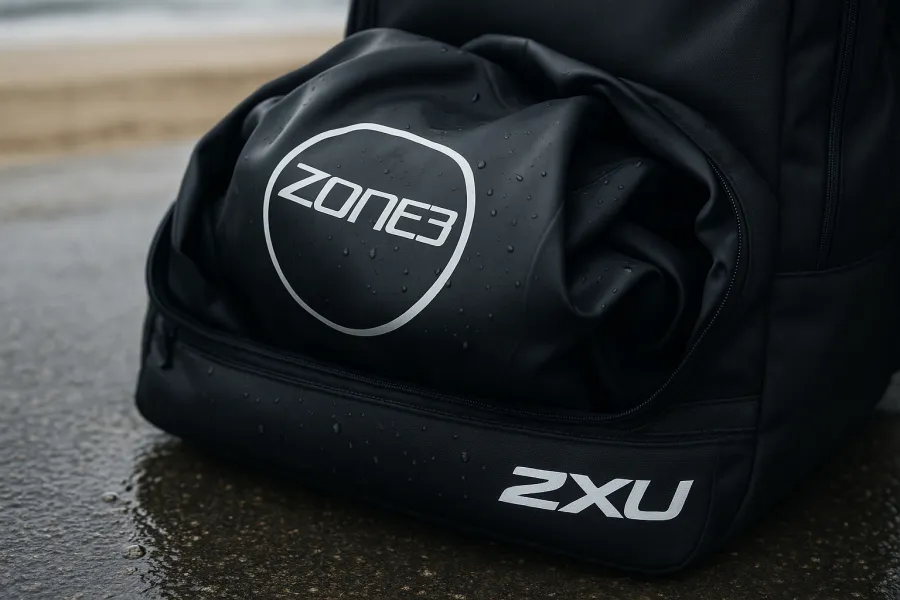
This is the single most important feature. After the swim, you've got a soaked wetsuit, dripping goggles, and a wet cap that you do not want marinating against your dry running shoes and clean socks. A proper bag has a sealed or waterproof-lined compartment (usually the bottom) to quarantine the swamp. Many include a removable dry bag too. Non-negotiable.
Helmet protection
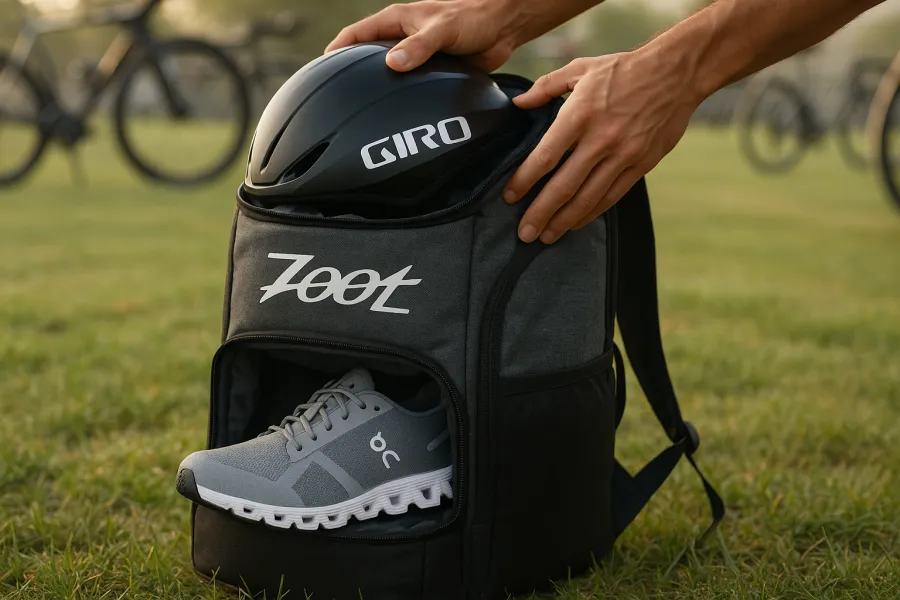
Your aero helmet is expensive and surprisingly fragile. The best bags have a structured top compartment that cradles it so it doesn't get crushed under a water bottle or knocked around in a crowded transition aisle. A dangling helmet clip on the outside is better than nothing, but an enclosed pocket is the real upgrade.
Smart organization
Compartments matter, but the right compartments matter more. Look for a padded sunglasses pocket, a ventilated shoe area, secure bottle storage, and small mesh pockets for the gels-and-goo ephemera that otherwise migrate to the bottom of the bag. A couple of bags even print a race-day checklist inside the lid, which sounds gimmicky until it saves your timing chip.
Carry comfort
You'll often park far from transition and walk a fully loaded bag in. Padded, ergonomic backpack straps and a breathable back panel beat a single shoulder strap every time. Your traps will thank you on the walk back when everything is wet and twice as heavy.
Capacity vs. portability
Bigger isn't automatically better. A 70-liter monster swallows everything for a destination Ironman but is a nightmare to stuff under an airline seat. A 40-something-liter bag covers most racing and still works as carry-on. Match the bag to how you actually travel.
Best Overall: Zoot Ultra Tri Bag
~$160
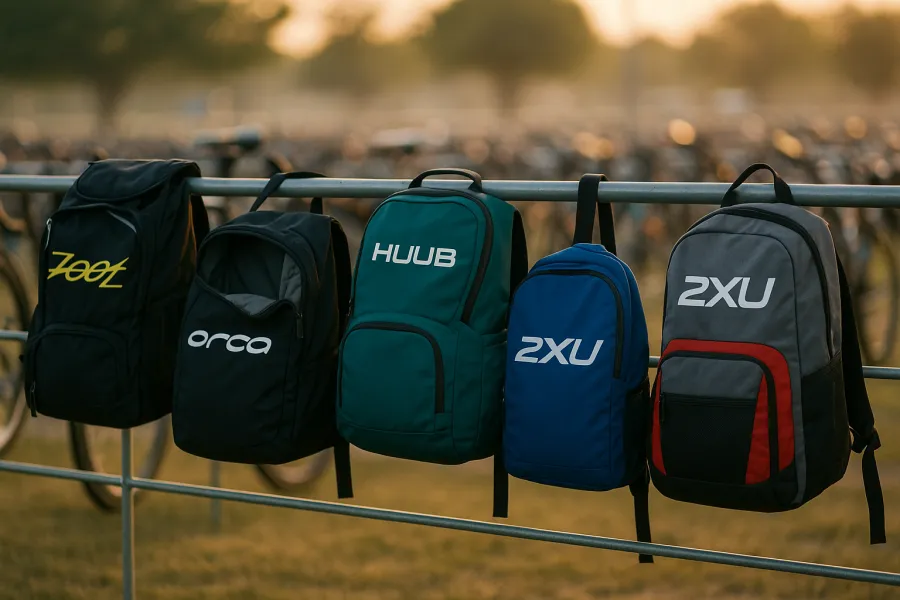
The Zoot Ultra Tri Bag is what happens when people who clearly race triathlon design a bag for racing triathlon. At around 43 liters it hits the sweet spot — big enough for a full kit, small enough to behave as carry-on luggage. The standout trick is that it opens flat, suitcase-style, so you can see and reach everything at once instead of excavating a top-loader by feel.
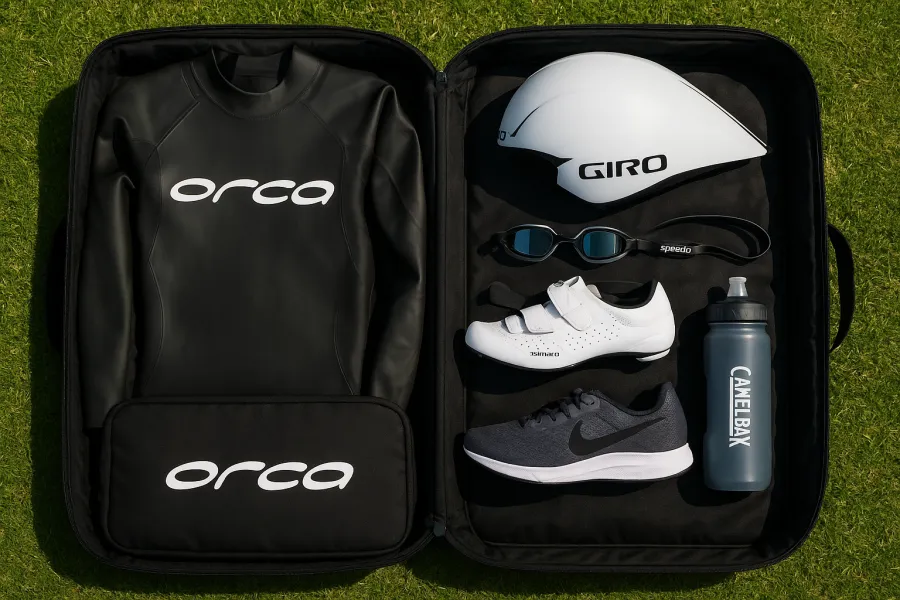
It checks every race-day box: an internal checklist so you don't forget anything, a separate compartment for dirty and wet items, a sizeable removable dry bag, secure bottle storage, multiple mesh pockets, and a protective helmet area. The comfy straps and ergonomic back panel make the walk in painless, and the canvas-style fabric looks sharp enough that it doesn't scream "gear bag." The only real knock: at roughly 62 cm tall it's borderline for the strictest airline staff, and it's purpose-built enough that it's overkill for your weekly pool session.
Buy it if: you want the best-organized, do-it-all race bag and you travel to races now and then.
Best for Capacity: Orca Transition Bag
~$155
If your packing philosophy is "bring everything, just in case," the Orca Transition Bag is your spirit animal. At roughly 70 liters it's a genuine cavern, with a clever layout that puts your helmet up top in a padded pocket and your wet swim gear down below in dedicated storage. There's a pocket for everything — including a padded sleeve for your sunglasses — plus comfortable, well-padded shoulder straps to haul the whole loaded mass.
It's also built like a tank. Reinforced materials keep their shape no matter how aggressively you cram bike shoes and tools into it, and the zippers shrug off the strain. The trade-off is exactly what you'd expect: it's big and it's heavy, and smaller athletes have found it a little unwieldy when fully packed. But for destination races and "I need it all" athletes, nothing swallows gear like the Orca.
Buy it if: you want maximum capacity and bombproof durability, and you don't mind the bulk.
Best for Travel: OGIO Endurance Duffle
~$80–110
Not everyone wants a backpack the size of a small refrigerator. The OGIO Endurance line keeps things compact and travel-friendly while still respecting the cardinal rule of wet/dry separation. You get a dedicated, ventilated compartment for wet or sweaty gear, a separate shoe pocket so your cleats don't muddy everything, and a clean duffel shape that slides into overhead bins and car trunks without a fight.
It's less triathlon-specific than the Zoot or Orca — no internal checklist, no structured helmet cradle — but it doubles beautifully as a gym bag and a weekender, which the dedicated race bags don't. For sprint and Olympic racers who'd rather own one versatile bag than a single-purpose one, it's a smart, affordable pick.
Buy it if: you want one bag for racing, the gym, and travel, without the bulk of a full transition pack.
Best Value: Synergy Triathlon Transition Backpack
~$90–120
Synergy has quietly become the value champion of triathlon gear, and its transition backpack follows the formula: most of the features of the premium bags, noticeably less money. You get a large main compartment, a helmet holder, a wet/dry compartment for swim kit, and enough pockets to stay organized, all in a comfortable backpack you won't resent carrying.
The materials and hardware aren't quite as plush as the Zoot's, and the organization is a bit less obsessively triathlon-tuned. But for a first transition bag — or for an athlete who simply refuses to spend $160 on something that lives in a muddy field — it nails the essentials for a fair price.
Buy it if: you want the core triathlon-bag features without the premium price tag.
Also Worth a Look: HUUB Transition Bag
~$130–150
The HUUB is the Orca's main rival in the big-capacity class — another well-built ~70-liter design with a dedicated helmet compartment up top and wet storage down below. Athletes who've used both tend to choose based on which layout clicks with their packing brain. If the Orca is sold out or you prefer HUUB's organization, you won't be downgrading.
How to Choose the Right Bag
- Start with your race distance and travel. Sprint and Olympic athletes who drive to races can go compact. Long-course athletes flying to destination races want capacity — but check carry-on dimensions before you commit.
- Demand real wet/dry separation. If a bag doesn't quarantine your soaked wetsuit from your dry shoes, keep shopping. This is the whole point.
- Protect the helmet. A structured top compartment beats an external clip. Your aero lid is worth more than the bag.
- Carry it before you love it. Padded backpack straps and a breathable back panel matter most on the loaded, wet walk back to the car.
A great bag is only half the battle — what you put in it (and how fast you can find it) decides your transitions. Pair it with our T1/T2 transition masterclass and the first 70.3 gear checklist so nothing gets left in the parking lot. And if you're still sorting your swim kit, our wetsuit buyer's guide will help you fill that wet compartment with the right neoprene.
The Verdict
For most triathletes, the Zoot Ultra Tri Bag is the one to beat — it's organized like it was designed by someone who's missed a swim start, it carries well, and it's sized to travel. If you need to haul everything for a destination Ironman, the Orca Transition Bag is the cavern that does it. And if you'd rather own one versatile bag that pulls double duty at the gym, the OGIO Endurance Duffle is the practical, affordable pick.
Whatever you choose: pack it the night before, lay your kit out in transition order, and never — under any circumstances — go back to fishing for your goggles in a black hole at 5 a.m.
— Dana Whitlock
Triathlete & TriathlonUniverse Contributor


