

You will spend two grand on a wetsuit, four on a bike, and an unholy amount on carbon-soled running shoes that last about 300 miles. Then you'll show up to race day squinting into the sun through a $12 gas-station pair you grabbed because you forgot yours on the kitchen counter. Triathletes are a strange and inconsistent people, and nowhere is that more obvious than with eyewear.
Here's the thing nobody tells you: sunglasses are the only piece of gear that has to survive all three disciplines without a single swap. They ride your face through open-water glare, wind-blast at 25 mph in the aero position, and a sweat-drenched run where every bounce threatens to send them sliding down your nose. A bad pair will fog, slip, pinch, or fall off at the worst possible moment. A great pair you'll forget you're even wearing — which is exactly the point.
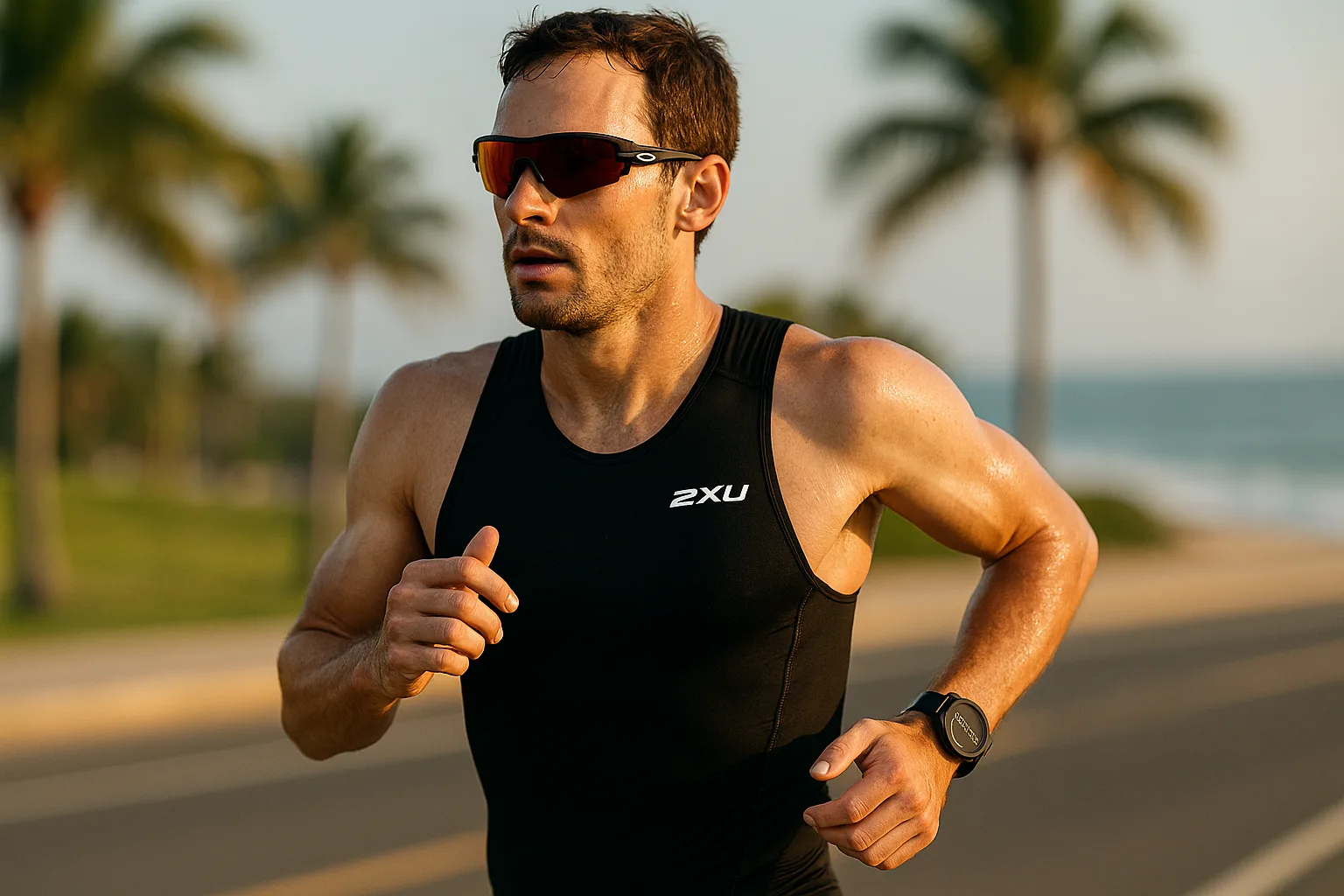
We pulled together the pairs that actually earn their keep across sprint, Olympic, 70.3, and full-distance racing, cross-referenced against testing from Triathlete, 220 Triathlon, and the endurance-athlete consensus, and added the real-world notes nobody puts on the spec sheet. Prices are USD and approximate — eyewear goes on sale constantly, so shop the deal.
What Actually Matters in Triathlon Sunglasses
Before the list, a quick filter. Ignore the marketing adjectives and judge a pair on these five things.
Fit and grip (the only thing that matters on the run)
A lens can be optically perfect and still be useless if it bounces. The magic ingredient is grip that gets better when you sweat — think hydrophilic nose pads and rubberized temple tips that bite harder the wetter they get. If a pair slides during a hard run effort, it's dead to you. Test it by jogging in place in the store and shaking your head like you're disagreeing with a referee.
Lens coverage and shape
In the aero position, your head is down and your eyes are looking up through the top of the lens. That's why race-oriented frames have tall or extended upper coverage — a short lens leaves a glare gap right where you need protection. Wraparound shield designs also block peripheral wind and the occasional bug to the eyeball.
Lens tint and technology
Oakley's Prizm and similar contrast-enhancing tints genuinely help you read road texture, potholes, and that one rumble strip you'd rather not hit at speed. It's not snake oil — it's tuned light filtering, and once you've used it, plain gray lenses feel like watching TV with the contrast turned down.
Photochromic vs. fixed
If your race starts in pre-dawn dark and finishes under a blazing noon sun (hello, long course), photochromic lenses that auto-adjust to light are worth the premium. One lens, all conditions, zero fumbling in T2. For a sprint that's over before the light changes, a fixed tint is fine and cheaper.
Weight
Sub-30 grams is the comfort sweet spot for long days. You won't notice 28 grams. You'll absolutely notice 45 grams pressing on your nose at mile 80 of the bike.
Best Overall: Oakley Jawbreaker (Prizm Road)
~$200–235
If there were a default answer to "what sunglasses should a triathlete buy," it's the Jawbreaker. Originally designed with input from a certain seven-figure-salaried cyclist, it has become the de facto race face of the sport for a reason: the giant single-shield lens gives you a wide-open, unobstructed field of view that's tailor-made for the head-down aero position.
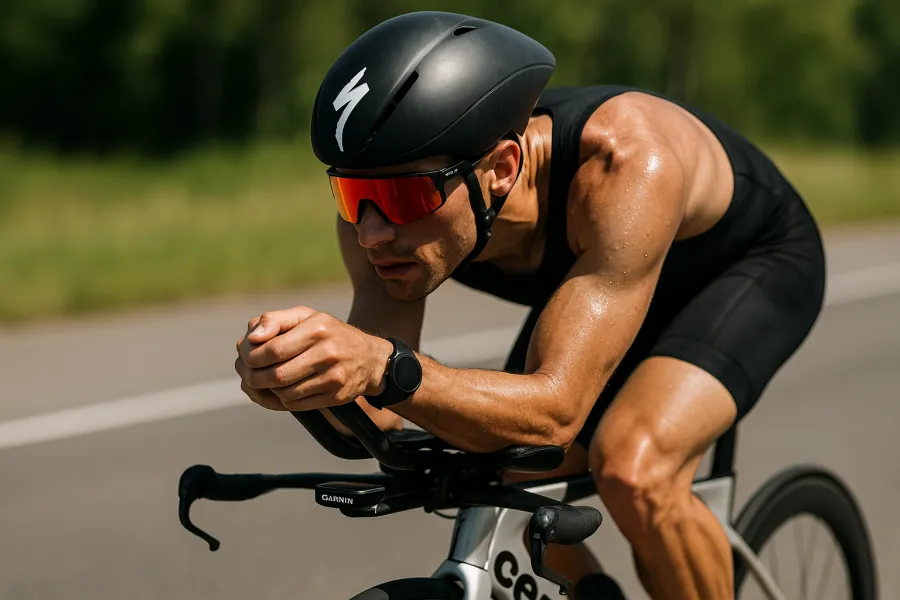
The Prizm Road lens is the headliner — it lifts road detail out of the asphalt in a way that makes plain lenses feel flat. The Unobtainium nose pads and temple socks grip harder as they get sweaty, and the adjustable temple length and three-position fit means you can dial out bounce. Downside? The frame is bold, borderline goofy off the bike, and the shield can fog if you stop moving on a humid day. Worn at speed, though, it's superb.
Buy it if: you want the proven race-day standard and don't mind looking like you mean business.
Best for Race Day: Oakley Radar EV Path
~$180–220
The Radar EV is the Jawbreaker's slightly more grown-up sibling. The "EV" extended the lens height versus the old Radar, and that extra upper coverage is exactly what you want when you're tucked low on the aerobars. The single-lens design sheds water and sweat well, and at around 28 grams it sits light enough to vanish.
Where it edges out the Jawbreaker for some athletes is everyday wearability — it's a touch more restrained, and the open-bottom frame keeps airflow moving so fogging is rarely an issue. Prizm lens options cover everything from bright-sun Road tint to low-light conditions. It's a do-everything race lens that happens to look sharp at the post-race taco truck.
Buy it if: you race in aero a lot and want maximum upper-sun coverage without the full shield look.
Best for Runners (and Everyone): Roka SR-1x
~$215–250
Roka built its reputation on a simple promise: sunglasses that do not move, no matter what. The SR-1x delivers on it. The frame is feathery (genuinely some of the lightest in the category), and the patented "GEKO" nose and temple pads lock down so well that runners — the toughest test for bounce — consistently rate it the best they've worn.
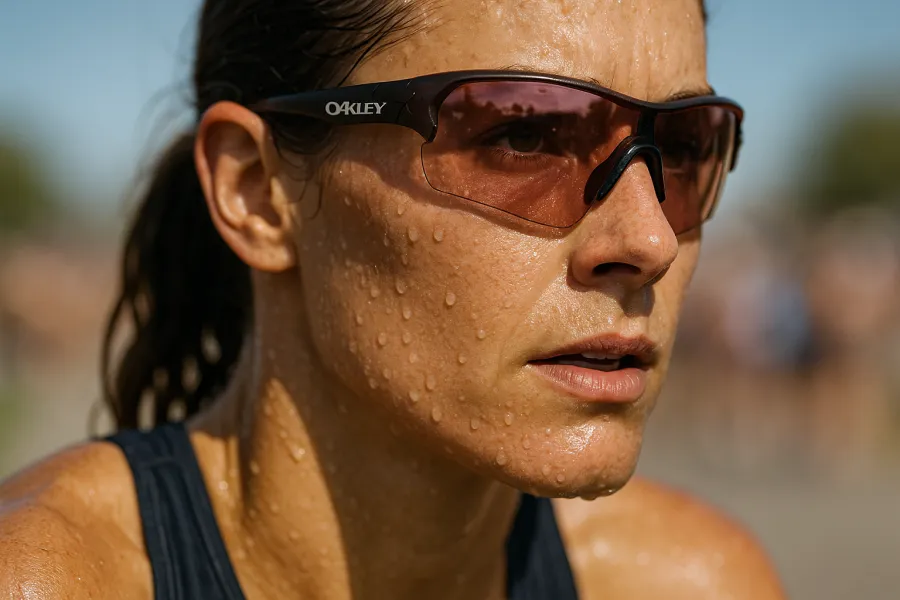
You also get a huge range of lens options including photochromic versions and full prescription availability — a genuine selling point if you're tired of fighting contacts in open water. The wraparound shape protects against wind and debris on the bike too, so it's a true one-pair-does-it-all option. It's not cheap, but it's the pair you stop thinking about.
Buy it if: you run a lot, hate bounce, or need prescription lenses without compromise.
Best Shield Alternative: Roka GP-1x
~$240
If you love the big-shield look but want Roka's no-slip fit, the GP-1x is the move. It's a bottom-frame wraparound shield with C3i lenses, ANSI Z87+ high-impact certification, and a stack of coatings — anti-scratch, anti-fog, hydrophobic, oleophobic — that hold up to abuse. It ships with multiple nose pieces so you can tune the fit to your face.
The honest caveat from testers: the standard single lens runs quite dark (great on blazing days, a little gloomy under tree cover or clouds), and it's expensive. Add a lighter spare lens and it becomes a serious year-round contender.
Buy it if: you want shield-style coverage with bombproof coatings and a locked-in fit.
Best Value: Tifosi Rail (and Podium XC)
~$50–80
Here's the open secret of triathlon eyewear: you do not need to spend $200. Tifosi has built a loyal following by delivering roughly 80% of the premium experience for a third of the price. The Rail is a wraparound that ships with three interchangeable lenses (a bright-sun tint, an all-conditions tint, and a clear lens for dawn or night), so one purchase covers every lighting scenario.
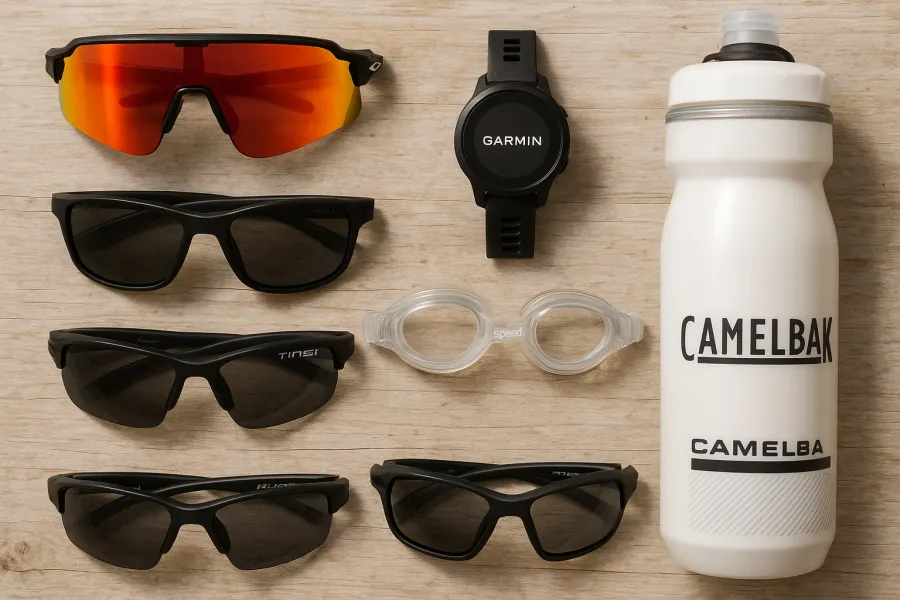
The lightweight Grilamid frame stays comfortable in heat, and the optics, while not Oakley-sharp, are genuinely good with no distortion or eyestrain. The smaller Podium XC (~$50) does the same trick for even less. Are they as crisp as a Prizm lens? No. Will anyone in your age group know or care while you're putting time into them on the bike? Also no.
Buy it if: you're new to the sport, training on a budget, or you simply refuse to drop premium money on something you'll inevitably scratch.
Best for Long Course: Rudy Project Defender (Photochromic)
~$200+
Long-course racing has a lighting problem: you roll out of T1 in flat morning light and finish the marathon in full afternoon glare. Swapping lenses mid-race is a fantasy. Rudy Project's ImpactX-2 photochromic lens solves it by darkening and lightening automatically — and as a bonus, it's bombproof (Rudy backs the ImpactX lenses with a lifetime breakage guarantee). The Defender's adjustable temples and nose piece make it easy to fine-tune, and the venting keeps fog at bay on long, sweaty climbs.
It's a specialist's pick. For a 20-minute sprint you'll never see the lens transition. For an Ironman, it's the kind of quiet upgrade that pays off every single hour.
Buy it if: you race long and your conditions change from start to finish.
Honorable Mentions
- Oakley Sutro (~$160): Bold, tall-lens style with great clarity and coverage. More of a "cool factor" pick than a pure-performance one, but it rides and runs well.
- Oakley Flak 2.0 XL (~$150): The versatile do-everything semi-rimless option with ANSI impact certification at ~31g. The one to buy if you want a single frame for training, racing, and life.
- Goodr (~$25–35): No, really. For brick workouts, easy runs, and the days you don't want to risk your nice pair, Goodrs grip shockingly well for the money and come in colorways that make you smile. Just don't expect contrast-enhancing wizardry.
How to Choose the Right Pair for You
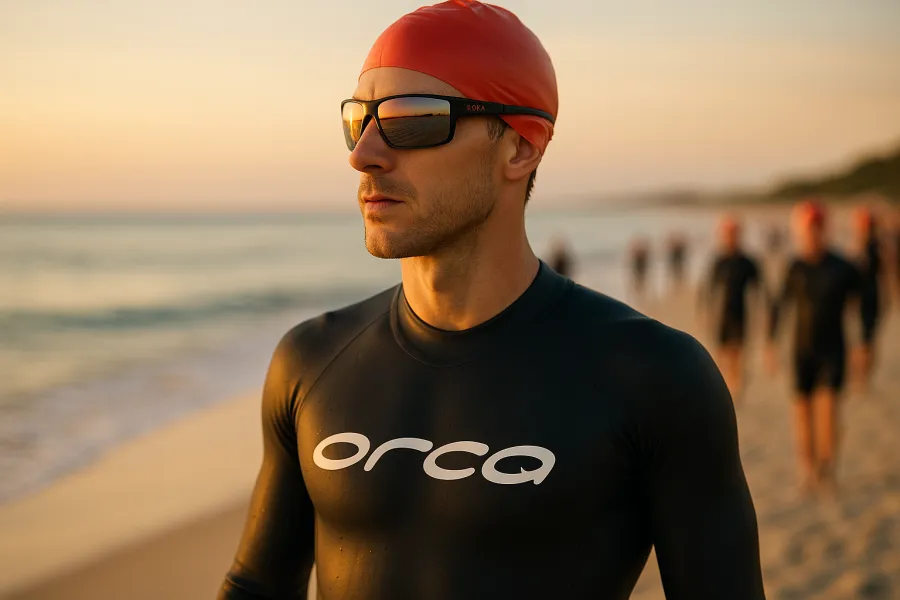
- Prioritize fit over everything. The fanciest lens in the world is useless if the frame bounces. If you can, try before you buy and move your head around.
- Match the lens to your race length. Fixed dark tint for short, bright races; photochromic for long course or races that start in the dark.
- Check replacement-lens availability. You will scratch or lose a lens eventually. Brands like Oakley, Roka, and Tifosi make it easy and affordable to swap.
- Don't overpay if you're starting out. A Tifosi Rail will serve you brilliantly for your first few seasons. Upgrade when you know what you actually want.
While you're dialing in your race-day kit, it's worth getting the rest of the head-and-eyes setup right too — a fog-free pair of swim goggles and a properly fitted aero helmet round out the package. And if you're racing somewhere hot, our heat execution playbook will keep you from cooking on the run.
The Verdict
If you want one pair that does everything and you've got the budget, the Roka SR-1x is the most complete tool here — lightweight, locked-down, and available in every lens flavor including prescription. For pure race-day optics in the aero position, the Oakley Radar EV Path or Jawbreaker remain the benchmark and look the part. And if you're not ready to spend premium money, the Tifosi Rail will quietly outperform its price tag every time you put it on.
Whatever you pick: clean the lens before the gun goes off, leash them in transition so they don't walk away, and for the love of split times, stop racing in the gas-station pair.
— Marcus Trent
Triathlete & TriathlonUniverse Contributor


