

Three days before an Olympic-distance race two summers ago, I went to swap the coin-cell battery in my old Garmin Vector pedal and stripped the threads on the battery door. Right there in my garage, with a tiny screwdriver and a word I won't repeat. That pedal rode the rest of its life with electrical tape wrapped around the cap, and I replaced it with a Rally RS200 the following spring, which used the same door design and gave me the same low-grade anxiety every single time I opened it. So when Garmin finally sealed that door shut for good and made the whole thing rechargeable, I paid attention. The Rally RS210 isn't a reinvention. It's a company fixing the one thing that had been quietly annoying its own customers for a decade.
What Actually Changed from the RS200
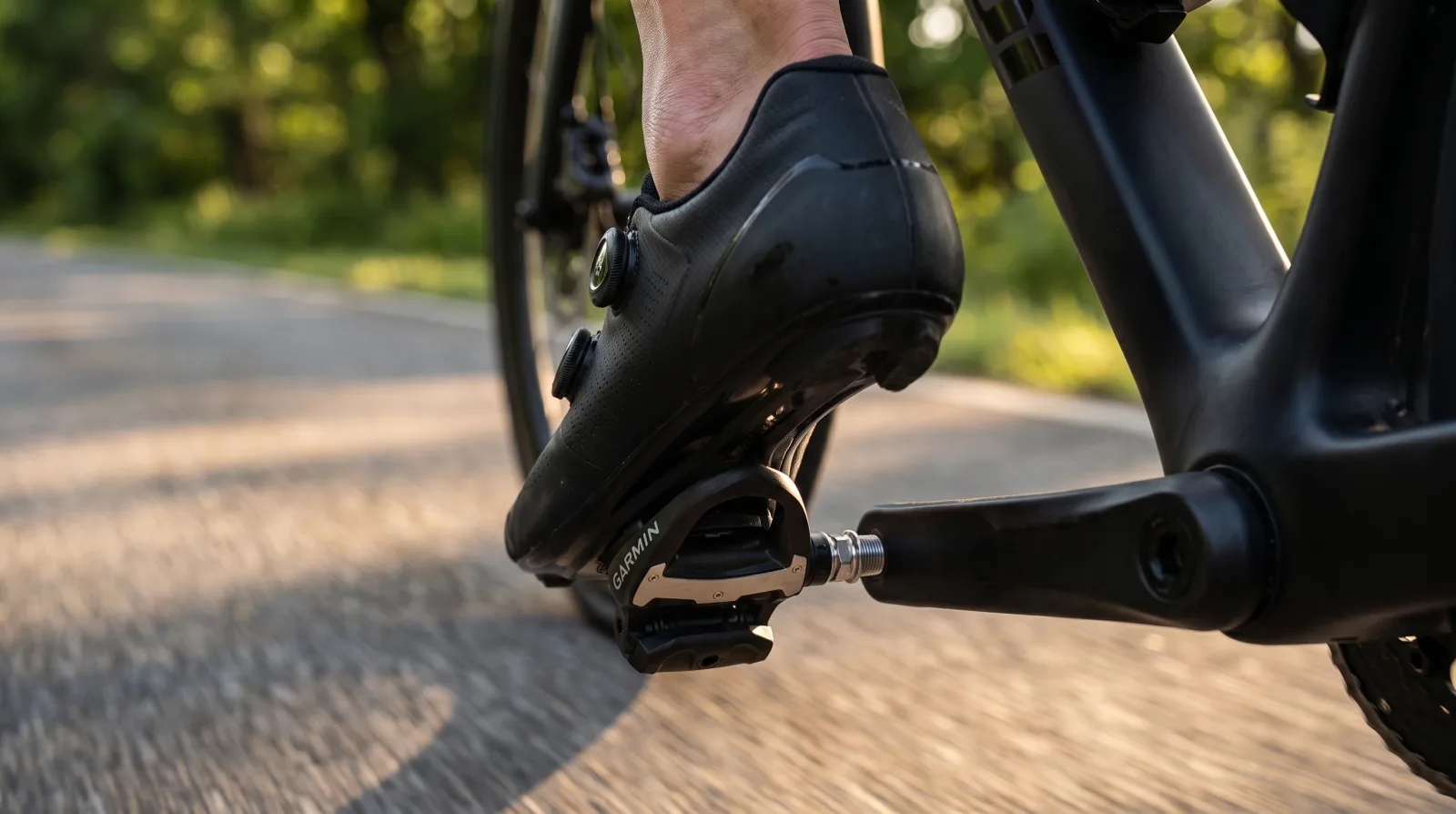
The short version: Garmin took the one real complaint about the Rally and Vector lineage and killed it. The RS200 and the Vector pedals before it ran on LR44 or CR1/3N coin cells tucked behind a tiny threaded door on the pedal body, sealed with an O-ring that wore out, cross-threaded under a nervous thumb, and occasionally let water in anyway. It wasn't a rare failure. It was common enough that most long-time Garmin power meter owners have a battery door story, and mine involves electrical tape and a race I almost missed a warm-up for.
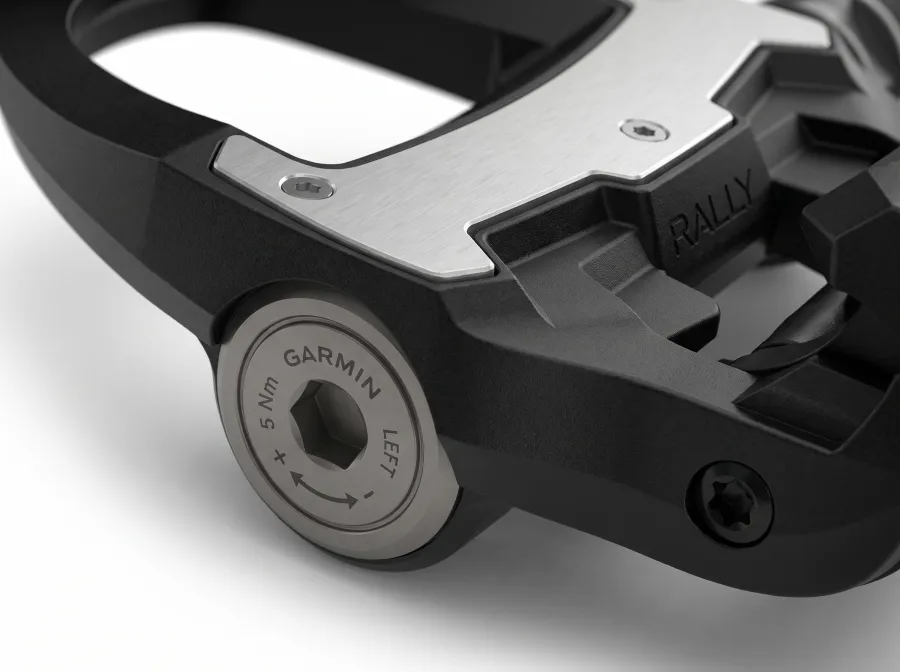
The RS210 seals that spindle shut permanently and charges over USB-C instead, using a magnetic clip that snaps onto charging pins on the pedal body. Garmin rates it for up to 90 hours of ride time per charge, with a 15-minute quick charge buying you about 12 more hours, which comfortably covers a forgotten overnight charge before a long ride. The RS200's replaceable cells technically lasted longer, around 120 hours, but you were trading that extra runway for a failure point that eventually bit almost everyone who owned one long enough.
Beyond the battery, Garmin added Pedal IQ, a calibration-alert feature that flags when temperature swings or time since your last calibration might be skewing your numbers, and redesigned the pedal body in a carbon material construction that Garmin says improves durability. The accuracy claim hasn't moved: still a reimagined strain gauge and gyroscope rated to within plus or minus 1 percent, the same number Garmin has quoted since the original Vector. If your RS200 is working fine, you are not missing out on better data. You're just not carrying around a decade-old failure point.
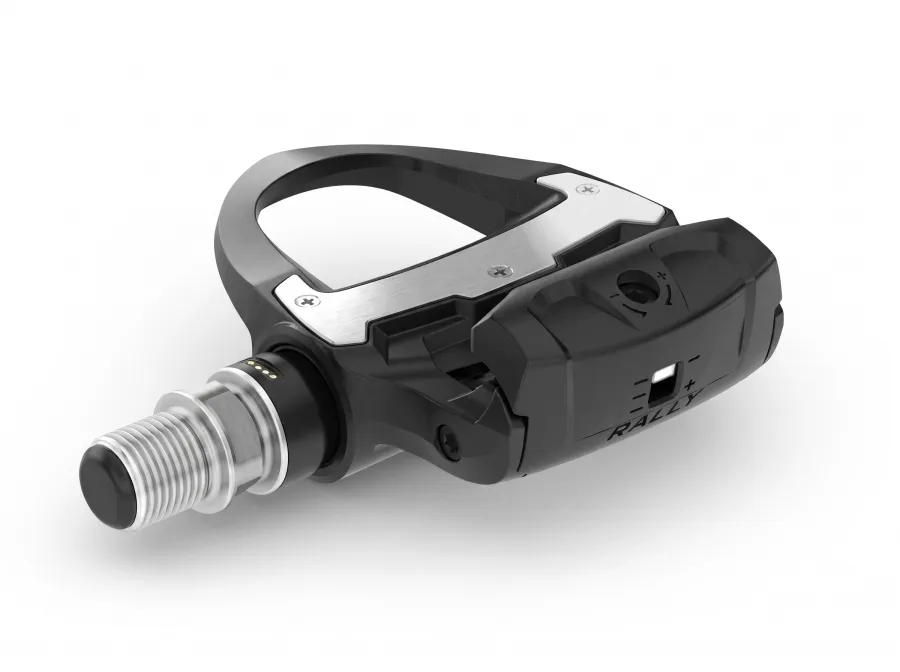
Here's the spec sheet version, for anyone who wants the numbers without the backstory:
- Weight: 312g for the pair
- Accuracy: ±1%, dual-sensing (independent left/right measurement)
- Battery: sealed rechargeable lithium-ion, up to 90 hours per charge, 12 hours from a 15-minute quick charge via USB-C
- Cleat compatibility: Shimano SPD-SL (the RK210 version uses Look Keo-style cleats instead)
- Stack height: 12.2mm · Q-factor: 53mm, or 55mm with the included 2mm washer
- Water rating: IPX7 · Max rider weight: 105kg (231.5 lbs)
- Connectivity: ANT+, Bluetooth, and USB-C for firmware updates and data transfer
- Swappable spindle compatible with Rally 110 and 210 road and off-road (XC) pedal bodies
That last line matters more than it looks. The power sensor lives in the spindle, not the pedal body, so if you also ride gravel or a mountain bike, you can buy the XC pedal body separately and move the exact same sensor between a road bike and a gravel bike instead of owning two separate power meters. It is a small thing until you've priced out a second power meter for a bike you ride four times a year, at which point it stops being small.
Compatibility-wise, the RS210 plays fine with oval chainrings, which some older power meters struggled to interpret correctly, and with electronic groupsets including Di2, since the pedal body itself doesn't interact with the drivetrain beyond the normal spindle threading. I run one bike with a compact oval ring and haven't seen the data glitch the way an older crank-based meter I owned once did on climbs.
Why Dual-Sensing Power Actually Matters on Race Day
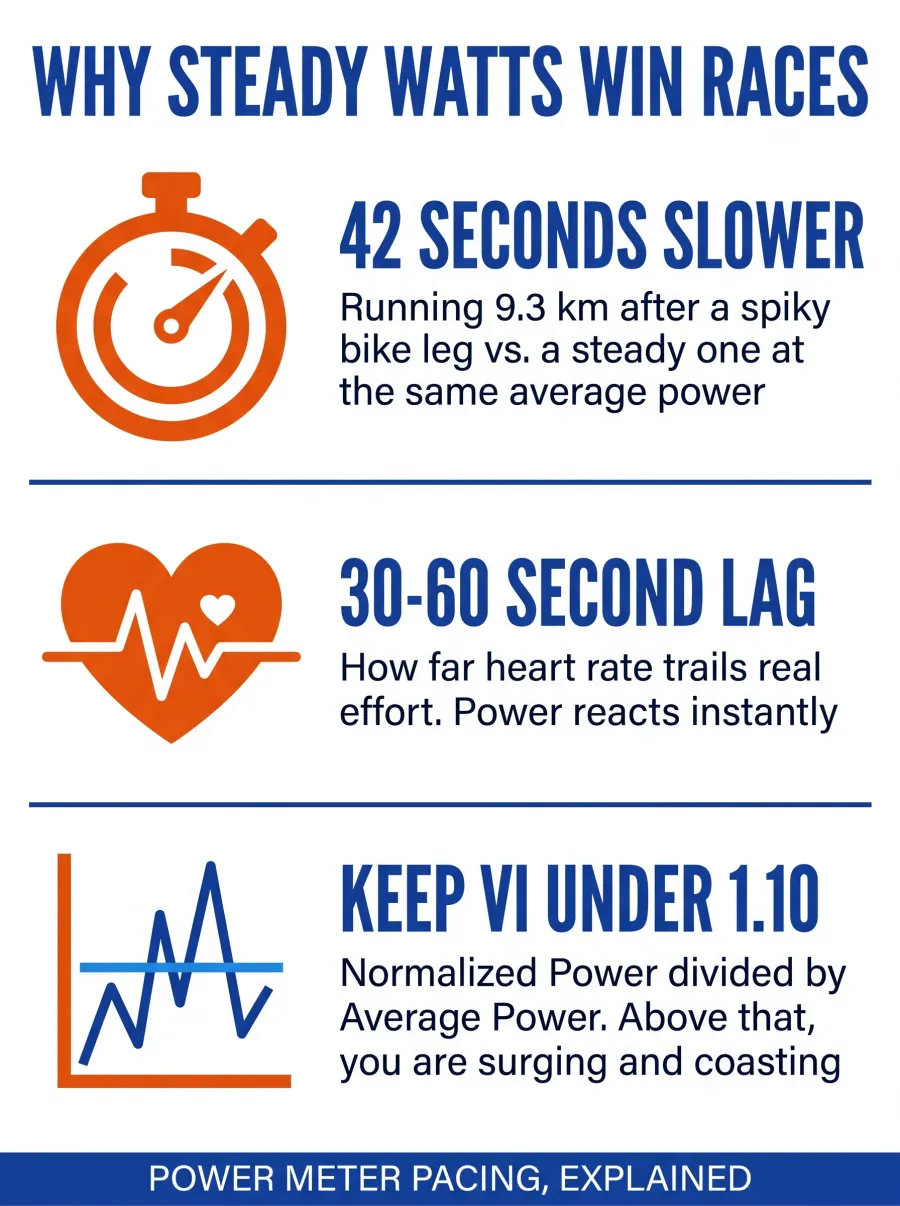
It's easy to treat a power meter as a number on a head unit and move on, but the research behind why that number matters is more specific than most riders realize. A 2006 study in the European Journal of Applied Physiology had trained triathletes ride two one-hour bike legs at the same average power, one steady and one deliberately variable, then run 9.3 kilometers immediately after each. The variable-power ride produced a run that was 42 seconds slower, with higher lactate, higher perceived exertion, and more ventilation, even though the average wattage on the bike was identical. Same work. Worse run. The only difference was how evenly the power got delivered.
That's the entire argument for riding by power instead of feel or heart rate. Heart rate lags behind actual effort by something like 30 to 60 seconds under hard surges, so by the time your monitor tells you you're overcooking it, you've already spent the matches. Power is instantaneous. Coach Joe Friel's benchmark, and one most coaches still use, is keeping your Variability Index, which is Normalized Power divided by average power, under about 10 percent for a given ride. Below that, you're riding smooth. Above it, you're surging and coasting your way to a slower run than your legs actually had in them.
Where dual-sensing specifically earns its keep is the left/right balance and cycling dynamics data riding on top of that total number. The RS210 tracks seated versus standing time, platform center offset, and power phase on both legs independently, which is how I first noticed my left leg was contributing about 46 percent of my total output after a bike fit went slightly wrong. A single-sided meter would have just reported the doubled total and told me nothing was wrong. For straightforward race pacing (see our full breakdown of pacing by power), a single-sided Favero Assioma or Garmin Rally RS100 will hold a target wattage exactly as well as this one does. For catching an asymmetry before it becomes an overuse injury, dual-sensing is the only version of this product that can see it.
Setting It Up, in Real Life
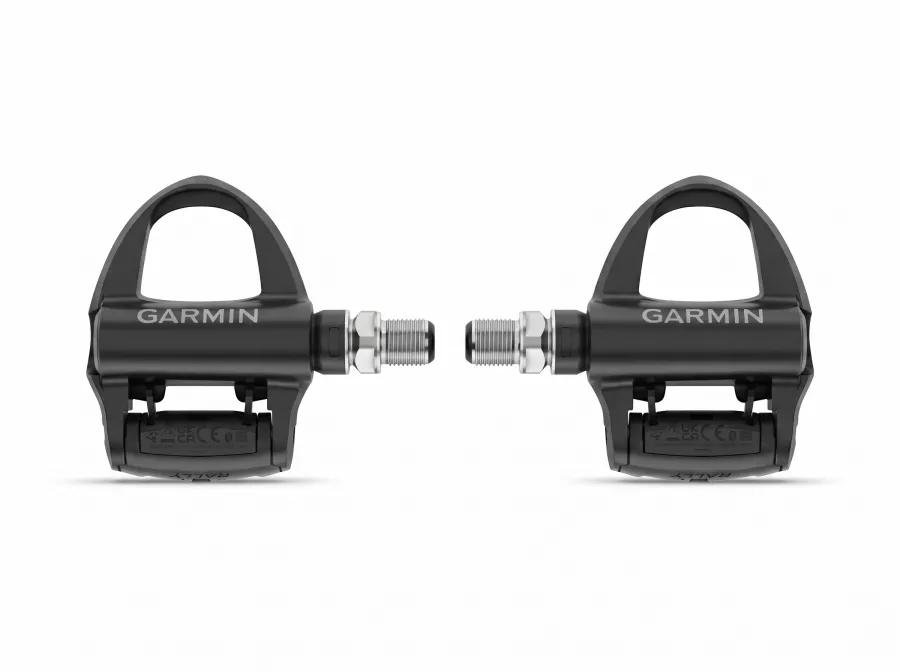
Installation is pedal installation: thread it on with a 15mm wrench or the 4mm hex in the spindle end, torque to spec, done in about five minutes per side. Pairing to an Edge head unit or the Garmin Connect app takes another couple of minutes, and the app walks you through a static zero-offset calibration before your first ride. The two included magnetic charging clips snap onto the inboard side of each pedal and route to USB-C, and I've found it easiest to just charge both pedals the night before any ride over about two hours, the same habit you'd already have for a bike computer or watch.
Travel mode puts the pedals to sleep so they don't drain in a bike bag, which matters if you're flying to a destination race and won't be riding for a few days. Garmin's own data from this generation shows the quick-charge window is real in practice, not just a spec sheet number: a 15-minute top-up off a hotel outlet the morning of a race genuinely buys enough runway for a 70.3 bike leg if you forgot to charge the night before. I wouldn't make a habit of cutting it that close, but the margin exists, which the old coin-cell system never gave you.
As an Amazon Associate, Triathlon Universe earns from qualifying purchases.
The charging clips themselves are the one piece of the system I was skeptical of going in, since magnetic connectors on a part of the bike that sees road grit, hose-downs, and the occasional pedal strike felt like a risk. In practice they've been fine. The pins sit slightly recessed into the pedal body, the clip snaps on with enough magnetic pull that it doesn't rattle loose on a bumpy ride, and I haven't had a connection failure yet across a wet winter of training. I keep both clips on a single cable in my transition bag now, the same way I'd pack a spare tube, more out of habit than necessity.
One Reddit thread I came across while deciding whether to upgrade summed up the split in opinion about as well as anything I've read: half of r/triathlon treats the RS200-to-RS210 jump as a non-event unless your battery door has actually failed, and the other half just wants the peace of mind of never thinking about a coin cell again, price be damned. Both camps are right, which is sort of the point of this whole review. This isn't a performance upgrade. It's an anxiety upgrade, and whether that's worth $900 to you depends entirely on how many times you've already been burned by the thing it fixes.
Is Nearly $900 Actually Worth It?
Garmin launched the RS210 at $1,199.99 and has since cut it to $899.99, a 25 percent drop that tells you something about where the market priced this generation versus where Garmin originally wanted it. Even at the lower number, that's still real money for a pedal, and road.cc's reviewer put the honest version of the critique on the table: the RS210 is more user-friendly than its predecessor, but the actual power data, the accuracy claim, and the dual-sensing metrics are identical to the RS200. You're not buying better numbers. You're buying a sealed battery system.
The direct competitor worth knowing about is the Favero Assioma Pro RS-2, which matches the dual-sided, plus-or-minus-1-percent accuracy claim at a price that runs close to $300 less in the UK market, and a similar gap in the US. If you're not already locked into Garmin's ecosystem of Edge computers and Connect, there's no technical reason to pay the Garmin premium. I run Garmin head units on both bikes, so staying in that ecosystem was worth something to me personally, but that's a brand-loyalty argument, not a performance one, and I'd rather say that plainly than pretend otherwise.
Where the RS210 earns its price is specifically for someone who already owns a Rally or Vector pedal and has lived through a battery door failure, or who wants the option to swap the same power sensor between a road pedal body and the XC off-road body without buying a second power meter entirely. If neither of those applies to you, and your current setup works, the honest move is to spend the difference on something that will actually change your training, like a smart trainer upgrade or a proper bike fit, rather than a second power meter that tells you the same numbers your first one already does.
Who Should Buy This, and Who Should Skip It
Buy the RS210 if you're shopping for your first dual-sided power meter and want to stay inside Garmin's ecosystem, if your old Rally or Vector pedal has a battery door that's starting to feel sketchy, or if you split time between a road bike and a gravel bike and like the idea of one sensor doing both jobs. Skip it if you already have a working RS200, Assioma, or Stages setup with no complaints, or if a single-sided meter would answer every question you're actually asking on race day, which for most age groupers chasing a target wattage, it will. If you're still deciding between crank-based, spider-based, and pedal-based options generally, our power meter buying guide covers that wider comparison in more depth than one pedal review reasonably can.
I've got about four months on a pair now, through one 70.3 build and a block of threshold work that would have eaten the old battery door alive with how often I was pulling the pedals on and off between my road bike and a trainer-only setup. Not once have I thought about the battery. That's the whole review, honestly. The best piece of gear is the one you stop thinking about, and for the first time in a decade of Garmin pedals, this is one I don't have to.
As an Amazon Associate, Triathlon Universe earns from qualifying purchases.


