

Be honest. You have a swim bag. And in that swim bag there is a pull buoy you use regularly, a pair of paddles you bought with great intentions, a snorkel that came out twice before getting exiled to the bottom, and possibly some fins you "borrowed" from your hotel pool and then technically kept. Don't be embarrassed. This is extremely common.
The problem isn't the gear. The problem is most swimmers — and especially triathletes who came to swimming later in life — have no clear idea what each tool actually trains, when to use it, or why. So they grab whatever's familiar and do laps. Which is better than nothing, but it's not a training strategy.
This is the guide that actually tells you what each piece of equipment targets, what the most common misuse looks like, and — most importantly — what the minimum effective dose is for each one to actually move the needle on your race swim splits.
1. Hand Paddles — The Highest ROI Tool in Your Bag
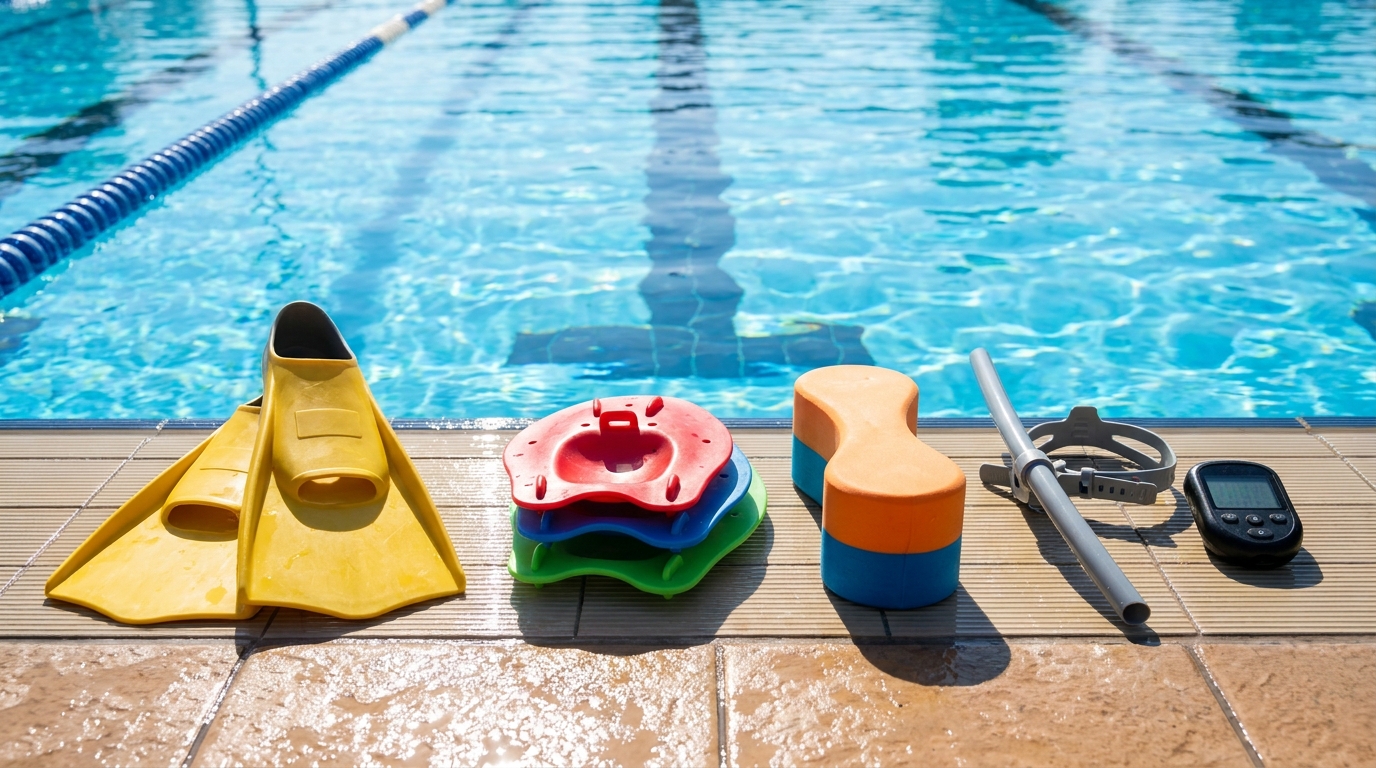
Hand paddles are flat plastic panels that strap to your palms and increase the surface area of your pull, forcing you to apply pressure across a larger surface with every stroke. The result: you build serious upper body pulling strength, you learn to "feel" the water with much better sensitivity, and you develop a higher-elbow catch almost automatically — because if you're dropping your elbow and slipping water with paddles on, you'll know it immediately by how unpleasant and slow the stroke becomes.
The most common misuse is going too big too fast. Oversized paddles amplify your existing stroke flaws along with your strengths. If your catch is already weak, giant paddles will destroy your shoulders over a full swim season. Start smaller than you think you need. A paddle just slightly larger than your hand — like the Speedo Power Paddle or the Finis Agility Paddle — is the right starting point for most age-group triathletes.
The minimum effective dose: two paddle sets per week, 400–600m each, focusing entirely on a high-elbow catch and deliberate pull-through. That's it. That amount, done correctly for six weeks, produces measurable improvement in stroke efficiency. Don't add distance because you feel good. Add quality.
2. Pull Buoy — The Most Overused Tool in Triathlon
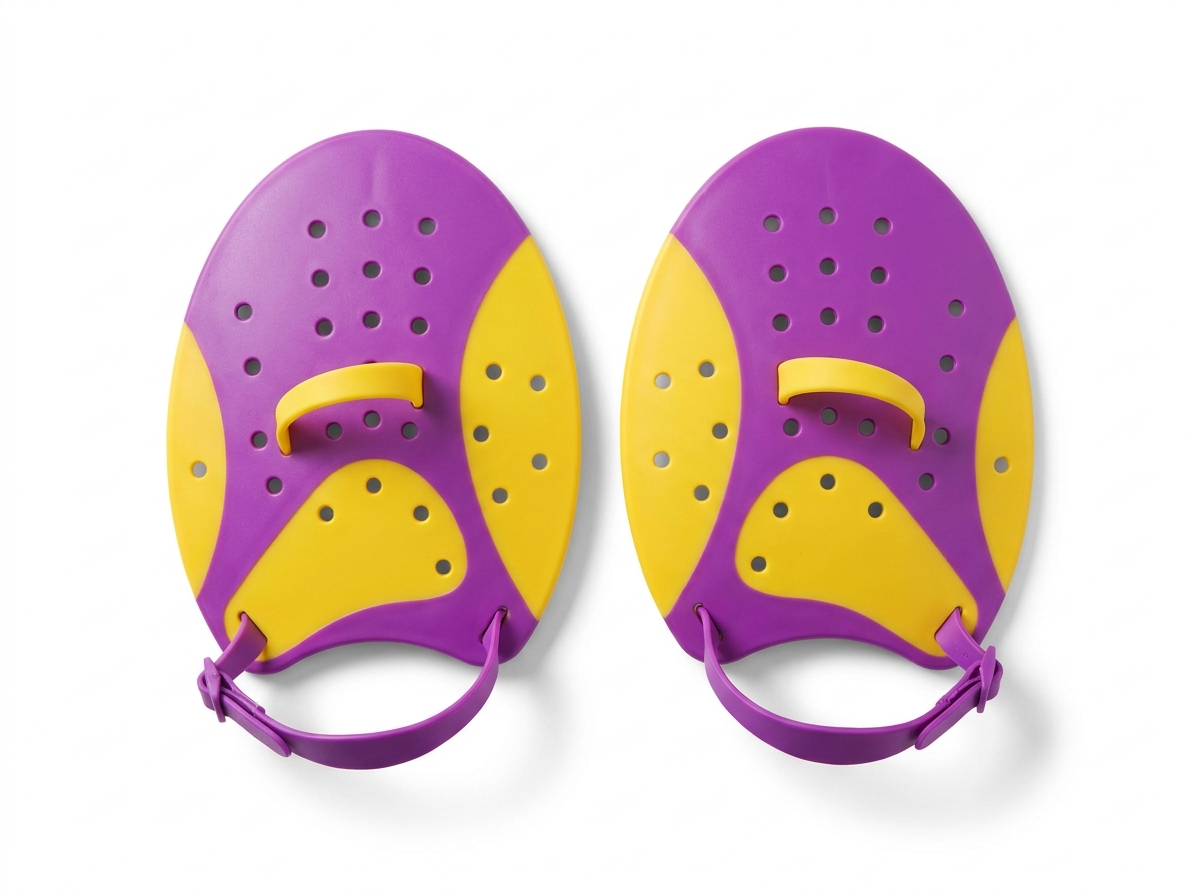
Here's the uncomfortable truth about pull buoys: most triathletes use them too much, and some use them as a crutch that's actively making their open water swimming worse. A pull buoy is a foam float wedged between your thighs to lift your hips and legs, removing the kick from the equation so you can isolate your upper body pull. It's genuinely useful. It's also frequently used as "a way to swim without the hard part."
The real value of pull buoy work is in developing your feel for the pull with an artificially elevated body position — helpful because it lets you swim at race pace without leg fatigue. It's also useful diagnostically: if your pull buoy time is significantly faster than your normal swimming, your kick is either too inefficient or too energy-expensive, and that's worth knowing.
The problem is that open water triathlon swimming doesn't have a pull buoy. Your body has to create its own buoyancy through core tension, head position, and rotation. Athletes who train almost exclusively with a pull buoy often develop a body position that relies on external flotation and collapses without it.
Use pull buoys for specific sets — maybe 20–30% of your total swim volume — not as your default because it makes the swim feel easier. Easier isn't always the signal you want to chase.
3. Fins — The Underrated Technique Tool
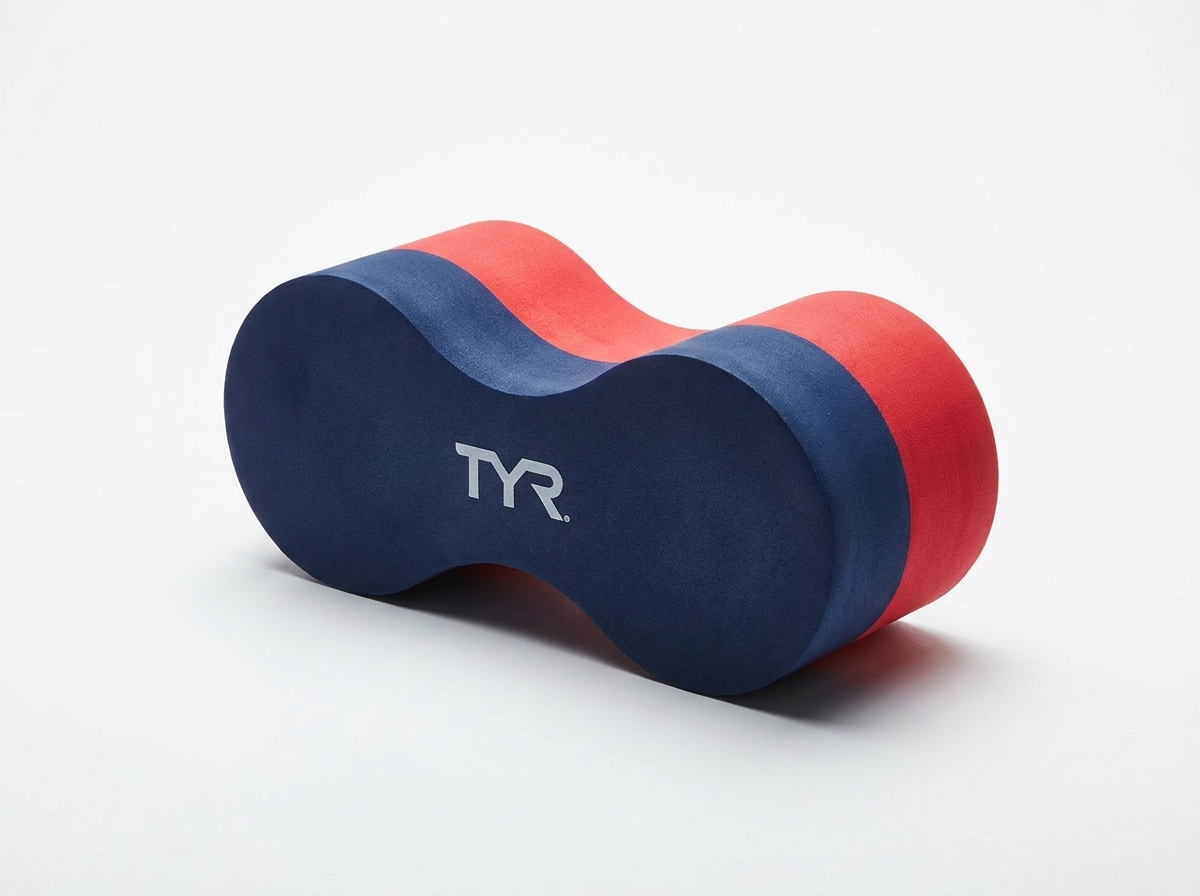
Most triathletes think of fins as training wheels or a way to go fast when they're tired. That's backwards. Fins — specifically short training fins, not the snorkeling kind that cover your entire lower leg — are one of the best tools for building body position, improving ankle flexibility, and experiencing what it actually feels like to move through the water with proper propulsion.
The key here is short fins. Finis Zoomers or the Arena Powerfin Pro, not the long tourist fins from a beach shop. Long fins change your kick mechanics in ways that don't translate. Short fins amplify your existing kick without replacing it — so you feel the difference between a good kick and a bad one, rather than just going fast regardless.
Fins are particularly valuable for two specific groups: triathletes who are weak kickers (which is most of them — you're not a swimmer, your ankle flexibility reflects that), and athletes doing drill work who need enough propulsion to maintain good body position while they isolate a specific movement. A body position drill without enough forward speed just turns into a sinking exercise.
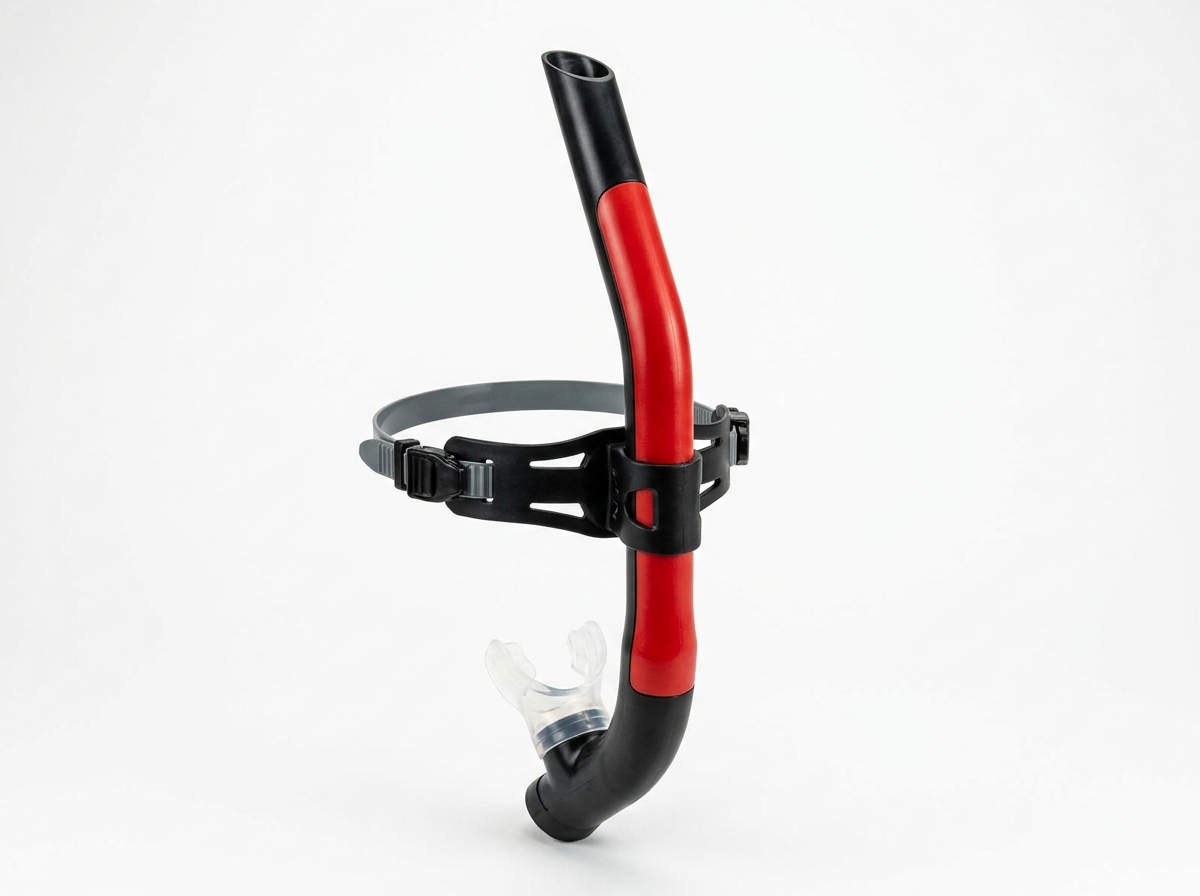
4. Center-Mount Snorkel — The Stroke Feedback Machine
The center-mount snorkel — not a side-mounted snorkel, the one that comes up from the front of your face — is one of the most underrated pieces of equipment for developing real freestyle technique. By eliminating the breathing rotation from the equation, it forces you to focus entirely on the mechanics of your pull, your body position, your kick, and your balance in the water.
When you're not worrying about turning to breathe, you can actually feel what your stroke is doing. Athletes consistently report noticing things they'd never detected before when they first swim with a snorkel: that their head bobs on every stroke, that one arm enters crossed over the center line, that their hips are sinking on the left side because their left arm pull is half-hearted. This feedback is invisible when breathing mechanics are in the mix.
Use a snorkel for technical drill sets, not for long, mindless yardage. Twenty minutes of high-attention snorkel work beats an hour of distracted laps every time. The Finis Swimmer's Snorkel is the standard recommendation — comfortable, well-vented, won't flood on flip turns.
5. Tempo Trainer — The Pacing Tool Nobody Uses Enough
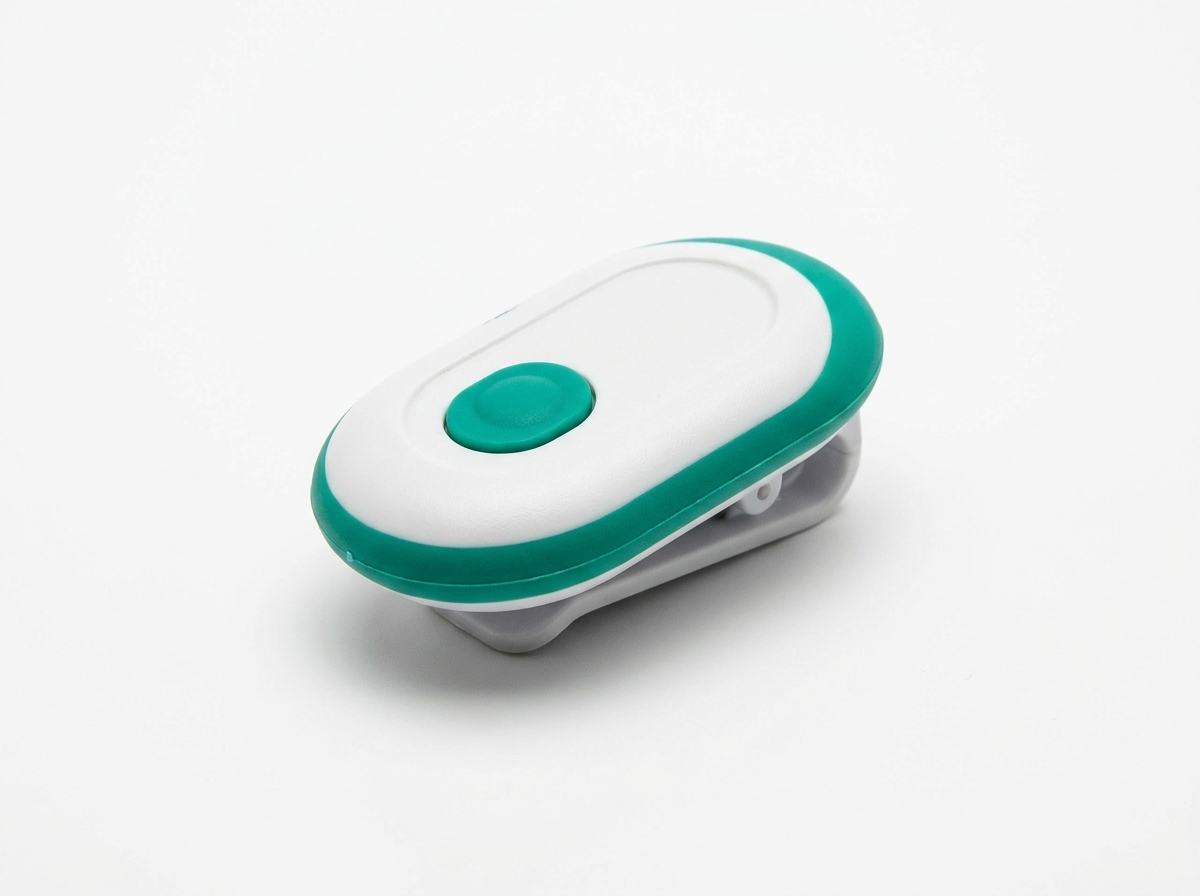
A tempo trainer is a small electronic device — the most well-known is the Finis Tempo Trainer Pro — that clips to your goggle strap and emits a beep at a set interval. You time your strokes to the beep. That's it. And it sounds almost comically simple until you try it and realize your stroke rate has been inconsistent your entire swimming life without you ever knowing.
For triathlon swimming specifically, tempo trainers are valuable because open water pace is notoriously difficult to gauge without the feedback loop of pool walls. Triathletes who train with a tempo trainer develop a much better internal metronome — they can maintain a consistent stroke rate when fatigued, when getting bumped in a mass start, when they've lost their rhythm after sighting. That consistency is free time in a race.
The process: find your current comfortable stroke rate (strokes per minute), set the tempo trainer to that rate, then gradually increase it over weeks. Most beginner to intermediate triathletes swim at 50–60 strokes per minute. Elite open water swimmers and faster age-groupers are typically at 70–80. That gap is part of why they're faster — they're taking more strokes per length at a higher efficiency per stroke.
6. Stretch Cords / Resistance Bands — Dry-Land Stroke Work
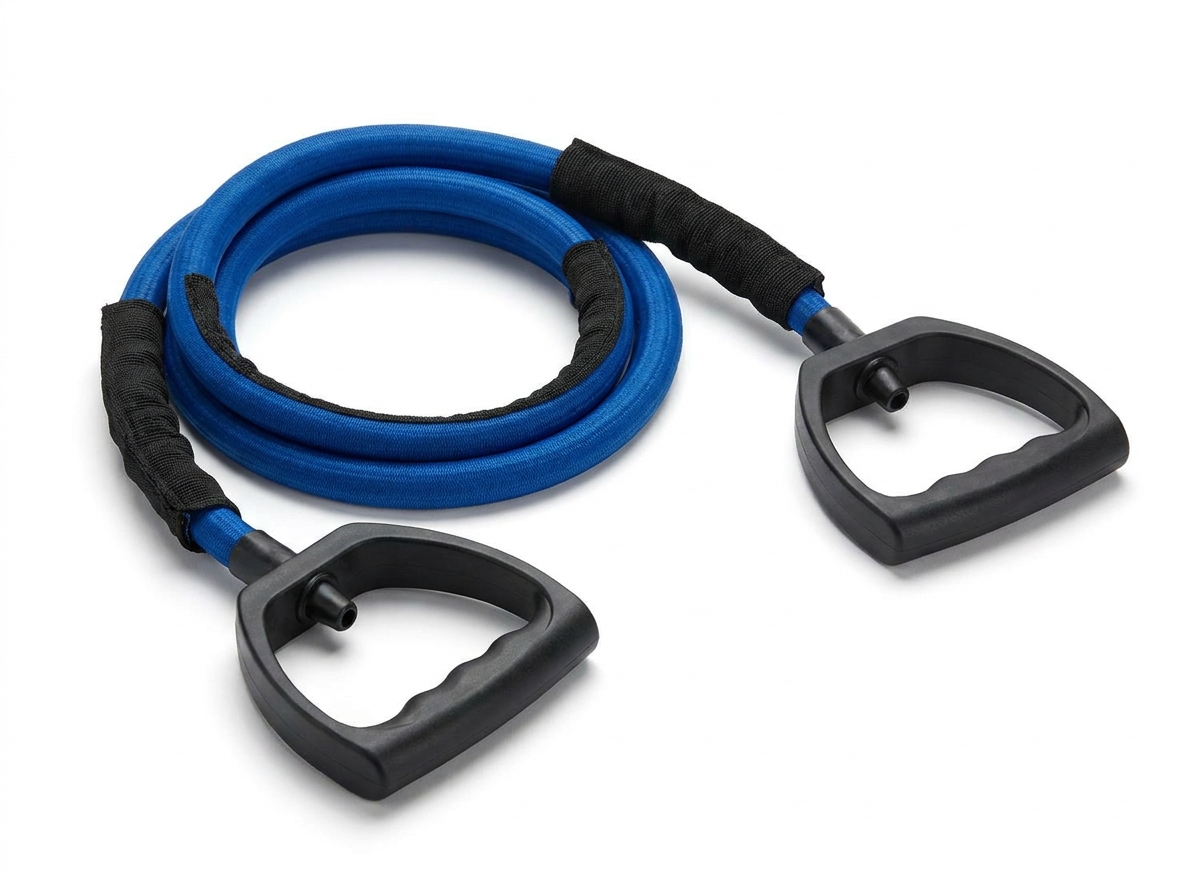
Swim-specific stretch cords — also called resistance bands or tether systems — let you simulate the swimming pull motion on dry land, which sounds either very useful or deeply embarrassing depending on your current fitness philosophy. It's genuinely useful. The pulling motion in freestyle is complex, involves multiple muscle groups firing in a specific sequence, and can be trained with specificity on dry land in ways that complement pool work.
The Speedo Stretch Cord is the most straightforward option: anchor it at shoulder height, pull through the freestyle stroke pattern, and you're training the exact neuromuscular recruitment pattern your pull relies on in the water. Ten to fifteen minutes of cord work before a pool session, three times a week, has been shown in multiple swim training programs to improve in-water pull strength measurably within four to six weeks.
The trap here is treating cord work as a substitute for swimming. It isn't. It's a supplement that helps you swim better when you get in the water. You still have to get in the water.
The Bottom Line: Use Your Tools Like a Surgeon, Not a Mechanic
A mechanic uses every tool in the box. A surgeon uses exactly the right tool at exactly the right moment. When it comes to swim training, the goal isn't variety — it's targeted stimulus. Every tool in your bag should be there because it trains something specific that your swimming needs right now.
If your catch is weak, you need paddles and a snorkel. If your body position is a disaster, you need fins and focused drill work. If your kick is killing you energetically, reduce your fin use and increase pull buoy sets temporarily while you rebuild kick economy. If your pacing in open water is inconsistent, invest six weeks with a tempo trainer before you ever worry about the other gear.
The athletes who improve fastest in the water are rarely the ones with the most equipment. They're the ones who use what they have with genuine intention — every set, every session, every length.
Alicia Thornton is a Triathlon Universe contributor and athlete. She has been competitive swimming since age nine, discovered triathlon at 32, and has spent the years since convinced that every triathlete is leaving at least two minutes per swim on the table just from poor tool usage. She is probably right.


