

The Woodlands, Texas knows how to host a race. Wide roads, relentless sun, humidity you can practically chew, and a finish chute that turns grown adults into sobbing messes — all the ingredients for a proper IRONMAN spectacle. The 2026 Memorial Hermann IRONMAN Texas North American Championship delivered on every count, and then some.
If you had Solveig Løvseth and Kristian Blummenfelt in your winner's pool, congratulations — you may be clairvoyant, or you just follow Norwegian triathlon very carefully. The two Norwegians stamped their authority on a race that was supposed to feature the clash of the season: Kat Matthews versus Taylor Knibb, a head-to-head that the sport had been circling on its calendar since January. Fate had other ideas, the Texas asphalt had other ideas, and by the time the sun was fully overhead, the script had been thoroughly shredded.
Let's break it all down.
The Kat Matthews Disaster (and Why It Changes Everything)
To understand the women's race, you have to start with the moment that wasn't: Kat Matthews finishing it. The two-time reigning IRONMAN Pro Series champion entered The Woodlands as one of the race's favorites, having already won her first two starts of the 2026 season. She'd done everything right. She'd trained in heat. She was fit. She was sharp. And then, with 88 kilometers remaining on the bike course, her rear tire had a different opinion.
A puncture. Catastrophic. Race-ending. DNF.
Matthews had been sitting in third place after the swim, within striking distance of the leaders, and was reportedly building momentum on the bike when it happened. The timing couldn't have been crueler. This isn't just a bad day — it's a significant hit to her Pro Series standing and her momentum. In a season that looked like it was building toward another dominant title defense, she'll now have to recalculate.
For the field, Matthews' exit changed the texture of the race entirely. A three-way battle became a two-woman showdown, and the real question became: could anyone run down Taylor Knibb?
Women's Race: When the Run Eats the Bike Lead
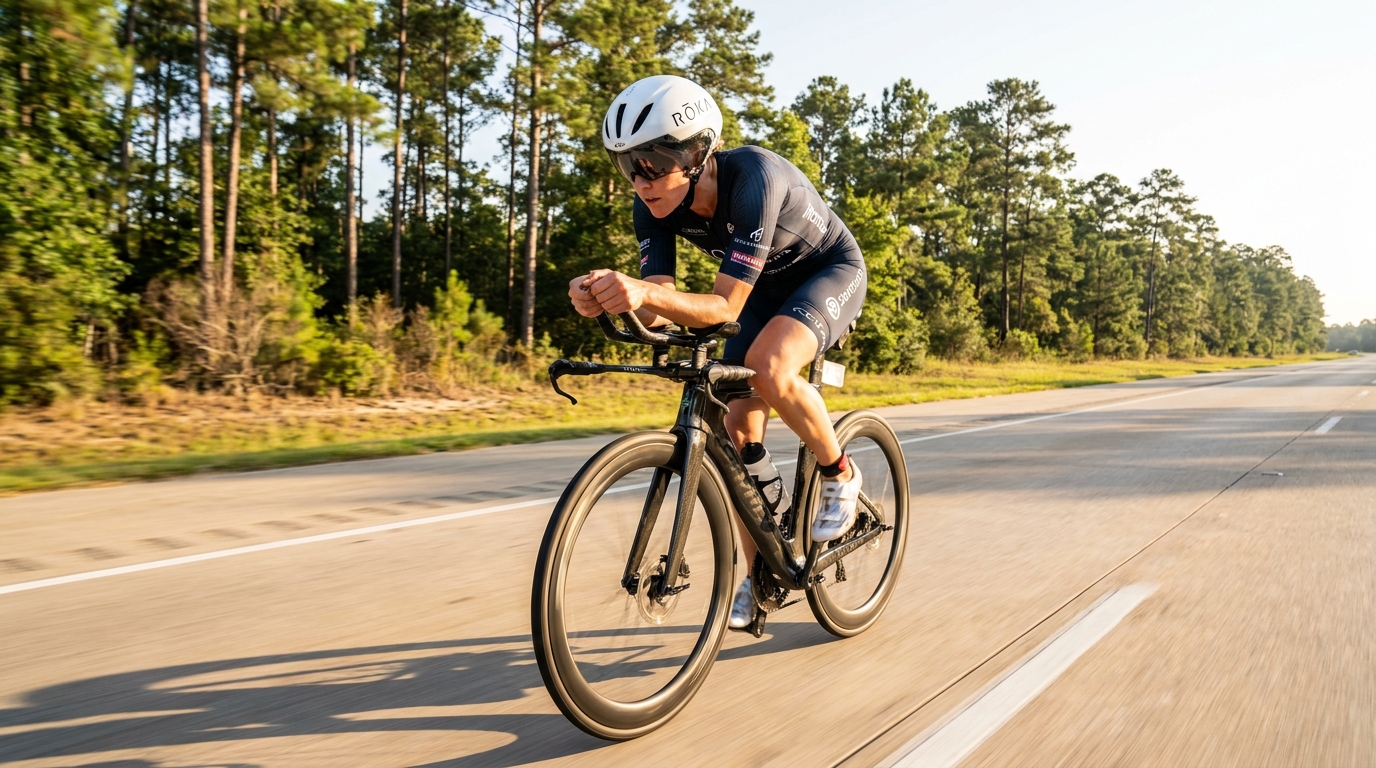
Taylor Knibb did exactly what Taylor Knibb does: she exited the water near the front, mounted her bike, and started building an advantage that looked increasingly uncomfortable for everyone behind her. Through the long, flat bike course she extended her lead, presumably while the rest of the women's field contemplated their life choices.
Solveig Løvseth — the reigning IRONMAN World Champion and a woman who runs like she's being chased by something — was not panicking. She has done this before. She knows that 112 miles of bike lead means nothing if the run doesn't hold, and she knows better than most what a great marathon can do to a great bike split.
What followed on the run course was textbook attrition. Løvseth posted the fastest women's marathon split of the day — 2:49:52 — and systematically disassembled Knibb's advantage. Knibb, to her enormous credit, ran a personal-best marathon herself. She wasn't falling apart. She was racing well. It just wasn't quite enough.
Løvseth crossed in 8:11:09. Knibb finished second at 8:14:48 — a time she can be genuinely proud of, a result that stings anyway. Marta Sanchez of Spain rounded out the women's podium in 8:31:06.
Women's Final Podium:
- Solveig Løvseth (NOR) — 8:11:09
- Taylor Knibb (USA) — 8:14:48 (personal-best marathon)
- Marta Sanchez (ESP) — 8:31:06
Løvseth's win is her second major 2026 result and cements her status as the dominant force in women's full-distance triathlon right now. She swam, she biked, she ran the fastest run split of the day. That's the complete performance checklist, and she ticked every box.
The Texas Heat: The Invisible Competitor
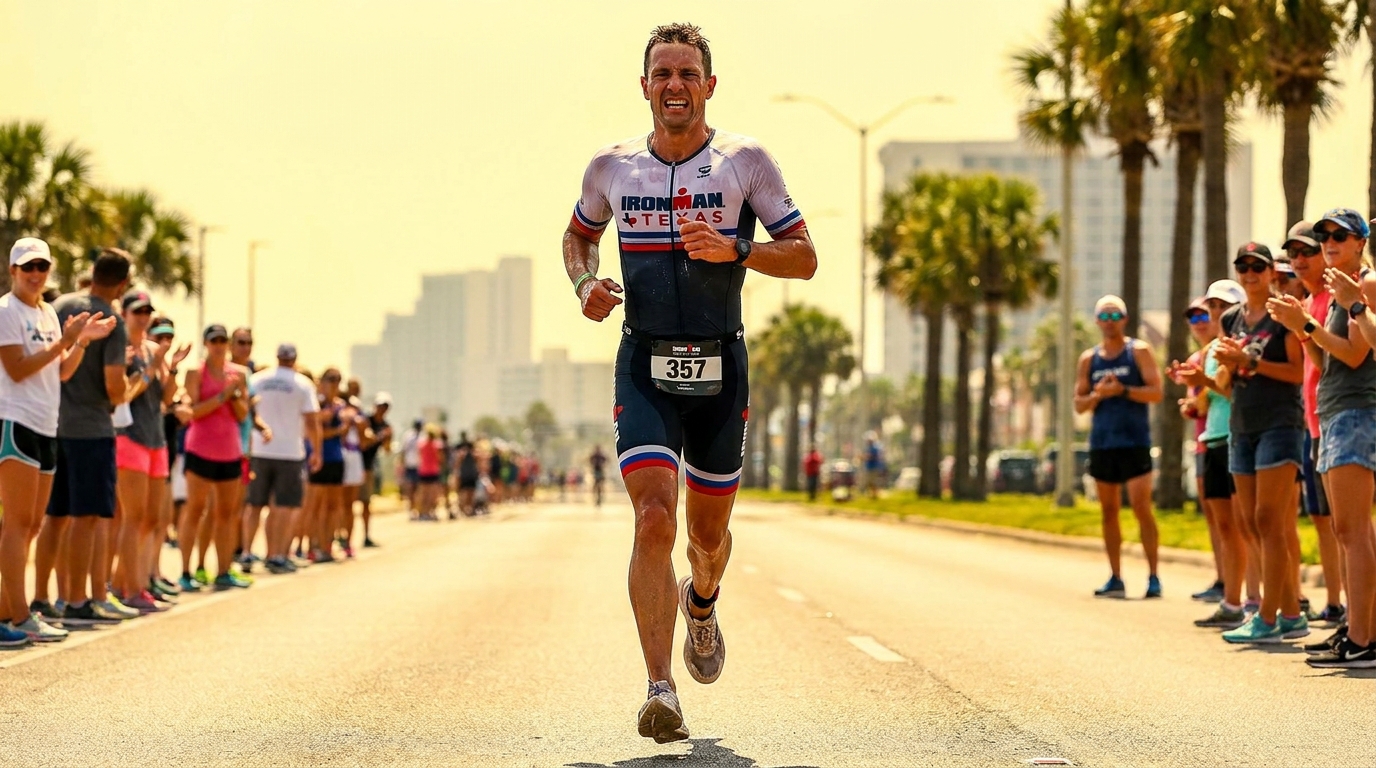
April in The Woodlands sounds like spring. It is not spring in any sense you'd recognize from a temperate climate. By the time the professional field was deep into the run, temperatures were climbing and the humidity was doing what Texas humidity does, which is make you feel like you're running inside a warm, wet sock.
This is where pacing strategy separates the prepared from the overconfident. The athletes who attacked early on the run — chasing time rather than managing effort — paid for it. The athletes who went out controlled, stayed patient through the middle miles, and trusted their heat adaptation work were the ones you saw still moving well at mile 20. This race always extracts a toll, and 2026 was no exception.
For what it's worth, Blummenfelt's marathon split of 2:30:47 in those conditions is quietly absurd. Full stop.
Men's Race: Blummenfelt Does It Again
Kristian Blummenfelt has now won IRONMAN Texas in back-to-back years. He has done this while also winning three consecutive Experience Oman IRONMAN Pro Series events. At some point we need to stop acting surprised and just accept that the Norwegian is operating at a level that requires its own categorization system.
Blummenfelt finished in 7:21:24, posting a marathon split of 2:30:47 that was the decisive factor in a men's race that stayed interesting until the run. Marten Van Riel of Belgium gave him the closest push, finishing second at 7:22:56 — just 92 seconds back. That's a tight race by any measure. Casper Stornes — Blummenfelt's Norwegian teammate and, apparently, a man who also simply refuses to be off the podium — completed the top three at 7:23:50.
Men's Final Podium:
- Kristian Blummenfelt (NOR) — 7:21:24
- Marten Van Riel (BEL) — 7:22:56
- Casper Stornes (NOR) — 7:23:50
An all-European men's podium, with two Norwegians and a Belgian. The Americans would like a word. They can have it — after Blummenfelt finishes collecting his trophies.
The Pro Series Implications
Blummenfelt sits firmly atop the 2026 IRONMAN Pro Series standings. Three events, three wins, the mathematical definition of a hot streak. For his rivals, the calculation is becoming uncomfortable: not only do you have to beat him, you have to beat him consistently, because he keeps showing up and doing this.
For Løvseth, the Texas win is another major result that builds her case as the women's Pro Series front-runner. Matthews' DNF — while devastating for her individually — tightens the field and keeps the women's series genuinely competitive.
Knibb will feel this one. A personal-best marathon at a major championship and a second-place finish is, objectively, a strong result. But Knibb came to Texas to win, and the gap to Løvseth — both in this race and in the series standings — gives her real work to do.
Finish Line Moments
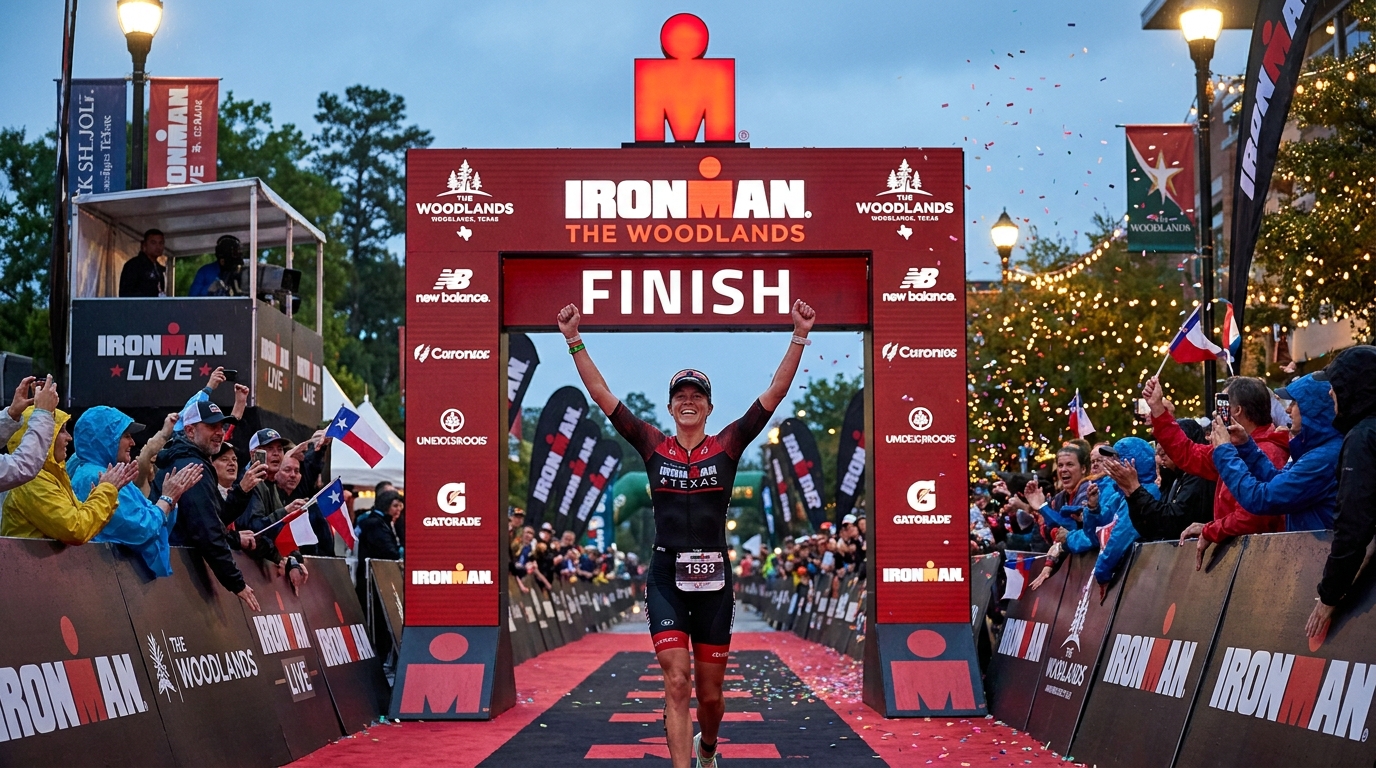
Beyond the professional race, IRONMAN Texas 2026 featured over 100 pro athletes and thousands of age groupers who endured 140.6 miles under Texas skies. The finish line on Waterway Avenue, packed with spectators deep into the evening, produced the moments that remind you why this sport exists: the first-timers with trembling legs, the veterans chasing personal bests, the every-fifth-year warriors who trained like their life depended on it for six months and are now questioning all of their decisions somewhere around mile 18 of the run.
They all made it. They all earned it.
The Bottom Line
Solveig Løvseth went to Texas and outran the field. Kristian Blummenfelt went to Texas and continued doing what Kristian Blummenfelt does in Texas. Kat Matthews had her heart broken by a rear wheel. Taylor Knibb ran a personal-best marathon and finished second at a North American Championship. The heat was brutal, the racing was real, and The Woodlands once again proved that it can host a major triathlon like few other venues on earth.
The 2026 IRONMAN Pro Series continues. The math is getting interesting. And somewhere, Kat Matthews is already planning what comes next — because athletes like that don't process a DNF by sitting down. They get back on the bike.
See you at the next one.


