
Let's get something out of the way: most triathletes obsess over race-day nutrition while eating like a distracted college student the other 364 days of the year. A perfectly dialed-in gel strategy won't save you if your daily triathlete daily nutrition looks like coffee, half a granola bar, and whatever was left in the office kitchen. The engine has to be built day by day — races just rev it.
This guide is your complete blueprint for eating like an actual triathlete every single day — not just the morning of your A-race. We're covering macros for every training phase, carbohydrate periodization, protein timing, pre-session fueling, meal prep for busy humans, the five dietary mistakes destroying your fitness, and a practical daily nutrition template you can start using this week.
Why Daily Triathlete Daily Nutrition Matters More Than Race-Day Nutrition
Race nutrition gets all the headlines because it's dramatic. You either bonk at mile 18 of the run or you don't. But training adaptation — the actual process of getting faster and stronger — happens in the weeks and months between races. And that adaptation is fueled (or sabotaged) by what you eat every single day.
Chronic under-fueling is the silent performance killer in triathlon. It leads to impaired glycogen storage, reduced muscle protein synthesis, suppressed immune function, and hormonal disruption. You can have the best training plan in the world. If you're showing up to hard sessions under-fueled, you're essentially renovating a house while someone else quietly dismantles the foundation.
Daily nutrition is where the real work happens. Race day is just the recital.
Macronutrient Targets by Training Phase
There's no one-size-fits-all macronutrient ratio for triathletes, because training load changes dramatically across a season. Here's how to adjust your intake as your training evolves:
Base Phase (Lower Volume, Aerobic Focus)
- Carbohydrates: 4–6 g/kg body weight per day. You're building aerobic infrastructure, not burning through glycogen at race pace. This is the phase where modest fat adaptation has value.
- Protein: 1.6–1.8 g/kg per day. Muscle repair and structural rebuilding matter even at lower intensities.
- Fat: 25–35% of total calories. Healthy fats support hormone production, reduce inflammation, and keep you satiated during longer recovery periods.
Build Phase (High Volume, Mixed Intensity)
- Carbohydrates: 6–8 g/kg per day. Training load is high and glycogen demands spike. This is not the time for low-carb experiments.
- Protein: 1.7–2.0 g/kg per day. Higher training stress = more muscle breakdown = more need for repair.
- Fat: 20–30% of total calories. Still important, but carbs earn more real estate on your plate.
Race Week (Taper + Carbohydrate Loading)
- Carbohydrates: 8–12 g/kg per day for the final 1–3 days. You're topping off glycogen tanks to the brim. Yes, you'll feel puffy. That's glycogen-bound water. That's good.
- Protein: Maintain at 1.6 g/kg — no need to overload.
- Fat: Reduce slightly to make room for the carbohydrate increase without a calorie explosion. Stick to easy-to-digest foods.

Carbohydrate Periodization: Train Low, Race High
This sounds like a catchy slogan but it's backed by legitimate science. The concept, popularized through Bob Seebohar's work on metabolic efficiency and endorsed by sports dietitians worldwide, is simple: strategically reduce carbohydrate availability around certain lower-intensity training sessions to force your body to become better at burning fat as fuel. Then, when it matters — race day — you flood the system with carbohydrates and perform at maximum capacity.
How to Actually Do It
- Fasted morning sessions: Short, easy aerobic workouts (under 60–75 minutes) done in a fasted state or with only black coffee. Effective for base phase fat adaptation. Not appropriate for interval sessions, tempo runs, or anything over 90 minutes.
- Sleep low: Train hard in the evening to deplete glycogen, eat a high-protein/low-carb dinner, then complete an easy morning session before carbohydrate refueling. Advanced strategy — not for beginners.
- Carb-appropriate sessions: ANY high-intensity session (threshold intervals, VO2 work, race simulations) gets full carbohydrate support. Always. Non-negotiable.
The mistake most athletes make is either (a) trying to "train low" on their hardest sessions because they read a blog post, or (b) eating the same amount of carbs every day regardless of training load. Both sabotage performance. Match the fuel to the session.
Protein Timing for Muscle Repair
How much protein you eat matters. When you eat it matters almost as much.
Daily Targets
Aim for 1.6–2.0 g/kg body weight per day, distributed across 4–5 eating occasions. Research consistently shows that spreading protein intake in 20–40 gram doses throughout the day drives better muscle protein synthesis than front-loading or back-loading (looking at you, "I'll just have a big dinner" crowd).
The Recovery Window
Consume 20–40 grams of protein within 30–60 minutes after training, combined with carbohydrates in roughly a 3:1 or 4:1 carb-to-protein ratio. This is when your muscles are most receptive to amino acids and the glycogen resynthesis rate is highest. A recovery shake, Greek yogurt with fruit, or chocolate milk (yes, chocolate milk — it works) are all solid options.
Best Protein Sources for Triathletes
- Chicken breast, turkey, lean beef
- Salmon, tuna, white fish
- Eggs and egg whites
- Greek yogurt, cottage cheese
- Legumes (lentils, chickpeas, black beans) — paired with a grain for complete amino acid profile
- Tofu, tempeh, edamame for plant-based athletes
What to Eat the Day Before a Long Training Session
The day before your long ride or long run is nutritionally just as important as the morning of. Think of it as a miniature carbohydrate load:
- Increase carbohydrates by 20–30% compared to your normal daily intake. Add an extra serving of rice, pasta, potatoes, or oats to each main meal.
- Keep fat intake moderate. High-fat meals slow gastric emptying and can cause GI distress during the following morning's session.
- Hydrate proactively. Aim to hit urine that's pale yellow (not clear — electrolytes need to stay balanced, not flushed out) by the time you go to bed.
- Dinner example: Large portion of pasta or rice, lean protein (chicken or salmon), cooked vegetables (low fiber to reduce GI risk), and a small dessert if you're into that sort of thing.
- Don't experiment. The night before a big session is not the time to try the new Thai place. Stick to foods you know work for your gut.
Meal Prep for Time-Crunched Triathletes
You're training 10–15 hours a week, working full-time, and somehow expected to cook elaborate meals. The answer is not elaborate meals. The answer is strategic simplicity.
The 90-Minute Sunday Protocol
One focused prep session covers the entire week:
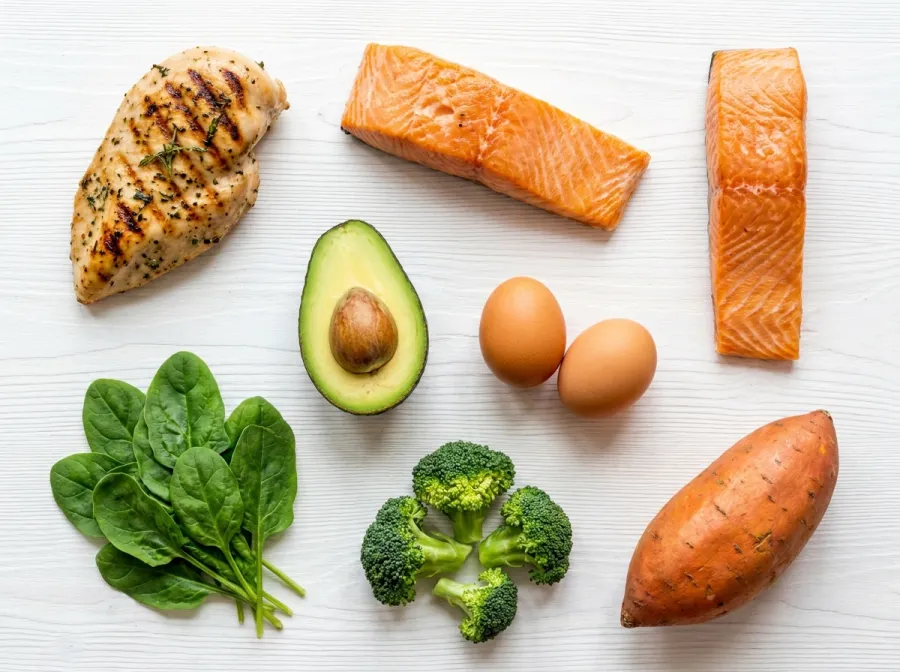
- Proteins (batch cook): Bake a tray of chicken thighs or breasts at 400°F for 25 minutes. Hard boil a dozen eggs. Cook a large salmon fillet. That's your week's protein.
- Carbohydrates (bulk cook): Cook a large pot of rice or quinoa (use a rice cooker — it requires zero attention). Roast two sheet pans of sweet potato and root vegetables.
- Vegetables: Wash and chop raw vegetables so they're grab-and-go. Prepped salad greens in a large container last 4–5 days.
- Assemble on demand: Each meal is a protein + carb + vegetable combination. Takes 90 seconds to assemble. Zero decision fatigue.
Pantry Staples That Save You
Keep these always stocked: canned chickpeas, canned tuna/salmon, oats, frozen edamame, frozen mixed berries, Greek yogurt, eggs, natural nut butter, and a good quality olive oil. When the prep runs out mid-week, these fill the gap in under 10 minutes.
The 5 Dietary Mistakes That Sabotage Triathlon Training
1. Not Eating Enough (The #1 Offender)
Relative Energy Deficiency in Sport (RED-S) is rampant in triathlon. Many athletes — particularly those who came to the sport through weight-loss motivation — chronically under-eat and wonder why their times plateau, they get injured constantly, or they're always tired. Training 12 hours a week at moderate intensity burns 3,500–5,000+ extra calories. You have to eat to perform. Eat to train. Train to race. In that order.
2. Over-Relying on Supplements
Protein powders, BCAAs, pre-workouts, greens powders, omega-3 caps, vitamin stacks — the triathlon supplement industry is a billion-dollar machine. Most of it is marginally useful at best, unnecessary at worst. Real food provides vitamins, minerals, fiber, and cofactors that no capsule replicates. Supplements supplement a good diet. They don't replace one.
3. Skipping Carbs on the Wrong Days
Not all easy days are created equal. Some athletes hear "carb periodization" and decide every non-race day is a low-carb day. Cutting carbs before a hard interval session will destroy the quality of that session and impair the adaptation you were trying to generate. Low carb only works when applied specifically to truly easy, aerobic sessions. Apply it broadly and you just have an underfueled athlete who's always tired.
4. Alcohol
One glass of wine won't derail your season. But alcohol impairs muscle protein synthesis for up to 24 hours, disrupts sleep architecture (especially deep/REM sleep critical for recovery), impairs glycogen resynthesis, and dehydrates you. If you're in a key build phase leading to an A-race, the cost-benefit of regular alcohol consumption is firmly in the red. Treat it like junk food — occasional, intentional, not habitual.
5. Under-Hydrating (Chronically)
Most triathletes hydrate well during workouts and then revert to drinking two glasses of water a day otherwise. Chronic mild dehydration reduces power output, impairs cognitive function, slows recovery, and thickens blood slightly — all things that compound over a training season. Target 30–35 mL per kg of body weight per day in baseline hydration, and add 400–800 mL for every hour of training. Electrolytes matter too — sodium, potassium, and magnesium help retain fluid and prevent cramping.
Your Daily Triathlete Daily Nutrition Template
This template is designed for a 75 kg athlete in a moderate build phase (~10 hours/week training). Adjust portions up or down based on your weight and training load.
Morning (Pre-Training)
- Large bowl of oats (90g dry) with banana, a tablespoon of almond butter, and a handful of berries
- 2 eggs (scrambled or poached)
- 350–500 mL water + electrolytes
- Black coffee (optional)
Post-Training Recovery (within 60 minutes)
- Greek yogurt (200g) with honey and granola
- OR: Recovery shake: 30g whey protein + 250 mL milk + banana
- 300 mL water
Lunch
- Large grain bowl: 150g cooked rice or quinoa, 150g chicken breast or salmon, leafy greens, roasted vegetables, olive oil + lemon dressing
- Piece of fruit
- 500 mL water
Afternoon Snack
- Apple with 2 tablespoons almond butter
- OR: Cottage cheese (150g) with sliced cucumber
- 200 mL water
Dinner
- Large serving of lean protein (150–200g salmon, chicken, or legumes)
- Generous portion of complex carbs (sweet potato, pasta, or rice)
- 2–3 servings of vegetables (roasted, steamed, or raw)
- Olive oil for cooking/dressing
- 500 mL water with dinner
Evening (if late training session)
- Casein-rich snack: cottage cheese or Greek yogurt — slow-digesting protein supports overnight muscle repair
- Optional: small handful of nuts
The Bottom Line
Race-day nutrition is the tip of the spear. Daily triathlete daily nutrition is the shaft, the grip, and the arm throwing it. Get your everyday eating dialed in — match your macros to your training phase, time your protein, periodize your carbohydrates intelligently, prep food in bulk, and stop sabotaging recovery with chronic under-eating, excessive alcohol, and the supplement industry's latest distraction.
The athletes who improve year after year aren't necessarily the ones with the best genetics or the most expensive gear. They're the ones who show up to every session properly fueled, recover hard, and treat their nutrition as a training discipline in its own right. Start there. The gels will take care of themselves on race day.


