

Ironman announced a brand new 70.3 five days ago, and my group chat has not shut up about it since. Not the usual polite "oh that's cool" reaction a new race listing normally gets, either. Actual chaos. Three different training partners sent me the same press release within an hour of each other, and one of them had already mapped the drive time from Salt Lake City before I'd finished reading it.
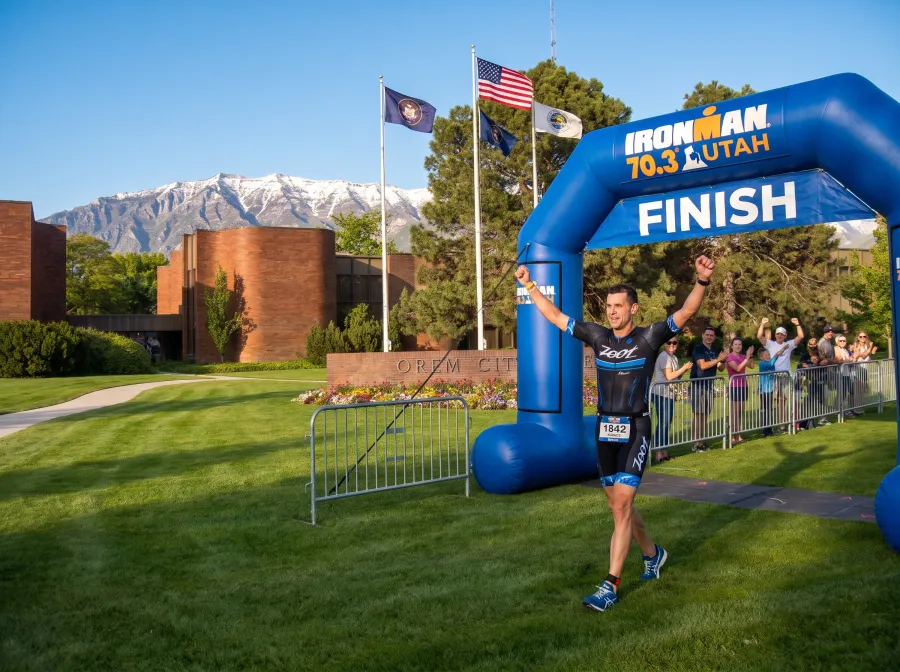
That's Ironman 70.3 Utah: a brand new race in Orem, debuting Saturday, August 21, 2027, built around a reservoir swim, a canyon descent, and a finish line under the Wasatch Mountains. It's the first Ironman-branded event this corner of the state has ever hosted, and it's filling a hole that's been sitting open since St. George walked away from the sport in 2025. General registration opens October 29, 2026. If you're even a little curious, here's what you actually need to know before you set an alarm for it.
- Date: Saturday, August 21, 2027
- Location: Orem, Utah, in Utah Valley beneath the Wasatch Range
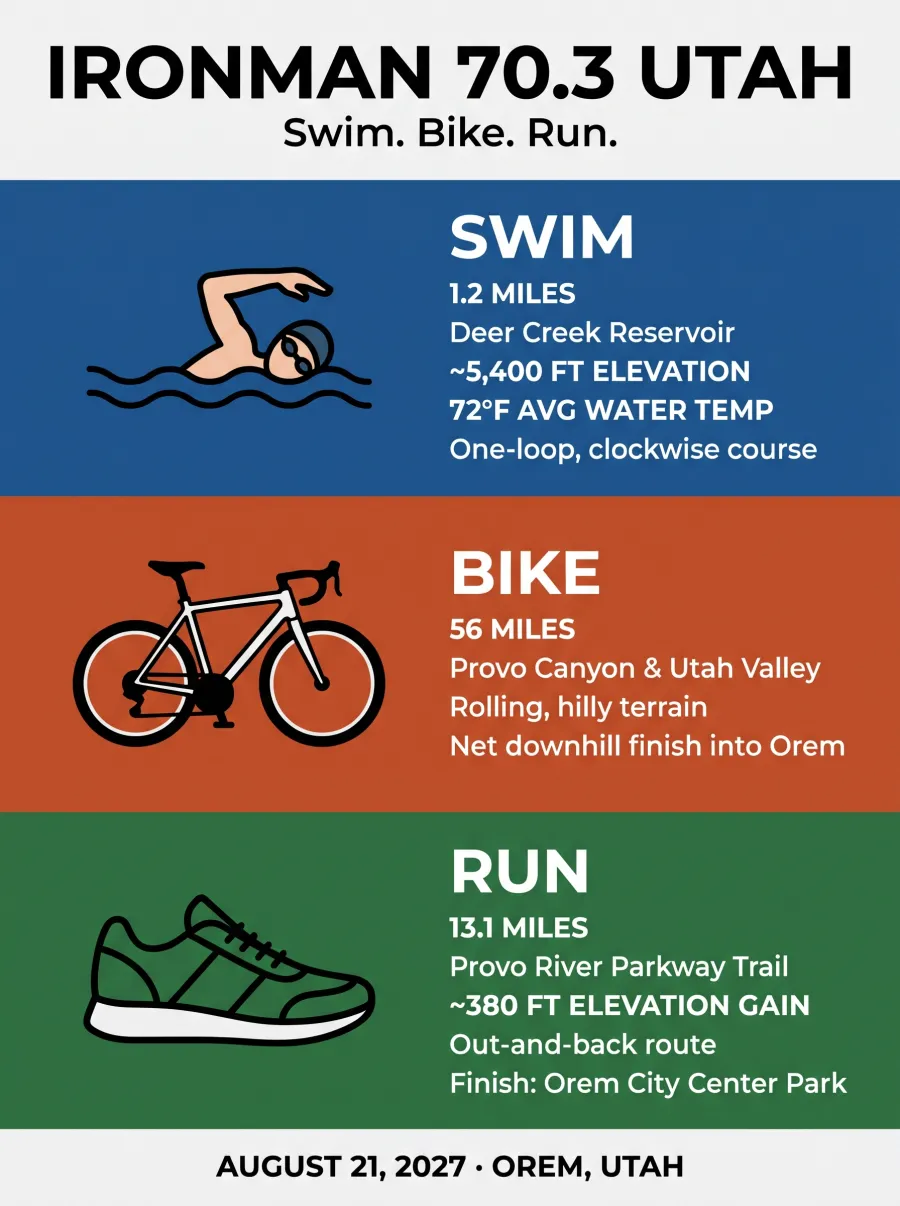
- Swim: 1.2 miles, Deer Creek Reservoir (elevation ~5,400 ft)
- Bike: 56 miles through Wasatch and Utah Counties, including Provo Canyon
- Run: 13.1 miles, out-and-back on the Provo River Parkway Trail
- Qualifies for: the 2028 Ironman 70.3 World Championship
- General registration opens: October 29, 2026, at ironman.com
What Is Ironman 70.3 Utah, and Why Is Everyone Talking About It?
Ironman doesn't add new races to an established U.S. market very often, and when it does, it usually means a city has been lobbying for one for years. Orem's debut is exactly that: a 1.2-mile swim in Deer Creek Reservoir, a 56-mile ride through Provo Canyon and Utah Valley, and a 13.1-mile run that finishes at Orem City Center Park, right next to SCERA Park, with the Wasatch Mountains stacked up behind the finish chute. It's the first Ironman-branded event ever held in Orem, and the race qualifies finishers for the 2028 Ironman 70.3 World Championship (the exact number of qualifying slots hasn't been published yet, which is normal this far out).
Part of the buzz is simple: new races with mountain scenery and a World Championship qualifier attached don't show up often, and this one landed with almost no warning, not long after a chaotic, record-setting Kona had everyone already paying close attention to the Ironman calendar. Part of it is also history. Utah has had an Ironman race before. It just hasn't had one for a couple of years, and the reasons it went away are worth knowing before you get attached to this one.
Ironman's own announcement video leans hard into the scenery angle, and for once the marketing isn't overselling it. Watch the official Ironman 70.3 Utah announcement video if you want the full "towering peaks and crystal clear skies" pitch before you decide whether Orem earns a spot on your calendar.
Wait, Didn't Utah Already Have an Ironman Race?
Yes. St. George hosted Ironman-branded racing for fifteen years, starting with a full-distance event in 2010 and shifting to the 70.3 North American Championship from 2013 through 2025. In one wild thirteen-month stretch, St. George hosted three separate World Championship races: the 2021 Ironman 70.3 Worlds, the pandemic-delayed 2021 full-distance Worlds (actually run in May 2022), and the 2022 Ironman 70.3 Worlds. Seventeen Ironman events over fifteen years is a real legacy, built in a place nicknamed the "Land of Endurance" for a reason.
It ended anyway. Washington County didn't renew the contract after the May 2025 race, citing rising costs, a growing population along the course, road-closure fatigue, and what local officials bluntly called "Ironman fatigue." The breakup was reportedly more one-sided than either party wanted to admit publicly, but the result was the same: no more Ironman racing in St. George for the foreseeable future.
Orem's race is not a replacement for that one, and if you raced St. George expecting déjà vu here, don't. These two courses have almost nothing in common besides the state line. St. George is red rock desert in the far southwest corner of Utah, nearly 300 miles from Orem's green river valley in the north-central part of the state. Different terrain, different climate, different everything except the brand on the finish arch.
The Swim: What Deer Creek Reservoir Actually Feels Like
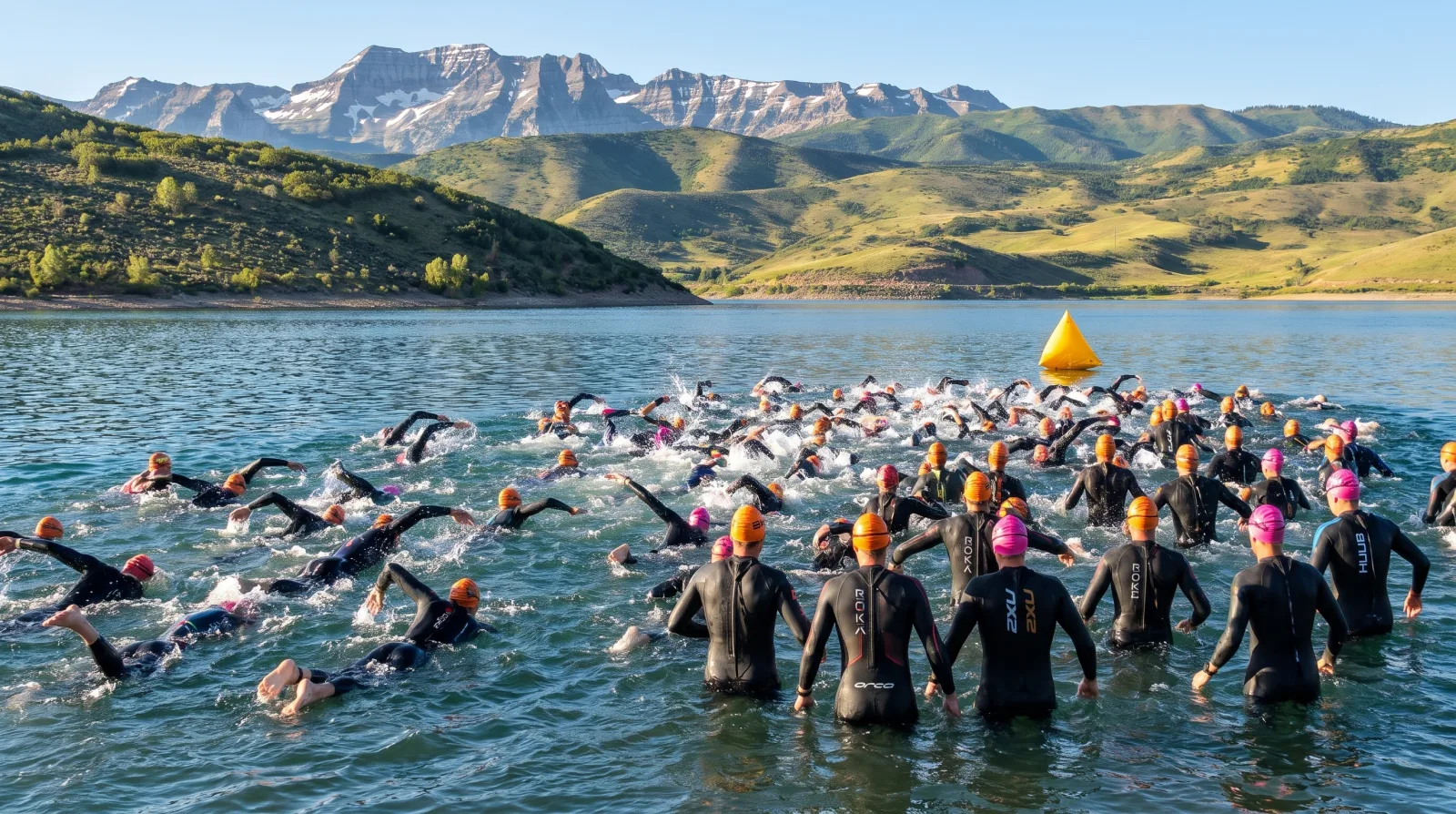
Picture a horseshoe traced into open water, one loop, clockwise, entering and exiting at the south-side campground boat ramp at Deer Creek State Park. ROKA is the official swim-course sponsor. Average water temperature sits around 72°F, which is comfortably wetsuit-legal territory, so expect most of the field in neoprene. The water is also genuinely clear, and the view across the reservoir toward Timpanogos is the kind of thing race photographers live for.
What the course description won't tell you is that Deer Creek Reservoir sits at about 5,400 feet above sea level. That's not a footnote. Altitude does something to your swim that nobody really warns you about until you've felt it: your arms feel fine, your stroke rate feels fine, but your lungs are working through soup. I learned this the hard way at a lake swim in Colorado years ago, breathing every stroke instead of every three and still coming up gasping at the first buoy. If you're flying in from sea level, budget a slower swim split than your usual number and don't panic when your watch says so mid-race.
The Bike: 56 Miles Through Two Canyons Worth of Scenery
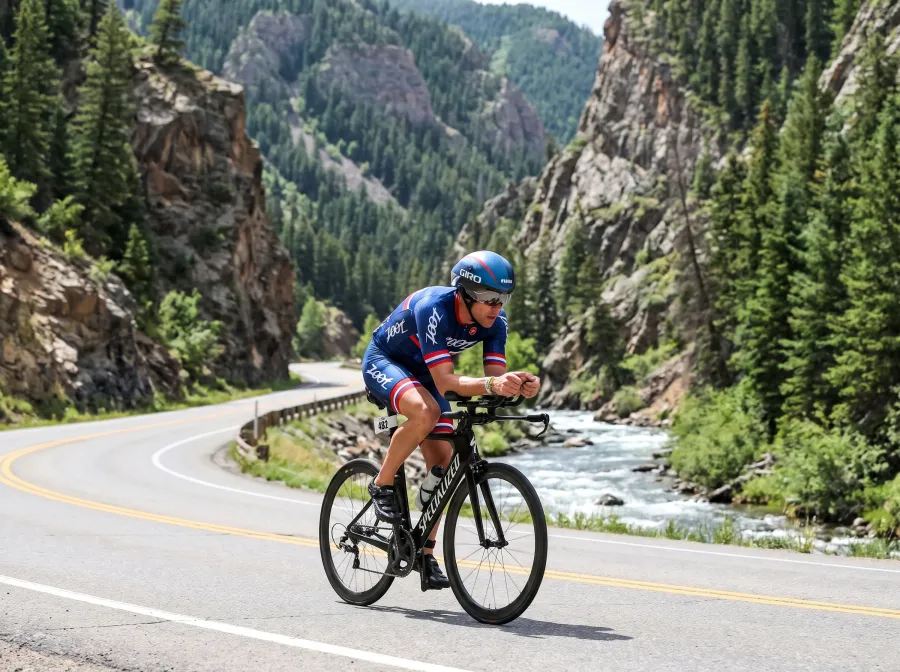
Ironman's own description calls this course "rolling" and "hilly" in one breath, then describes "a net downhill through iconic Provo Canyon" in the next. Both things are true, and the second one shouldn't lull you into thinking this is a free ride. Net downhill is doing a lot of work in that sentence. The canyon road climbs toward Deer Creek Dam at roughly 5,400 feet before the course eventually drops back toward the valley floor near the canyon mouth, which sits around 4,830 feet. Rolling and hilly means rolling and hilly, and nothing about a canyon road at 5,000 feet coasts itself.
Zoot sponsors the bike course, which runs through Wasatch and Utah Counties on roads Ironman describes as smooth with panoramic views, finishing at T2 in Orem. The canyon stretch along the Provo River is already a well-loved local cycling road, so expect good pavement and real scenery, plus the usual canyon-road caveats: wind that funnels unpredictably between rock walls, and descents fast enough to punish anyone who hasn't practiced braking into a corner they can't fully see.
The Run: Why the Last 13.1 Miles Might Be the Hardest Part
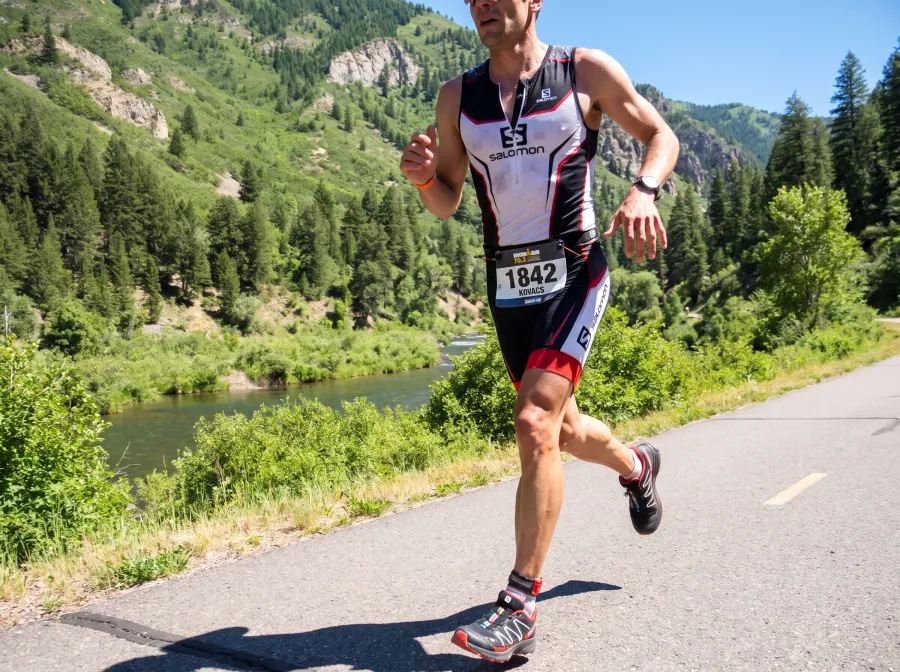
Salomon sponsors an out-and-back route that starts in Orem, follows the Provo River Parkway Trail into the mouth of east Provo Canyon, and climbs roughly 380 feet before turning around and heading back to the finish at Orem City Center Park. The trail itself sounds lovely: river on one side, canyon walls on the other. What sounds less lovely is the forecast. Ironman's own historical weather data for this course shows August highs trending upward each of the last three years, from 94°F in 2024 to 96°F in 2025 to 99°F in 2026, with overnight lows only dropping into the low 70s.
That's a hot run leg with limited shade in sections, on top of a swim you've already raced at altitude. I forgot electrolytes on a hot run leg once and paid for it around mile 10, legs working fine, brain completely checked out. Train for heat specifically this cycle, not just for the distance. Heat acclimation is trainable in a way that shows up on race day, and most people skip it until it's too late.
Should You Worry About Altitude?
Honestly, it depends, and here's why. If you live and train anywhere near 4,000 feet or higher already, this course will feel close to normal. If you're flying in from sea level, your body genuinely doesn't make enough extra red blood cells in a few days to offset the altitude, so don't expect a few days of acclimation to fix much physiologically. What actually helps is arriving early enough to get used to the sensation (even if the blood chemistry hasn't caught up) and racing by effort rather than chasing the pace or heart-rate numbers you're used to hitting at home. Your swim and bike splits will probably run a little slower than your personal history suggests. That's the altitude talking, not your fitness.
How Do You Actually Register, and What Will It Cost?
General registration opens October 29, 2026, through the race page at ironman.com. Pricing hasn't been published yet, which is typical for a race still almost a year out. What is confirmed: this race qualifies finishers for the 2028 Ironman 70.3 World Championship, and the usual Ironman registration perks apply, including the Flex90 fee-free transfer and partial-refund window, the optional Flex Up 75% refund add-on, and buy-now-pay-later checkout through Klarna, Afterpay, or Affirm if you'd rather spread the cost out.
Don't assume you'll have weeks to decide. Utah triathlete Heather Jenson, who's finished eight half-Ironmans, told KSL she's "setting like three alarms" to be online the moment registration opens. A brand new race with a World Championship qualifier, in a state that's been starved of Ironman racing since St. George's exit, is exactly the kind of thing that sells out in hours, not months.
Getting There and Where to Stay
Orem calls itself "Family City USA," and it sits in Utah Valley about 45 miles south of Salt Lake City. That makes travel logistics genuinely easy compared to a lot of destination races. Salt Lake City International (SLC) is roughly 45 minutes away by car and handles the bulk of national and international flights. Provo Municipal Airport (PVU) is about 20 minutes away and is worth checking if you're coming from a smaller regional hub, though it has far fewer direct routes than SLC. Lodging in Orem and Provo is plentiful by Utah County standards, but a first-year race in a compact valley with a World Championship qualifier attached is going to fill hotels fast once the date is locked in. Book early rather than waiting to see how your training goes.
Is This Race Worth Building a Season Around?
If you're near the Wasatch Front and haven't had a true home-state Ironman race since St. George packed up, the answer is close to obvious. Same goes for anyone chasing an early, scenic shot at a 2028 World Championship slot before the bigger-name races fill their qualifying spots. I'd think twice if you're brand new to the sport and not altitude-acclimated at all; there are easier first 70.3s at sea level, and this isn't the forgiving kind of debut course.
Scenery this good doesn't come free, not in a canyon and not in a registration price we don't even know yet. But if Heather Jenson's three alarms are any indication, you may not get much time to think it over. What's your bet: does Orem sell out faster than St. George's old race ever did?


