
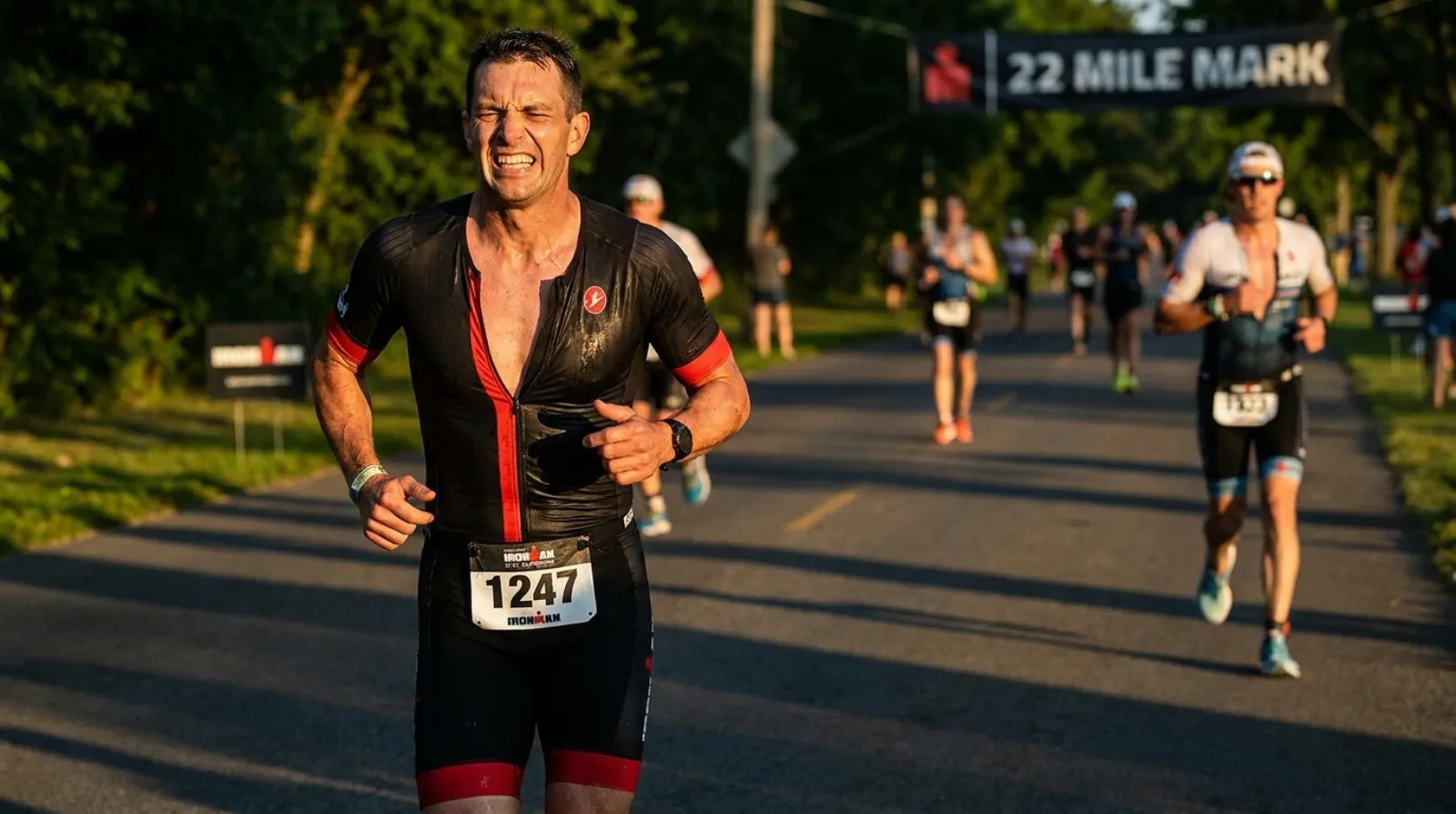
You've trained for months. Your swim is dialed, your bike power is where it needs to be, and your run fitness is the best it's ever been. Then, somewhere around mile 16 of the marathon, your stomach stages a full revolt. What started as mild queasiness becomes full-on nausea, and suddenly you're shuffling to a porta-potty while your race goal dissolves in the Florida heat. Sound familiar?
GI distress is one of the leading causes of DNFs in IRONMAN racing — studies suggest that up to 30–90% of endurance athletes experience GI symptoms during competition, with a significant percentage forced to abandon races entirely. Here's the hard truth most coaches won't tell you: your nutrition didn't fail you on race day. Your training did. Specifically, your gut training.
What Actually Happens to Your Gut During Hard Racing
To fix the problem, you need to understand the physiology. During intense exercise, your body is a ruthless prioritizer. It routes blood — and the oxygen and nutrients it carries — to where it's needed most: your working muscles, heart, and lungs. The digestive system gets the short end of the stick.
At maximum exercise intensity, blood flow to the gut can decrease by up to 80%. This state is called splanchnic hypoperfusion — or, if you prefer plain English, "your guts are being starved of oxygen." The consequences cascade:
- Gastric emptying slows dramatically — food and fluids sit in your stomach longer, causing bloating, fullness, and nausea
- Nutrient absorption drops — intestinal transport proteins can't function properly without adequate blood flow, so even the fuel you're taking in may not actually reach your muscles
- Intestinal lining is damaged — gut ischemia injures the mucosal barrier, increasing intestinal permeability ("leaky gut")
- Endotoxemia occurs — bacterial byproducts leak through the damaged lining into the bloodstream, triggering inflammation and nausea. Research has directly linked endotoxemia to nausea in ultramarathon runners — and the biology is identical in IRONMAN athletes
The switch from bike to run makes this exponentially worse. The aerodynamic position on the bike already compresses your GI tract. Then you start running — and the repetitive impact of each stride mechanically jostles everything your stomach contains. If it hasn't emptied properly, that's when things get ugly.
How Heat Turns a Problem Into a Crisis
Race in the heat and you're stacking a second physiological emergency on top of the first. As your core temperature rises, your body diverts blood to the skin to facilitate sweating and cooling. Now your gut is competing for blood not just with your leg muscles — it's competing with your entire skin surface area too.
Research from Monash University identified body temperature as a major independent risk factor for GI issues during exercise in hot weather. The hotter it gets, the more severe the gut ischemia, the more the intestinal barrier breaks down, and the more likely you are to spend quality time at a portable toilet on the Queen K.
Dehydration compounds this further. When you're under-hydrated, the body can't maintain plasma volume, which reduces cardiac output, which means even less blood available for splanchnic circulation. Highly concentrated nutritional products you take in then draw water from surrounding tissues into the gut, making dehydration worse. It's a beautiful, self-reinforcing spiral of suffering.
The 5 Most Common GI Mistakes Triathletes Make
1. Nothing New on Race Day — Then Doing Everything New on Race Day
Every triathlete has heard "nothing new on race day." Then they show up and take on-course nutrition they've never trained with, drink a sports drink that isn't what they've been using, eat aid station bananas and pretzels they've never tested at race pace. The body has zero tolerance for novel substances during high-intensity exercise when gut function is already compromised.
2. Consuming Too Much, Too Fast, Too Concentrated
Panic-fueling is real. Athletes under-fuel in training, then overcorrect on race day by cramming gels and fluids in because "I should be taking in 90g of carbs an hour." The stomach's capacity to empty is finite. Slamming 3 gels in 20 minutes when you haven't trained with that volume creates an osmotic disaster in your GI tract.
3. High-Fructose or Sugar-Alcohol Products
Fructose is absorbed more slowly than glucose and uses a different intestinal transporter (GLUT5). If you exceed the gut's fructose absorption capacity — roughly 30–40g/hour when taken alone — the excess ferments in your colon, producing gas, bloating, and diarrhea. Check your gel ingredients for sorbitol, xylitol, or high free-fructose content. Your gut will thank you.
4. Eating Normal Food the Morning Before and Expecting a Miracle
Your pre-race breakfast is not the place for fiber, fat, or dairy experimentation. Athletes who eat their "normal healthy breakfast" — whole grain toast, avocado, eggs — then wonder why they have GI distress three hours into the bike leg. All three of those things are your enemy the morning of.
5. Never Practicing Race Nutrition in Training
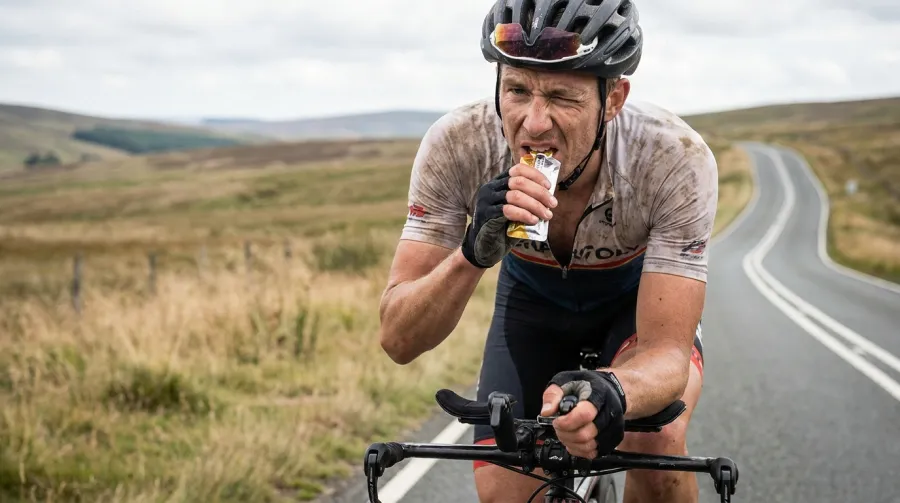
This is the big one. If you do all your long rides and runs with a bottle of water and a gel you grabbed at mile 2, your gut has never been asked to process 80g of carbohydrate per hour while operating on 20% of its normal blood supply. You've trained your cardiovascular system, your musculoskeletal system, even your mental toughness. You've trained your gut exactly zero times. Then you ask it to perform on race day. Predictably, it declines.
The Gut Training Protocol: Train Your Stomach Like a Muscle
The gut is adaptable — more adaptable than most athletes realize. Research shows that consistent gut training can improve gastric emptying rates, upregulate intestinal carbohydrate transporters (meaning your SGLT1 and GLUT5 proteins literally multiply, allowing higher absorption rates), and increase tolerance to large volumes of fluid and carbohydrate during exercise.
The timeline for meaningful adaptation: 6–10 weeks of consistent gut training before your A-race. Some adaptation begins within days. Full adaptation takes weeks.
The Progressive Fueling Protocol
- Start at a comfortable baseline — typically 45–60g of carbohydrate per hour. Execute this on every long session for 2 weeks with your race nutrition products
- Add 10g per hour each week — incrementally ramp toward your target race intake (usually 80–90g/hour for most IRONMAN athletes)
- Train with exact race-day products — same gels, same drink mix, same everything. No variation
- Practice fueling from T1 onward — simulate taking on nutrition immediately off the bike onto the run, not just when you "feel like it"
- Do gut training sessions at race intensity — low-intensity rides don't stress the gut the same way. At least some of your fueling practice must happen at Zone 3–4 effort
- Log symptoms after every session — track what you ate, when, at what intensity, and how your gut responded. Patterns emerge quickly
Elite athletes often target 100–120g of carbohydrate per hour. You don't need to get there — but you do need to train the gut to handle what you plan to consume in competition. The goal isn't just performance; it's not having to stop.
Use Multiple Carbohydrate Sources
Glucose and fructose use different intestinal transporters. When you combine them in roughly a 2:1 ratio (glucose:fructose), you can absorb more total carbohydrate than with glucose alone — research shows up to 90g/hour with dual-source carbs versus ~60g/hour with glucose only. Look for products listing maltodextrin + fructose, or glucose + fructose on the label. Maurten uses a glucose-fructose hydrogel matrix specifically engineered around this principle.
Race Week and Race Morning: What to Avoid
48–72 Hours Before Race
- Reduce dietary fiber — minimize vegetables, whole grains, legumes, nuts, seeds. Go white: white rice, white pasta, white bread
- Reduce dietary fat — cut out fried foods, fatty meats, creamy sauces, and avocado (yes, even avocado)
- No alcohol — it's inflammatory, dehydrating, and sleep-destroying
- No new or unusual foods — not the time to try the local specialty at the race hotel's restaurant
Race Morning (2–4 Hours Before Start)
- Simple carbohydrates only — white rice, white toast, banana, plain oatmeal (low fiber)
- Minimal fat and protein — slow gastric emptying, and you don't need them for a race you've already tapered for
- No dairy if you're lactose-sensitive — this is not the morning to test your tolerance
- No carbonated drinks — gas in, gas out, at the worst possible time
- Avoid excessive caffeine — a moderate dose is fine (caffeine has performance benefits), but excessive intake can trigger lower GI distress
- Stop eating 90 minutes before the swim start — give your gut a chance to clear before you ask it to work
On-Course GI Recovery: When It Hits Mid-Race
Despite best-laid plans, GI distress can still strike. Here's the damage-control protocol:
- Stop fueling immediately — if you're nauseous or cramping, adding more fuel to an already-distressed gut makes things worse, not better. Give it 15–20 minutes to settle
- Sip water only — small amounts, frequently. Plain water is the easiest thing for a stressed gut to process
- Reduce pace — lower intensity means more blood returning to the gut. This is a worthwhile trade at mile 17 of a marathon
- Walk through aid stations — even brief walking allows heart rate to drop and splanchnic blood flow to partially recover
- Try flat cola at the run aid stations — the cola trick is almost legendary in triathlon circles, and there's genuine science behind it. Flat cola provides quick glucose and fructose in a dilute, easily absorbed form. The caffeine helps. The sodium helps. And for reasons not fully understood, many athletes report that cola settles a nauseous stomach when nothing else will
- Avoid solid food — if your gut is already struggling, introducing bananas, pretzels, or real food is a gamble. Stick to liquids until symptoms resolve
Products That Actually Help
Gels and Energy Products
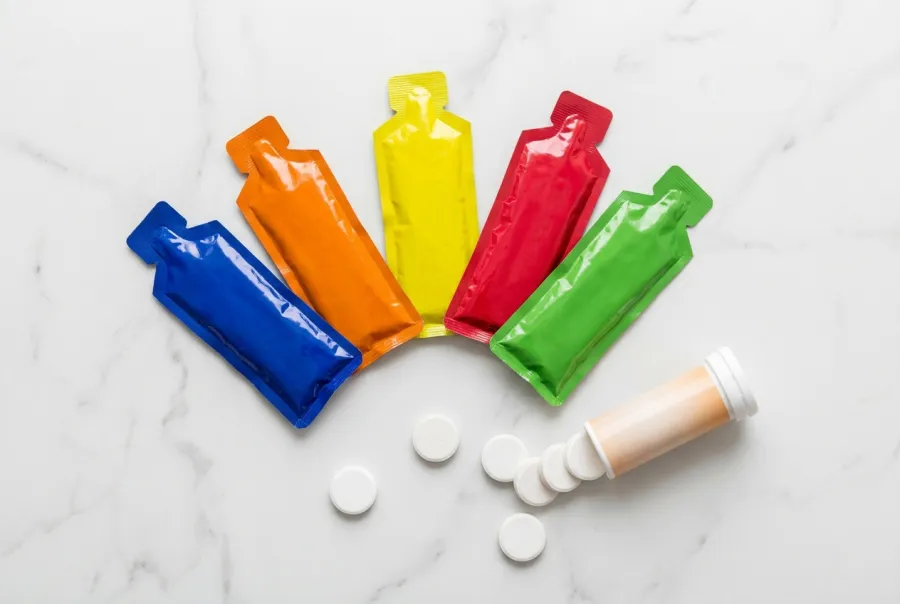
- Maurten Gel 100 and 160 — widely regarded as the most gut-friendly gel on the market. The hydrogel matrix encapsulates the carbohydrates, reducing osmotic stress on the gut. Many athletes who can't tolerate other gels tolerate Maurten well. Expensive, but if you have a history of GI issues, worth every penny
- Science in Sport (SiS) GO Isotonic Gels — isotonic formulation means they don't require a chase of water, reducing the risk of over-concentration in the gut
- GU Energy Gels — the reliable workhorse. Not the most gut-friendly for sensitive athletes, but well-tolerated by most when properly trained
- CLIF Shot Bloks — chewable format is useful for athletes who struggle with gel texture at high fatigue levels
Electrolytes
- Precision Hydration (now Precision Fuel & Hydration) — PH's research specifically addresses the wide variability in sweat sodium concentration between athletes. Their sweat test protocol lets you dial in exact sodium requirements rather than guessing. Sodium is critical: low sodium leads to hyponatremia, but under-salted fueling also impairs fluid absorption
- Nuun Sport tablets — lower calorie electrolyte option for those who prefer to separate hydration from carbohydrate intake
- LMNT — high-sodium electrolyte packets favored by athletes who are heavy or salty sweaters
The Cola Strategy
At IRONMAN aid stations, flat Coca-Cola typically appears around mile 14–18 of the run. It's not there by accident. The formula: roughly 200–250ml of flat cola every 20 minutes from when GI distress starts. Let it go flat if possible — the carbonation adds unnecessary gas. The glucose-fructose mix, caffeine boost, and high palatability make it effective when your gut has rejected everything else. Many athletes plan their cola consumption in advance, regardless of whether GI issues emerge, as a late-race energy strategy.
Your Gut Is Coachable
The triathlete who blows up with GI issues on race day isn't unlucky. They're undertrained — in a part of their physiology that nobody talks about enough. The gut responds to training stimulus just like the heart, lungs, and legs. Push it progressively, give it time to adapt, fuel it with the right products in the right ratios, and it will perform when you need it most.
The athletes who successfully complete IRONMAN races year after year without GI disasters share a common trait: they treat race nutrition as a skill to be practiced, not a box to be checked. They fuel every long session. They know exactly how many grams of carbohydrate per hour their gut can handle. They've tested their products across hot days, hard efforts, and back-to-back sessions.
You can do the same. It takes 6–10 weeks of deliberate gut training, some product testing, and the discipline to actually fuel during training instead of saving it for race day. Do that, and the only thing you'll be managing at mile 22 is the pace math — not a revolt in your intestines.
The race starts long before race day. So does gut training.


