
Let's get something straight: the run leg is where Ironman dreams either come alive or get buried in a shallow grave of cramping calves and broken ambition. Your bike split gets you to T2. Your shoes — and the legs inside them — are what bring you home.
The good news? Carbon-plate super shoe technology has never been better than it is in 2026. The bad news? There are now roughly 47 options claiming to be "the fastest shoe ever made," and most reviews are written by people who ran in them for three miles on a treadmill in a climate-controlled lab.
This isn't that. We've dug through triathlon-specific testing from 220triathlon.com, triathlete.com, and tri247.com, synthesized Reddit's most obsessive shoe geek threads from r/RunningShoeGeeks, and stress-tested each shoe against the specific demands of triathlon: sloppy T2 entries, waterlogged feet, post-bike jelly legs, and the absolute psychological darkness of mile 18 in an Ironman marathon.
Here are the six best.
📊 Quick Comparison: 2026 Triathlon Running Shoe Rankings
🥇 #1 — Hoka Rocket X 3: Best Overall for Every Distance
Price: $250 | Weight: 8.1 oz (men's size 10) | Stack: 42–35mm, 7mm drop
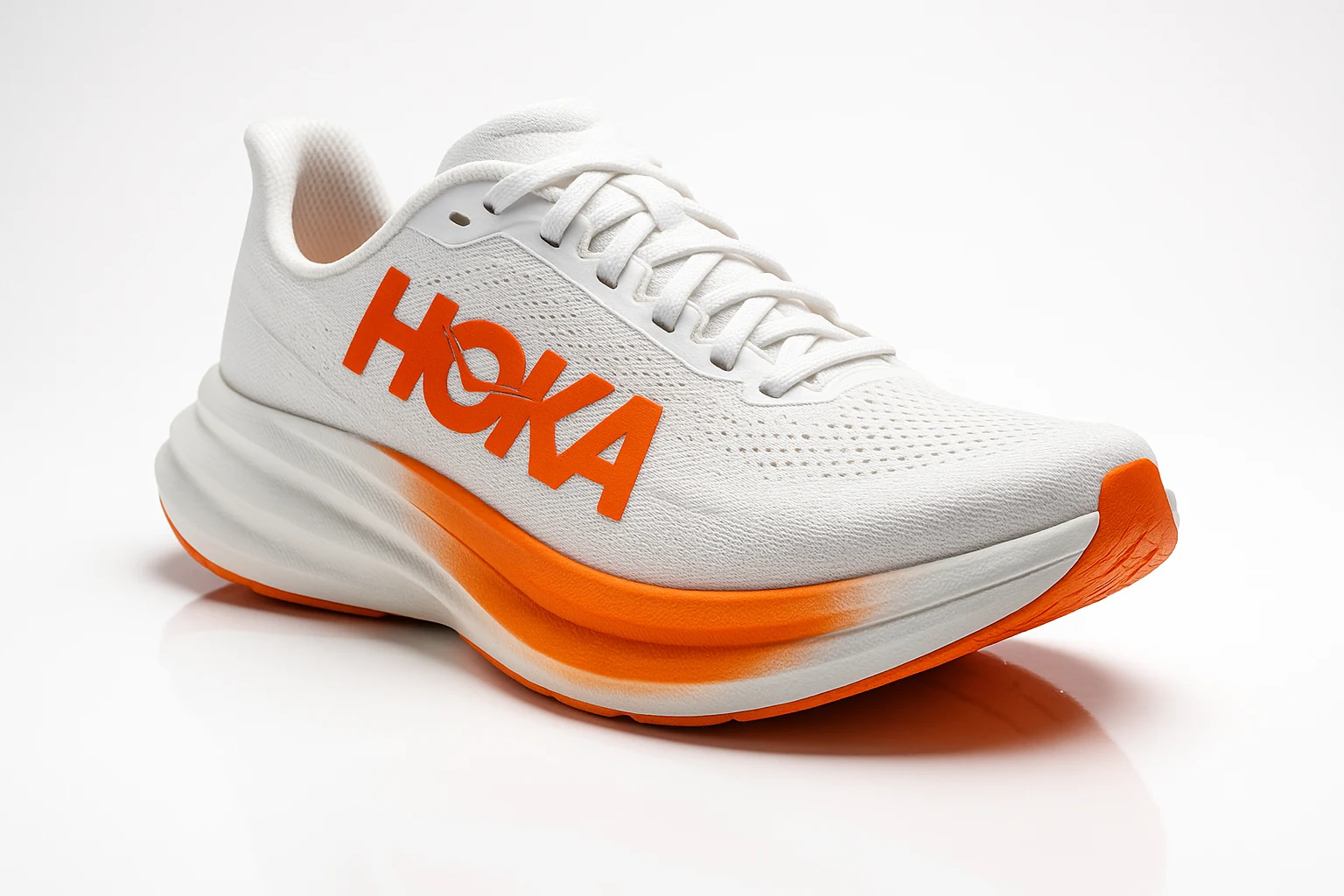
If you could only own one triathlon running shoe in 2026, the Hoka Rocket X 3 would make the strongest argument. Spotted on the feet of fifth-place 2025 Ironman World Championship finisher Sam Laidlow — so yes, it can handle the long stuff — this shoe earned its top spot not just by being fast, but by being versatile in a way most super shoes flat-out refuse to be.
The rocker geometry is aggressive enough to feel like propulsion at threshold pace, but it never becomes awkward at easy 9–10 minute miles. That's exceptional. Most carbon-plated shoes turn you into a stumbling penguin the moment you back off the gas. The Rocket X 3 lets you actually use it in training — meaning you get the race-day adaptation you need without babying a shoe that costs $250.
"The Rocket X 3 might be the most versatile race shoe I've owned. Fast enough to race in, forgiving enough to train in. The outsole durability alone makes it worth $250." — r/RunningShoeGeeks
Triathlon-specific callout: Drainage and breathability are top-notch — crucial when you exit T1 with soaking wet feet or pour water on your head at mile 18. The only real knock: the mesh is rough against bare skin, so go sockless at your own peril. Pack the Lock Laces.
- ✅ Pros: Versatile, durable, fast at all paces, excellent drainage, proven at Ironman distance
- ❌ Cons: Not ideal sockless, slightly heavier than pure race shoes, no off-road capability
🥈 #2 — Adidas Adios Pro 4: Fastest Shoe for Sprint to 70.3
Price: $250 | Weight: 7.05 oz | Stack: 39.5–30.5mm
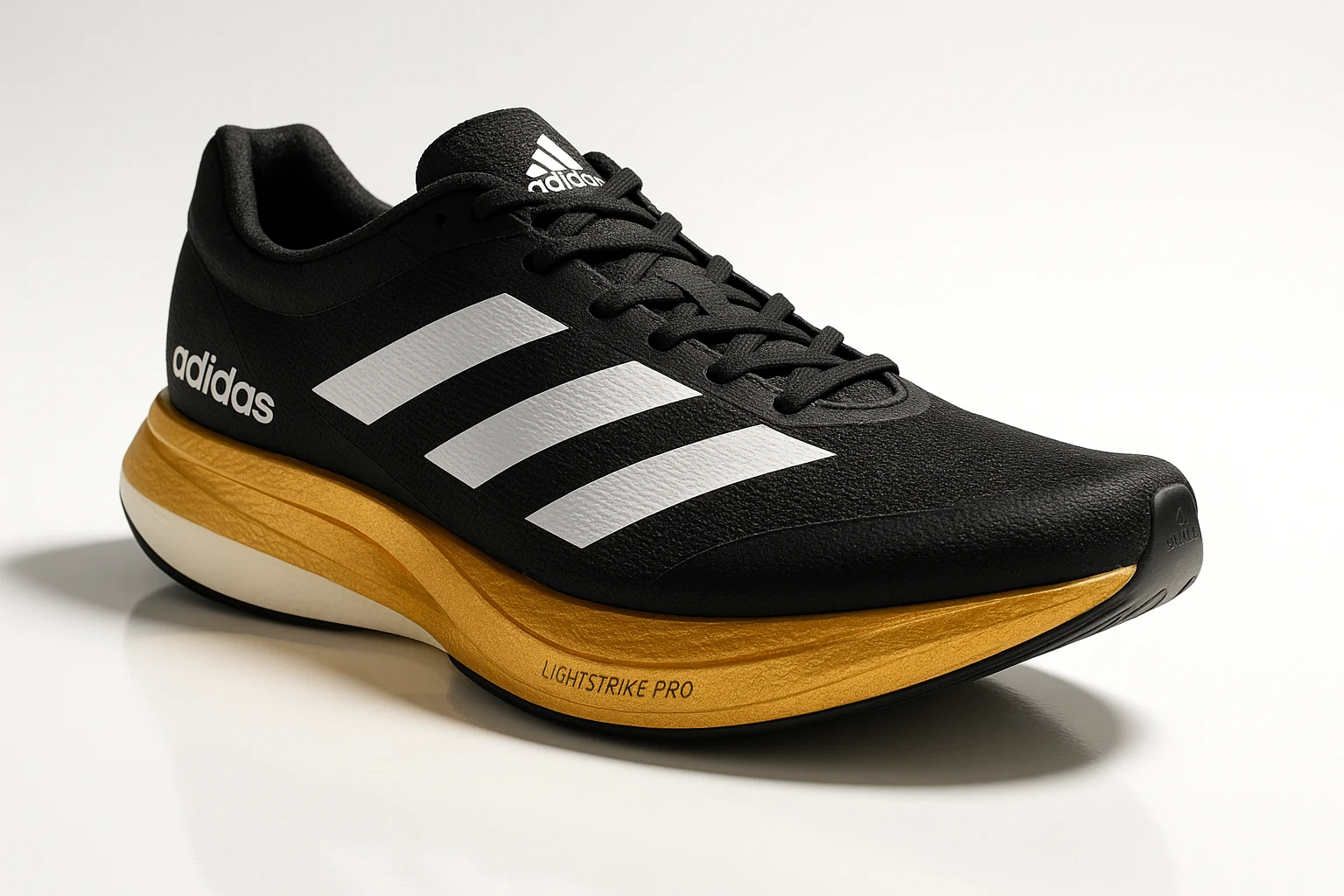
The Adios Pro 4 is the kind of shoe that makes you smirk when you lace up. It's aggressively rockered, punishingly responsive, and it puts you in that forward-leaning, core-engaged position that makes you feel like Alistair Brownlee in his prime — even if you're decidedly not.
The energy return from the Lightstrike Pro foam is some of the best available in 2026. The forefoot compression is borderline violent in the best possible way. And the upper is impressively waterproof and sockless-friendly — rare for a shoe this fast, and huge for triathlon.
"If you can hold the pace, the Adios Pro 4 will absolutely reward you. Best energy return I've felt in a race shoe. Just don't try to jog in it — it doesn't know how." — triathlete.com tester
The catch: This shoe demands you. Heel-striking turns it from a sports car into a shopping cart. And those post-bike jelly legs? If your form breaks down on the run, the Adios Pro 4 won't help you compensate — it'll expose every crack. Best suited for athletes who hold their form under fatigue, and for races up to 70.3. Full Ironman? Proceed with caution.
- ✅ Pros: Explosive energy return, great sockless comfort, excellent drainage, lightest on the list
- ❌ Cons: Punishes poor form, not ideal for heel strikers, risky for Ironman if your run form degrades late
🥉 #3 — Nike Vaporfly 4: The Comeback King
Price: $260 | Weight: 5.9 oz | Stack: 40–32mm
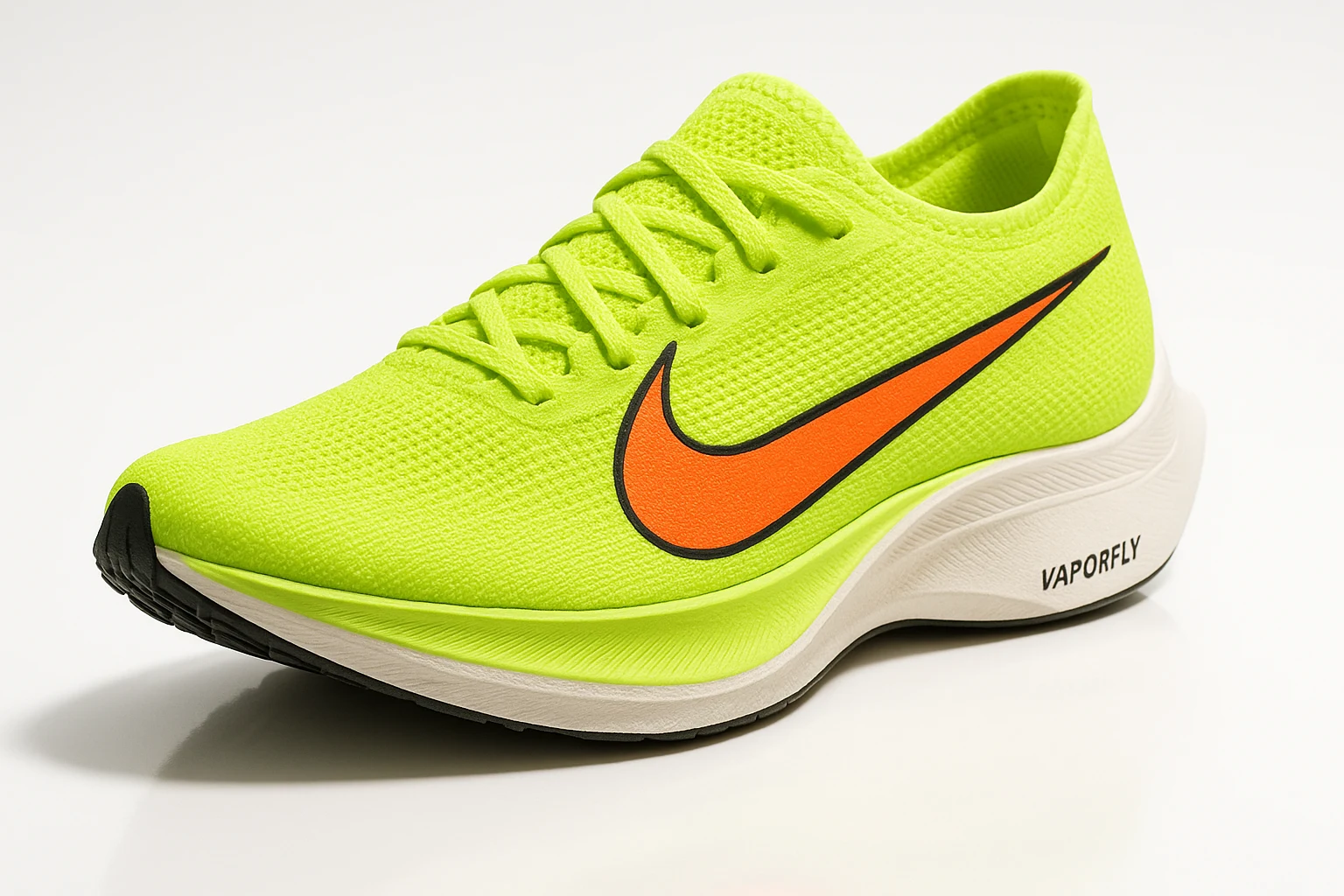
The original Vaporfly line invented the carbon-plate revolution. The Vaporfly 3 wobbled. The Vaporfly 4 is back, and Reddit's shoe geeks are enthusiastic: "insanely lightweight yet far more stable and structured than the 3."
At 5.9 ounces it's the lightest shoe on this list — and you'll feel it. ZoomX foam delivers that snappy, direct-contact responsiveness that Nike does better than almost anyone. The ribbed mesh upper locks your foot down like it knows what it's doing. Continuous rubber under the forefoot gives you grip confidence without adding weight.
"Picked up the Vaporfly 4 for around $150 on sale. Legitimately shocked. It's like the 3 never happened. Smooth, light, stable. I ran a 1:19 half off the bike and it felt effortless." — r/runninglifestyle, 2026
Triathlon note: The tongue design on the Vaporfly 3 was a T2 nightmare. The 4 improves on this, though it's not quite as fast as the Adios Pro 4 to get on. Excellent for all distances. The ZoomX foam holds up better over Ironman marathon miles than many competitors, making it a legit full-distance option.
- ✅ Pros: Lightest race shoe on the list, snappy ZoomX responsiveness, improved stability over V3, can find on sale
- ❌ Cons: Premium price ($260), tongue still not the easiest T2 entry, less forgiving on bad form days
4. Saucony Endorphin Elite 2: Best Shock Absorption for Long Course
Price: $250 | Weight: 7.2 oz | Stack: 40–32mm
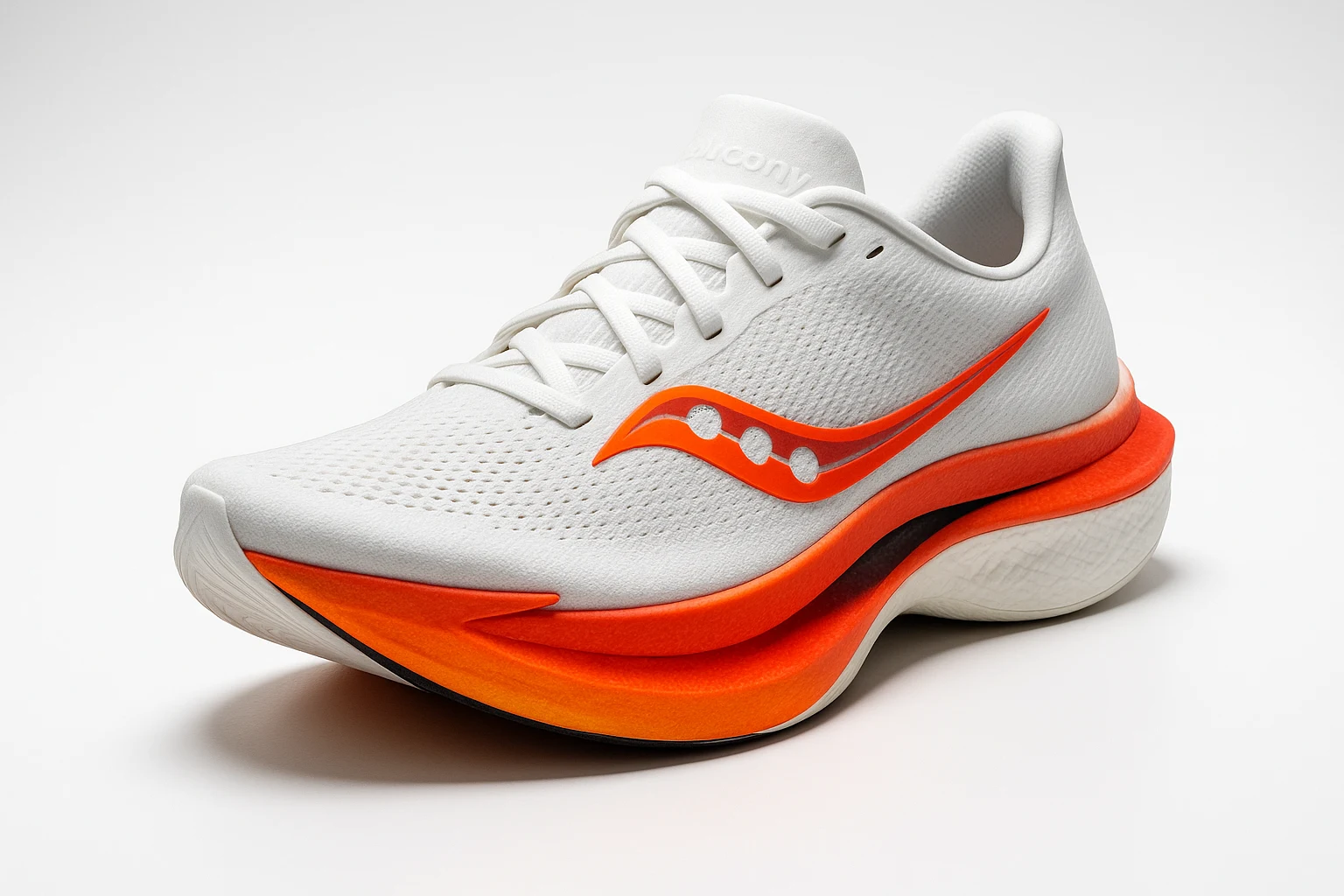
If your Ironman marathon tends to go sideways around mile 16 because your legs feel like they've been hit with a tire iron, the Endorphin Elite 2 is your shoe. It earned the "best shock absorption" crown in 2026 competition shoe reviews — and it earns that crown.
The PWRRUN HG foam is exceptionally soft while still being fast and efficient. The carbon plate drives energy return without the punishing stiffness you get from more aggressive race shoes. The result is a shoe that genuinely lets you run long distances without your body staging a mutiny.
"The Elite 2 is what happens when a race shoe remembers that some of us are racing for 10+ hours. It's fast AND forgiving. That combination is rarer than it sounds." — r/RunningShoeGeeks
The catch for triathletes: The heel counter tends to fall inward when you're trying to slap your foot in during a flying T2 dismount. This is a real problem. Budget an extra 3–5 seconds in transition or practice the entry obsessively. Also, the upper is slightly coarse — not ideal sockless. The Endorphin Elite 3 is due June 2026 with a redesigned heel and IncrediRUN foam — if you're buying new in summer, consider waiting.
- ✅ Pros: Best long-course cushioning on the list, fast AND forgiving, accommodating toe box for swollen Ironman feet
- ❌ Cons: Heel counter complicates fast T2 entry, not great sockless, Elite 3 coming June 2026 — consider timing your purchase
5. ASICS Metaspeed Sky Tokyo: Best for Cadence-Dominant Runners
Price: $250 | Weight: 5.8 oz | Stack: 40–30mm
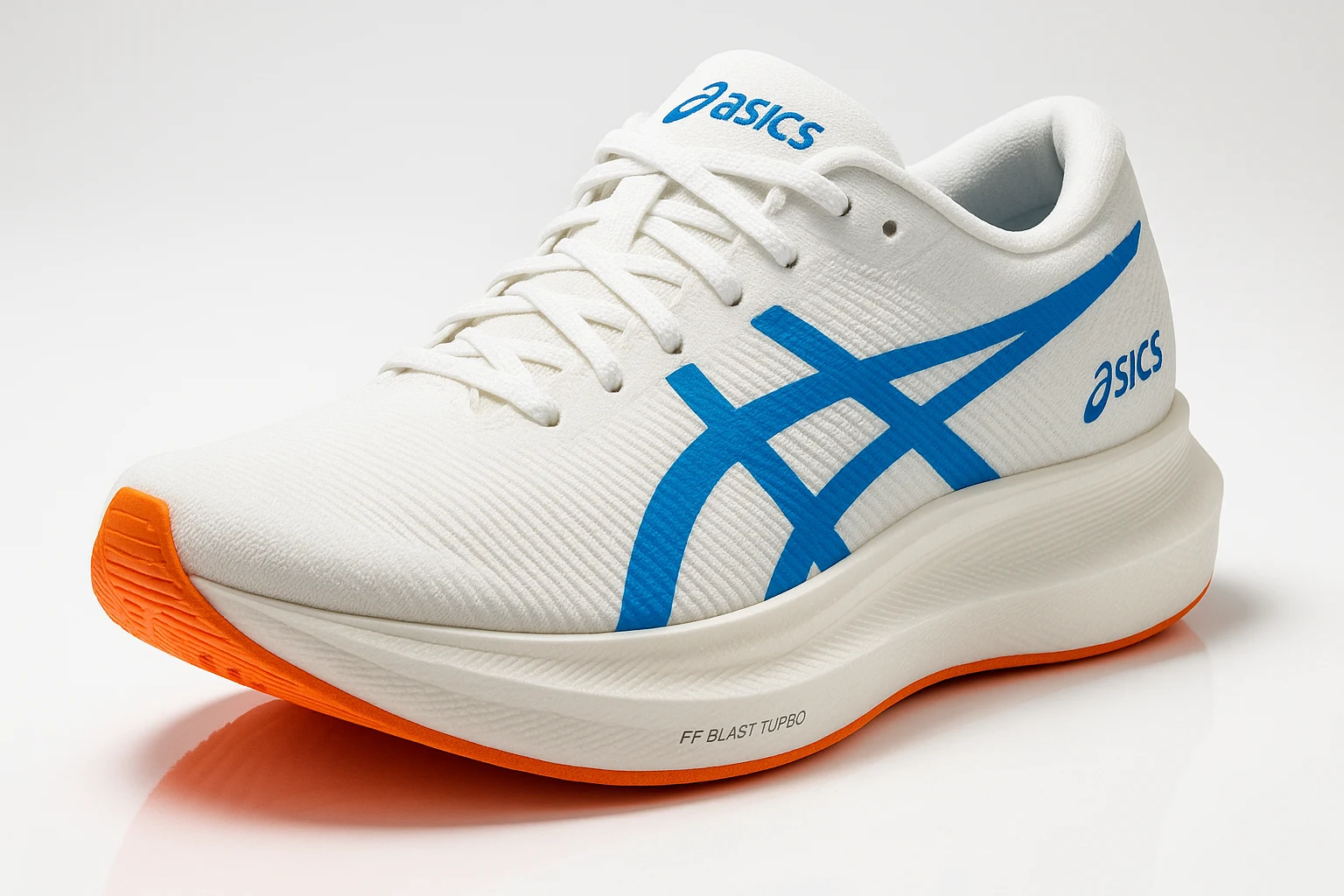
ASICS built two versions of the Metaspeed: the Edge for stride-length runners and the Sky for cadence runners. If you've been told you overstride, or you naturally run with a quicker, lighter turnover — the Sky Tokyo was designed specifically for you.
It is aggressively light (5.8 oz ties it for lightest here), zippy as a sports car, and the FF Blast Turbo foam layered midsole delivers a unique dual-density feel that's firm up top for response and soft below for cushion. The breathable woven upper is race-day ready and comfortable enough for daily training use in a pinch.
"If you have a high cadence and the Vaporfly always felt a bit 'bouncy' for your style, the Metaspeed Sky Tokyo will feel like it was made for you. Snappy, precise, and stupid fast." — 220triathlon.com
Best for: Sprint and Olympic distances where you can sustain high cadence for the full run. It's less forgiving than the Endorphin Elite 2 when fatigue sets in over Ironman distances.
- ✅ Pros: Elite weight, perfect for high-cadence runners, versatile enough for training
- ❌ Cons: Cadence-runner specific (stride runners should get the Edge instead), less ideal at Ironman distances, sizing can run narrow
6. Brooks Hyperion Max 2: Best Value and Best for Training
Price: $180 | Weight: 7.8 oz | Stack: 38–28mm
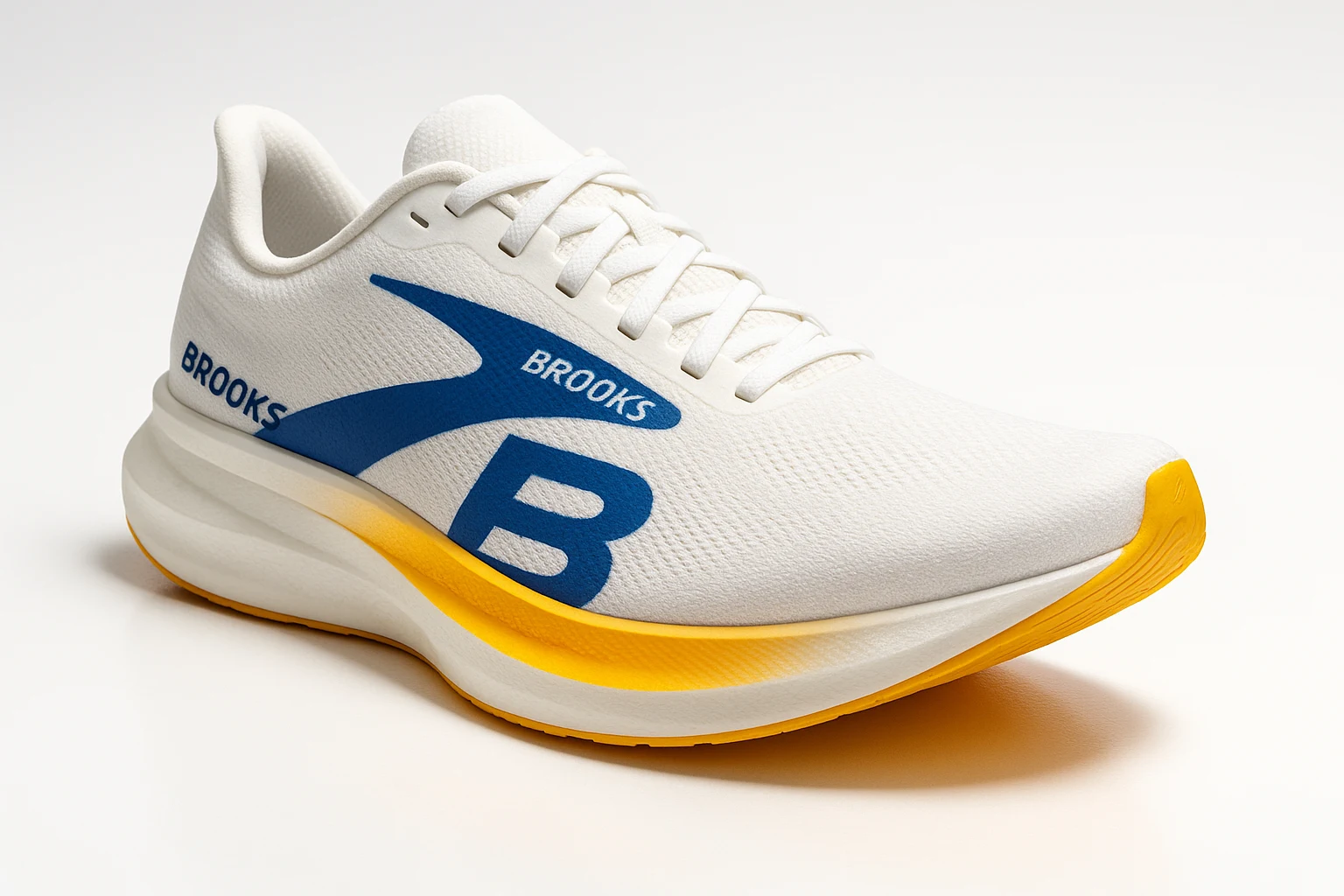
Not every shoe needs to cost $260 and require a specific running gait to perform. The Brooks Hyperion Max 2 comes in at $180 — $70–80 cheaper than the rest of this list — and still packs a PEBAX SpeedVault plate, a sockless-friendly knitted upper, and enough speed for legitimate race use at Olympic distance.
Where it really shines is as a workhorse training shoe. While the carbon super shoes above want to be saved for race day and key workouts, the Hyperion Max 2 can handle tempo runs, brick sessions, and long training runs without feeling wasted on lesser efforts.
"I use the Hyperion Max 2 for everything except my actual A-race. It's fast enough that I don't feel like I'm cheating myself on hard sessions, but durable enough that I'm not destroying a $250 shoe on a Tuesday brick workout." — r/triathlon
The honest truth: This isn't the shoe for Kona dreams. The firm cushioning can fatigue your legs over very long runs, and it won't match the pure speed of the top 5 on this list on race day. But for value, versatility, and building race-ready legs through training? It's unmatched at this price point.
- ✅ Pros: Best price on the list, great sockless comfort, PEBAX plate for real propulsion, ideal training companion
- ❌ Cons: Firm cushioning is punishing over very long distances, not a match for race-day speed of top 5
How to Choose Your Shoe: The Triathlon-Specific Framework
Here's the decision tree you actually need:
- Racing all distances, want one shoe: Hoka Rocket X 3. Full stop.
- Sprint or Olympic speed specialist: Adidas Adios Pro 4 — but you better hold your form.
- Ironman and your feet swell like sausages by mile 20: Saucony Endorphin Elite 2 for the roomier toe box and shock absorption. Wait for the Elite 3 in June if you can.
- High-cadence runner who's always felt slightly off in other super shoes: ASICS Metaspeed Sky Tokyo.
- Just want the lightest thing possible: Nike Vaporfly 4.
- Budget-conscious or need a training workhorse: Brooks Hyperion Max 2 at $180 is genuinely excellent.
"The best shoe is the one you've trained in enough to trust. Race day is not the time to debut a new pair of $250 carbon rockets. Break them in. Know them. Then let them fly." — David Warden, triathlon coach
One last thing: whatever shoe you choose, put in the miles with it before race day. The most expensive shoe in the world can't compensate for under-prepared legs. Train your run. Be consistent. Show up to T2 with something left in the tank. Then let the shoe do the rest.
Now stop reading about shoes and go for a run.


