
Picture this: mile 18 of the Ironman run. You're running (using the term loosely — let's say "forward-shuffling with intent"). Your hands are trembling. Your stomach has been staging a low-grade revolt since the turnaround. Someone holds out a thick, syrup-dense gel at an aid station and you instinctively recoil. You've been there. We've all been there.
SIS GO Isotonic Energy Gels exist precisely to solve that problem. They're the gel that redefined what race nutrition can feel like — and fifteen years after they first appeared on the market, they're still the benchmark by which every other gel is measured. Here's why.
The Science Behind "Isotonic"
Most energy gels are hypertonic — meaning they're more concentrated than your blood. When you swallow them, your body has to pull fluid from your cells to dilute them before they can be absorbed. This is why the standard advice is "take with water" — and also why ignoring that advice can leave you with a stomach that sounds like a washing machine by kilometre 30.
SIS cracked this with a different formulation. Their GO Isotonic gels are engineered to match the osmolality of your blood — roughly 270–330 mOsm/kg — meaning they can be absorbed directly from the stomach without requiring additional fluid to dilute them. The result: faster absorption, less GI stress, and no mandatory water chaser. For a triathlete managing nutrition on a bike bento box with limited hydration access, this is not a minor detail. It's a game-changer.
The primary carbohydrate is maltodextrin — a long-chain glucose polymer that absorbs quickly and tastes mild rather than cloying. Each standard 60ml sachet delivers 22 grams of carbohydrate and 90 calories, hitting the lower end of what most sports dietitians recommend per gel (20–30g carbs) while keeping the flavour from becoming overwhelming at dose 4, 5, or 6.
As an Amazon Associate, Triathlon Universe earns from qualifying purchases.
Technical Specifications
| Format | 60ml soft sachet |
| Carbohydrates | 22g per sachet |
| Calories | 90 kcal per sachet |
| Formula Type | Isotonic (270–330 mOsm/kg) — no water needed |
| Primary Carb Source | Maltodextrin (long-chain glucose polymer) |
| Consistency | Liquid-gel (thinner than traditional gels) |
| Variants | Standard, Caffeine+ (75mg), Electrolyte |
| Recommended Dose | 1–3 gels per hour during endurance exercise >90 min |
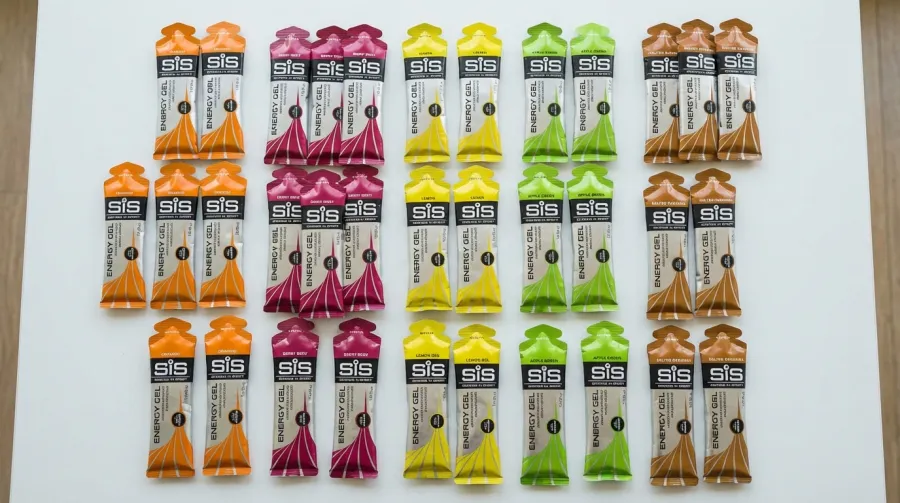
| Flavours Available | 10+ including Berry, Orange, Apple, Cola, Lemon & Mint |
| Price | ~$65 for 40-pack ($1.63/gel) |
How It Tastes (And Why That Actually Matters)
Gel flavour fatigue is a real and underappreciated race day hazard. Swallow enough of the same intensely sweet, syrupy gel and your body starts rejecting them — not because of the chemistry, but because your brain simply refuses. This is how athletes bonk at mile 20 with three gels still in their pockets. They just couldn't face another one.
SIS handles this problem well. Their gels have a noticeably milder, less sugary flavour profile than most competitors. The consistency sits between apple juice and light applesauce — genuinely easy to swallow without gagging, even deep in race fatigue. Reviewers consistently describe them as "the gel that doesn't make you dread the next one," which is, frankly, the highest praise race nutrition can receive.
Ten-plus flavours means you can rotate through the bike leg without eating the same one six times. Berry and Apple are the fan favourites. Cola is divisive (some people find the carbonation mimicry odd mid-effort). Lemon & Mint is genuinely refreshing on a hot day and converts almost everyone on first taste.
The Caffeine+ Variant: A Race Day Weapon
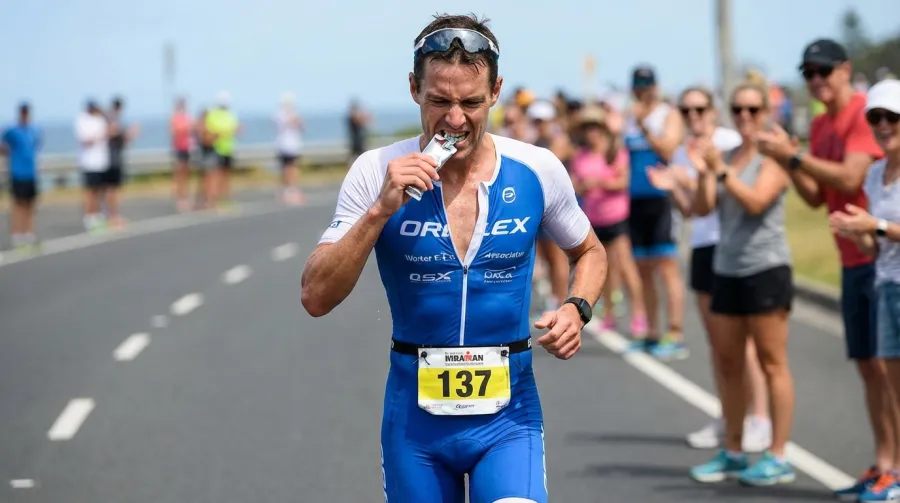
SIS's caffeinated variant packs 75mg of caffeine per sachet — roughly the equivalent of a strong espresso shot. This is meaningful for long-course racing where mental focus starts degrading in the back half of the run. A smart race plan might look like: standard gels through the bike leg and first half of the run, switching to caffeine+ gels from around kilometre 25 of the marathon through to the finish.
Important caveat: the caffeinated and electrolyte variants are not isotonic — they have a different formulation that requires water. Read the label before race day. You don't want to discover this distinction mid-race.
SIS GO vs. The Competition
vs. Maurten 100
Maurten's hydrogel technology is impressive and genuinely works for many athletes — particularly those with sensitive GI systems who struggle with anything else. But at ~$4+ per gel, a full Ironman nutrition plan with Maurten gets expensive fast. SIS at $1.63/gel gives you clinically-proven isotonic absorption at less than half the price. For most age-groupers, the difference in GI tolerance is negligible; the difference in cost is not.
vs. GU Energy Gels
GU is the most widely available gel on the planet — you'll find them at virtually every aid station. They're reliable, well-tested, and come in an enormous flavour range. But they're hypertonic and thick, meaning water is non-negotiable. If your race nutrition plan relies on course aid stations rather than your own bento box supply, GU's ubiquity is a genuine advantage. If you're self-supplied, SIS's no-water formula wins on simplicity and gut comfort.
Race Day Execution: How to Use Them
A general framework that works well for most long-course athletes:
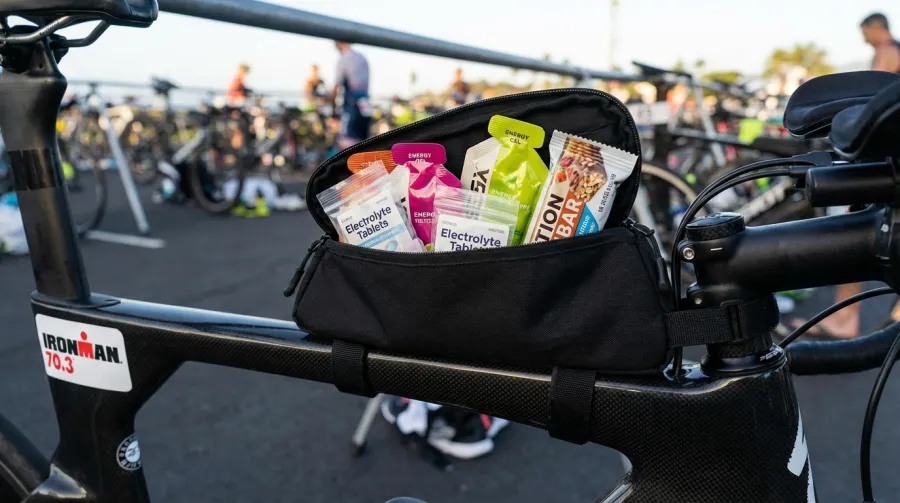
- Bike leg: 2 gels/hour from 45 minutes in, alternating flavours, standard (non-caffeine) formula. Stash in your bento box or back pocket. They slide out clean — no sticky residue.
- Run leg (first half): 1–2 gels/hour, continue standard formula. Tuck into your tri-suit pocket or race belt.
- Run leg (final third): Switch to caffeine+ if using. Take every 30–40 minutes. Pair with water at aid stations (good practice regardless of formula).
- Practice in training: Test your exact race-day gel schedule in your longest brick sessions. GI response is highly individual — what works for your training partner may not work for you.
The One Honest Drawback
SIS sachets are larger than traditional gels — about the size of a ketchup packet at a diner rather than the slim tubes you might be used to. This is a direct result of the isotonic formulation requiring more water content. For athletes using a small rear-pocket race belt or limited bento box space, it's worth planning around. A 40-pack fills a reasonable amount of drawer space too, but that's a problem we're willing to live with.
They're also not always available at race-course aid stations — which is primarily a Maurten or GU world out there. Self-supply is the play, which means planning your carry capacity before race morning.
The Verdict
The SIS GO Isotonic Gel earns our Best in Class nutrition pick because it solves the fundamental race-day nutrition problem — gut distress and flavour fatigue — without costing a fortune or requiring a PhD in sports dietetics to execute. The isotonic formula works, the taste is genuinely mild and manageable, the caffeine variant is a legitimate race-day performance tool, and at $1.63/gel for the 40-pack, the economics make sense.
Will it guarantee a PR? No. But it'll make sure your stomach isn't the reason you didn't get one. In long-course triathlon, that's worth every cent.
Triathlon Universe Rating
4.6 / 5.0
Best in Class — Race Day Nutrition


