
Indoor training used to be the thing you did when the weather turned nasty and you had no other options — a grim, static punishment that smelled faintly of old rubber and regret. Then smart trainers happened. Today, athletes are willingly skipping outdoor rides to chase Zwift KOMs, hit precise power targets, and race strangers in virtual worlds at 6 AM. The pain cave is no longer a cave. It's a lab.
But here's the thing: not all smart trainers are created equal. Buy the wrong one and you'll spend your winter staring at wildly inconsistent power numbers, listening to a sound like a blender full of rocks, and questioning every training decision you've ever made. Buy the right one and your FTP gains practically collect themselves.
We tested three direct-drive contenders — the Wahoo Kickr Core 2, the Tacx Neo 3M, and the Elite Direto XR — plus a fourth wheel-on option for athletes who want smart training without the teardown. Here's what you actually need to know.
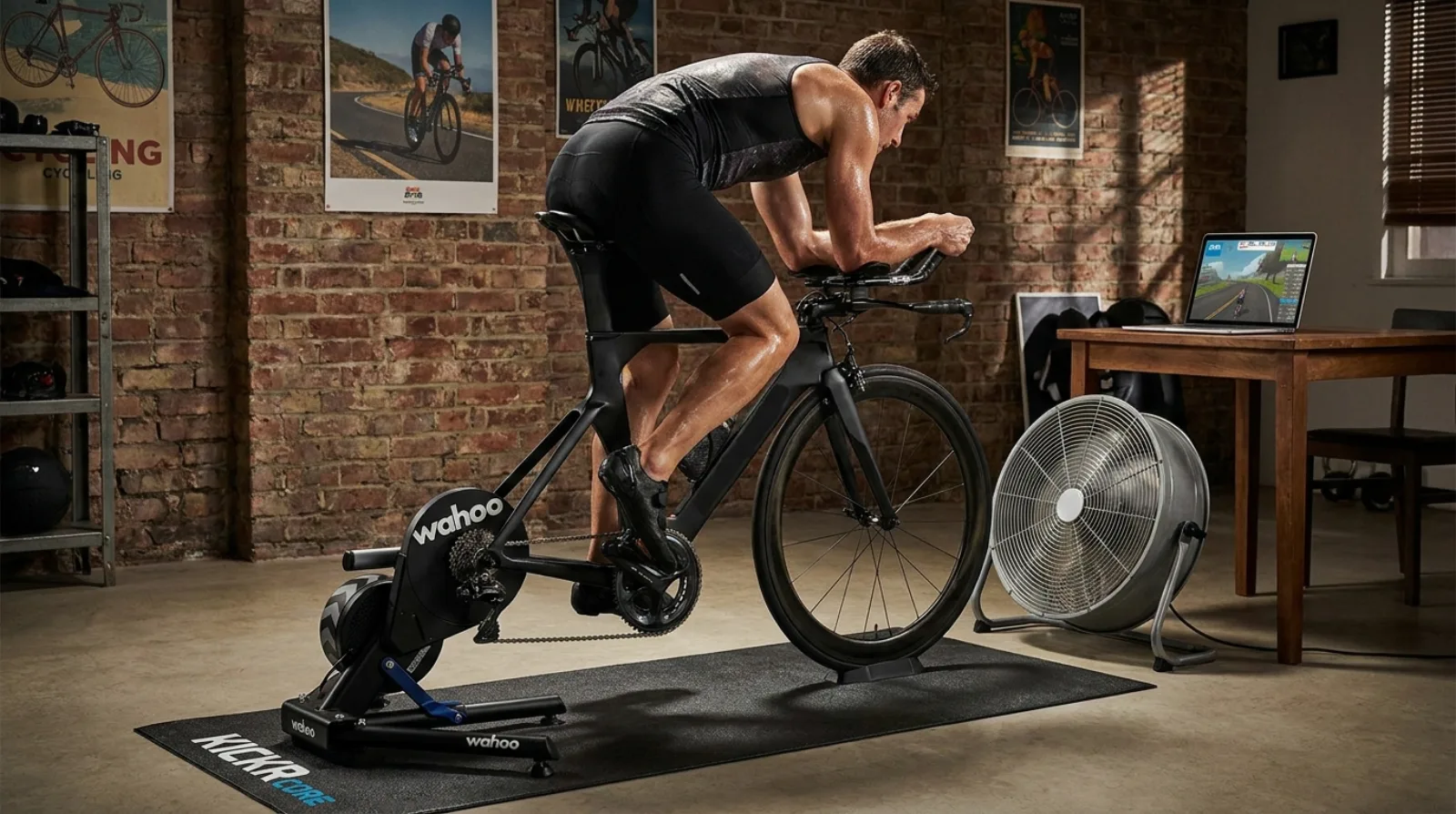
What Actually Makes a Smart Trainer Good?
Before we dig into the hardware, a quick primer on what separates a great smart trainer from an expensive piece of anxiety-producing furniture.
Power Accuracy
Power is the currency of structured training. If your trainer says you're pushing 250W and you're actually pushing 237W, your zones are wrong, your FTP test is wrong, and your training stress score is fiction. Most trainers claim accuracy within ±1–2%. The difference between ±1% and ±2% sounds negligible until you're comparing data across devices or chasing specific training adaptations. For triathletes doing precision work, tighter is better.
Noise
Apartment dwellers, people with sleeping partners, and anyone training at 5 AM understands this intimately. Smart trainers range from genuinely quiet (Tacx Neo territory) to "the neighbors think you're renovating" (certain budget rollers). Noise is measured in dB, and the difference between 50 dB and 65 dB is not academic — it's the difference between a library and a busy restaurant.
ERG Mode Response
ERG mode is when the trainer automatically adjusts resistance to hit a target power output, regardless of your cadence or gear. The key metric is response time — how quickly the trainer adjusts after you change effort. Fast, smooth ERG response means workouts feel controlled and professional. Sluggish ERG response means your intervals look like cardiograms from a stressed stockbroker.
Road Feel and Flywheel
Flywheel weight determines how "real" the trainer feels. Heavier flywheels create more momentum, mimicking the feeling of actual road cycling. Some trainers use virtual flywheels (magnetically simulated weight) to achieve similar effects at lower physical mass. The quality of this simulation separates the $600 experience from the $2,000 experience in ways your legs will immediately understand.
App Compatibility
All three trainers here work with Zwift, TrainerRoad, Rouvy, and most major platforms. But the quality of that integration — response lag, data fidelity, connection reliability — varies. ANT+ FE-C and Bluetooth FTMS are the universal protocols; anything supporting both should connect to anything modern without drama.
The Contenders
Wahoo Kickr Core 2
The original Kickr Core launched in 2018 and became the default answer to "what trainer should I buy?" for about four years running. The Core 2, released in September 2025, takes everything that worked and adds the features that power users kept complaining were missing. The result is a trainer that punches well above its price class.
The headline additions: built-in WiFi for firmware updates and more stable app connections, a new Race Mode that bumps power and cadence transmission to 10Hz (from the standard ~4Hz), and Sensor Bridging that lets the trainer relay heart rate and other sensor data directly — a genuine quality-of-life upgrade for Apple TV users who've historically needed a separate ANT+ bridge dongle.
The redesigned flat legs are a small but meaningful improvement. The original Core's legs were functional but awkward to set up. The Core 2's legs deploy flat and cleanly, making setup faster and storage tidier. These are the kind of details that trainers at double the price get right, and Wahoo brought them down to the $549 tier.
Power accuracy is rated at ±2% — the widest margin of the three direct-drive options here. In practice, most users find the Core 2 tracking within 1.5% of external power meters during sustained efforts, with slightly wider deviations during explosive sprints. For 95% of training purposes, this is completely adequate. For elite athletes chasing precision, it's worth noting.
| Spec | Detail |
|---|---|
| Price | $549 USD (MSRP) / frequently on sale ~$399 |
| Power Accuracy | ±2% |
| Max Power | 1,800W |
| Max Grade Simulation | 16% |
| Flywheel Weight | 5.4 kg (11.9 lbs) |
| Connectivity | ANT+, ANT+ FE-C, Bluetooth (3 simultaneous), WiFi |
| Cassette | Optional 11-speed (11-28) or Zwift Cog |
| Axle Compatibility | 130/135mm QR, 12x142, 12x148 thru-axle |
| New in Core 2 | WiFi, Race Mode (10Hz), Sensor Bridging, flat legs |
Bottom line: The Kickr Core 2 is the trainer that makes the most sense for the most people. It's not the most accurate trainer in this group, and it's not the quietest, but it delivers a genuinely excellent training experience for a price that doesn't require a conversation with your accountant. The WiFi integration and Race Mode additions make it a meaningful step up from its predecessor rather than a minor refresh.
Tacx Neo 3M
The Tacx Neo 3M is what happens when a company decides that "good enough" is not their product philosophy. At $1,999, it costs roughly 3.5x the Kickr Core 2, and Garmin (which acquired Tacx in 2019) has very deliberately made sure you feel the difference the moment you clip in.
The Neo 3M's party trick is its motor system — a direct-drive magnetic motor that generates its own power from your pedaling. No external power cable required. It also produces zero mechanical noise from the resistance unit itself; the only sound you'll hear is your drivetrain. In a world of smart trainers, the Neo 3M is genuinely, startlingly quiet.
Power accuracy is rated at ±1%, and independent testing consistently validates that claim. The Neo 3M's power data is clean, consistent, and tracks closely with quality external power meters across the full power range — including the notoriously noisy low-power "soft pedaling" zones where cheaper trainers tend to produce garbage data.
The "3M" stands for the three-way motion the trainer offers. Built-in multidirectional motion plates allow 5cm of fore/aft movement and meaningful side-to-side tilt — all without any additional hardware. For athletes training through an injury, dealing with saddle discomfort, or simply wanting a ride feel that doesn't feel clamped and static, this is a significant feature. You can toggle the motion off if you prefer a locked platform.
The road feel simulation is the Neo's other signature capability. The virtual flywheel system can simulate the feel of different road surfaces — cobblestones, gravel, wooden boards — through programmed resistance patterns. In Zwift, this works with the Paris-Roubaix cobbles segment and various gravel sections. It's either deeply immersive or slightly distracting, depending on your personality type.
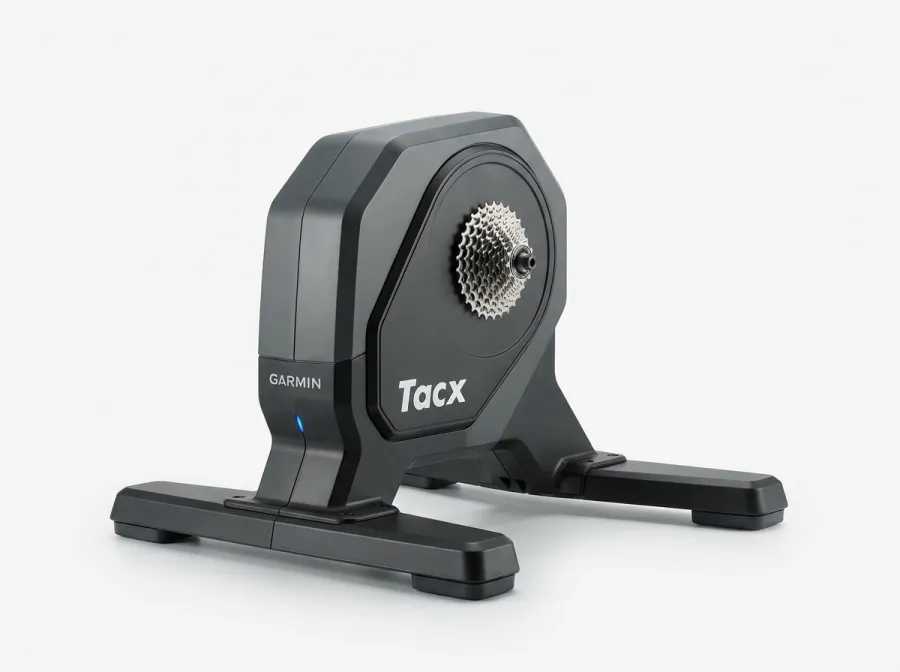
| Spec | Detail |
|---|---|
| Price | $1,999.99 USD |
| Power Accuracy | ±1% |
| Max Power | 2,200W |
| Max Grade Simulation | 25% |
| Flywheel | Virtual flywheel (magnetic motor, no physical flywheel) |
| Motion | Built-in multidirectional: 5cm fore/aft, lateral tilt |
| Weight | 23.6 kg (52 lbs) |
| Connectivity | ANT+, Bluetooth (2 simultaneous), WiFi/Ethernet (adapter) |
| Calibration Required | No |
| Power Source | Self-powered (generates power from pedaling) or wall power |
| Road Surface Simulation | Yes — cobblestones, gravel, boards |
Bottom line: The Tacx Neo 3M is the trainer for athletes who demand the absolute best indoor experience and have the budget to back that demand up. The silence, the motion, and the accuracy are all best-in-class. If you're doing 15+ hours a week on the trainer through a serious winter build, the Neo 3M pays for itself in comfort, data quality, and training confidence. If you're doing 5 hours a week and buying your first direct-drive trainer, it's a lot of trainer.
Elite Direto XR
Elite doesn't get enough credit. The Italian brand has been making trainers since 1978, and the Direto XR represents their current flagship direct-drive offering — a trainer that delivers near-premium performance at a price that undercuts the Neo 3M by more than $1,000.
The Direto XR uses Elite's Optical Torque Sensor (OTS) power measurement system, which measures torsion on the trainer's main axis rather than using strain gauges or other methods. The claimed accuracy is ±1.5%, and most independent testing puts real-world accuracy well within that spec during sustained efforts. There have been occasional outlier measurements in high-intensity sprint scenarios, but for steady-state and interval training, the XR delivers reliable, repeatable data.
At 2,300W maximum resistance, the Direto XR actually out-specs the Kickr Core 2 on peak power output — relevant only if you have the legs of a track sprinter, but it does indicate serious hardware inside that relatively compact chassis. The 5.1kg flywheel produces a solid road feel, though it's perceptibly lighter than the Core 2's 5.4kg unit in feel (the difference is small but noticeable to experienced riders).
Where the XR shows its value positioning is noise and ERG mode. It's impressively quiet for its price — audibly louder than the Neo 3M (which is an unfair comparison at half the price) but quieter than many trainers at similar price points. ERG response is smooth on sustained intervals but can exhibit slight overshoot on very short, high-power efforts. For most structured training, this is a non-issue.
One honest caveat: the XR's construction leans heavily on hard plastic, which gives it a lighter overall feel than the metal-dominant designs of the Wahoo and Tacx. Stability is fine in use, but it doesn't have the planted, tank-like feel of the Neo 3M. For $949, this is a completely acceptable trade-off. Just don't expect it to feel like twice its price.
| Spec | Detail |
|---|---|
| Price | ~$949.99 USD (XR with cassette) |
| Power Accuracy | ±1.5% (Optical Torque Sensor) |
| Max Power | 2,300W (at 40 km/h) |
| Max Grade Simulation | 24% |
| Flywheel Weight | 5.1 kg (11.2 lbs) |
| Weight | ~16 kg (35.2 lbs) with cassette |
| Connectivity | ANT+ (FE-C, Power, Speed/Cadence), Bluetooth (FTMS) |
| Cassette | 9/10/11-speed included (Shimano/SRAM compatible) |
| Includes | Riser block, 12-month My E-Training subscription, 1-month Zwift trial |
| Missing vs. competitors | No WiFi, no 10Hz race mode, no motion |
Bottom line: The Elite Direto XR is the trainer that makes serious athletes feel clever. You get direct-drive performance, OTS power accuracy, and solid ERG response for roughly $600 less than the Wahoo at MSRP and $1,050 less than the Tacx Neo 3M. The lack of WiFi and Race Mode matter less than Wahoo's marketing might suggest; the plastic construction is a legitimate aesthetic compromise. For the value-conscious athlete who doesn't want to compromise on data quality, the XR is the move.
Budget Pick: Wahoo Kickr Rollr
Not everyone needs to pull their rear wheel and swap a cassette every time they want to ride indoors. Enter the Wahoo Kickr Rollr ($699.99) — a wheel-on smart trainer that sits in an interesting category: smarter than a basic roller, cheaper than a direct-drive, and faster to set up than either.
The Rollr uses a dual-roller design with electromagnetic resistance to deliver controlled, app-controllable training. At 1,500W max resistance and 10% max grade simulation, it covers the majority of structured training needs for endurance-focused athletes. Power accuracy is rated at ±1% when paired with an external power meter (not included) — without one, power estimates are approximate.
The catch: the Rollr requires an external power meter for serious training data, and at $699 it's not actually cheaper than the Kickr Core 2 on sale. The real value proposition is setup speed — wheel stays on, just roll the back tire onto the Rollr and you're riding in under two minutes. For athletes with a dedicated training bike and a separate road bike, or those who want a minimal-hassle setup for easy/recovery rides, it makes sense.
Side-by-Side Comparison
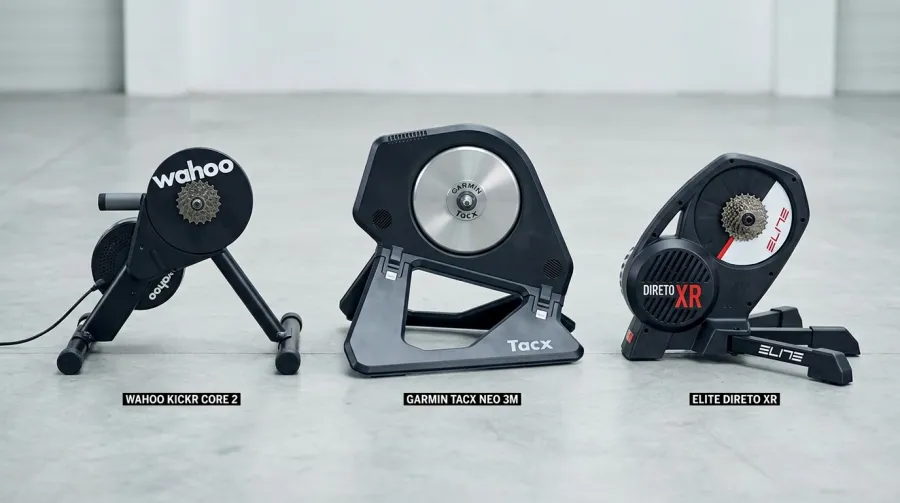
| Spec | Wahoo Kickr Core 2 | Tacx Neo 3M | Elite Direto XR | Wahoo Kickr Rollr |
|---|---|---|---|---|
| Price (USD) | $549 ($399 sale) | $1,999.99 | ~$949.99 | $699.99 |
| Type | Direct-drive | Direct-drive | Direct-drive | Wheel-on |
| Power Accuracy | ±2% | ±1% | ±1.5% | ±1% (external PM req.) |
| Max Power | 1,800W | 2,200W | 2,300W | 1,500W |
| Max Grade | 16% | 25% | 24% | 10% |
| Flywheel | 5.4 kg physical | Virtual (magnetic) | 5.1 kg physical | 4.7 kg physical |
| Noise | Moderate | Near-silent | Low-moderate | Moderate (tire noise) |
| Motion | None | Built-in (3-axis) | None | None |
| WiFi | Yes | Yes (adapter) | No | No |
| Race Mode (10Hz) | Yes | No | No | No |
| Road Surface Sim | No | Yes | No | No |
| Descent Simulation | No | Yes | No | No |
| Weight | ~17 lbs | 52 lbs | 35.2 lbs | 50 lbs |
Who Should Buy What
Buy the Wahoo Kickr Core 2 if:
- You want the best value in direct-drive training right now
- You race on Zwift and want Race Mode's 10Hz data transmission advantage
- You're new to smart trainers and don't want to overspend on your first setup
- WiFi integration and clean app connectivity matter to you
- You're on a budget but unwilling to compromise on ride feel
Buy the Tacx Neo 3M if:
- You train 10+ hours per week indoors and want the absolute best experience
- Silence is non-negotiable (apartment, early mornings, sleeping partner)
- You're dealing with lower back, hip, or saddle issues and want movement
- You want the most accurate power data available in a trainer
- You're preparing for gravel or cobbled events and want road surface simulation
- Budget is secondary to performance
Buy the Elite Direto XR if:
- You want near-premium accuracy without the premium price tag
- You're experienced with smart trainers and know what you're evaluating
- The Kickr Core 2's ±2% accuracy spec bothers you but $2,000 for the Neo 3M does not compute
- You want the cassette included and minimal fuss out of the box
- Value per watt of training quality is your primary metric
Buy the Wahoo Kickr Rollr if:
- You already own a quality external power meter
- Setup speed is more important than ultimate accuracy
- You want to use your road bike indoors without removing the rear wheel
- You do mostly easy/recovery rides indoors and save structure for outdoors
App Compatibility Guide
All four trainers here support ANT+ FE-C and Bluetooth FTMS — the two universal smart trainer protocols. That means they'll connect to any major training app without issues. Here's what the experience looks like across the main platforms:
Zwift
All three direct-drive trainers work excellently with Zwift. The Kickr Core 2's Race Mode (10Hz cadence and power transmission) gives it a legitimate advantage in Zwift racing — gradient changes and sprint efforts register faster. The Neo 3M's road surface simulation is functional in supported Zwift worlds. The Direto XR delivers solid Zwift performance with no notable integration issues.
TrainerRoad
TrainerRoad's structured workouts lean heavily on ERG mode quality. All three direct-drive options perform well here; the Neo 3M edges ahead on ERG smoothness during complex interval structures. The Direto XR's occasional ERG overshoot on very short efforts is a minor knock in this context.
Rouvy
Rouvy's video-based route simulation works well with all three trainers. The Neo 3M's descent simulation adds a distinctive touch on downhill segments — resistance actually reduces, then increases as you crest the climb. None of the others do this.
Wahoo SYSTM
The Kickr Core 2 obviously integrates most deeply with Wahoo's own ecosystem, including SYSTM workouts, the Wahoo app, and the broader Wahoo X platform. Direct WiFi sync, automatic calibration, and Sensor Bridging all function most reliably within the Wahoo ecosystem.
The Verdict
If someone puts a gun to our head and demands a single recommendation: Wahoo Kickr Core 2. Not because it's the best trainer in this group — the Neo 3M clearly holds that title — but because it delivers 85% of the best-case experience for about 27% of the price. The WiFi, Race Mode, and Sensor Bridging are genuine improvements over the previous generation, and the ride feel is legitimately excellent.
That said, if you're a serious athlete doing heavy indoor training volume, the gap between $549 and $1,999 shrinks considerably when you amortize it over 500+ hours of training. The Tacx Neo 3M's silence, motion, and accuracy have real daily value. It's not frivolous spending — it's investing in training quality.
The Elite Direto XR sits in an interesting spot: it's the trainer for people who've done their homework. The specs are strong, the price is right, and the OTS power measurement is genuinely good. The lack of WiFi and Race Mode are real omissions for 2026, but if your primary concern is power accuracy and training quality rather than ecosystem features, it's an outstanding value proposition.
Whatever you choose: buy a good fan, invest in a quality mat, and train consistently. The best trainer is always the one you actually use.


