
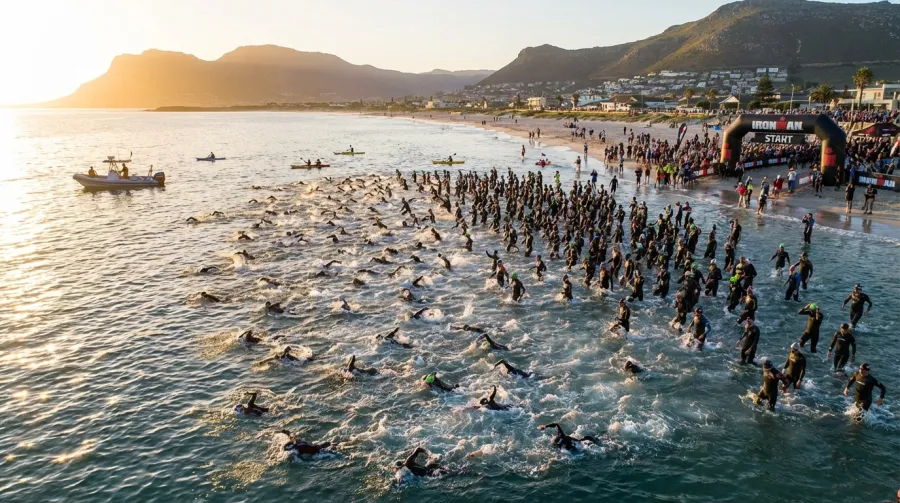
Every triathlete remembers their first open water swim at a race. The gun goes off. Two hundred people simultaneously attempt to occupy the exact same cubic meter of water. Someone's elbow finds your goggles. Someone else's foot finds your face. In this chaos, your wetsuit is doing several important jobs at once: keeping you warm, keeping you buoyant, letting you actually move your shoulders, and not giving you a panic attack. The Orca Apex does all of these things exceptionally well — and on a good day, it makes you legitimately faster in the water.
Orca is a New Zealand brand that has been making triathlon wetsuits since 1992 — long enough that their engineering decisions are based on decades of actual race data rather than marketing copy. The Apex series is their flagship, and it comes in three variants designed for different swimmer profiles. This review covers the Apex lineup comprehensively, with a focus on which version suits which triathlete.
The Apex Family: Three Variants, One Goal
The Orca Apex line is not a single wetsuit — it's a philosophy applied three different ways:
- Apex Flex — maximum flexibility for strong swimmers who already have good body position in the water and want unrestricted shoulder movement. Lower buoyancy panels, exceptional range of motion.
- Apex Flow — the sweet spot. Balances buoyancy with speed and flexibility. This is the variant most age-groupers should consider — it improves body position without restricting the stroke.
- Apex Float — maximum buoyancy for swimmers who need significant lift at the hips and legs. If your legs sink and you fight your natural body position in every swim, this is your variant.
The honest question every triathlete should ask before buying: am I a strong swimmer who needs flexibility, a middle-ground swimmer who needs balance, or a weak swimmer who needs buoyancy? Your answer determines which Apex is yours. When in doubt, the Flow is the safest choice for most athletes.
Technical Specifications
| Neoprene | Yamamoto 39-cell and 44-cell neoprene |
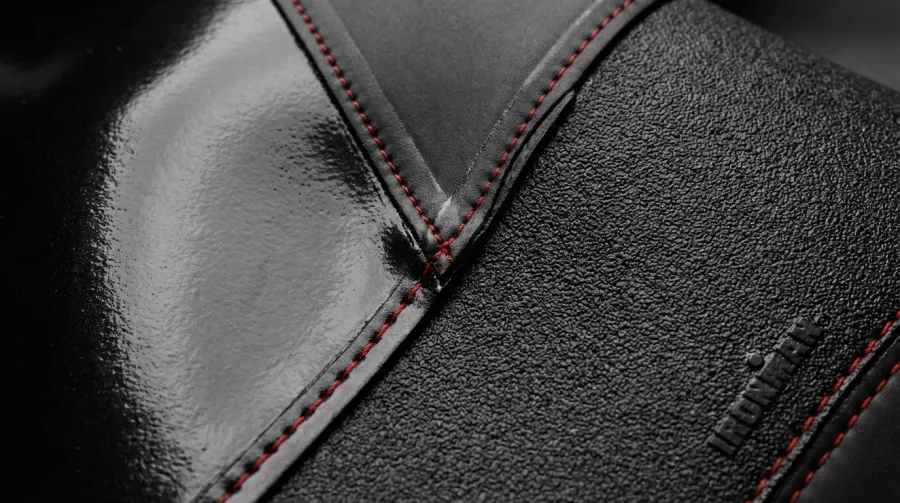
| Coating | SCS (Super Composite Skin) hydrodynamic outer coating |
| Thickness Zoning | 5mm buoyancy panels / 2mm flexibility zones — strategically placed |
| Forearm Panels | Hydrostroke technology — increased water catch per stroke |
| Calf Panels | Speed Transition panels — optimised for fast removal in T1 |
| Shoulder System | Dynamic Shoulder Fit — 360° articulation without bunching |
| Race Legal | WTC / Ironman legal in all legal temperature conditions |
| Price Range | ~$550–$750 depending on variant and retailer |
The Yamamoto Neoprene Difference
Premium wetsuits universally use Yamamoto neoprene from Japan — and for good reason. Yamamoto neoprene is produced using limestone (calcium carbonate) rather than the petroleum-based process used for standard neoprene. The result is a material with significantly better stretch recovery, warmth-to-thickness ratio, and buoyancy characteristics. It's also notably lighter.
The Apex uses both 39-cell and 44-cell variants. The cell number refers to the density structure of the foam — 39-cell is softer and more flexible (used in high-movement zones like the shoulders and arms), while 44-cell is firmer and provides better buoyancy (used in torso and hip panels where you want lift, not flex). This strategic zoning is what separates a thoughtfully engineered wetsuit from one that's just expensive neoprene in a nice colour.
SCS Coating: Drag Reduction You Can Actually Feel
The SCS (Super Composite Skin) coating is Orca's proprietary hydrodynamic outer surface. At a physical level, it reduces the friction between the wetsuit and water by creating a microscopically smoother surface — water flows past rather than clinging. The practical effect is measurable: in Orca's own testing, the SCS coating reduces drag compared to uncoated neoprene. In a swim leg that matters for both time and energy expenditure, reduced drag means a faster swim and fresher legs for the bike.
Important care note: the SCS coating is not indestructible. Do not apply sunscreen, body glide with petroleum components, or any other petroleum-based product directly to the outer surface. These degrade the coating over time. Use a non-petroleum lubricant (like a triathlon-specific anti-chafe balm) at the neck and wrist seams to prevent chafing without damaging the suit.
Hydrostroke: The Forearm Panels That Actually Work
The Hydrostroke forearm panels are one of the Apex's most distinctive features. The forearms are constructed with a slightly stiffer, more rigid neoprene panel that increases the surface area and resistance during the catch phase of the freestyle stroke. In practical terms, it's like having forearm paddles built into the suit.
The effect is real but requires some adaptation. Athletes with good stroke mechanics and an established catch will feel an immediate improvement in their pull phase. Athletes with less developed technique may find it slightly unfamiliar at first — the increased resistance can feel unusual if you're not used to engaging the forearm properly in your stroke. A few pool sessions before your race are non-negotiable.
Speed Transition Calf Panels: T1 Is a Sport Within the Sport
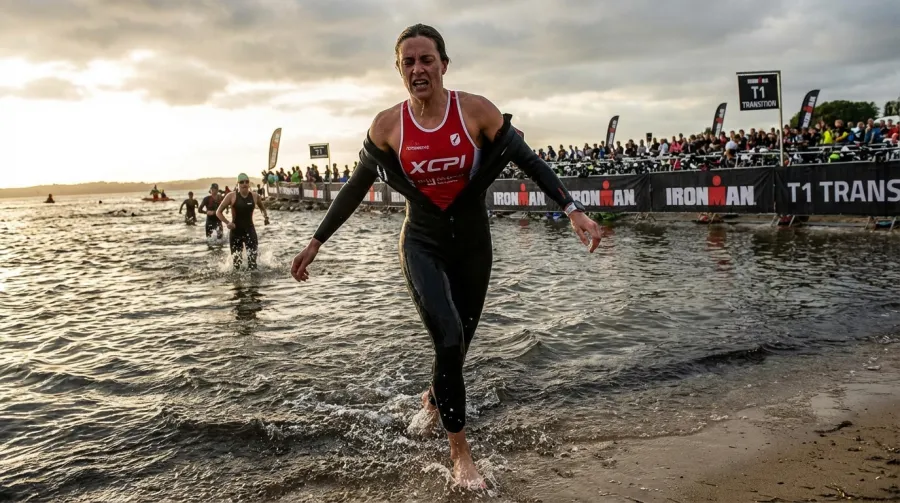
T1 wetsuit removal is an art form. Elite athletes can strip a wetsuit in under 30 seconds. Most age-groupers take considerably longer, often because their wetsuit has glued itself to their calves and refuses to cooperate. The Apex's Speed Transition calf panels are specifically constructed with a slicker inner surface at the calf that allows the suit to slide off with minimal resistance. Combined with properly applied lubricant at the ankles and a practiced two-step removal technique, the Apex can come off in under 45 seconds for most athletes.
Pro tip that nobody tells you until you've already lost 90 seconds in T1: practice wetsuit removal in training. Specifically, practice it when you're slightly tired. The movements feel obvious when you're fresh and standing still. They feel extremely complicated when you're oxygen-depleted, heart rate at 170, and you can already hear the other athletes running past you toward their bikes.
Dynamic Shoulder Fit: Stroke Unrestricted
The Dynamic Shoulder Fit system is Orca's solution to the fundamental wetsuit engineering problem: shoulders need to be articulated enough for a full freestyle stroke rotation (120+ degrees) while the rest of the suit needs to be fitted closely enough to provide buoyancy and reduce drag. The Apex achieves this through a combination of 39-cell neoprene in the shoulder zones, strategically placed seam positioning, and a shoulder cut that allows full arm rotation without the suit bunching or restricting at the armpit.
The practical result: you can breathe properly, reach full extension on your stroke, and rotate your body without fighting the suit. After a mile in the water, this is not a small thing. Shoulder fatigue from a restrictive wetsuit is genuinely cumulative — and you still need those shoulders on the bike.
Apex vs. The Competition
vs. Xterra Vortex 4
The Vortex is a solid mid-range option that punches above its price point, but it uses a single-density neoprene strategy rather than the Apex's strategic zoning approach. The SCS coating and Hydrostroke panels on the Apex represent genuine performance advantages that most athletes will feel in the water. For serious age-groupers, the Apex is the better suit.
vs. Blueseventy Helix
The Blueseventy Helix is a legitimate competitor — a well-engineered wetsuit with excellent buoyancy and good flexibility. It tends to fit differently (often described as fitting "long" in the torso) compared to the Apex's more fitted cut. Both are excellent suits; the choice often comes down to personal fit and brand preference. Try both if possible; your body geometry will determine which one feels correct.
Fit, Sizing, and What to Actually Do
Wetsuit sizing is infuriating. Every brand uses slightly different measurements, different weight-to-height proportions, and different ideas about how fitted is "fitted." Orca provides a detailed sizing chart based on height, weight, and chest/hip measurements. Use all of them. Do not guess.
A correctly fitted wetsuit should be snug — like a very fitted compression garment — with no sagging at the lower back or excessive bunching at the armpits. The neoprene at the crotch should sit properly (if it's too low, the suit will restrict your kick). You should be able to raise both arms fully overhead without the suit pulling. If you can't, try the next size up.
Breaking in a new wetsuit: swim in it at least 3-4 times before a race. The neoprene will soften and conform slightly to your body, and you'll learn its quirks before they become race-day surprises.
The Verdict
The Orca Apex series represents the best combination of swim-leg performance and transition-friendly design in its price category. The Yamamoto neoprene is genuinely superior material. The SCS coating provides measurable drag reduction. The Hydrostroke panels actively improve your stroke. The Speed Transition calves make T1 feel manageable. And the Dynamic Shoulder Fit means you can actually swim properly without the suit fighting you.
At $550–$750, the Apex is an investment — but a wetsuit that's properly fitted and properly maintained will last 5+ seasons, making the per-race cost relatively modest. Choose your variant carefully based on your swimming background, get fitted properly, swim in it before you race in it, and let it earn your time back in the water.
Triathlon Universe Rating
4.8 / 5.0
Best Wetsuit — Triathlon Race Performance


