
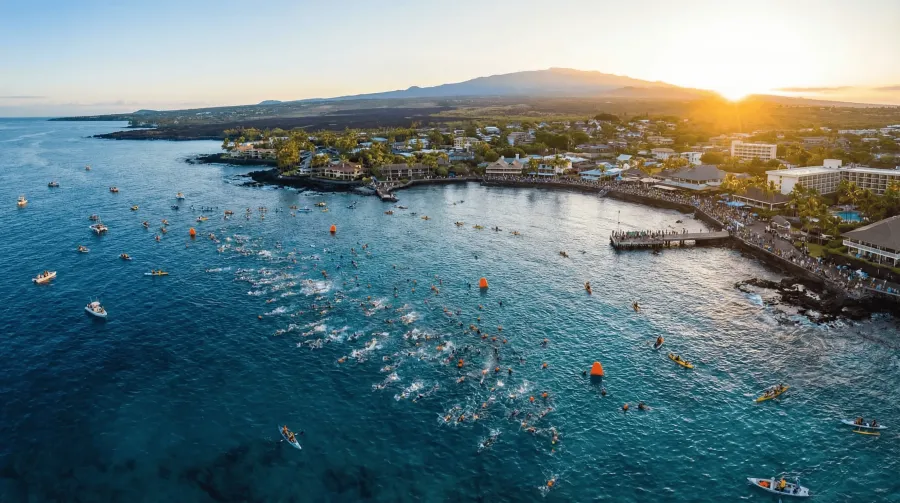
Every October, a small Hawaiian town becomes the center of the endurance universe. Kailua-Kona, where the lava fields shimmer at 95°F and the trade winds turn the Queen K highway into a wind tunnel, is the stage for the most iconic long-course triathlon on earth. And 2026 is shaping up to be a vintage year — a stacked field, multiple course records within reach, and a women's race that could redefine what's possible at the distance.
Here's who's coming, what the conditions will demand, and who we think has the best shot at making history.
The Course: What Kona Demands
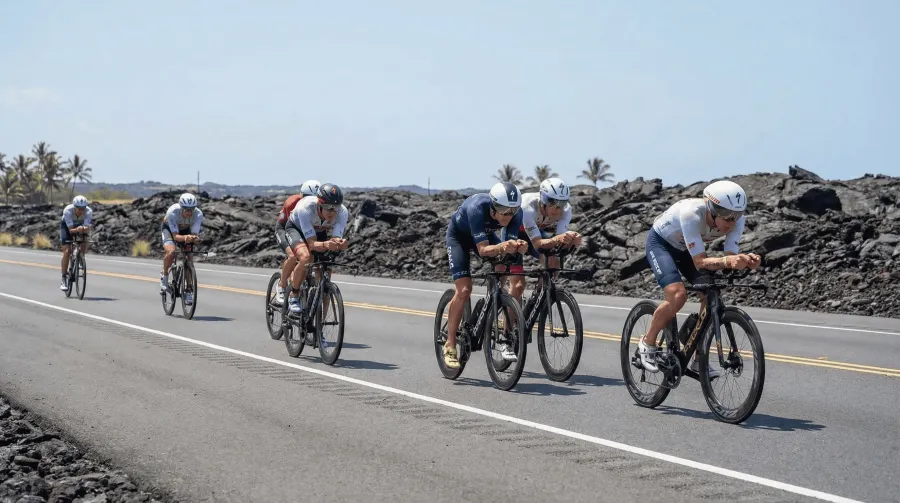
Before the athletes, you have to understand the arena. Kona doesn't just test fitness — it tests adaptability, heat management, and mental durability. The swim in Kailua Bay is typically benign by Ironman standards, but the bike leg is something else entirely. The 112-mile loop out to Hawi and back along the Queen K is relentless: little shade, minimal shelter from crosswinds, and heat radiating off the black lava fields on either side. Athletes regularly report temperatures at road level significantly higher than ambient — 100°F+ at the worst stretches.
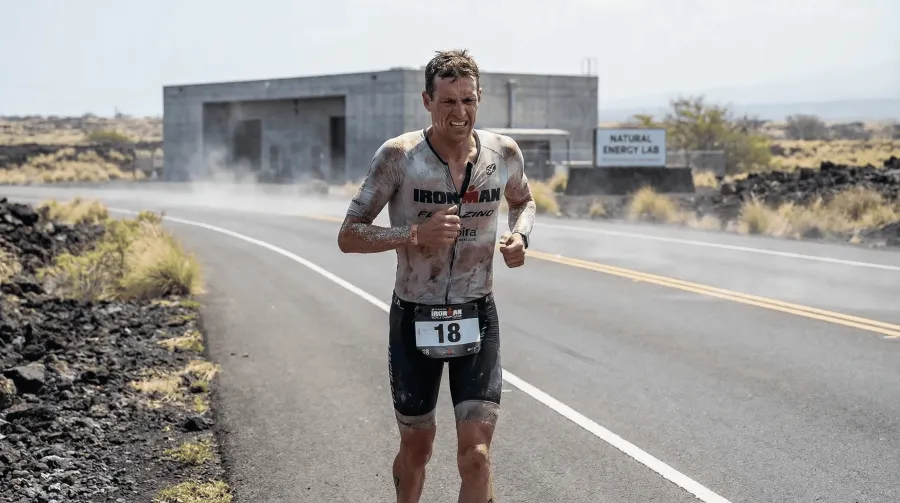
The run, a 26.2-mile out-and-back along the Ali'i Drive and the Energy Lab, is where races are truly won and lost. The Energy Lab section — low, humid, and exposed — has broken more pre-race favorites than any other stretch in triathlon.
Men's Race: The Contenders
Kristian Blummenfelt
The Norwegian is the benchmark in long-course triathlon right now. Olympic gold in Tokyo, Ironman World Champion, and a relentless training machine whose preparation is among the most scientific and data-driven in the sport. Blummenfelt's combination of elite swimming ability, world-class watts on the bike, and a sub-2:40 marathon off the bike makes him the most complete threat in the field. His weakness, to the extent he has one, is heat management — the Norwegian training environment is not exactly Kona-specific preparation.
Sam Laidlow
The young Frenchman has announced himself as a generational talent. His bike power is extraordinary, and he has the mental composure of an athlete twice his age. If he can improve his run consistency off a Kona-pace bike leg, he's a genuine title threat rather than a podium contender.
Patrick Lange
A two-time Kona champion whose run split is the stuff of legend — his 2:39:45 marathon in the 2018 race remains one of the most astonishing athletic performances in the event's history. Lange is meticulous, patient, and has made peace with the fact that he can't out-bike the strongest riders. He hunts on the run, and the best run hunters in Kona history have a habit of ending up on the podium.
Magnus Ditlev
The Dane is quietly one of the most dangerous athletes in the field. His 2023 Ironman World Championship result in Nice showed he can compete at the very highest level, and his steady development suggests 2026 could be his year to break through at Kona specifically.
Women's Race: The Story of the Season
Kat Matthews
After her record-obliterating performance at Ironman New Zealand to open the 2026 Pro Series — breaking the women's course record by over 10 minutes — Matthews is the form athlete of the season. She's always been a threat at Kona, but 2026 feels different. She's racing with a confidence and aggression that suggests she's not here to compete for podiums. She's here for the record.
Lucy Charles-Barclay
The Brit has finished on the Kona podium more times than almost any other athlete currently racing. She is the finest swimmer in the women's pro field — often exiting the water 5–8 minutes ahead of the chase pack — and her bike has improved significantly over recent seasons. Her limiting factor has always been the run, but incremental improvements there make her a complete threat. If Matthews has an off day, Charles-Barclay is the most likely beneficiary.
Anne Haug
The 2019 Kona champion is quietly one of the most underestimated athletes in the field. Haug is a supremely intelligent racer — she rarely appears in pre-race hype cycles, but she consistently executes on race day. Her heat tolerance and ability to run strongly off a hard bike make her perfectly suited to Kona's specific demands.
Chelsea Sodaro
The defending champion comes in with the weight of expectation and the benefit of experience on a course she's already conquered. Her ability to bike aggressively and then run down the field is dangerous at any Ironman venue, but especially here.
Course Conditions: What 2026 Forecasts
La Niña conditions in the Pacific through early 2026 suggest a warmer and potentially windier Kona than average. For athletes who've invested in specific heat acclimatization training — either through heat chambers or training camps in hot climates — this is an advantage. Athletes arriving from Northern European base camps may find the conditions more challenging.
Wind is always the wildcard. The crosswinds on the return leg from Hawi can exceed 30 mph in strong trade wind years, effectively adding 20–30 minutes to even elite bike splits and significantly changing race tactics. Strong crosswinds tend to favor the most technically skilled cyclists and punish athletes whose handling suffers under fatigue.
Dark Horses to Watch
In the men's race, keep an eye on Rudy Von Berg, whose bike power and improving run have made him increasingly dangerous in long-course racing. Among women, Laura Philipp has shown she can execute a complete Ironman performance when the conditions suit her, and her consistency is a significant asset in a race where attrition is high.
Bold Predictions
- Men's winner: Blummenfelt, edging Lange in a run battle over the final 10k of the marathon
- Women's winner: Kat Matthews, threatening the women's course record if conditions cooperate
- Biggest surprise: A dark horse from the Asia-Pacific region, where heat acclimatization is built into the geography
- Heartbreak story: Someone comes in as heavy favorite and faces a mechanical or GI crisis. Kona has a way of humbling the favorites. It always does.
Why This One Matters
Every Kona matters. But the 2026 edition feels like it's arriving at an inflection point for the sport. The Pro Series has elevated the quality of competition and the frequency of record-breaking performances. The athletes racing in 2026 are the best-prepared, most scientifically coached, and fastest in the event's history.
Whether or not records fall in October, one thing is certain: the race will be worth watching from start to finish. And it will remind you, one more time, why you signed up for a triathlon in the first place.


