
Your wetsuit is probably the single piece of gear that will make the biggest difference to your open water swim split — more than your stroke technique, more than your swim fitness, and certainly more than any $400 pair of goggles. A well-fitted triathlon wetsuit adds buoyancy that lifts your hips and legs into a flatter, faster position, reduces drag, and keeps you warmer in cold water so you're not already shivering when you hit T1. Depending on your swimming background, a good suit can shave 1–3 minutes off a 1500m swim. A bad one — or the wrong one — will restrict your shoulders, ride up your neck, and leave you fighting the suit for every stroke. Given that, spending an hour thinking carefully about which wetsuit to buy is time well invested.
The 2026 market is in good shape. Neoprene quality is up across the board, even at the budget end, and the gap between entry-level and premium suits has narrowed. That said, there are still meaningful differences in how suits fit different body types, how they perform in a mass-start washing machine, and how quickly you can actually get out of them in T1. This guide cuts through the noise.
What to Look for in a Triathlon Wetsuit
Fit first, always. A wetsuit that doesn't fit is worse than no wetsuit. It needs to be snug with no air pockets, particularly across the back and shoulders. Excess material bunches, restricts movement, and adds drag. If you're between sizes, try both — sizing charts vary significantly between brands.
Buoyancy vs. flexibility. These trade off against each other. Thicker neoprene (5mm+) floats you more; thinner (1.5–2mm) through the shoulders lets you rotate and pull more freely. Good suits engineer this balance — thick panels where you need lift, thin panels where you need range of motion.
Water temperature. Most triathlon wetsuits are designed for 60–78°F (16–26°C). Below 60°F, you'll want a suit with full torso thickness. Above 78°F, most races won't allow wetsuits at all.
Transition features. Look for a long YKK zipper pull, smooth outer panels on the lower legs, and ankle panels that slide cleanly. Every second you spend wrestling your suit off in T1 is a second you could be on the bike.
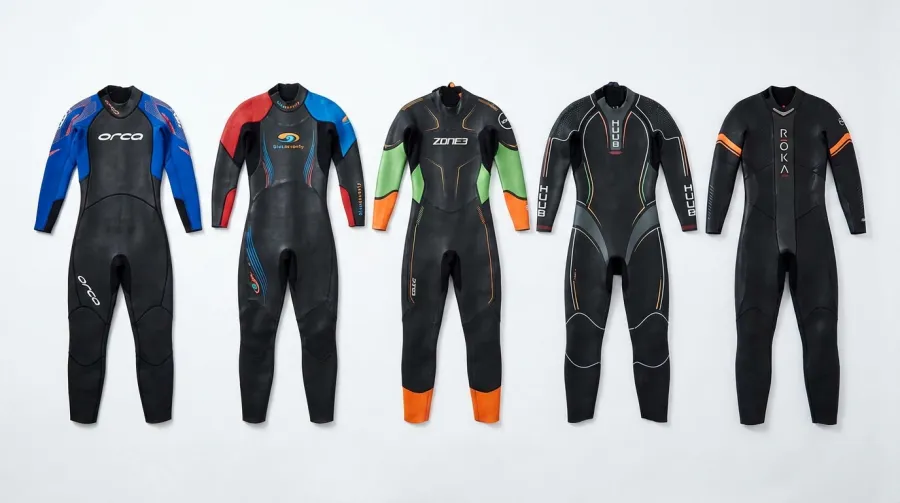
The 7 Best Triathlon Wetsuits for 2026
1. Zone3 Advance 2026 — Best Budget Pick
Genuine Yamamoto neoprene at a price that won't make you reconsider the whole sport.
The Zone3 Advance has been the go-to recommendation for budget-conscious triathletes for a few years now, and the 2026 version earns that reputation again. The headline spec is Yamamoto #38 neoprene — the same Japanese-made material you'll find in suits costing twice as much. Yamamoto rubber is softer, more buoyant, and more durable than most of the Chinese-sourced alternatives found in entry-level suits. Getting it at this price point is genuinely unusual.
The construction is functional rather than sophisticated. You get a 5mm core and 3mm shoulder panels, which is a solid setup for most recreational swimmers. Flexibility is decent but not exceptional — if you have a strong swim background and a high stroke rate, you may notice the shoulders on long efforts. For sprint to Olympic distance racing, most athletes won't. The ankle panels are smooth enough for a clean T1, and Zone3's sizing tends to run accurate to their chart. Weak points: the lining feels a little rough against skin compared to premium options, and the zipper pull cord is on the short side.
- Price: ~$200
- Neoprene: Yamamoto #38
- Best for: First-time buyers, sprint/Olympic distance
- Thickness: 5mm core / 3mm shoulders
2. Orca Athlex Float — Best for Beginners, Maximum Buoyancy
If you want to be lifted out of the water rather than swim through it, this is your suit.
Orca designed the Athlex Float around one priority: keeping you as horizontal and high in the water as possible. The 5mm Yamamoto #40 neoprene across the entire core delivers more buoyancy than most suits at this price, which makes a real difference for athletes who struggle with hip drop or are not confident open water swimmers. If your swim background is limited and you're just trying to survive the first leg, the Float does more of the work for you than almost anything else in this category.
The tradeoff is shoulder restriction. The Float uses thicker panels through the upper body than competitors at similar prices, so freestyle swimmers with high stroke rates will feel some resistance. Orca has added TRYon technology to the lining — essentially a hydrophobic treatment to reduce drag on entry — and it works reasonably well. Sizing from Orca runs on the smaller side; go up if you're on the border. This is a suit for athletes who prioritize buoyancy support over hydrodynamic finesse.
- Price: ~$250
- Neoprene: Yamamoto #40 (core), #39 (legs)
- Best for: Beginners, low-confidence open water swimmers
- Thickness: 5mm core / 3mm shoulders
3. TYR Hurricane Cat 1 — Best Value Full-Suit with Quick-Release Ankles
A credible full-race suit with a transition-specific feature set that costs less than it should.
TYR doesn't always get the same shelf space as Orca or blueseventy in triathlon shops, but the Hurricane Cat 1 makes a strong case for itself. The quick-release ankle system is the headline — the lower leg panels are designed to peel away faster than a standard construction, which is a real advantage if T1 has historically been a disaster for you. It's not quite the same as a premium zipper ankle design, but it's meaningfully better than nothing and is one of the few suits at this price to address T1 speed at all.
The suit runs on Yamamoto #39 neoprene, which is a step up from generic rubber and gives it solid buoyancy for a mid-range build. Shoulder flexibility is reasonable — TYR has done a decent job with the panelling to allow a full catch without fighting the material. Fit is a slight wildcard; TYR sizing runs slightly long in the torso, which works well for taller athletes but can leave shorter swimmers with excess material in the chest. Worth checking the size chart carefully. Overall, strong value at $300 for a suit that thinks about your entire race, not just the swim.
- Price: ~$300
- Neoprene: Yamamoto #39
- Best for: Transition-focused athletes, mid-distance racing
- Thickness: 5mm core / 2mm shoulders
4. Blueseventy Reaction — Best Mid-Range All-Rounder
The suit that does everything competently and nothing poorly — which is harder to pull off than it sounds.
Blueseventy has been making triathlon wetsuits since the early 90s and the Reaction is where most athletes end up when they want a proven, versatile option without paying for race-day premium features they might not need. The Reaction uses Yamamoto #40 SCS neoprene — the SCS coating adds a layer of water-shedding treatment that genuinely reduces surface drag — and the construction is thoughtful throughout. The shoulder panels are 1.5mm, which gives you excellent arm mobility, while the core sits at 5mm for solid lift.
Where the Reaction earns its reputation is in consistent sizing and reliable fit across a wide range of body types. Blueseventy's pattern is cut specifically for triathlon swimmers, meaning it accommodates the flatter back position most triathletes hold while still fitting athletes with more developed shoulders. The neck seal is comfortable for long efforts without choking you out. The main limitation is that the Reaction doesn't have the panel sophistication of the premium suits above — the buoyancy distribution is good but not fine-tuned, and there's no ankle speed system to speak of. At $350, it's excellent value.
- Price: ~$350
- Neoprene: Yamamoto #40 SCS
- Best for: Sprint to Olympic distance, versatile athletes, broad body types
- Thickness: 5mm core / 1.5mm shoulders
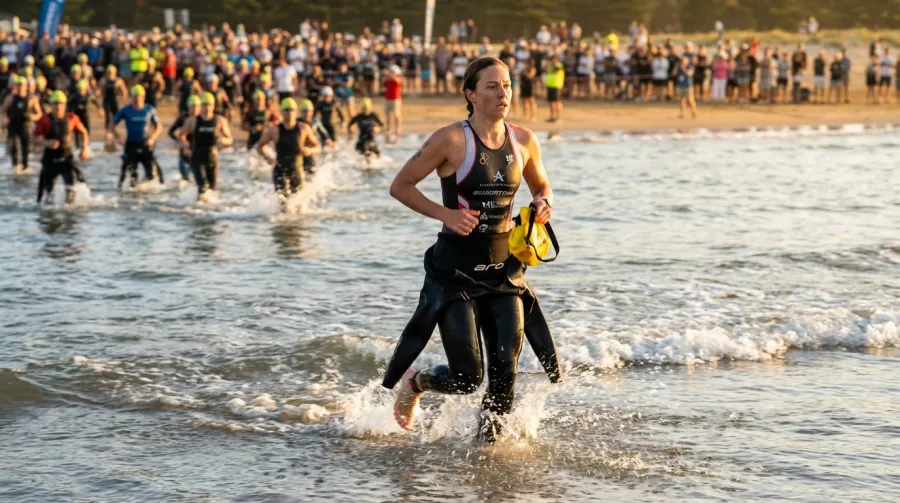
5. Roka Maverick Comp — Best for 70.3 Athletes
Built for the 1.2-mile swim, not the 400m sprint — there's a difference, and Roka understands it.
Roka entered the wetsuit market later than most of the legacy brands and immediately made things uncomfortable for the incumbents. The Maverick Comp is positioned as the step-up suit for athletes racing 70.3 distances or longer, where you'll be in the water for 25–40 minutes and every detail of fit, movement efficiency, and drag reduction compounds across those minutes. The suit uses Yamamoto #40 SCS throughout the body with strategic 1.5mm Aerodome panels at the shoulder — Roka's proprietary stretch material that sits among the most flexible in this price bracket.
Where the Comp stands out is in how it handles prolonged effort. The lining is smooth and doesn't chafe during extended swims. The buoyancy panels are tuned to lift the hips specifically, rather than just adding thickness across the whole core, which helps maintain stroke mechanics as fatigue sets in. Roka's fit is also notably consistent — their sizing chart is accurate and they offer a wider range of cuts than most brands, which matters more for half-iron and iron-distance athletes who care deeply about optimized fit. At $475 it's the most expensive suit in the mid-range tier, but for 70.3 athletes, the case for it is clear.
- Price: ~$475
- Neoprene: Yamamoto #40 SCS + Aerodome panels
- Best for: 70.3 and longer, experienced swimmers who want shoulder freedom
- Thickness: 5mm core / 1.5mm shoulders
6. Zone3 Vanquish-X — Best Premium Race-Day Suit
Zone3's top-shelf suit is as close to a swim-specific performance tool as a wetsuit gets.
The Vanquish-X is Zone3's flagship, and it shows in the construction. Yamamoto #40 SCS panels sit alongside Zone3's own Nano SCS coating, which reduces surface drag more aggressively than standard SCS treatment. The panel mapping is the most sophisticated in Zone3's lineup — different thicknesses in different zones are calibrated to support buoyancy where you lose it first (hips, thighs) while maintaining near-unrestricted movement through the shoulder girdle. At 1mm through the upper arm and shoulder panels, you'll feel almost nothing resisting your stroke.
The Vanquish-X also has the best T1 features Zone3 offers: ultra-thin calf panels, a zip-away ankle system, and a long Velcro tab on the back zip that's easy to grab with cold, shaking hands. The neck is cut slightly lower than comparable suits, which some athletes prefer — less restriction, marginally less seal. In cold water, the trade-off is worth monitoring. The suit rewards athletes who already swim well; it won't compensate for poor technique the way the Athlex Float will, but it will make a good swimmer faster. The price is firm but justified.
- Price: ~$600
- Neoprene: Yamamoto #40 Nano SCS
- Best for: Competitive age-groupers, Olympic to iron distance
- Thickness: 5mm core / 1mm shoulders
7. Roka Maverick X.3 — Best Overall
The top pick for serious age-groupers who want the fastest legal wetsuit they can buy.
The Maverick X.3 is Roka's best suit and, by most measures, the most complete triathlon wetsuit available to age-group athletes in the US market right now. The construction combines Yamamoto #40 SCS across the body with Roka's Aerodome X panels in the shoulder and upper arm — a proprietary material that's meaningfully thinner and more elastic than standard #40, sitting at approximately 0.88mm in the highest-mobility zones. In the water, the shoulder freedom is immediate and noticeable, particularly if you're coming from a mid-range suit.
The buoyancy engineering is the other headline. Roka has mapped 8mm panels into the core hip and thigh zones, which is thicker than almost any competing suit and creates a pronounced lifting effect that keeps your legs at or above horizontal even when tired. For athletes who are decent but not elite swimmers, this hip lift translates directly into a faster, less effortful swim. The panel transition between thick and thin zones is also unusually smooth — you don't feel hard edges or stiffness at the seams.
The Maverick X.3 fits precisely. Roka offers more size options than most brands (including separate tall sizing in some models) and the construction is consistent across units. T1 performance is first-class: the ankle panels are the fastest-releasing in this guide, the zip pull is long and textured, and the outer surface is smooth enough to strip quickly even in cold conditions. At $850, it's the most expensive suit here, and it's not a casual purchase. But if you're training seriously and racing multiple times per year, the investment is defensible.
- Price: ~$850
- Neoprene: Yamamoto #40 SCS + Aerodome X panels
- Best for: Serious age-groupers, 70.3 to iron distance, high-volume racers
- Thickness: 8mm hips/thighs, 5mm core / 0.88mm shoulders
How to Choose: Match Your Profile to Your Suit
You're doing your first triathlon and just want to survive the swim: Get the Orca Athlex Float. Maximum buoyancy, forgiving fit, and the extra float will make open water feel less terrifying. You don't need to spend more yet.
You're budget-conscious but don't want to buy junk: The Zone3 Advance 2026 is the answer. Genuine Yamamoto neoprene at $200 is a fair deal, and it will serve you well through several seasons of sprint and Olympic racing.
You lose time in T1 and it bothers you: Look at the TYR Hurricane Cat 1. The quick-release ankle design is specifically aimed at your problem, and it's a solid overall suit on top of it.
You want a proven, versatile suit that fits most people well: The Blueseventy Reaction has been a reliable recommendation for years. It's not flashy, but it works.
You're racing 70.3s and want a suit that reflects that commitment: The Roka Maverick Comp is designed for exactly that distance. The shoulder freedom and sustained buoyancy over 1.2 miles are worth the step up in price.
You're a competitive age-grouper chasing podiums: Either the Zone3 Vanquish-X or the Roka Maverick X.3 depending on your budget. The Vanquish-X is excellent. The Maverick X.3 is better. If you're racing 8+ times a year and your swim split matters, the X.3 earns its price.
Care and Maintenance
A triathlon wetsuit is an investment. A few simple habits will make it last several seasons rather than one:
- Rinse after every use in fresh, cool water. Saltwater and chlorine degrade neoprene over time. Don't skip this even if you're tired after a race.
- Dry inside-out in the shade. UV light degrades neoprene and the SCS coating. Direct sun will shorten your suit's life noticeably.
- Store flat or hung from the waist — never folded. Fold creases weaken the rubber at the crease point over time.
- Use wetsuit lube (BodyGlide or similar) at the neck and wrists before races to prevent chafing and make removal easier. Do not use petroleum-based products — they degrade neoprene.
- Use a plastic bag or wetsuit bag to transport it. Shoving it in a transition bag loose damages panels and seams.
- Repair small tears early. Aquaseal or similar neoprene cement will stop a small nick from becoming a full split. Don't leave it.
Final Thoughts
The wetsuit market in 2026 is the most competitive it's been. Budget suits now use materials that used to be reserved for mid-range, and the premium end has pushed genuinely interesting engineering into mobility and buoyancy mapping. Wherever you are in your triathlon journey — first sprint or fifteenth iron-distance — there's a suit in this list that fits your needs without padding a brand's margin. Buy the right one, maintain it properly, and it will pay for itself across multiple seasons. Then get in the water.


