
Altitude training has a mythology problem. In triathlon circles, it's spoken about in hushed, reverent tones — the Kenyan runners who live at 2,400 meters, the Boulder training camps, the tents that promise red blood cell magic from the comfort of your own bedroom. Every year, thousands of age-groupers invest significant time and money chasing the altitude advantage. But what does the research actually say in 2026? And more practically: is any of this worth pursuing for athletes who aren't racing for prize money?
Here's the honest assessment.
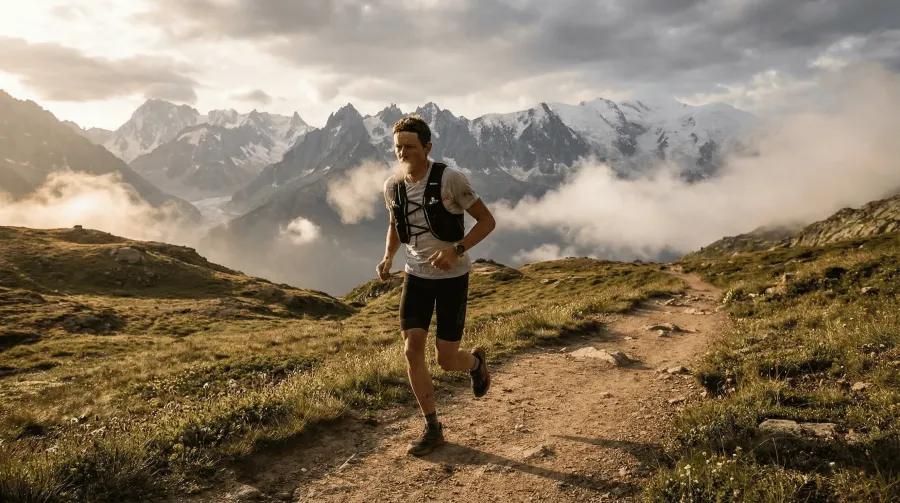
The Theory: Why Altitude Should Help
At altitude, the partial pressure of oxygen in the air is lower. Your body, deprived of its normal oxygen supply, responds by releasing erythropoietin (EPO) — a hormone that stimulates the production of red blood cells. More red blood cells means more oxygen-carrying capacity. More oxygen-carrying capacity means a better aerobic engine. Return to sea level with that elevated haematocrit and you theoretically have an aerobic advantage over athletes who never left the coast.
The physiology is real. Elite athletes who train at altitude do show measurable performance improvements when they compete at sea level within the optimal window post-camp. This is not disputed science.
The question is whether the effect translates meaningfully to age-groupers — and whether the costs and logistics justify it.
The Gold Standard: Live High, Train Low (LHTL)
The most evidence-supported approach is LHTL: living (and sleeping) at altitude (2,000–3,000 meters) while conducting key training sessions at lower elevation. This allows the body to stimulate EPO production through constant hypoxic exposure while still training at near-maximal intensity (which is physiologically compromised at high altitude — you simply can't hit the same watts or pace).
Studies on the LHTL protocol consistently show:
- Significant increases in haemoglobin mass after 3–4 weeks at altitude
- VO2max improvements of 3–5% in well-trained athletes
- Performance improvements that persist for 2–4 weeks post-altitude before the additional red blood cells are metabolized
- Diminishing returns after the first 4-week block — subsequent camps produce smaller gains
The catch: LHTL requires access to a location where you can sleep at 2,500m+ and drive down to train at 1,000m or below. This exists in places like Flagstaff, Arizona; Sierra Nevada, Spain; and St. Moritz, Switzerland. It's not a casual undertaking, and it requires weeks of absence from normal life.
Altitude Tents: The Bedroom Version
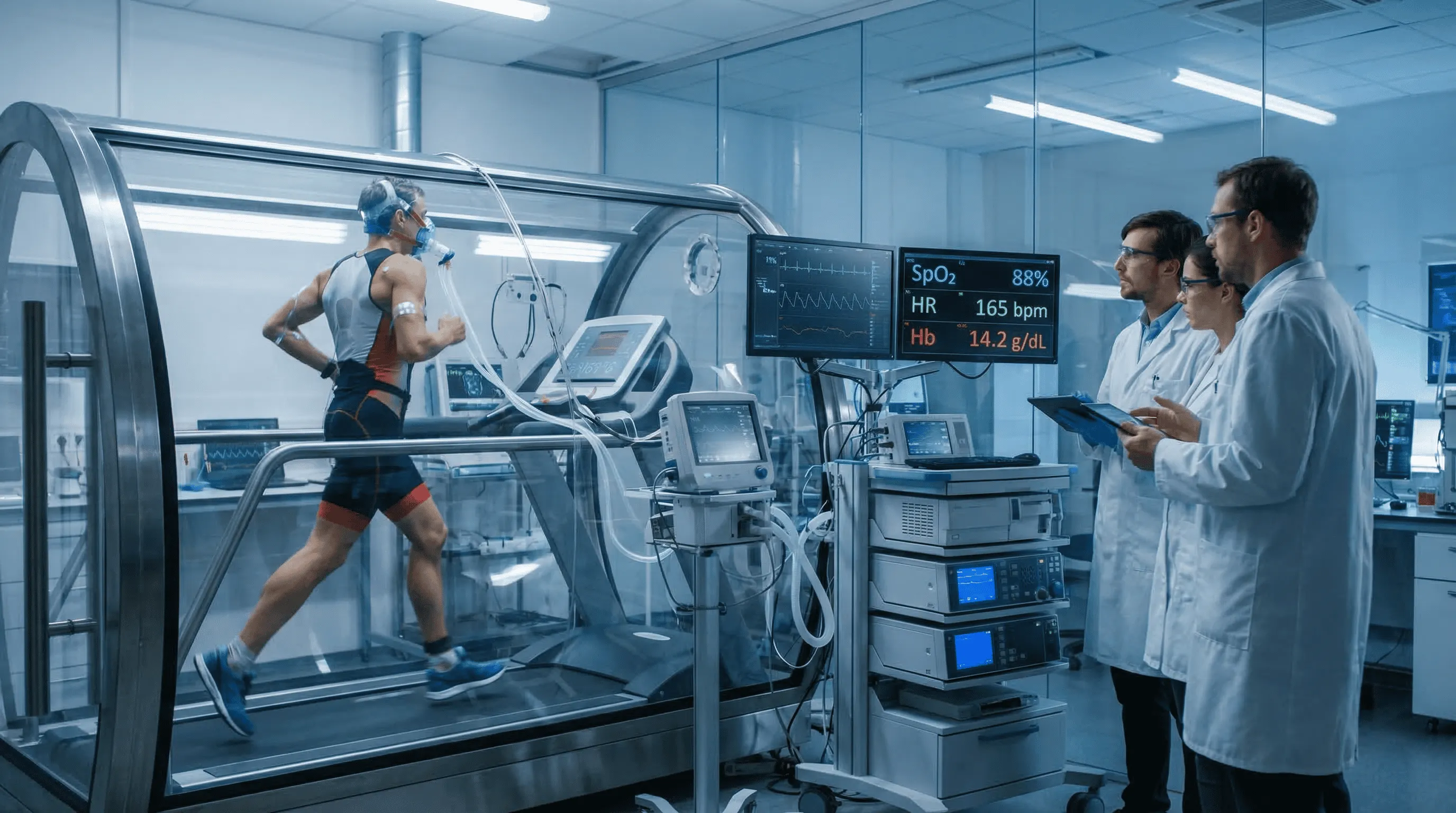
The altitude tent industry has grown significantly on the premise that you can get altitude adaptation benefits while sleeping in your own home. Normobaric hypoxic tents reduce the oxygen percentage in a small enclosed sleeping area to simulate elevation of 2,500–3,500m.
The honest research review in 2026 is less enthusiastic than the marketing:
- Multiple meta-analyses show inconsistent red blood cell responses to tent sleeping — many subjects show minimal haematocrit changes even after 4+ weeks
- The overnight exposure duration (7–8 hours) may be insufficient to consistently trigger the EPO response that full-time altitude residence produces
- Disrupted sleep quality is a documented side effect, and sleep quality is one of the most critical recovery factors for athletes — potentially negating the adaptation benefit
- Placebo effects complicate the research: athletes who believe they're getting altitude benefits often perform better regardless of haematological changes
The tent costs $2,000–$5,000 to set up, requires a hypoxic generator, and will make your bedroom uncomfortably warm. The evidence for meaningful performance gains is marginal at best for most athletes.
Training Quality at Altitude: The Hidden Cost
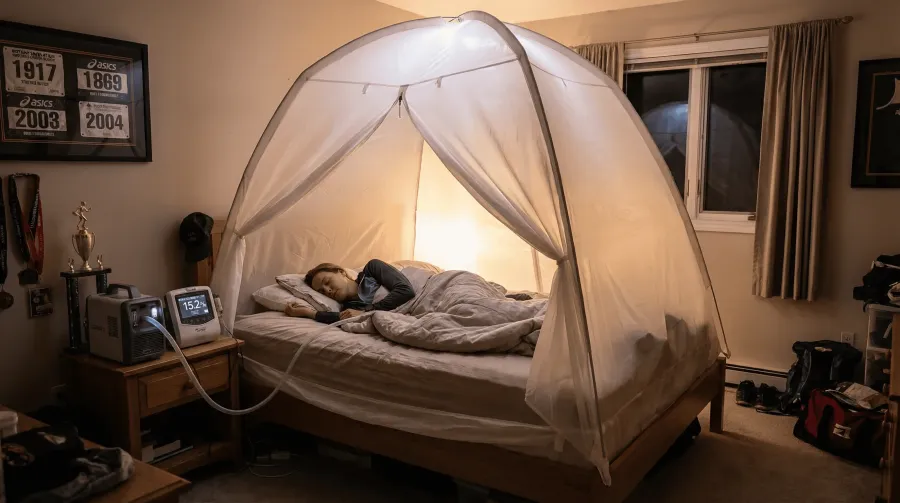
Here's what the altitude enthusiasts often underplay: training quality decreases significantly at elevation. At 2,500 meters, a well-trained athlete may see their power output drop by 8–12% at equivalent perceived effort. Running pace slows. Lactate accumulates faster. The sessions simply aren't as hard as they would be at sea level.
For elite athletes who can maintain enormous volume even at reduced intensity, this is manageable — the haematological gains outweigh the quality loss. For age-groupers who have limited training time and can only do 12–15 hours per week at peak, sacrificing training quality for 3–4 weeks to chase marginal aerobic gains is a questionable trade.
The math: is 3 weeks of compromised training + 2 weeks of altitude benefit worth more than 5 weeks of high-quality sea-level training? For most age-groupers, probably not.
Who Actually Benefits?
Altitude training makes the most sense for:
- Elite or near-elite athletes who have maxed out sea-level adaptation and need additional stimuli for haematological gains
- Athletes racing at altitude — if your target race is at 1,500+ meters, training at altitude for race-specific adaptation makes practical sense beyond haematology
- Athletes with 4+ weeks available for a proper camp at an established altitude training destination, ideally with coaching support and structured LHTL protocols
It makes much less sense for:
- Age-groupers with limited training time who would be better served maximizing sea-level training quality
- Athletes using bedroom tents as a primary altitude strategy
- Anyone expecting a 10-minute Ironman improvement from a single altitude camp
Practical Alternatives With Better ROI
If your goal is aerobic adaptation, the evidence is strong that the following produce reliable gains with far less logistical overhead than altitude training:
- Heat acclimatization training — 10–14 days of training in heat (or heat chambers) produces meaningful plasma volume expansion and cardiovascular adaptations. The research is at least as compelling as altitude, and it's far more accessible.
- Consistent high-volume training at sea level — the most reliable predictor of improved aerobic capacity remains training volume and consistency. More hours, better recovery, quality coached sessions.
- Threshold and VO2max work — structured intervals at sea level remain the most evidence-backed method of raising VO2max for the vast majority of athletes.
The Bottom Line
Altitude training works — for the right athletes, in the right conditions, executed properly. For elite and near-elite competitors who have the time and resources to do it correctly, it's a legitimate performance tool. For the age-grouper trying to qualify for Kona or go sub-10 hours, altitude is unlikely to be the limiting factor — and the disruption to training quality and daily life is often not worth the marginal gains.
In 2026, the altitude tent industry will continue to sell dreams. The research will continue to be mixed. And the most impactful training decision most age-groupers can make remains the same as it's always been: sleep more, train consistently, and do the work.


