
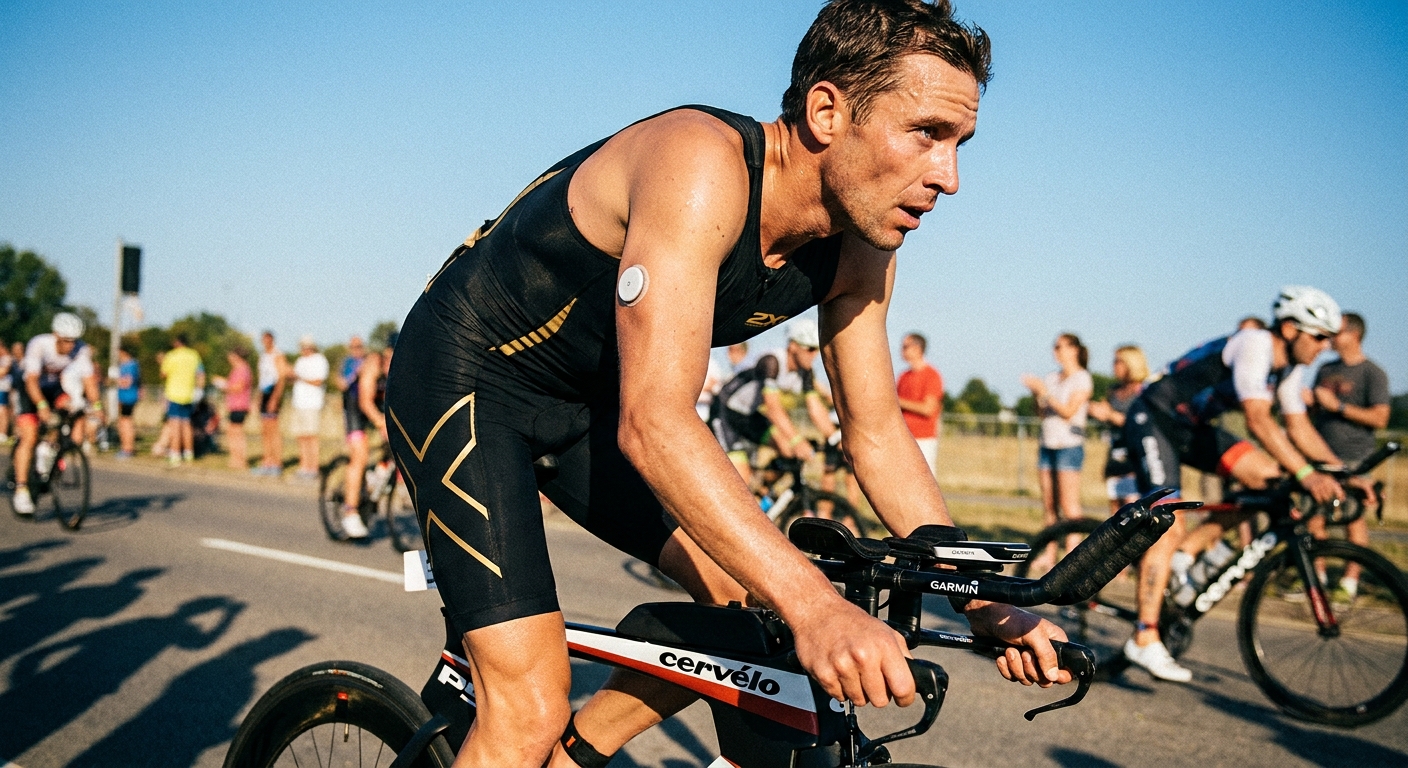
You've dialed in your swim stroke, optimized your bike fit, and finally nailed your run cadence. You track power, pace, HRV, sleep, and nutrition to the gram. But there's a metric most triathletes are still flying blind on: blood glucose. The fuel gauge for your entire body — and until recently, checking it meant stabbing your finger before breakfast and hoping for the best.
Enter the Continuous Glucose Monitor. CGMs were originally designed for people managing diabetes, but in the last few years they've migrated firmly into the endurance sports world. Supersapiens tried to make them mainstream for athletes (and then folded — more on that shortly). Now the big players — Dexcom, Abbott, Senseonics — are building devices that work for hard-training triathletes who just want to know why they bonked at mile 15 of the run, again, despite eating "enough."
We spent serious time researching every CGM worth strapping to your arm in 2026. Here's the honest truth about each one — what it does brilliantly, where it falls flat, and which one belongs on your arm before your next 70.3.
What to Look For in a CGM for Triathlon
Before we get into individual picks, here's what actually matters when evaluating a CGM through a triathlete lens:
- Water resistance: You swim. The CGM needs to survive it. There's a meaningful difference between rated at 1 meter for 30 minutes and rated at 2.4 meters for 24 hours.
- Real-time vs. scan-based readings: Some CGMs push data to your phone every minute. Others require you to actively scan. During a race, real-time wins — always.
- Smartwatch integration: Can you see your glucose on your Garmin or Apple Watch? Glancing at your wrist is the only data check that actually happens on the bike at 40km/h.
- Accuracy (MARD): Mean Absolute Relative Difference — lower percentage means more accurate. Target under 10%.
- Wear time: Longer wear means fewer sensor changes during a heavy training block, and fewer opportunities for adhesive failure mid-brick.
- The lag: CGMs measure interstitial fluid, not blood directly. There's a 10–15 minute delay between blood events and sensor readings. During hard exercise, glucose can move faster than the sensor can track. Know this. Plan for it.
- Prescription vs. OTC: Some require a doctor's script. Others you can buy off a shelf. Huge practical difference for performance-focused athletes.
1. Dexcom G7 — The Gold Standard for Triathletes
Price: ~$89–$110/sensor (Rx required) | Wear time: 10.5 days + 12-hour grace period | MARD: 8.2%
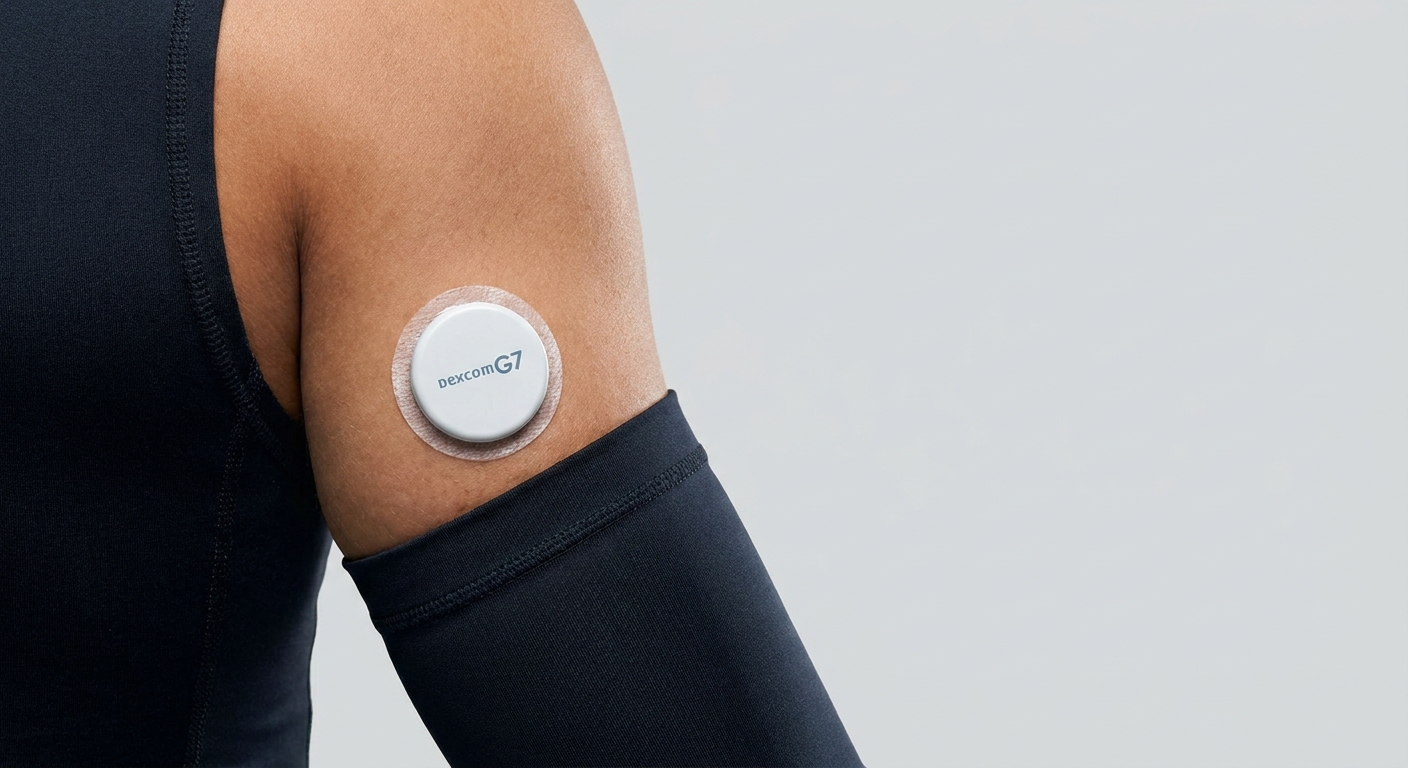
If there's a consensus pick among endurance athletes who use CGMs seriously, it's the Dexcom G7. It's the most complete package available: genuinely waterproof (IPX8 to 8 feet / 2.4 meters for 24 hours), a 30-minute warm-up time, real-time readings every minute pushed to your phone, and — critically — direct integration with Apple Watch and select Garmin devices. You can see your glucose on your wrist without touching your phone. During a race, that's the only kind of data check that's actually happening.
The G7 is 60% smaller than the G6 it replaced, which matters more than you'd think. It sits lower, snags on fewer things, and survives swim after swim without the paranoid overpatch ritual that older sensors required. The 8.2% MARD is best-in-class accuracy. And during rapid glucose changes — exactly what happens during a hard brick workout — the G7 tracks more consistently than its competitors. Dexcom also received FDA clearance in 2025 for a new 15-day version of the G7, the longest-wearing Dexcom sensor yet.
- ✅ Best waterproof rating for swimmers — IPX8 to 8 feet / 24 hours
- ✅ Real-time 1-minute readings, Apple Watch + Garmin compatible
- ✅ 8.2% MARD — top-tier accuracy, especially during exercise
- ✅ 30-minute warm-up after application
- ✅ Compact, low-profile design that survives hard training
- ❌ Requires a prescription
- ❌ Most expensive per-sensor option on this list
- ❌ Universal 10–15 minute lag still applies during fast glucose swings
Best for: Serious triathletes who want the most reliable, swim-proof, watch-integrated CGM available and are willing to navigate the prescription process.
2. Abbott FreeStyle Libre 3 Plus — The Slim, Discreet Runner-Up
Price: ~$75–$95/sensor (Rx required) | Wear time: 15 days | MARD: 8.2%
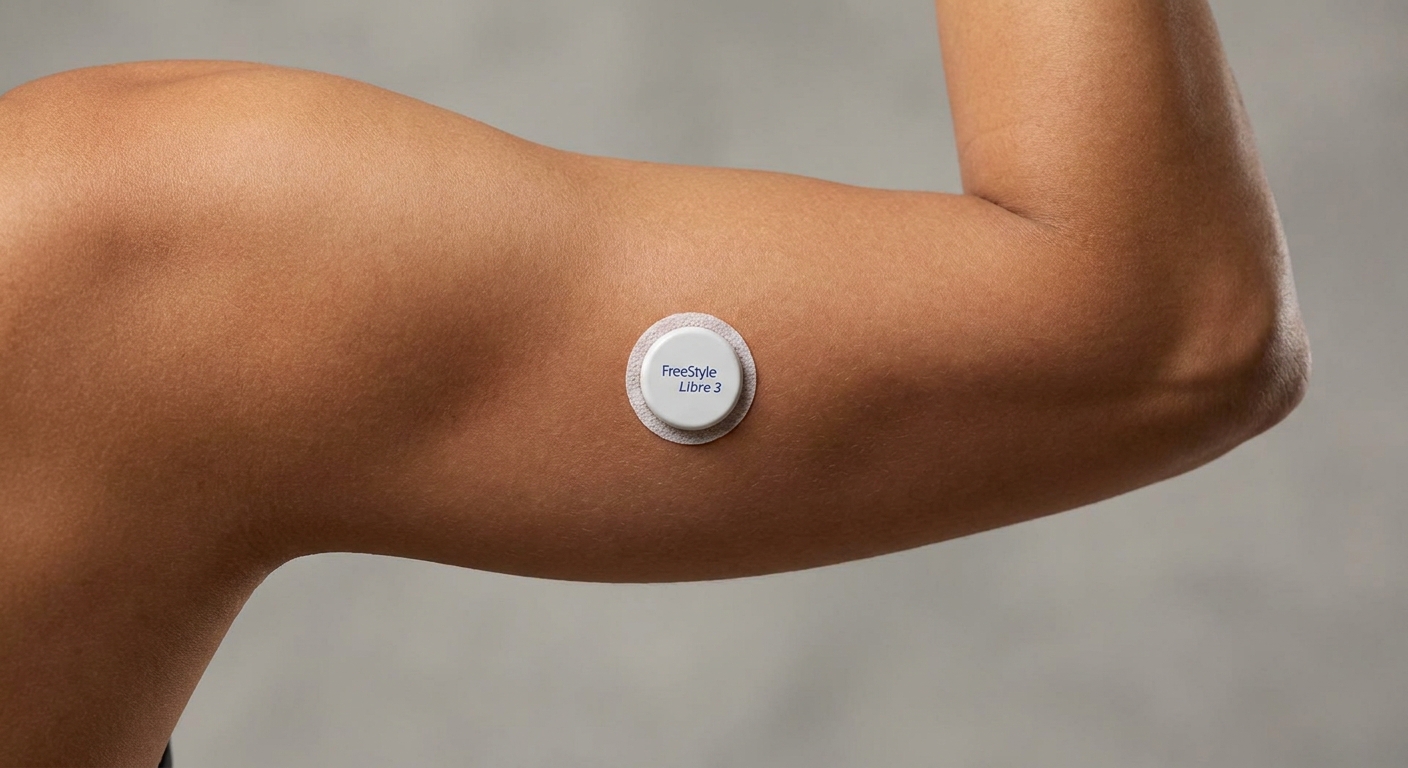
The FreeStyle Libre 3 Plus is legitimately impressive hardware. It's the world's smallest CGM — roughly the size of two stacked pennies — with a 15-day wear time, real-time minute-by-minute readings, and no fingerstick calibration required. The 8.2% MARD matches the Dexcom G7 on accuracy, and the longer wear time means fewer sensor changes during a heavy training block.
The critical limitation for triathletes is water resistance. The Libre 3 Plus is rated IPX8, but only to 1 meter (3.3 feet) for a maximum of 30 minutes. Short pool sessions are probably fine. An open-water race swim of 1.9km or 3.8km is right at — or beyond — its rated limits. Most serious swimmers report needing an overpatch to keep it in place through a full training block. Also worth flagging: Abbott issued a recall on some Libre 3 and 3 Plus batches in early 2026 for incorrect glucose readings. Check your lot numbers.
- ✅ World's smallest CGM — genuinely discreet under a trisuit
- ✅ 15-day wear time — fewer changes per training block
- ✅ Real-time readings, 8.2% MARD, no fingerstick calibration
- ✅ Slightly less expensive than Dexcom G7
- ❌ Water resistance limited to 1 meter / 30 minutes — problematic for open-water racing
- ❌ 60-minute warm-up time (vs 30 min for Dexcom G7)
- ❌ 2026 recall on some sensor batches — verify lot numbers
- ❌ Requires a prescription
Best for: Pool-focused triathletes who want a discreet, long-lasting CGM and can manage the water resistance limitation with an overpatch for race day.
3. Dexcom Stelo — The No-Prescription Gateway Drug
Price: ~$89 per 2-pack (OTC, no Rx needed) | Wear time: 15 days | MARD: ~8.5%
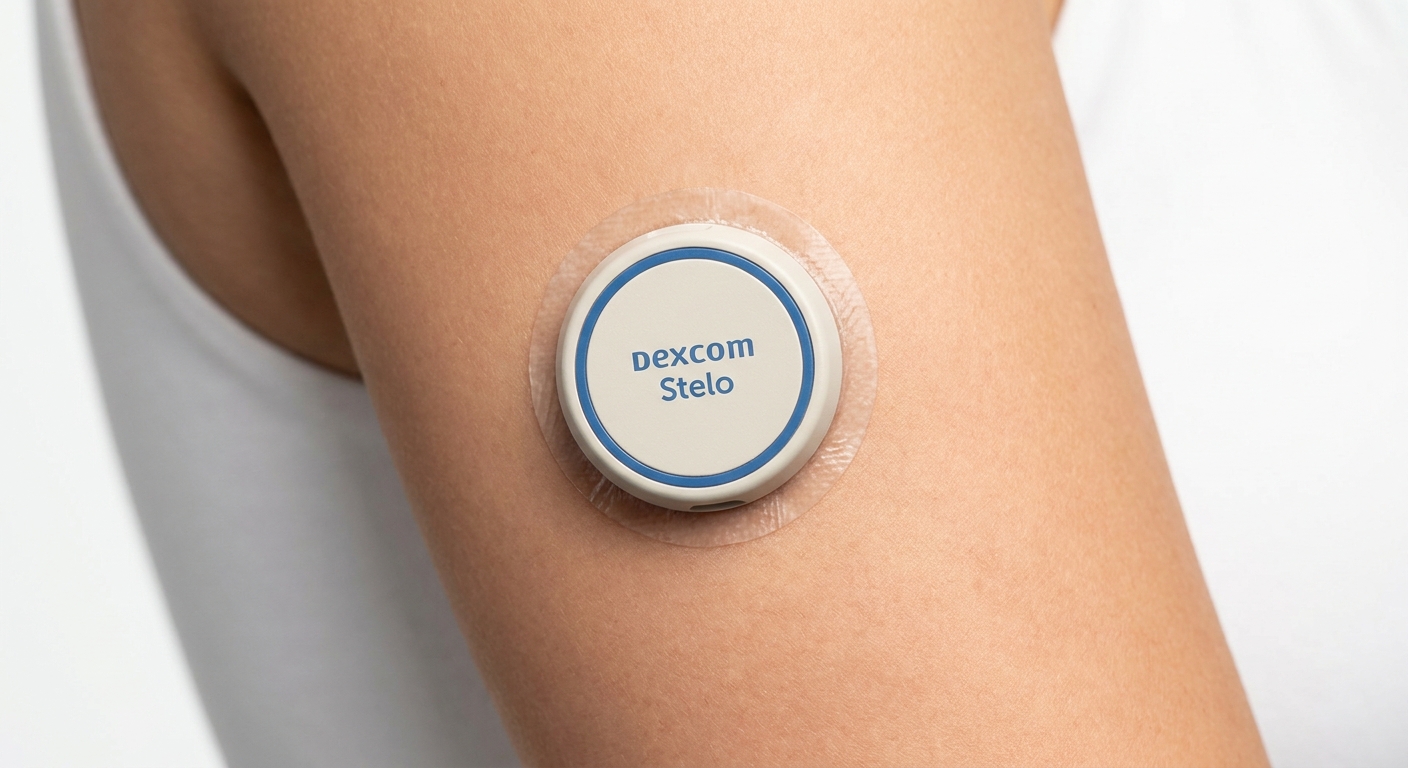
Dexcom's Stelo is the first FDA-cleared over-the-counter glucose biosensor in the US. You can walk into a pharmacy, buy it, and start tracking without a doctor visit or a 45-minute insurance call. For the performance athlete who isn't diabetic and just wants to understand their metabolic response to training, this is the most frictionless entry point into CGM technology that currently exists.
The hardware is closely related to the G7 — IPX8 waterproof to 8 feet, 15-day wear, real-time data. Where it differs: no urgent low glucose alerts (designed for non-insulin users), slightly less smartwatch integration, and a notable integration with the Oura Ring that lets you correlate glucose data with sleep and recovery scores in one place. For athletes already using Oura, that's legitimately useful.
Important caveat: the Stelo is explicitly designed for people not on insulin and not at risk for hypoglycemia. If you're managing insulin-dependent diabetes, you need the prescription G7, not this. For non-diabetic performance athletes? The Stelo is the best and cheapest way to find out what's actually happening to your fuel levels during training.
- ✅ No prescription required — available OTC at pharmacies
- ✅ Oura Ring integration for combined metabolic + recovery tracking
- ✅ IPX8 waterproof to 8 feet — same rating as Dexcom G7
- ✅ 15-day wear time, no fingerstick calibration
- ✅ Lowest cost per sensor for non-prescription options
- ❌ No urgent low glucose alerts — not suitable for insulin-dependent athletes
- ❌ More limited smartwatch integration than G7
- ❌ Some user reports of occasional accuracy discrepancies
Best for: Non-diabetic triathletes doing a CGM experiment for performance optimization. The easiest, lowest-friction way to start collecting glucose data.
4. Eversense 365 — The Nuclear Option
Price: Procedure cost varies (~$300–$600 insertion + sensor) | Wear time: 365 days | MARD: 8.8%
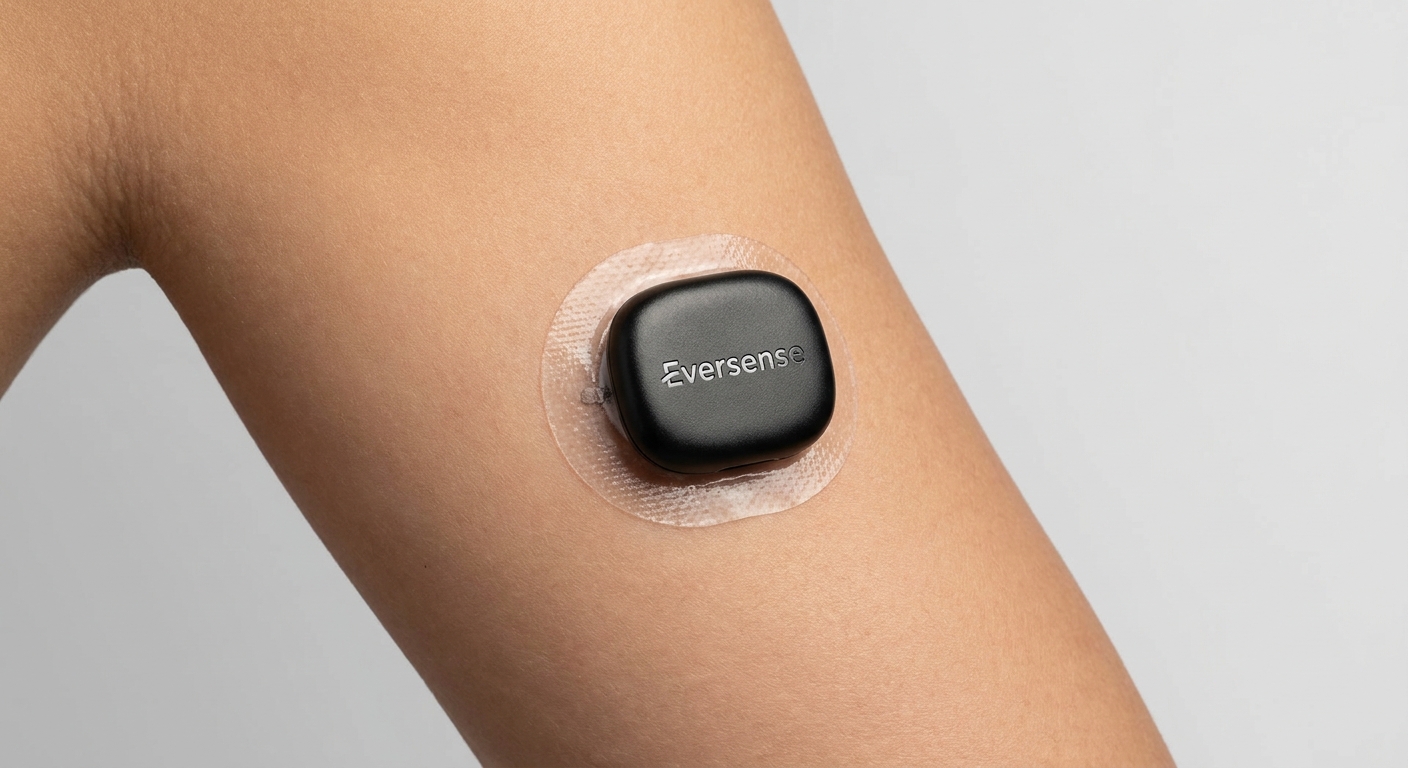
The Eversense 365 is not for the needle-averse. It's the world's first one-year implantable CGM: a tiny sensor inserted under the skin of your upper arm by a healthcare provider, paired with a removable external transmitter held in place with adhesive. One procedure. Twelve months of data. No weekly sensor changes. No adhesive patches failing mid-race. No worrying about knocking it off in T1.
For athletes doing a full Ironman build, the appeal is real. The implanted sensor physically cannot be dislodged by a wetsuit, a rogue elbow at the mass swim start, or an aggressive foam roller. On-body vibration alerts notify you of glucose events even when your phone is nowhere near you. The 8.8% MARD is accurate enough for meaningful training insights. And since the external transmitter is removable, you can take it off for activities where having a disc on your arm is impractical.
The trade-offs are clear: you need a medical procedure to put it in and take it out, it requires occasional fingerstick calibration, and the app ecosystem is more limited than Dexcom's. But if you've ever changed a sensor the morning of a race and held your breath hoping the 30-minute warm-up would finish in time, the Eversense 365 solves that problem permanently.
- ✅ 365-day wear — nothing else comes close
- ✅ Implanted sensor cannot be dislodged by any sport or activity
- ✅ On-body vibration alerts without needing the phone
- ✅ Removable transmitter for flexibility
- ✅ 8.8% MARD — clinically validated accuracy
- ❌ Requires a minor in-office insertion procedure
- ❌ Prescription and healthcare provider required
- ❌ Smaller app ecosystem, fewer third-party integrations
- ❌ Requires occasional fingerstick calibration
Best for: Committed long-course athletes who want a full-season glucose dataset with zero maintenance interruptions — and aren't deterred by a minor medical procedure.
5. Sibionics GS3 — The Dark Horse for Swimmers
Price: ~$60–$80/sensor | Wear time: 14 days | MARD: ~9.0%
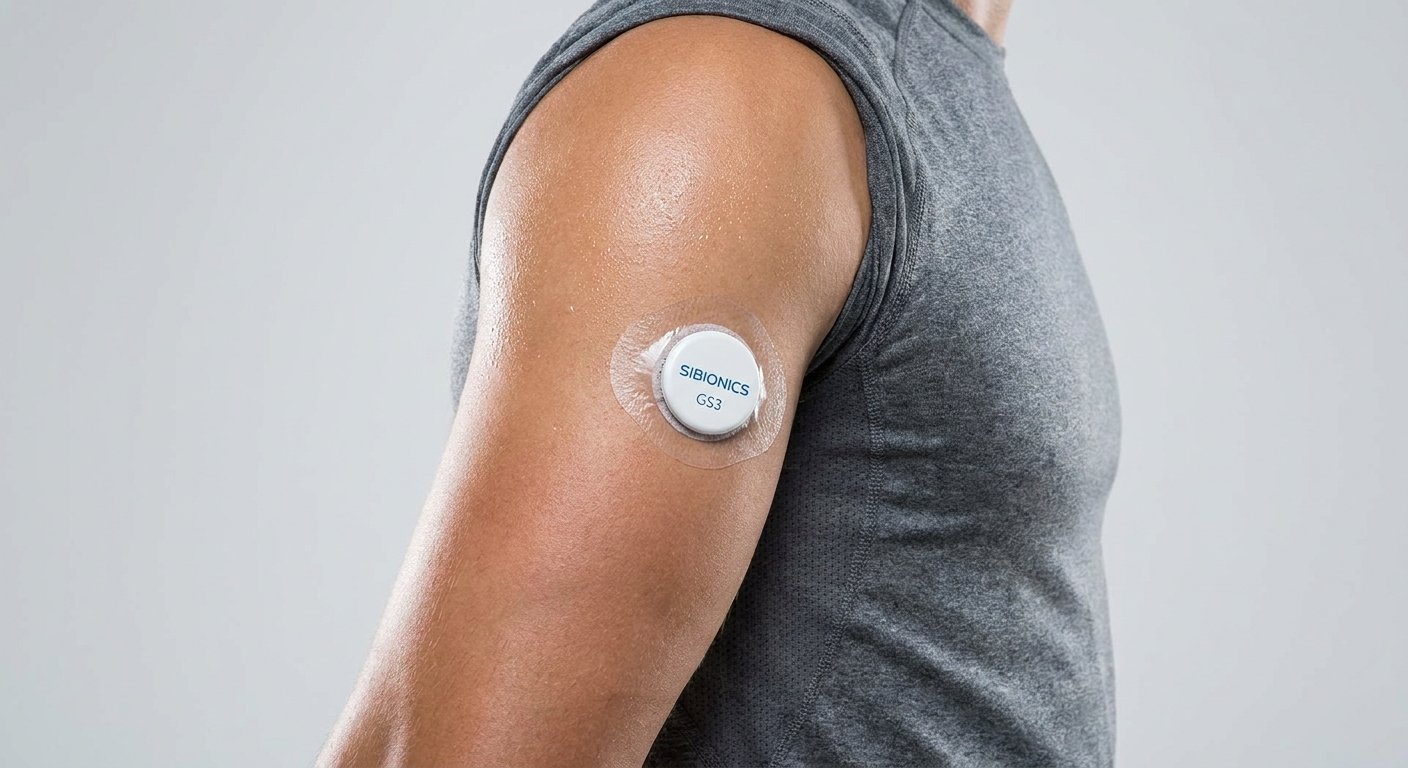
Most triathletes outside the tech-forward CGM community haven't heard of Sibionics. The GS3 carries an IP38 dust and water resistance rating that exceeds every other device on this list — it's engineered for extended, serious water exposure in a way that the Dexcom and Abbott devices simply aren't rated for. For athletes who log serious swim volume, this distinction matters.
The GS3 delivers real-time readings every 5 minutes (less frequent than Dexcom's 1-minute cadence but still continuous), a 14-day wear time, and a no-fingerstick design. It's also the most affordable CGM on this list by a meaningful margin. At ~9.0% MARD, accuracy is solid, though not quite at Dexcom G7 levels.
The limitation is ecosystem. Sibionics is a newer entrant in Western markets with fewer integrations with Garmin, Apple Watch, and major training platforms. If you're deep in Garmin Connect or TrainingPeaks, you'll feel the gap. But as a swim-proof, budget-conscious CGM for athletes who prioritize water durability, it punches well above its price.
- ✅ Best-in-class water resistance (IP38) — purpose-built for swimmers
- ✅ Most affordable CGM on this list
- ✅ 14-day wear, no fingerstick, real-time readings
- ❌ 5-minute reading interval vs 1-minute for Dexcom G7
- ❌ Smaller app ecosystem and fewer smartwatch integrations
- ❌ Less community support and third-party resources
Best for: Open-water swimmers and triathletes who want maximum water resistance at the lowest price and don't need deep ecosystem integration.
A Moment of Silence: Supersapiens
No CGM comparison for triathletes would be complete without acknowledging Supersapiens — the Abbott-powered platform built specifically for athletes, launched with serious pro triathlon sponsorships, and then quietly shut down in 2023 citing "regulatory challenges." It was the right product with the wrong timing, and its absence left a gap the five devices above are now filling, piece by piece.
Quick Comparison: Which CGM Is Right for You?
- Best overall for triathletes: Dexcom G7
- Best water resistance for serious swimmers: Sibionics GS3
- Best no-prescription option: Dexcom Stelo
- Longest wear / zero maintenance: Eversense 365
- Most discreet: Abbott FreeStyle Libre 3 Plus
- Best value: Sibionics GS3
So — Should You Actually Use a CGM?
Here's the honest answer: for most age-group triathletes, a CGM works best as a 60–90 day education tool rather than a permanent fixture. Run a sensor through a full training block and you'll learn things about your glucose response to intervals, long rides, and pre-race nutrition that no sports dietitian can tell you from a single consultation. You'll find your real Zone 2 threshold. You'll watch exactly what that mid-ride gel does to your blood sugar — and what happens 20 minutes later when it crashes. You'll understand why mile 15 of the run always feels like mile 25.
Take that data, build smarter fueling habits, and decide whether continuous monitoring is worth the ongoing cost. The athletes on the podium aren't guessing about their fuel. That data is available to you now. The only question is whether you want to use it.


