
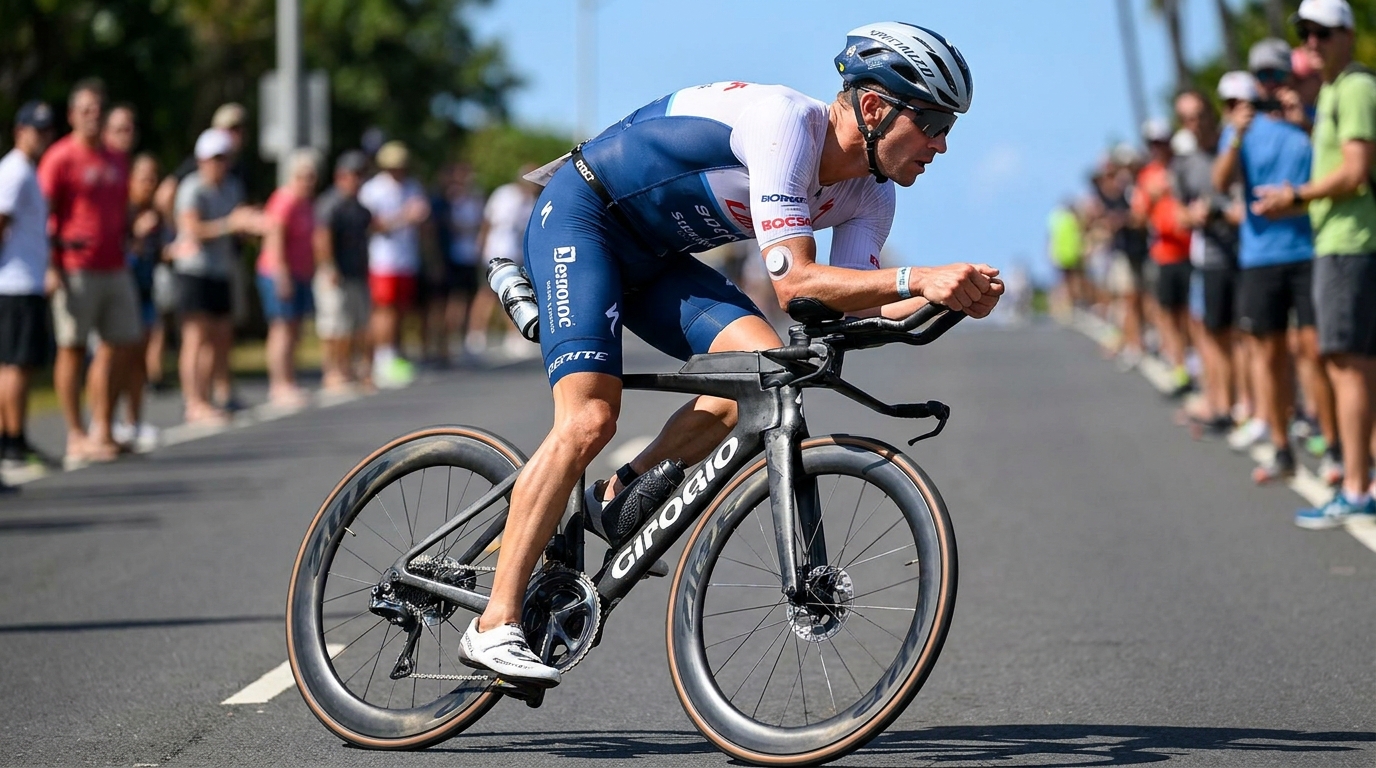
Picture this: you're 22 miles into the bike leg at your 'A' race, heart rate dialed, cadence smooth, and your upper arm is quietly beaming real-time glucose data to your Garmin. You see your blood sugar trending down faster than expected. You reach for a gel — not because your stomach told you to, not because of some arbitrary "eat every 30 minutes" rule, but because a sensor smaller than a poker chip literally told you so.
Welcome to the era of the Continuous Glucose Monitor — and whether you've heard of them because your friend who's clearly gone off the biohacking deep end won't shut up about them, or because you genuinely want to optimize your fueling, it's time to get properly informed.
What Is a CGM, Exactly?
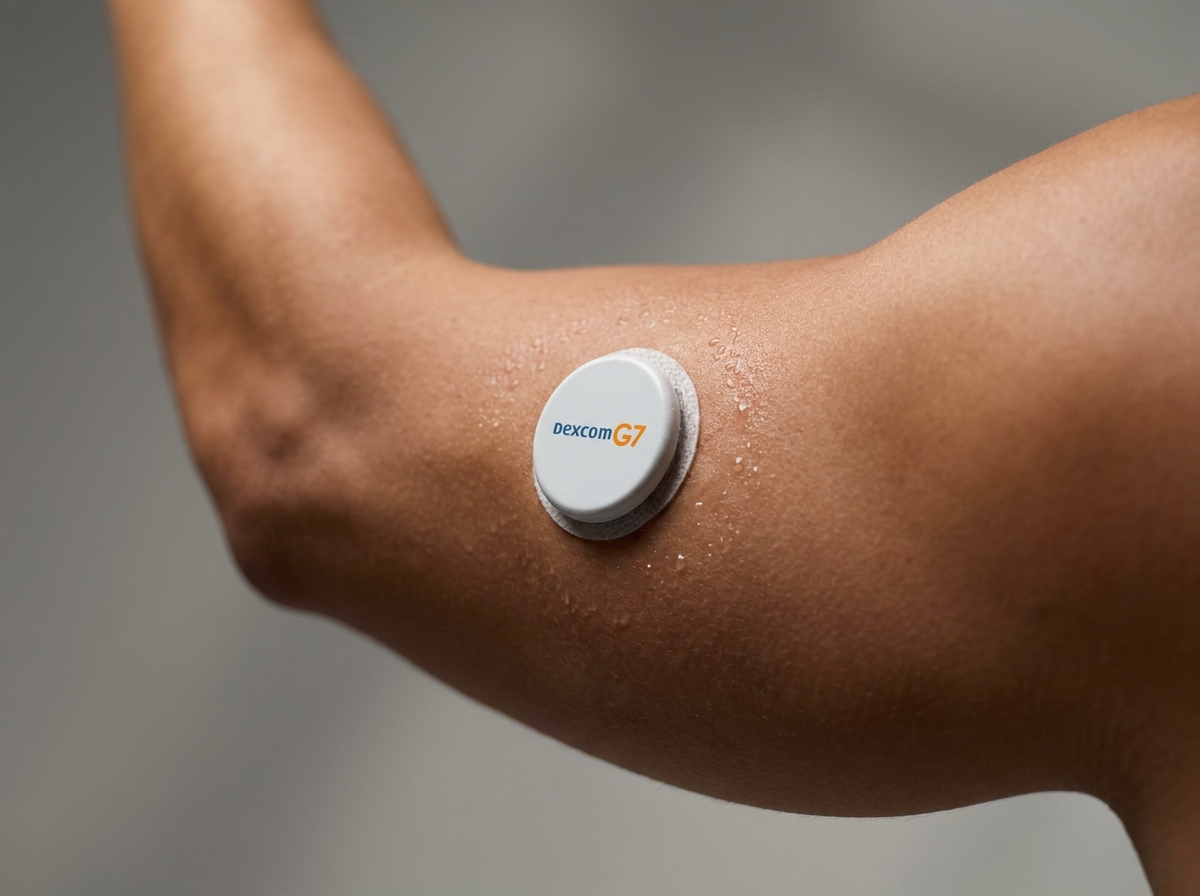
A Continuous Glucose Monitor is a small wearable device — typically a sensor the size of a large coin — that you stick to the back of your upper arm or abdomen. A tiny filament (yes, it goes slightly under the skin — relax, it's the size of a hair) measures glucose in your interstitial fluid every 1–5 minutes and beams that data to your phone or smartwatch.
Historically, CGMs were medical devices for people managing Type 1 and Type 2 diabetes. Then elite athletes got their hands on them. Then professional cyclists. Then triathletes. Now Dexcom and Abbott have released over-the-counter versions — Dexcom Stelo and Abbott Lingo — specifically marketed to healthy, non-diabetic adults who want metabolic data. The mainstream has arrived, and it brought a $150–$200/month price tag with it.
The CGM Landscape for Athletes in 2026
Let's run through the main players, because not all CGMs are built the same:
- Dexcom G7: The gold standard of accuracy. Medical-grade, Garmin/Apple Watch integration, 15.5-day wear, 30-minute warm-up. Requires a prescription in most markets, though some sports medicine clinics now prescribe it off-label for performance athletes.
- Abbott FreeStyle Libre 3 / Libre 3 Plus: World's smallest CGM, real-time minute-by-minute data, 15-day wear, excellent Bluetooth. The Libre 3 Plus just pushed accuracy close to Dexcom levels.
- Dexcom Stelo: Over-the-counter, no prescription needed, 15-day wear. Built specifically for non-diabetic adults — if you want to skip the doctor's office, this is your entry point.
- Abbott Lingo: The other OTC option, gamified app experience, focused on making glucose data approachable for people who've never thought about their blood sugar before.
- Supersapiens: The athlete-specific platform that used Abbott Libre sensors with a sports-performance app and Garmin integration. It was brilliant for triathletes — and it shut down in 2024. Gone, but not forgotten, and a proof of concept that the market will see successors to.
"The CGM market for non-diabetic users is projected to grow explosively through 2027 — driven largely by endurance athletes, biohackers, and the metabolic health wave. Over 60% of elite endurance athletes now report using CGM data in their training protocols."
What Does CGM Data Actually Tell You as a Triathlete?
Here's where we separate signal from noise — and there's a fair amount of noise.
The Useful Stuff
At high exercise intensity, CGMs develop a meaningful lag — interstitial fluid glucose trails actual blood glucose by 10–15 minutes. During a hard interval session or race effort, your CGM might show you're fine while you're already bonking. This isn't the device's fault; it's physics. The fluid it's sampling doesn't update as fast as blood does during intense exercise.
Where CGMs genuinely shine for triathletes:
- Pre-training fueling feedback. Did that breakfast actually top you off or spike-then-crash you? Your CGM will show you the curve. This is actionable data that helps you choose better pre-race nutrition.
- Zone 2 training. During easy aerobic work (85–95 mg/dL is the sweet spot for fat oxidation), CGM data is accurate and revealing. You'll see how well your body is running on fat versus needing glucose support.
- Recovery nutrition timing. Post-workout glucose data tells you how well you're replenishing glycogen stores and whether your recovery meal is doing its job.
- Overnight trends. Glucose patterns while you sleep are surprisingly informative — a dip overnight often means you under-fueled the day before. Elite coaches use this to dial in training-day nutrition for the following morning.
- Carbohydrate response profiling. Not all carbs hit the same for all people. Two athletes eating the same gel will have different glucose responses. CGM data lets you build a personalized picture of what fuels work for your physiology.
The Limitations You Need to Know
Before you drop $200/month on sensors, some cold water:
- The lag problem is real during racing. At high intensity — the bike leg of an Olympic tri, the run in an Ironman 70.3 — CGM data is delayed. Don't make real-time fueling decisions based on CGM readings during hard efforts without understanding this.
- Stress spikes glucose too. Race-day adrenaline will push your glucose up. Don't see a spike and think you need to back off on fueling — cortisol and adrenaline cause glucose to rise independent of what you've eaten. Context matters.
- It won't tell you what to eat. CGM data is a measurement, not a prescription. You still need to know your carbohydrate needs, your sodium targets, your timing windows. The sensor doesn't replace nutrition education.
- Adhesion during triathlon is tricky. Salt water, wetsuits, neoprene friction, body heat — CGM sensors have to work for this. The Libre 3 and Dexcom G7 hold up reasonably well with performance patches, but plan to test in training before race day. Do not find out mid-swim that your sensor has peeled off.
Is It Worth the $200/Month Habit?
Honest answer: for most age-groupers, no — not as a permanent year-round tool. But as a targeted education investment? Potentially yes.
The highest-ROI use of a CGM for a non-diabetic triathlete is a learning block: wear it for 60–90 days, ideally through a training block that includes race-pace sessions, long rides, brick workouts, and a tune-up race. You'll come out the other side knowing:
- How your body responds to your usual pre-race breakfast
- Which gels and drinks spike-and-crash you vs. provide steady energy
- What your glucose looks like during Zone 2 vs. threshold vs. race-pace efforts
- Whether your post-workout nutrition is actually refueling you or stressing your system
That's genuinely valuable data. And once you've learned it, you don't necessarily need the sensor anymore — you've encoded the patterns. Some athletes do a seasonal check-in (one 15-day sensor once a quarter) to verify their nutrition is still dialed. That's a much more financially sustainable approach than permanently living at $200/month.
CGM Practical Tips for Triathletes
If you decide to run a CGM experiment, do it right:
- Apply the sensor 24 hours before your first serious session. The first day of readings is often noisy while the sensor calibrates.
- Use a performance patch over the sensor for any swim or sweat-heavy workout. Skin Tac adhesive barrier wipes are also popular in the CGM athlete community.
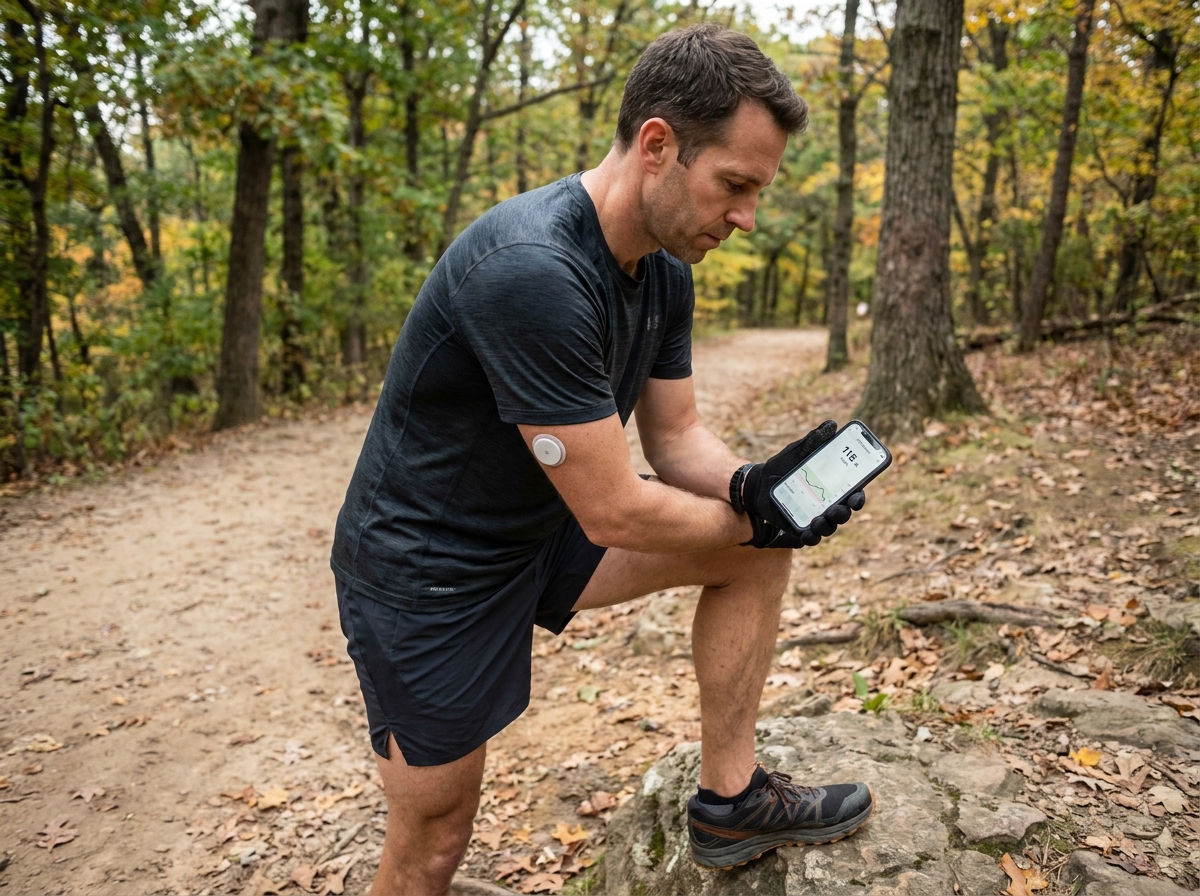
- Log your workouts, food, and stress alongside glucose data. Raw glucose numbers without context are nearly meaningless. The story is in the correlation.
- Don't obsess mid-race. Use the data for training education. On race day, stick to your tested fueling plan — the CGM can be a background check, not your race-day coach.
- Work with a sports dietitian if you can. CGM data is powerful in the hands of someone who knows how to interpret it for endurance athletes specifically. Clinical thresholds for diabetes are not the same as performance thresholds for a triathlete running 6:30 miles.
The Bottom Line
CGMs represent one of the more genuinely interesting technological developments in triathlon nutrition — not because they tell you what to do, but because they show you things about your own physiology that you simply cannot perceive otherwise. The lag-time limitations matter, the cost is real, and the data requires context to be useful. But for a triathlete serious about dialing in fueling — especially an age-grouper who's tired of guessing — a targeted CGM experiment is worth considering.
Just don't become the person at the coffee shop pulling up your glucose graph on your phone to explain why you had to order a banana with your espresso. We all know that person. Don't be that person.
Train smart, fuel smarter, and if you're going to strap a sensor to your arm — actually use the data.


