
Best Triathlon Watches of 2026: The Only GPS Watch Guide You’ll Actually Need
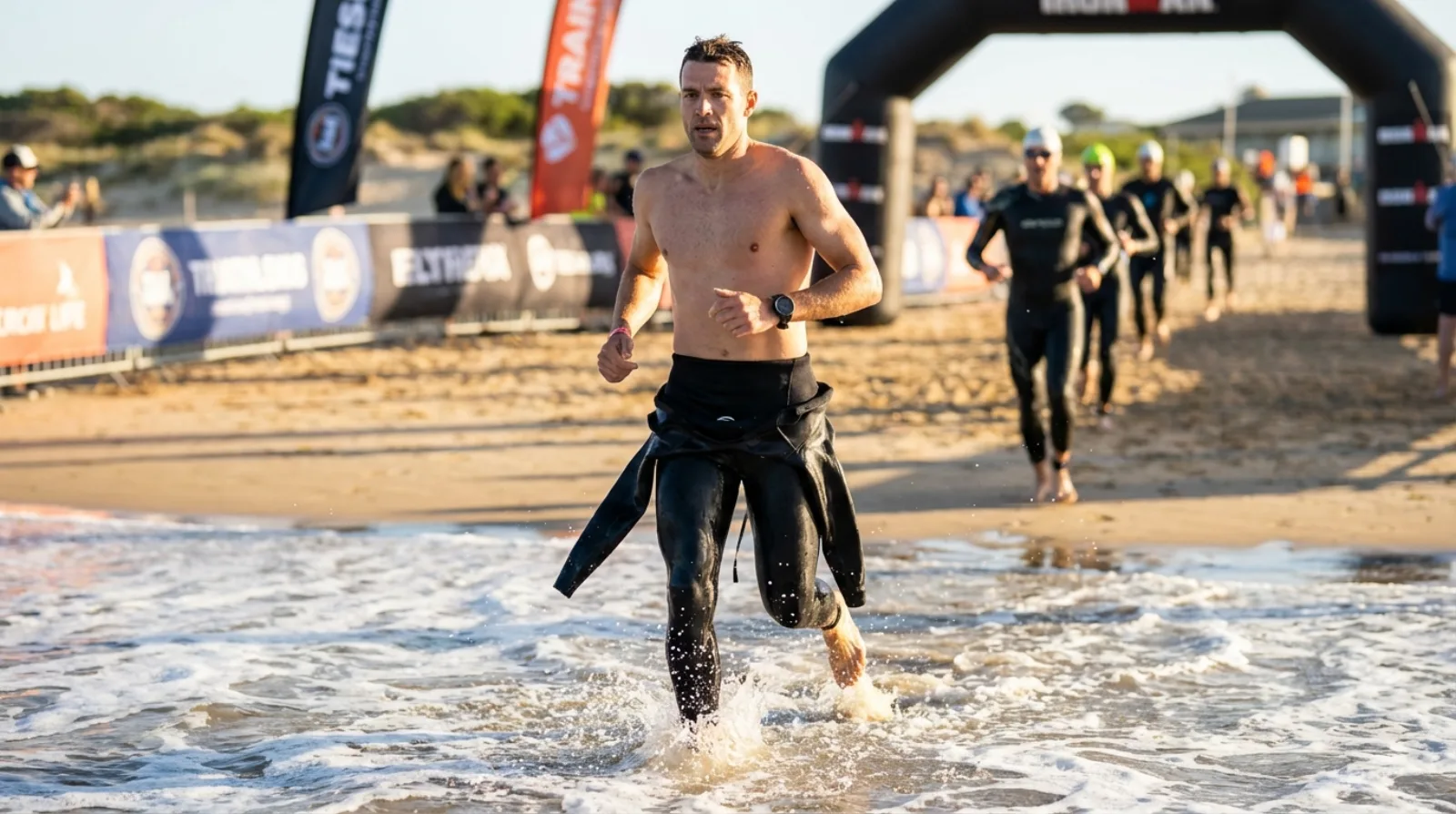
You’re standing in T1, heart hammering at 170 bpm, lake water dripping off your wetsuit, and your watch is still showing “Pool Swim — 25m.” You tap the screen. Nothing. You mash the button. It starts a new activity. Your open-water split? Gone. Your transition time? Fiction. The next four hours of bike and run data will be orphaned in some digital purgatory where Garmin Connect and your coach will never find them. You haven’t even mounted your bike yet, and race day is already a data disaster.
Every triathlete has a watch horror story. The GPS that mapped your swim through a parking lot. The heart rate monitor that flatlined the moment you got wet. The battery that died at mile 18 of the run because you forgot to charge it after that brick session. If you’ve raced long enough, you’ve been burned — and you know the sinking feeling of crossing the finish line with nothing but vibes to show your coach.
Here’s the thing: your watch isn’t an accessory. It’s the only piece of equipment that follows you through all three disciplines. Your bike stays in transition. Your shoes swap out. Your goggles come off. But your watch? It’s there from the first stroke to the final step, quietly recording the data that tells you whether your training is actually working — or whether you’re just accumulating fatigue with better tan lines.
We spent weeks researching the best triathlon watches of 2026, cross-referencing reviews from DC Rainmaker, Triathlete Magazine, 220 Triathlon, and the brutally honest forums of r/triathlon. We tested, compared specs, and argued about whether AMOLED screens are worth the battery trade-off (they are). Here are the five GPS watches that earned a spot on this list — and the honest truth about each one.
What to Look For in a Triathlon Watch
Before we get into the individual picks for the best triathlon watches of 2026, here’s what actually matters when you’re choosing a GPS watch for swim-bike-run:
- Multisport/Triathlon Mode: One-button transitions between swim, bike, and run. Non-negotiable. If you have to stop and manually switch activities in T1, the watch has failed its primary job.
- GPS Accuracy: Dual-frequency/multi-band GPS is the new standard. Single-band GPS will map your open-water swim through a cornfield.
- Battery Life: You need enough juice for your longest training day, plus margin. Sprint racers need 3–4 hours. Ironman athletes need 14+ hours of continuous GPS. Plan accordingly.
- Swim Tracking: Open-water GPS tracking, stroke detection, pool length counting, and ideally underwater heart rate. Bonus if it doesn’t count your flip turns as extra laps.
- Heart Rate + Chest Strap Compatibility: Wrist-based HR is convenient but still struggles with cold water and high intensity. Make sure it pairs with ANT+ or Bluetooth chest straps for race-day accuracy.
- Recovery & HRV: Training hard is easy. Training smart requires recovery data, HRV trends, sleep tracking, and training load analysis.
- Data Sync: Strava, TrainingPeaks, and your coach’s platform of choice. If it doesn’t sync, it didn’t happen.
- Display Readability: You need to read your pace at a glance while bouncing down a road at 25 mph or squinting through transition brain fog. AMOLED wins for clarity; MIP wins for sunlight.
- Durability & Water Resistance: 5 ATM minimum. Sapphire glass if you’re hard on gear. Your watch will get scratched, submerged, baked in the sun, and slathered in sunscreen. It needs to survive all of it.
- Price-to-Performance: The best watch is the one that gives you what you need without paying for features you’ll never touch.
Garmin Forerunner 965: The Gold Standard
Price: $599
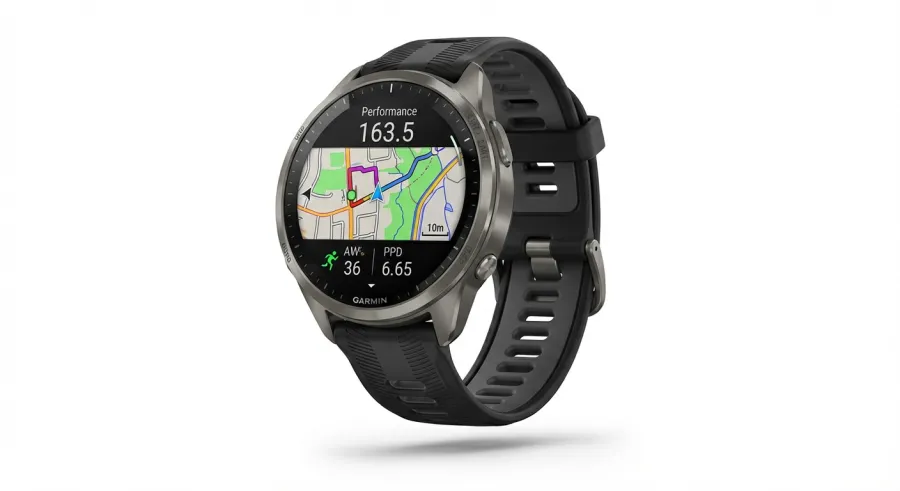
The Garmin Forerunner 965 remains the default recommendation for serious triathletes, and for good reason. It does everything well and nothing poorly. The 1.4-inch AMOLED display is gorgeous — bright, crisp, and readable in direct sunlight with a quick flick of the wrist. The titanium bezel keeps the weight down to 53 grams, which means it won’t feel like an anchor during a 10K at race pace. And the triathlon mode is Garmin’s best: one-press transitions, auto-detection, and seamless data logging across all three disciplines.
GPS accuracy is exceptional thanks to multi-band SatIQ technology. Open-water swim tracks are clean and tight — not the drunken zigzag you’d get from older single-band models. On the bike, it pairs with power meters, speed sensors, and radar units from the Garmin ecosystem (and third-party devices via ANT+). The running metrics are comprehensive: wrist-based running power, PacePro pacing strategy, real-time stamina tracking, and daily suggested workouts that actually adapt to your training load.
Battery life clocks in at 31 hours in standard GPS mode and up to 23 days as a smartwatch. That’s enough for an Ironman with room to spare, and enough for a week of daily training without obsessively checking the charge level. The training insights ecosystem — Training Readiness, HRV Status, Body Battery — is the deepest in the business. Your coach will love the data exports. You might love them too, if you’re into that sort of thing.
The catch? It’s $599, and it doesn’t include maps at the level of the Fenix 8 (though it does have full-color mapping). And Garmin Connect, while comprehensive, has a learning curve that makes your first triathlon look simple by comparison. But if you want one watch that does it all without compromise, this is it. It’s the Honda Civic of triathlon watches — not the flashiest, but everyone recommends it because it just works.
- ✅ Stunning 1.4” AMOLED display, readable in any conditions
- ✅ 31-hour GPS battery life covers any race distance
- ✅ Multi-band GPS with excellent open-water swim tracking
- ✅ Deepest training metrics ecosystem (HRV, Training Readiness, stamina)
- ✅ Lightweight titanium bezel at just 53g
- ❌ $599 price tag — premium performance, premium cost
- ❌ Garmin Connect has a steep learning curve for new users
- ❌ AMOLED display uses more battery than MIP alternatives
Best For: Serious triathletes who want the most complete, no-compromise GPS watch on the market.
Available at major retailers including Amazon, REI, and brand websites.
Garmin Forerunner 265: The Smart Mid-Range Pick
Price: $349
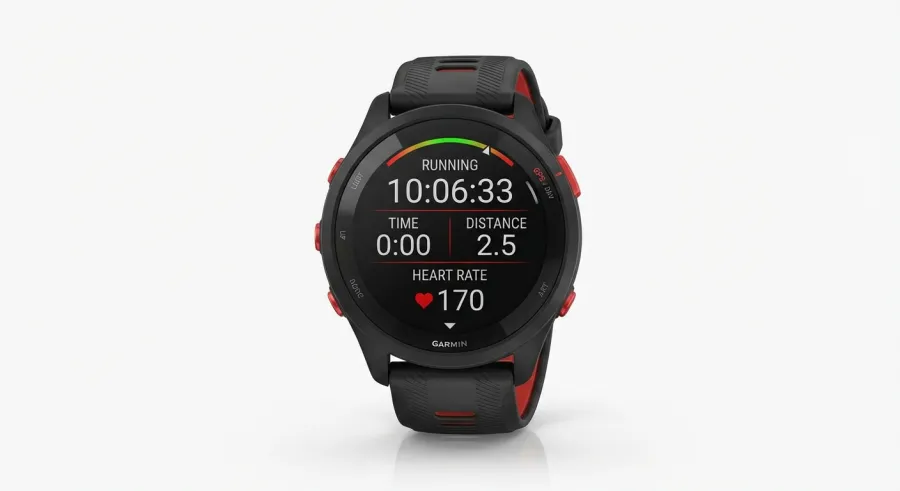
The Forerunner 265 is the watch the 965 doesn’t want you to know about. It shares the same AMOLED display technology, the same multi-band GPS, the same triathlon mode, and nearly the same training metrics — for $250 less. Since the Forerunner 570 launched as its successor, street prices have dropped to around $349, making it one of the best values in the triathlon watch market right now.
The 1.3-inch AMOLED screen is vibrant and easy to read mid-race. GPS tracking uses SatIQ multi-band positioning, which means your open-water swims and winding bike courses get mapped accurately. The triathlon profile supports auto-transitions, and you get the full suite of Garmin training tools: Training Readiness, Training Status, PacePro, and real-time stamina. It also packs wrist-based running dynamics — cadence, ground contact time, stride length — without needing a chest pod.
Battery life is 20 hours in GPS mode and 13 days in smartwatch mode. That’s enough for an Olympic or half-Ironman without worry, though full Ironman athletes cutting it close on a hot day might want to enable battery-saver GPS. Music storage, Garmin Pay, and smart notifications round out the daily-wear features.
What you lose compared to the 965: the titanium bezel (it’s polymer here), a slightly smaller display, shorter battery life, and on-watch maps. For most age-groupers doing sprint to 70.3 distances, you won’t miss any of it. The 265 is the triathlon watch equivalent of flying economy-plus: you get 90% of the experience for 60% of the price, and nobody at the finish line can tell the difference.
- ✅ Excellent AMOLED display at a mid-range price point
- ✅ Same multi-band GPS and triathlon mode as the 965
- ✅ Full Garmin training ecosystem (Training Readiness, PacePro, HRV)
- ✅ Wrist-based running dynamics without external sensors
- ✅ Street price around $349 makes it a standout value
- ❌ 20-hour GPS battery may be tight for full Ironman racers
- ❌ No on-watch maps (breadcrumb navigation only)
- ❌ Polymer case instead of titanium
Best For: Sprint to 70.3 triathletes who want Garmin’s best features without the flagship price.
Available at major retailers including Amazon, REI, and brand websites.
COROS Pace 3: The Budget Beast
Price: $199
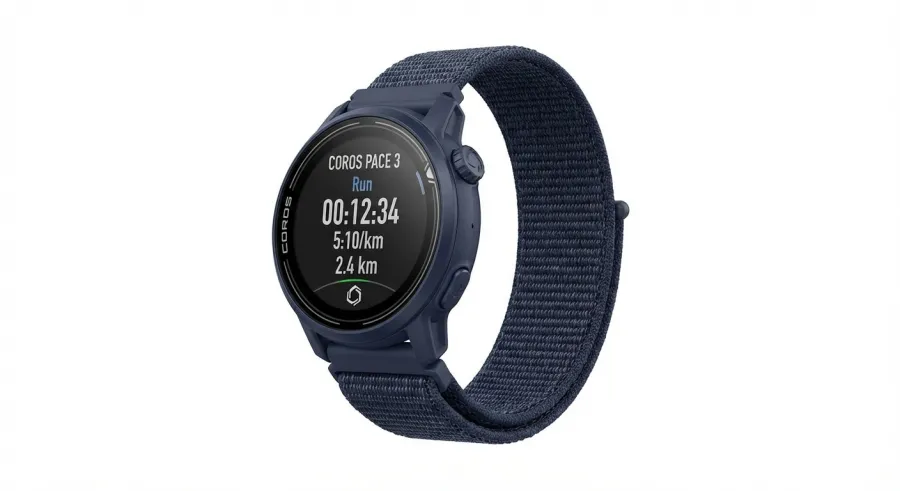
The COROS Pace 3 is the watch that makes $500+ competitors uncomfortable. At $199 and 30 grams (with the nylon band), it’s the lightest full-featured triathlon watch on this list — and arguably the best dollar-for-dollar value in multisport. It has dual-frequency GPS, a dedicated triathlon mode with auto-transitions, and 38 hours of GPS battery life. Read that again: thirty-eight hours. For two hundred dollars.
The 1.2-inch touchscreen is a color MIP display — not AMOLED, which means it won’t pop like the Garmin screens, but it’s perfectly readable in sunlight and sips battery like it’s on a budget too. Navigation is handled by a single button plus a rotating dial, which takes a session or two to master but becomes second nature. The COROS app and EvoLab training platform deliver training load analysis, recovery advice, race predictions, and VO2 Max estimates that rival platforms costing three times as much.
Heart rate tracking uses a 5-LED optical sensor that’s surprisingly accurate for a watch at this price. Swimming metrics include stroke detection, SWOLF, and open-water GPS tracking. On the bike, it pairs with power meters and speed/cadence sensors via Bluetooth. Running gets wrist-based power, and music lovers get 8GB of onboard storage for offline playlists. It even syncs with Strava and TrainingPeaks.
The trade-offs are predictable: no AMOLED screen, no contactless payments, no on-watch maps, and the COROS ecosystem is smaller than Garmin’s. But if you’re a first-time triathlete who doesn’t want to spend Cervelo money on a watch, or a seasoned racer who’d rather spend the savings on race entries, the Pace 3 is an absolute no-brainer. It’s the watch that proves expensive doesn’t always mean better — it just means more expensive.
- ✅ $199 price point — best value in triathlon watches, period
- ✅ 38 hours GPS battery life outlasts watches three times its price
- ✅ Featherweight 30g design disappears on your wrist
- ✅ Dual-frequency GPS for accurate tracking across all three sports
- ✅ Full triathlon mode with auto-transitions and EvoLab training tools
- ❌ MIP display lacks the visual punch of AMOLED competitors
- ❌ Smaller app ecosystem compared to Garmin
- ❌ No contactless payments or on-watch maps
Best For: Budget-conscious triathletes and beginners who want serious features without the serious price tag.
Available at major retailers including Amazon, REI, and brand websites.
COROS Apex 2 Pro: The Ironman Endurance King
Price: $449
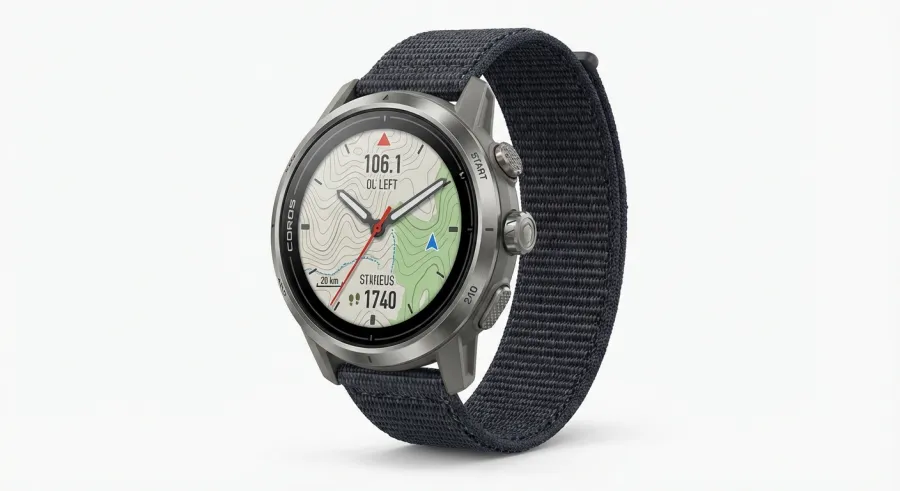
If you race Ironman distance — or train like you do — the COROS Apex 2 Pro is built specifically for your kind of suffering. Its headline stat is staggering: 75 hours of GPS battery life in standard mode, or 26 hours with full dual-frequency GNSS active. That means you can race a full Ironman with multi-band tracking, have juice for the post-race Strava upload, and still have battery left to track your recovery shuffle the next morning.
The build quality matches the endurance credentials. A grade-5 titanium alloy bezel with PVD coating, sapphire crystal glass, and 5 ATM water resistance give the Apex 2 Pro a premium feel that punches well above what you’d expect from COROS. At 53 grams with the nylon band, it’s lighter than most watches in this class. The 1.3-inch touchscreen MIP display is crisp enough for training, and the sapphire glass means you can bash it against your bike frame without leaving a mark.
Training features are comprehensive: EvoLab delivers training load, recovery insights, and race-time predictions. The 5-LED optical heart rate sensor handles wrist-based monitoring, and there’s even an ECG sensor for on-demand heart rhythm checks. The watch connects with all five major satellite systems and supports breadcrumb navigation with pre-loaded GPX routes. Music storage (32GB) means long runs without your phone. And firmware updates from COROS keep adding features — the watch you buy today will be better in six months.
The downsides? The MIP display is functional but won’t win beauty contests against AMOLED screens. The COROS app has fewer third-party integrations than Garmin Connect. And at $449, it sits in an awkward spot — more than the Pace 3, less than the Forerunner 965, and competing with the Polar Vantage V3 at a similar price. But if battery life is your deciding factor — and for Ironman athletes, it absolutely should be — nothing else comes close. This watch will outlast your race, your training block, and possibly your motivation to keep training in January.
- ✅ 75 hours GPS battery — unmatched for ultra and Ironman racing
- ✅ Titanium bezel + sapphire glass = premium durability
- ✅ Full dual-frequency GNSS across all five satellite systems
- ✅ 32GB storage for maps and music
- ✅ Continuous firmware updates add features over time
- ❌ MIP display looks dated next to AMOLED competitors
- ❌ COROS app ecosystem still smaller than Garmin’s
- ❌ $449 price competes directly with the Polar Vantage V3
Best For: Ironman and ultra-distance athletes who need a watch that won’t die before they do.
Available at major retailers including Amazon, REI, and brand websites.
Polar Vantage V3: The Recovery Scientist
Price: $599
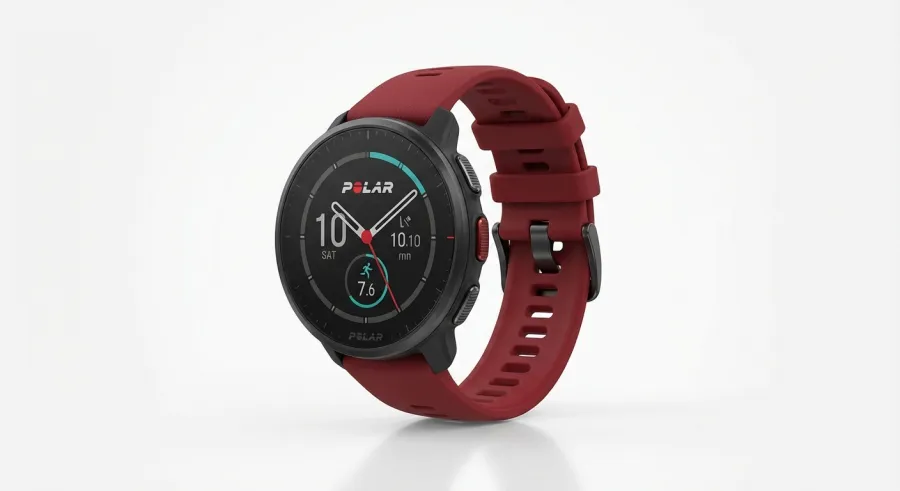
Polar has been doing heart rate monitoring since before most of us owned a bike, and the Vantage V3 is the culmination of decades of biosensor expertise. This watch doesn’t just track your heart rate — it interrogates it. Wrist-based ECG, skin temperature sensing, SpO2, HRV tracking, and Polar’s Nightly Recharge recovery system give you a physiological dashboard that makes other watches look like they’re guessing. If you’re the type of triathlete who nerds out on recovery metrics and wants to know exactly when to go hard versus when to rest, the V3 speaks your language.
The 1.39-inch AMOLED display is vivid and responsive, with both touchscreen and five-button control for quick adjustments mid-workout. Dual-frequency GPS provides accurate tracking, and downloadable offline maps with topographic detail make it useful for trail running and adventure racing too. Over 150 sport profiles means you’ll never lack a mode for whatever cross-training activity your coach throws at you. The triathlon multisport mode handles transitions seamlessly.
Battery life is listed at up to 61 hours in training mode with GPS, though real-world usage with the AMOLED screen active and multi-band GPS tends to land in the 30–40 hour range — still more than enough for Ironman. Polar Flow, the companion app, syncs with Strava, TrainingPeaks, and Komoot. The running and cycling performance tests built into the watch give you lab-grade estimates of VO2 Max and threshold values without visiting an actual lab.
The reality check: Polar’s third-party ecosystem is thinner than Garmin’s, and if you’re deep in the Garmin or COROS world with existing sensors, switching has friction. The $599 price matches the Forerunner 965, so you’re choosing between Garmin’s broader ecosystem and Polar’s superior biosensing. It’s a watch for people who treat recovery as seriously as they treat intervals — which, according to every exercise physiologist, is exactly what you should be doing.
- ✅ Industry-leading heart rate accuracy and biosensor suite (ECG, SpO2, skin temp)
- ✅ Nightly Recharge and Recovery Pro deliver best-in-class recovery insights
- ✅ Vibrant AMOLED display with offline maps
- ✅ 150+ sport profiles and robust multisport mode
- ✅ Built-in VO2 Max and threshold performance tests
- ❌ $599 — matches the Forerunner 965 without Garmin’s ecosystem depth
- ❌ Smaller third-party integration ecosystem than Garmin
- ❌ Real-world GPS battery life is lower than the headline 61-hour claim
Best For: Data-driven triathletes who prioritize recovery science and physiological metrics above all else.
Available at major retailers including Amazon, REI, and brand websites.
Best Triathlon Watches 2026: Head-to-Head Comparison
| Watch | Price | GPS Type | Battery Life (GPS) | Swim Tracking | Multisport Mode | Best For |
|---|---|---|---|---|---|---|
| Garmin Forerunner 965 | $599 | Multi-band SatIQ | 31 hours | OW GPS + Pool + HR | Yes (auto-transition) | Best Overall |
| Garmin Forerunner 265 | $349 | Multi-band SatIQ | 20 hours | OW GPS + Pool + HR | Yes (auto-transition) | Best Value Garmin |
| COROS Pace 3 | $199 | Dual-frequency | 38 hours | OW GPS + Pool | Yes (auto-transition) | Best Budget |
| COROS Apex 2 Pro | $449 | Dual-frequency 5-system | 75 hours | OW GPS + Pool + HR | Yes (auto-transition) | Best for Ironman |
| Polar Vantage V3 | $599 | Dual-frequency | ~40 hours real-world | OW GPS + Pool + HR | Yes (auto-transition) | Best for Recovery Data |
The Verdict: Which Triathlon Watch Should You Buy in 2026?
After weeks of research, spec comparisons, and reading more forum arguments than any human should endure, here’s the honest answer: all five of these watches will serve you well on race day. The differences are in the details — and the details depend on what kind of triathlete you are, what distances you race, and how deep you want to go into the data rabbit hole.
The Garmin Forerunner 965 is the best overall triathlon watch of 2026 because it makes no compromises. It has the screen, the GPS, the battery, the metrics, and the ecosystem. If you want one watch and you’re done thinking about it, buy the 965. The Forerunner 265 is the smart play for athletes who realize that 90% of the same technology at 60% of the price is just good math. And the COROS Pace 3 is proof that you don’t need to spend more than a race entry fee to get a legitimately excellent triathlon watch.
For long-course athletes, the COROS Apex 2 Pro’s 75-hour battery life is not a gimmick — it’s peace of mind. And the Polar Vantage V3 is the pick for athletes who understand that what happens between workouts matters as much as the workouts themselves.
Quick-Pick Guide:
- 🏆 Best Overall: Garmin Forerunner 965
- 🏊 Best for Ironman Distance: COROS Apex 2 Pro
- 💰 Best Budget Pick: COROS Pace 3
- 🧬 Best for Data Nerds: Polar Vantage V3
- 🌟 Best for Beginners: Garmin Forerunner 265
Stop overthinking it. Pick the watch that fits your wrist, your budget, and your racing ambitions. Charge it the night before. Set it to triathlon mode. And when that starting cannon goes off and you hit the water with 2,000 other lunatics at 6 AM, you’ll have one less thing to worry about — because your watch already knows what’s coming. Now go train. Your watch is ready. The question is: are you?


