
Let's Talk About the Bike Lie
Scroll through any triathlon forum and you'll find two kinds of posts. The first: "Just finished Kona on my insert $12,000 aero rocket here." The second, far more relatable: "Can I do a tri on a budget without looking like an idiot?" The answer to the second question is an unqualified, emphatic yes — and we're going to prove it.
Here's the truth the industry doesn't love to advertise: the engine matters more than the machine. A well-fitted $1,200 tri bike with trained legs will smoke a $10,000 superbike with an undertrained rider all day long. Your first tri bike doesn't need to cost more than a car payment. It needs to fit, roll, and get you to T2 upright and ready to run.
This guide is your no-BS blueprint to building a legitimate, aero, race-legal triathlon bike setup for under $1,500. We're talking real bikes, real prices, and real talk about where to spend and where to save.
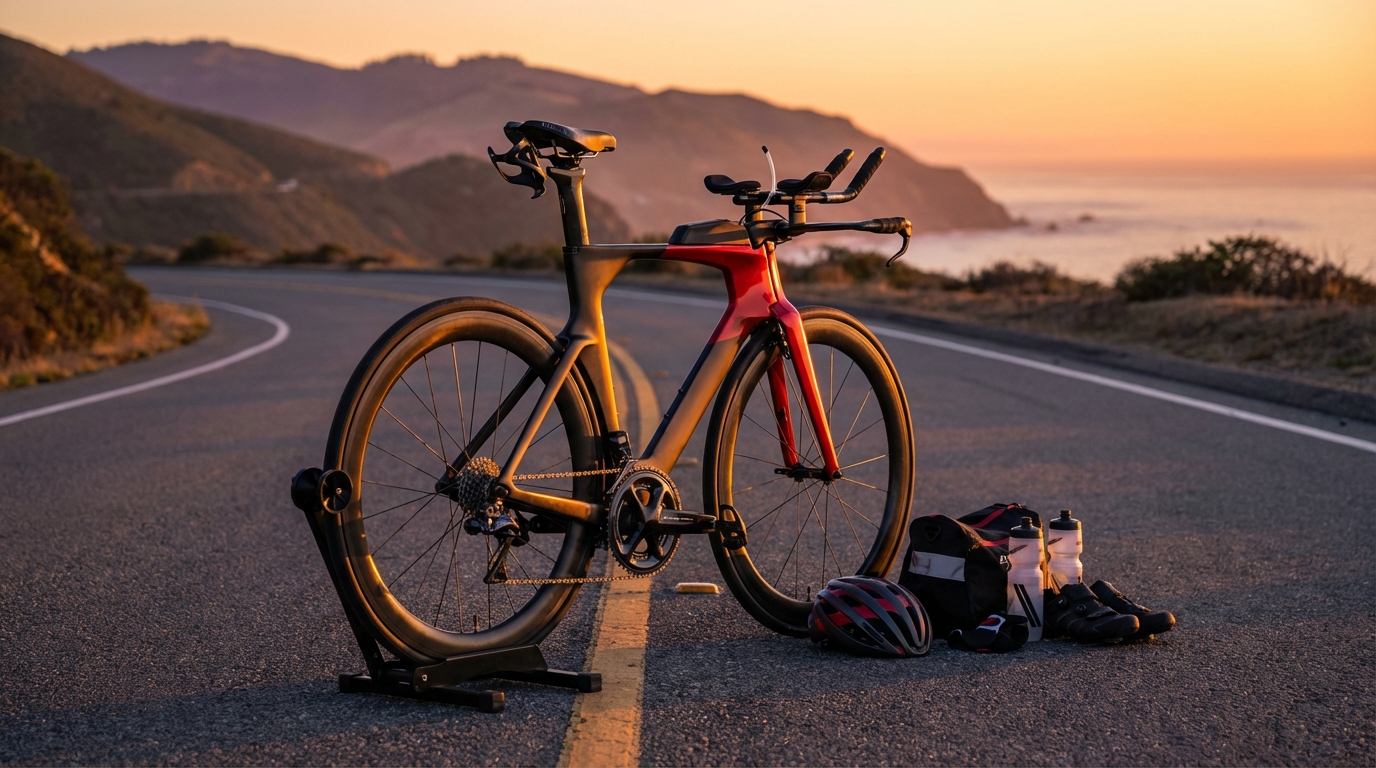
Why Your First Tri Bike Doesn't Need to Be Expensive
Aerodynamics accounts for roughly 80% of the resistance you fight on the bike. But here's the kicker — your body position is responsible for the lion's share of that drag, not the price tag of your frame. Getting low, getting narrow, and staying aero for the full bike leg will save you far more time than upgrading from aluminum to carbon.
Think about it this way: the difference between a $1,500 tri bike and a $6,000 tri bike, ridden by the same athlete in the same position, might be 2-3 minutes over a 40km course. The difference between a properly fitted $1,200 bike and the same bike with a terrible fit could be 10+ minutes — plus a wrecked back and cramped quads heading into the run.
"Fit is the single most important variable on any bike. Get the fit right, then worry about the frame." — Every legitimate bike fitter who's ever lived
First-timers obsess over groupsets and frame weight. Veterans obsess over position and tires. Be a veteran before your first race.
What to Actually Spend Money On
1. The Bike Fit (~$150–$350)
This is the single best investment in your entire bike budget. Before you spend a dollar on components or upgrades, budget for a professional triathlon-specific bike fit. A certified fitter will dial in your saddle height, reach, cockpit width, and hip angle — the stuff that determines whether you're fast and comfortable or slow and broken.
A tri fit is different from a road bike fit. It accounts for the run you're about to do off the bike, optimizing your position to spare your hamstrings. Expect to pay $150–$350 for a solid session. It's the cheapest speed you'll ever buy.
2. Clip-On Aero Bars (~$80–$150)
If you're converting a road bike or buying a budget entry-level bike that doesn't have integrated bars, a solid set of clip-on aerobars is your first and most impactful upgrade. The Profile Design Sonic Ergo series is the community favorite in this price range — up to 100 armrest positions, plush padding, J-bend extensions, and built like a tank.
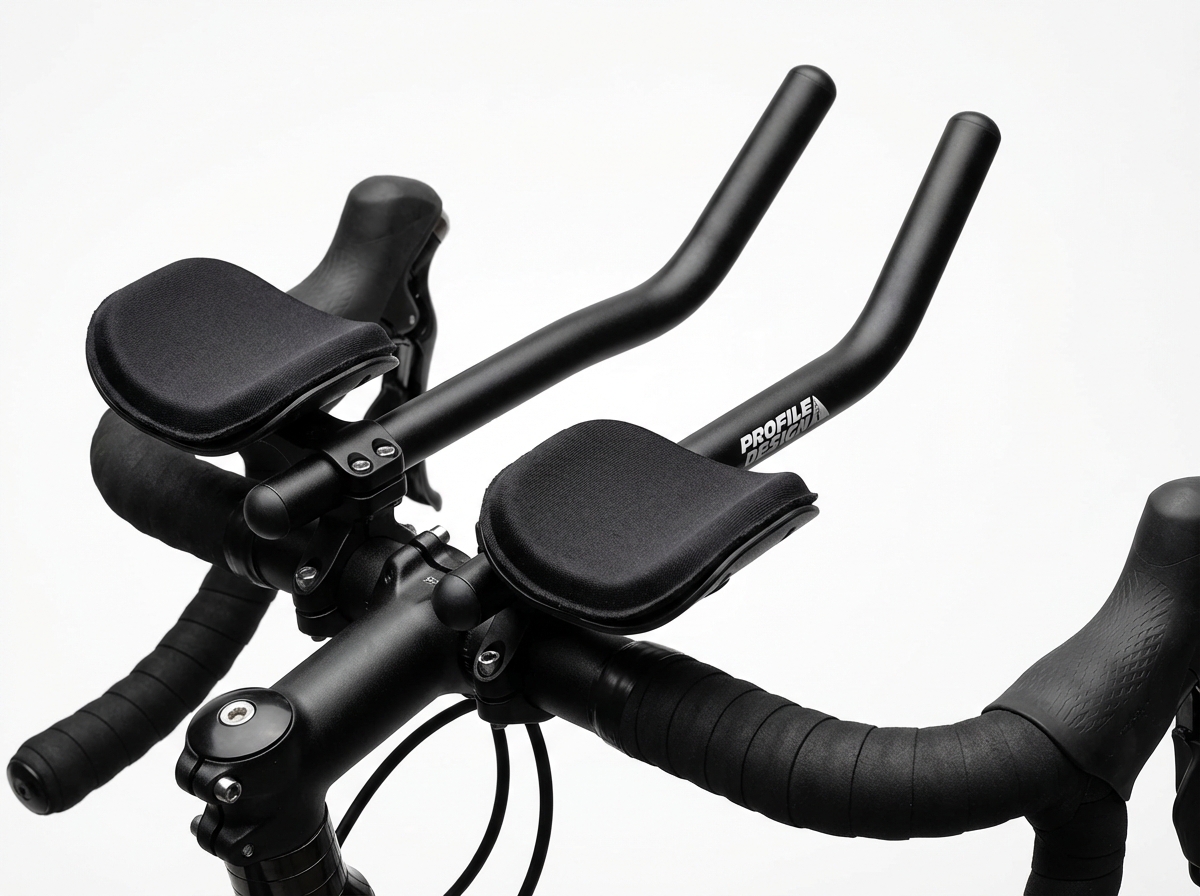
Getting aero is getting free speed. A good set of clip-ons can save you 15–20 watts at race pace compared to riding the hoods. At $100, that's the best watts-per-dollar ratio in all of cycling.
3. Tires (~$100–$120/pair)
Tires are the one component that touches both your speed and your safety, and yet they're the most commonly skimped-on item on a budget build. Don't do it. Continental GP5000 clinchers (~$55–$65 each) are the industry gold standard for road and tri racing — low rolling resistance, excellent puncture protection, and race-day confidence. Pair them with quality latex tubes and you're rolling like a pro for under $150.
4. Saddle
Tri saddles are weird on purpose. The aggressive forward position on a tri bike means your weight shifts onto your sit bones and nether regions in ways a road saddle was never designed for. An ISM Adamo or ISM PN 1.1 saddle (~$100–$130 used) is the classic budget-tri-world recommendation — noseless design, pressure relief where it counts, and compatible with virtually any seatpost. Don't suffer on a $20 saddle for a 40km bike leg. Your run will pay the price.
What to Skip or Buy Used
The Frame
The used tri bike market is genuinely excellent right now. Triathletes upgrade obsessively, which means there's a steady stream of perfectly functional carbon and high-grade aluminum frames hitting the market at 50–70% off retail. You do not need a brand-new frame. You need a structurally sound frame that fits you.
Target platforms: Facebook Marketplace, The Pro's Closet, Buycycle, eBay, and local triathlon club buy/sell groups. Post-season (September–November) is prime hunting season as athletes offload pre-upgrade bikes. Patience and persistence will score you a killer deal.
The Groupset
For budget builds, anything with Shimano 105 is more than enough. Ultegra is a bonus. Dura-Ace on a used frame is a lottery win. Avoid anything so old it predates 10-speed drivetrains — compatibility headaches aren't worth the savings. Electronic shifting (Di2, eTap) is wonderful and completely unnecessary at this stage. Skip it.
Deep-Section Carbon Wheels
Carbon aero wheels are genuinely fast and genuinely expensive — and genuinely not the priority at this budget level. Get decent alloy wheels, put good tires on them, and save the wheel upgrade for year two when you actually know what distances you're targeting and have a more dialed position.
The Budget Build List: 6 Bikes Under $1,500
1. Cervélo P2 (Used) — ~$1,000–$1,400
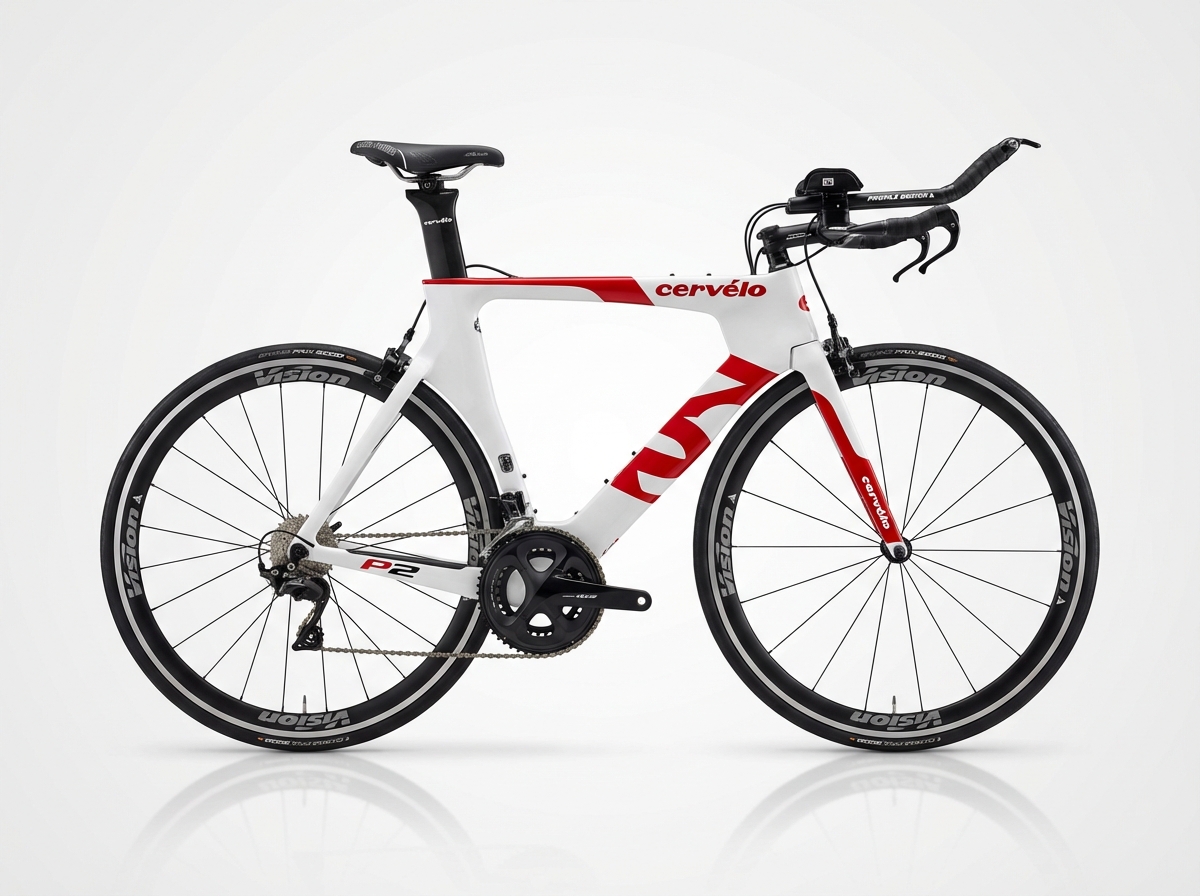
The Cervélo P2 is the single most recommended budget tri bike on every forum, thread, and Discord server in the triathlon world. It was Cervélo's entry-level tri platform for years, which means millions of them were sold, and a healthy percentage are now on the used market at very honest prices. Expect Shimano 105 or Ultegra, a proper TT geometry, and a frame that will embarrass bikes costing three times as much. A 2015–2019 model in good condition runs $1,000–$1,400 all day on Facebook Marketplace or eBay.
Why it wins: Proven platform, massive parts availability, serious aero pedigree, and the used market is deep.
2. Giant Trinity Advanced (Used) — ~$1,200–$1,500
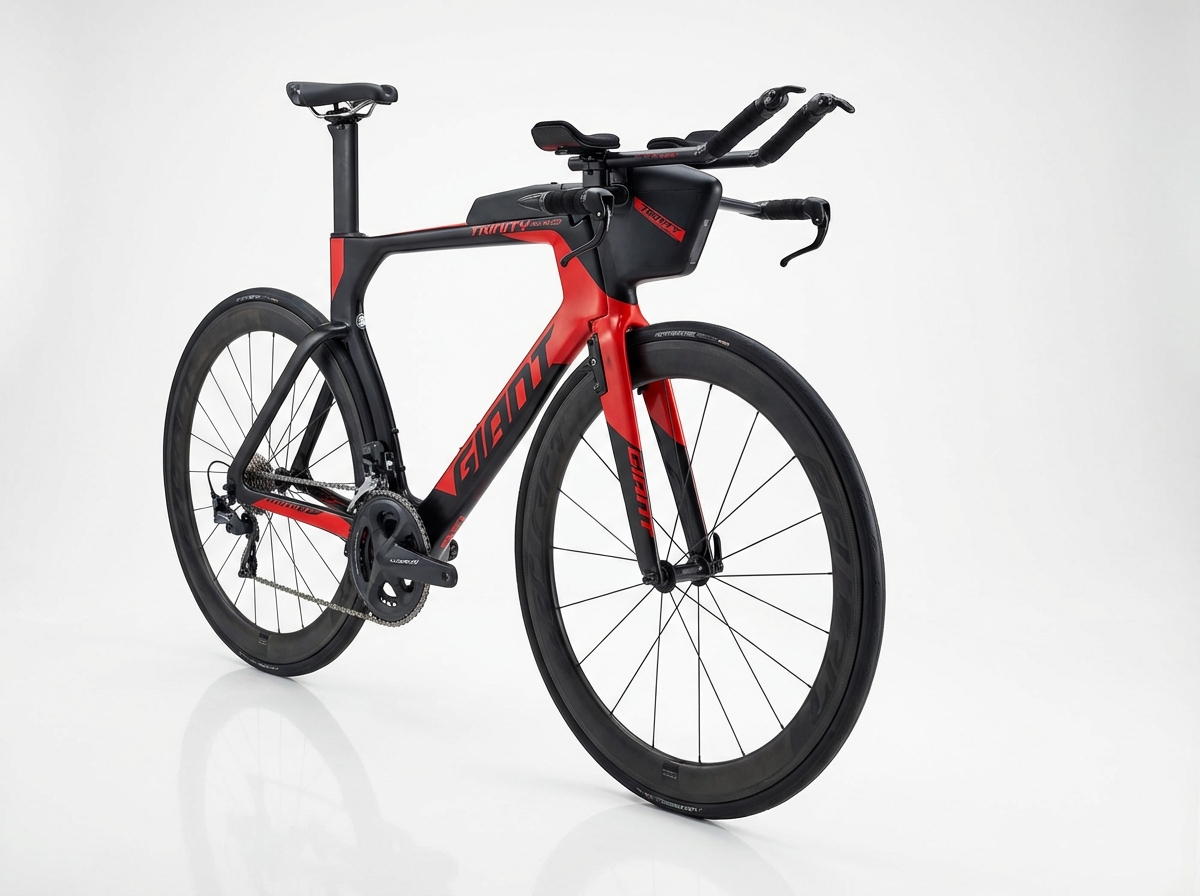
Giant's Trinity line punches well above its weight class. The Advanced model features a proper carbon frameset with wind-tunnel validated aerodynamics — the same frame architecture as models costing significantly more. The adjustable cockpit makes dialing in your position a realistic DIY project, and it often comes equipped with an ISM saddle from the factory. The 2017–2020 vintage hits the $1,200–$1,500 range on the used market.
Why it wins: Carbon frame, real aero geometry, adjustable fit system, solid component spec.
3. Felt B16 (Used) — ~$1,000–$1,400
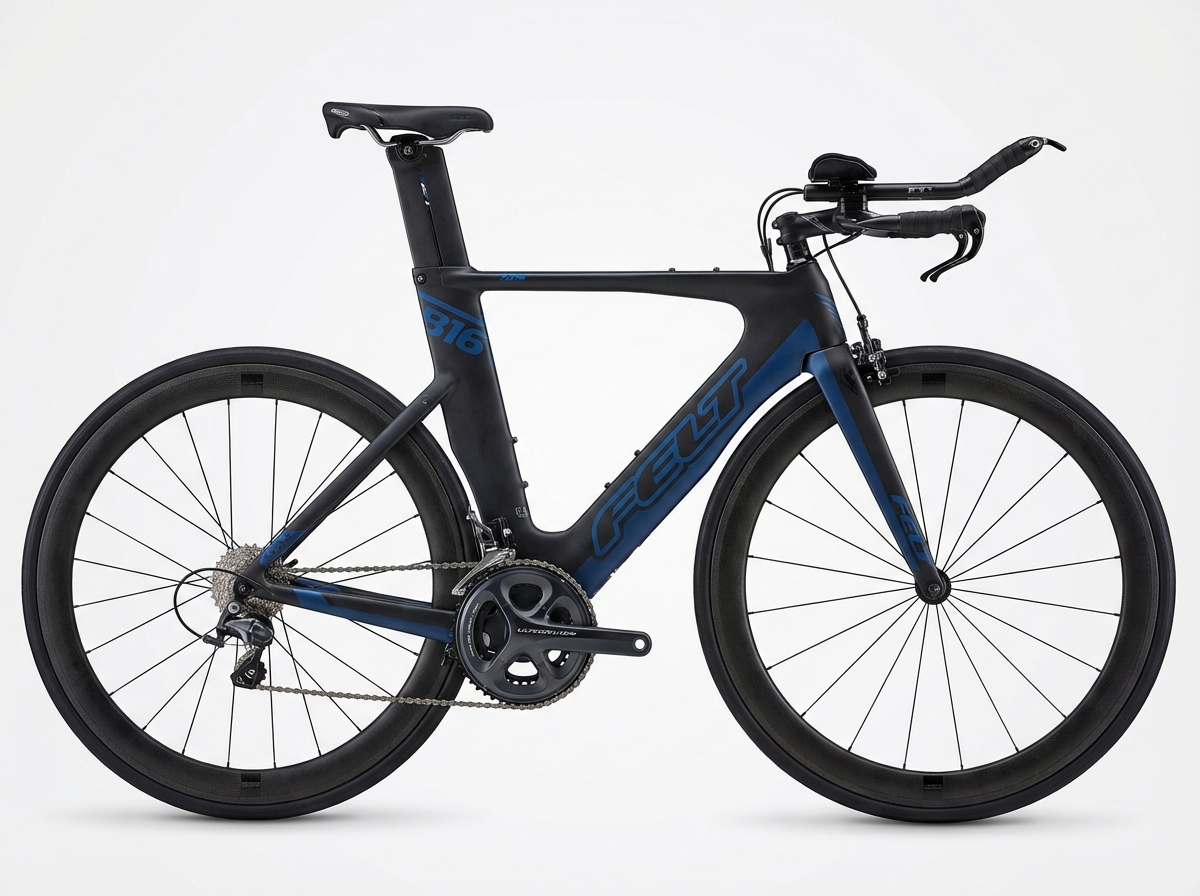
The Felt B-series was built specifically for athletes who wanted real triathlon performance without the premium price tag. The B16 features an aluminum frame with a carbon fork — a proven formula that delivers excellent stiffness and ride quality. Shimano 105 groupset, proper TT geometry, and a price point that regularly lands under $1,200 on the used market. A 2012–2016 model in solid condition is a legitimate race machine for $900–$1,300.
Why it wins: Triathlon-specific geometry, reliable components, aluminum durability, excellent used-market value.
4. Fuji Norcom Straight 2.3 (New or Used) — ~$1,300–$1,500
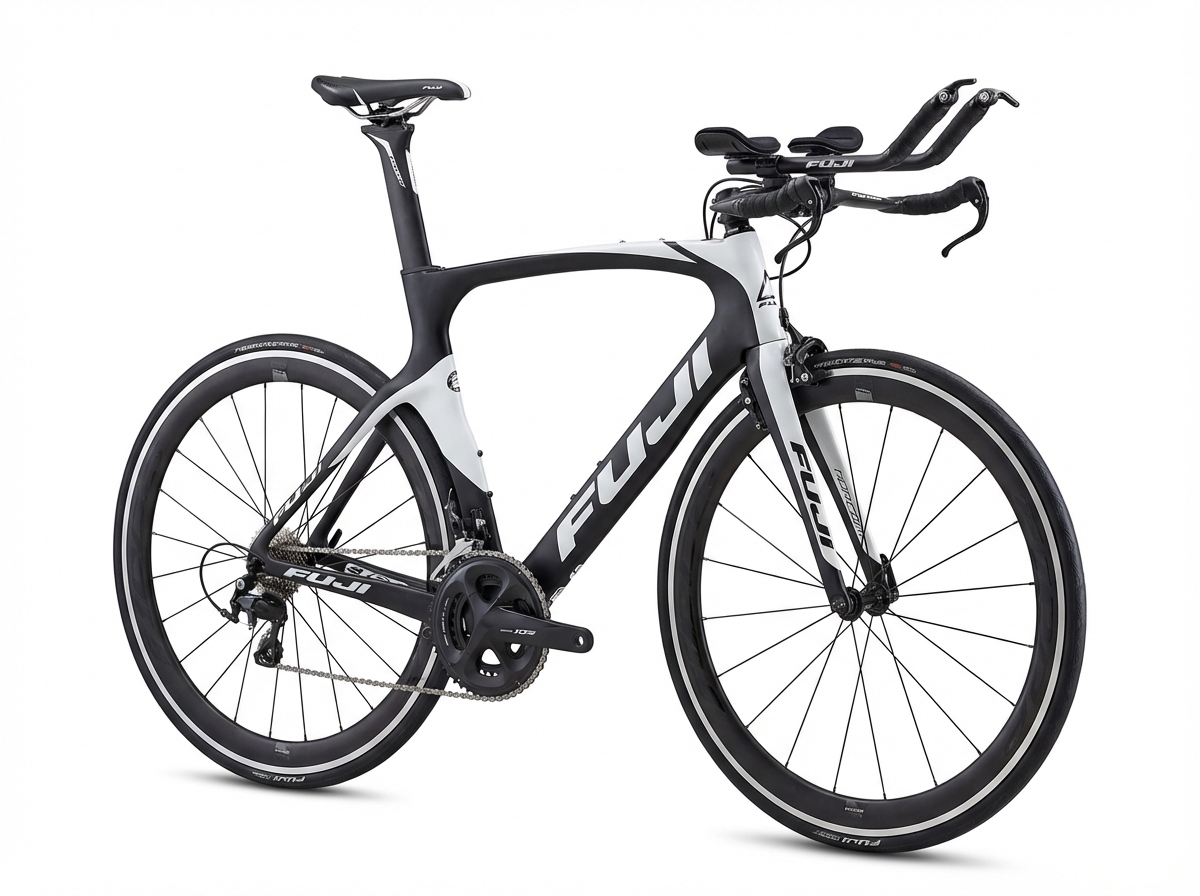
Here's the rare bird: a new purpose-built tri bike that can actually come in under $1,500. The Norcom Straight 2.3 features an A6 SL superbuttéd aluminum frame with an AC5 carbon aero fork — a legitimate fast-feeling ride with serious aerodynamic intent. Shimano 105 throughout, clip-on aero bars, and an adjustable cockpit make it a strong choice for athletes who want new-bike peace of mind. Find it on clearance or last year's model for $1,200–$1,500.
Why it wins: New, warrantied, properly sized, available in multiple geometries. Great beginner confidence booster.
5. Specialized Shiv (Used, Older Model) — ~$1,000–$1,500
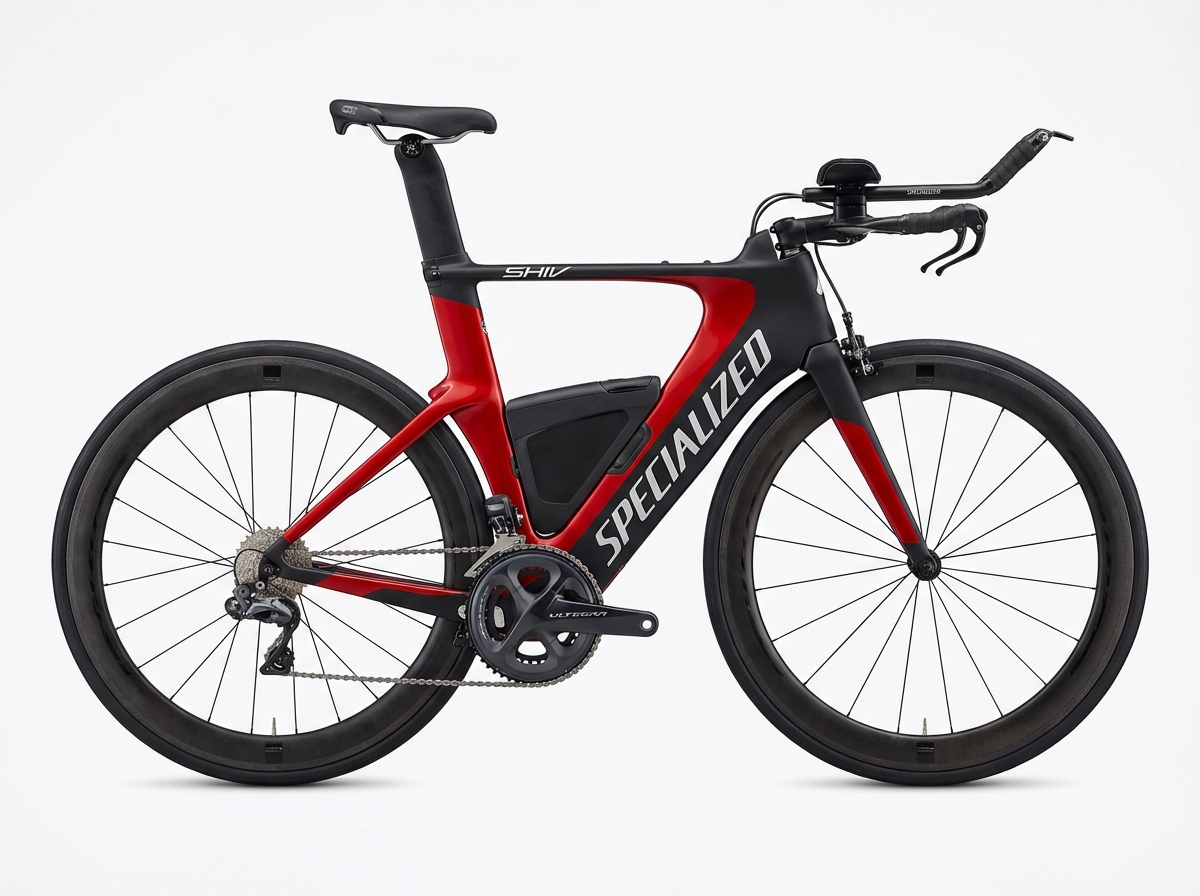
The Specialized Shiv was a genuine race bike — used at world championship events and engineered for serious aerodynamics. Older generations (2013–2018) can be found in the $1,000–$1,500 range with mid-tier Shimano drivetrains. The integrated storage and aero profile make it feel like a far more expensive machine. If you find one in your size and budget: buy it immediately and ask questions later.
Why it wins: Pro-level aero design, integrated nutrition storage, premium feel at a used-market price.
6. BMC Timemachine ALR (Used) — ~$1,200–$1,500
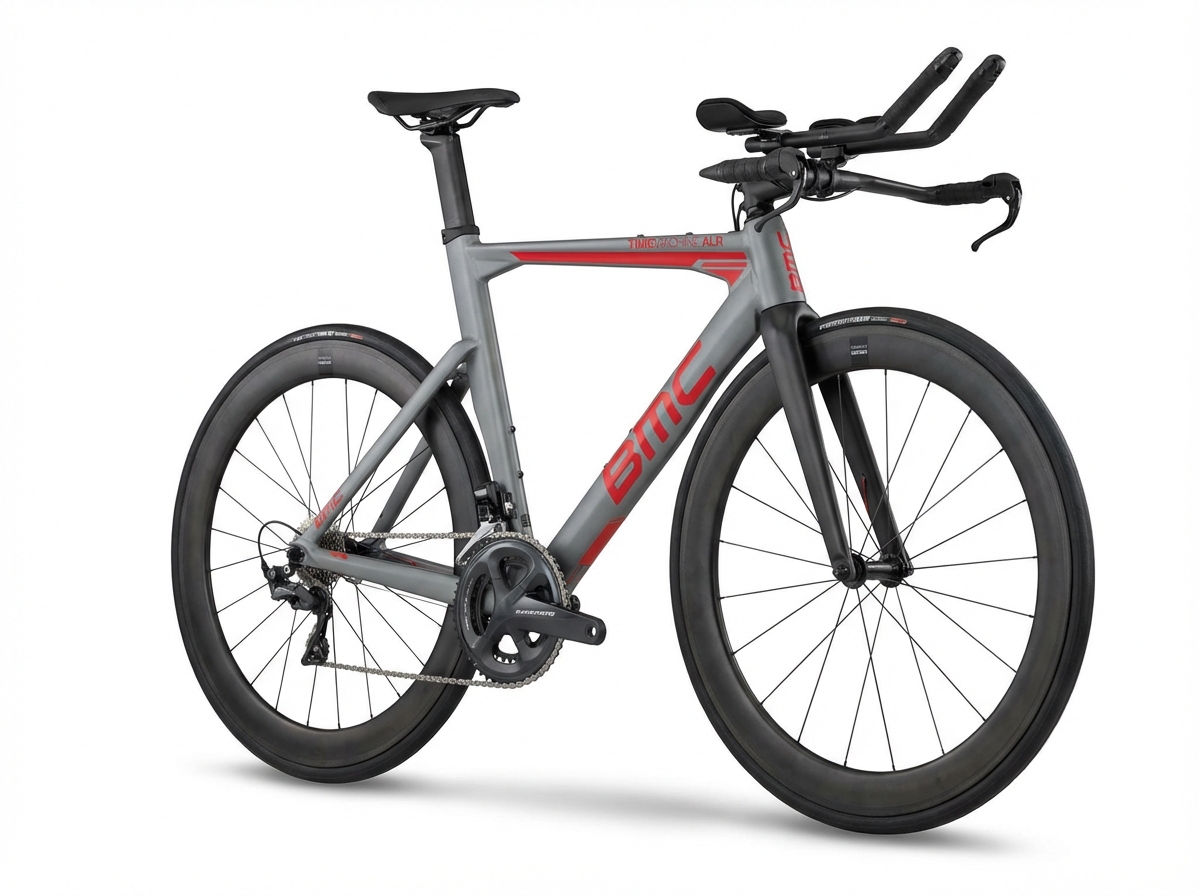
BMC's Timemachine ALR is the aluminum sibling of the brand's full carbon race lineup, and it inherits enough of that DNA to make it a genuinely fast machine. Aluminum frame, carbon aero fork, internal cable routing, and aggressive TT geometry — all the ingredients of a legit tri setup. Look for 2015–2019 models in the $1,100–$1,500 range on the used market. The BMC name also holds resale value well, which matters if you're planning to upgrade in 18 months.
Why it wins: Swiss engineering pedigree, clean aero lines, internal cable routing, strong resale value.
Tips for Finding Used Bikes Without Getting Burned
- Check the carbon for cracks. Run your hand along every tube. Look for stress fractures, paint bubbling, or soft spots. When in doubt, bring a mechanic.
- Verify the size before you travel. Get the seller to send you the stack and reach numbers. One hour on a geometry calculator is worth more than two hours of driving to see a bike that doesn't fit.
- Shop post-season. September through November is gold. Athletes who just completed their A-race are listing bikes to fund next year's upgrade. Strike then.
- Use The Pro's Closet or Buycycle for peace of mind. Both inspect and certify used bikes, which is worth a small premium if you're not mechanically confident.
- Don't negotiate yourself into a bad deal. A $900 bike that needs $400 in work is a $1,300 bike. Factor everything in.
- Know what size you need before you start. Tri bikes fit differently than road bikes. Stack and reach matter more than frame size in centimeters. Do the homework first.
The Budget Breakdown: Where Your $1,500 Goes
- Used tri bike (Cervélo P2, Felt B16, etc.): $900–$1,200
- Bike fit (triathlon-specific): $150–$350
- Clip-on aerobars (if not included): $80–$150
- Quality tires (Continental GP5000 x2): $110–$130
- ISM saddle (if needed, can buy used): $80–$130
Yes, that math potentially runs over $1,500 if you hit the top of every range. So prioritize: bike + fit + tires. Everything else can come in race season two when you've finished your first race and know exactly what you want to upgrade.
The Finish Line (Of This Article)
Here's what nobody tells you when you're standing in a tri store being upsold into a $5,000 bike: finishing your first triathlon on a $1,100 used Cervélo P2 is exactly as satisfying as finishing it on a Ventum or a Felt IA. Maybe more so, because you did it smart.
The bike doesn't cross the finish line. You do. The engine is you — your lungs, your legs, your training log, your stubbornness at mile 18 of the run. The bike is just the vehicle. Make it fit well, make it roll fast, and make it legal. Everything else is noise.
Now stop reading and go find that used P2 on Facebook Marketplace. It's waiting for you. And so is that finish line.
"You don't need the best gear. You need to be better than your excuses."


