
Swim, bike, run — every triathlete knows the three disciplines. But ask any seasoned age-grouper or elite pro what the real deciding factor is on race day, and the answer is almost always the same: nutrition. Bonking at mile 18 of the run, cramping on the back half of the bike, or feeling hollow and slow at the turnaround point — these aren't fitness failures. They're fueling failures. That's why nutrition is widely called the fourth discipline of triathlon, and why getting it right can be the difference between a PR and a DNF.
The sports nutrition market has exploded over the past decade. Walk into any race expo and you'll find an overwhelming array of gels, chews, waffles, powders, and tablets all promising peak performance. The question isn't whether to fuel — it's what to fuel with. To cut through the noise, we've ranked the 10 most popular endurance nutrition products used by triathletes, from the iconic staples to the science-forward newcomers. Whether you're doing your first sprint tri or your fifth Ironman, there's something here for your kit bag.
Energy Gels: The Backbone of Race-Day Fuel
Energy gels remain the dominant format in endurance sports for good reason — they're compact, fast-acting, and deliver a precise carbohydrate hit without requiring chewing or digestion of solid food. Here's how the top players stack up.
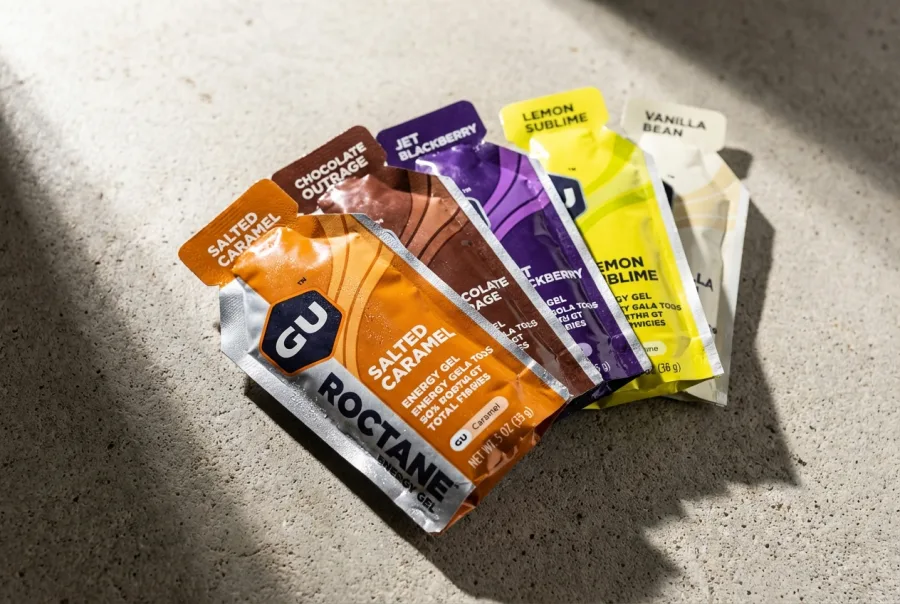
1. GU Energy Gel
GU is the original. Since 1994, these little foil packets have fueled more finish lines than perhaps any other product in endurance sports. Each gel delivers 100 calories and 22 grams of carbohydrates from a dual-source maltodextrin-and-fructose blend — a formula designed to maximize absorption by engaging multiple intestinal transport pathways. Throw in 450mg of branched-chain amino acids (BCAAs) to reduce muscle breakdown and a meaningful electrolyte hit, and you've got a gel engineered from the ground up for athletes.
With over 20 flavors and caffeine levels ranging from zero to 40mg, GU lets you customize your race-day stack precisely. The texture is thick but manageable, and the brand's ubiquity at aid stations means you'll likely encounter it whether or not you packed your own. For athletes new to fueling, GU is the safest starting point — well-tested, widely available, and backed by decades of real-world performance data.
2. Maurten Gel 100
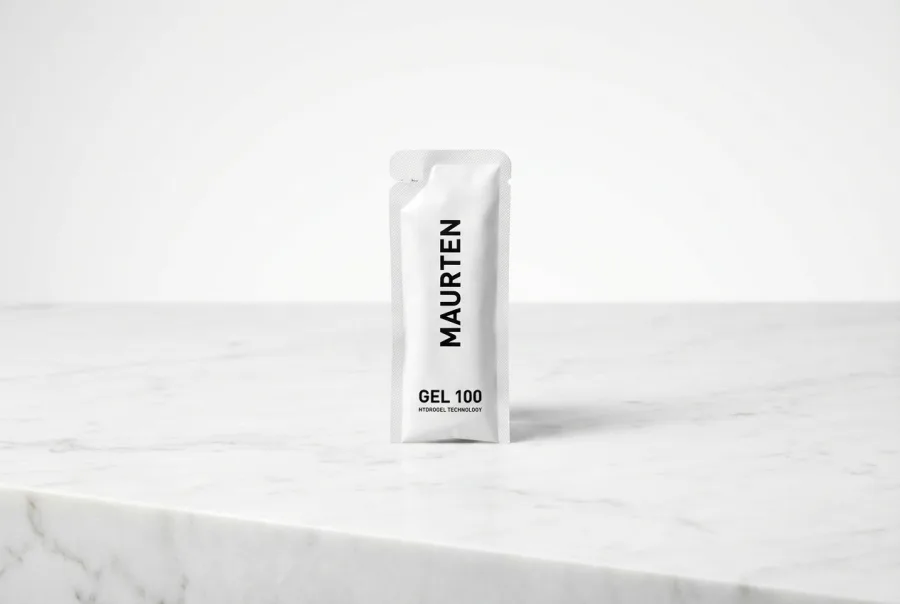
Maurten entered the scene with a bold claim: their hydrogel technology makes carbohydrates easier to absorb at high intensities by forming a gel in the stomach's acidic environment, allowing carbs to pass into the intestine intact before absorption. The science is credible — Maurten's formulation is backed by peer-reviewed research — and the results speak for themselves in the elite field, where Eliud Kipchoge and countless Ironman world champions have fueled on Maurten products.
Each Gel 100 provides 25 grams of carbohydrates (glucose and fructose in a 0.8:1 ratio) from just six ingredients. There are no artificial flavors, no preservatives, and no sweeteners beyond the carbs themselves. The taste is neutral — almost clinical — which is either a feature or a bug depending on your preference. The caffeinated version (Gel 100 CAF) contains 100mg of caffeine, making it one of the stronger options available. At $3.60/gel, Maurten is the premium choice, but athletes with sensitive stomachs who struggle with other products often find it worth every cent.
3. Clif Shot Energy Gel
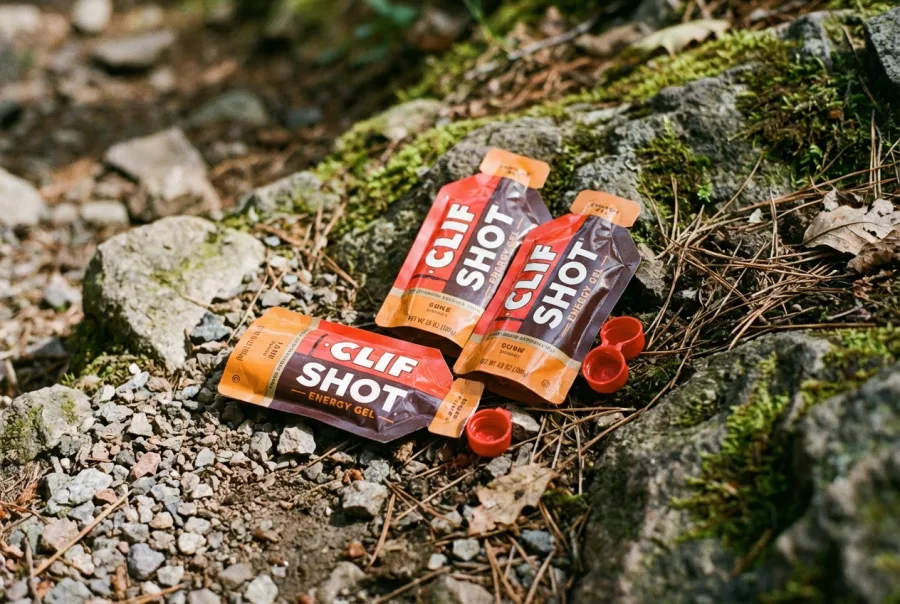
Clif Shot is the budget-conscious athlete's friend — organic, effective, and among the most affordable gels on the market. Each packet delivers 100 calories and 22–24 grams of carbohydrates, with caffeine options ranging from 0mg all the way up to 100mg (in the Double Espresso flavor, a cult favorite for the final miles). The organic ingredient list is a selling point for clean-eating athletes, and the brand carries B Corp certification.
The consistency is noticeably thicker than most competitors, which some athletes find harder to take without water — especially deep into a hot race. Clif addressed this with their "litter leash" cap design that keeps the foil flap attached after opening, a small but genuinely appreciated detail for athletes who don't want to litter a race course. For training days and budget-minded racing, Clif Shot is a reliable workhorse.
6. Honey Stinger Energy Gel
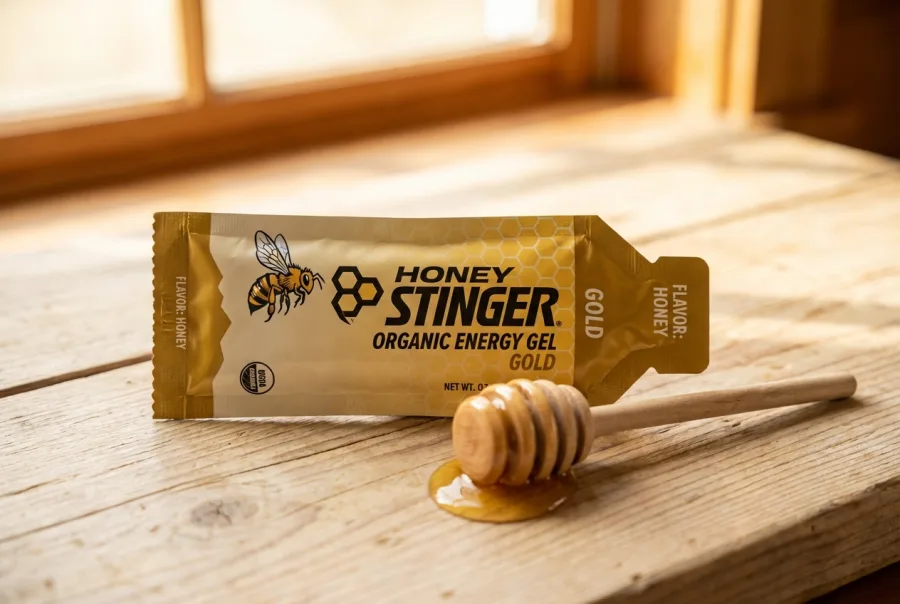
Where most energy gels rely on processed maltodextrin, Honey Stinger uses organic honey as its primary carbohydrate source — a more natural, whole-food approach that resonates with athletes who prefer cleaner ingredient lists. Each gel contains 100 calories and 24 grams of carbohydrates, with a notably smooth, honey-forward consistency that feels less artificial than many competitors.
The taste profile is distinctly sweet and pleasant — more dessert than medicine — and the texture flows easily without requiring much water. A caffeinated version adds 32mg of caffeine from green tea extract for a gentler buzz. For athletes who've struggled with the artificial flavors in conventional gels, Honey Stinger offers a compelling middle ground: still convenient and fast-fueling, but with ingredients you can actually recognize.
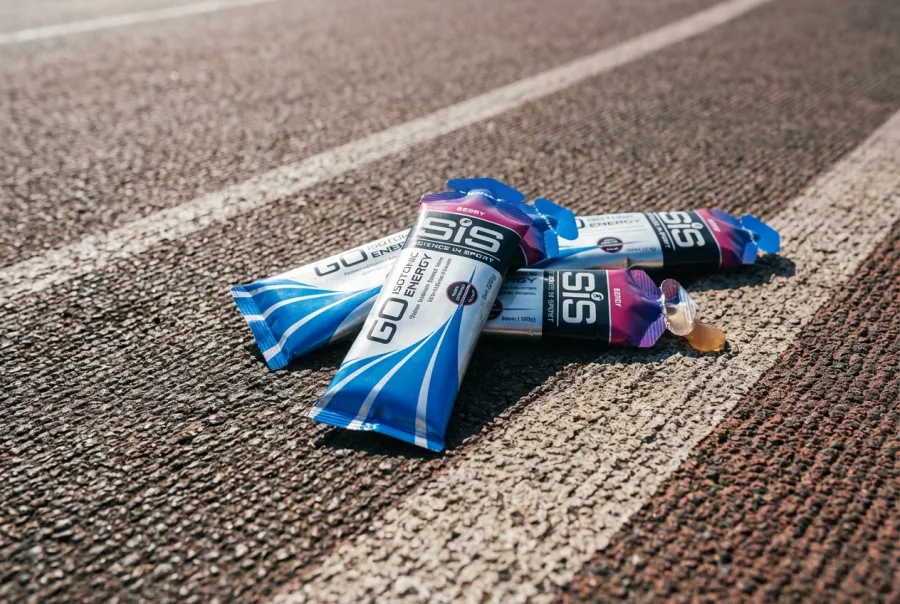
10. SiS GO Isotonic Energy Gel
Science in Sport's GO Isotonic gel solves one of the most common complaints about traditional energy gels: the need for water. Most gels are hypertonic — they require fluid to dilute them for proper absorption. Miss the aid station or misjudge your hydration, and you risk GI distress. SiS's isotonic formula matches the osmolality of your blood, meaning it can be taken without water and still absorbs effectively.
The trade-off is a thinner, more liquid consistency that takes some getting used to — it's closer to a sports drink in a packet than a traditional gel. Each serving provides 90 calories and 22 grams of carbohydrates. At roughly $1.77/gel when bought in the 30-pack, it's competitive on price and stands out as one of the few gels that works seamlessly in situations where water access is limited or timing is awkward.
Real Food & Chews: When Solid Fuel Makes Sense
Not every athlete thrives on gels. For longer-format racing — especially Ironman-distance events where you're fueling for 10+ hours — real food and chewable formats offer important variety that can stave off flavor fatigue and settle anxious stomachs.
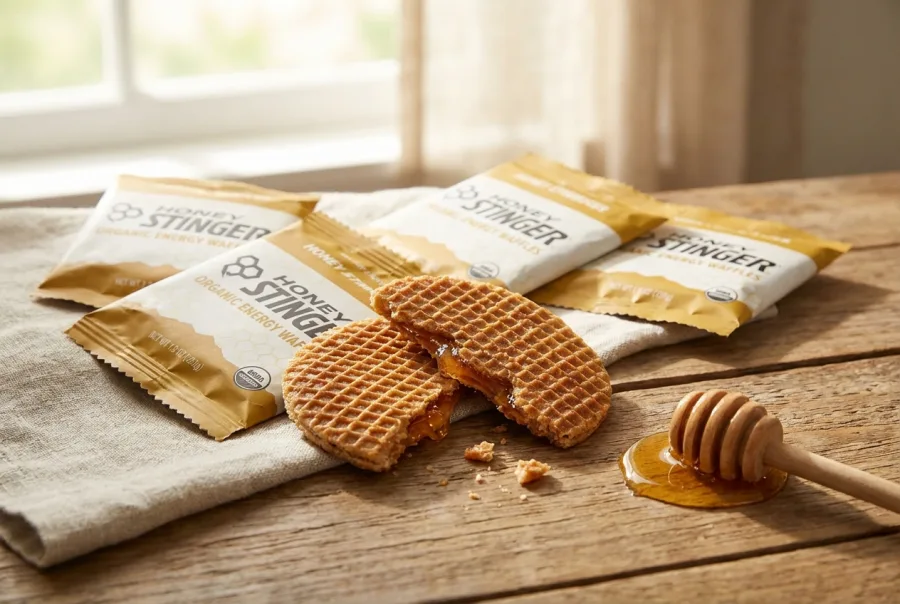
4. Honey Stinger Waffles
Honey Stinger's Organic Energy Waffles are the beloved exception in a world of gels and powders — real food that somehow manages to be practical on a race course. Inspired by the Belgian stroopwafel, each waffle consists of two thin, slightly crisp wafer cookies sandwiching a warm-tasting honey filling. They're organic, gluten-free, and contain 160 calories with 21 grams of carbohydrates per waffle. Flavors include Salted Caramel, Chocolate, Vanilla, and a few seasonal options.
The on-bike experience is where waffles truly shine. They're easy to unwrap one-handed, easy to chew without choking, and psychologically satisfying in a way that a tube of maltodextrin gel simply isn't. Many Ironman athletes slot a waffle into their jersey pocket for the first half of the bike when intensity is lower and solid food is easier to digest. The main caveat: they don't travel well in heat. In a hot race, the honey filling can soften to a sticky mess — worth packing in a small zip-lock to keep them manageable.
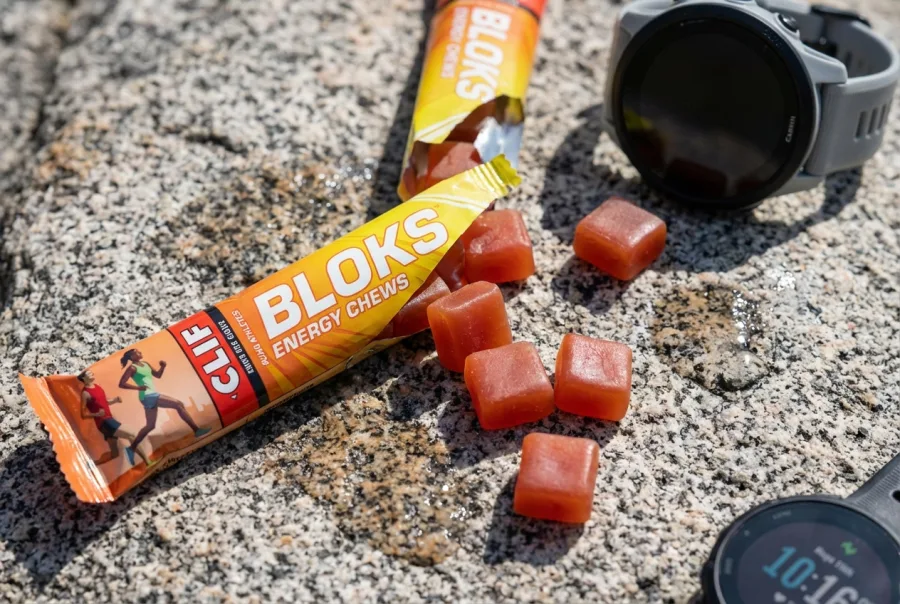
5. Clif Bloks Energy Chews
Clif Bloks occupy a smart middle ground between gels and real food. Each sleeve contains 6 soft, gummy cubes with a total of 48 grams of carbohydrates and a meaningful electrolyte dose. The recommended serving is 3 blocks (half a sleeve), delivering 24 grams of carbs and hitting sodium, potassium, and magnesium targets. But the real advantage of the blok format is portion flexibility — you can eat one block, two blocks, or the whole sleeve depending on where you are in a race and what your gut is tolerating.
The texture is softer than most gummy candies — almost melt-in-your-mouth — which makes them accessible even when your jaw muscles are fatigued late in a long race. They're organic, non-GMO, and come in flavors ranging from Black Cherry to Margarita (the latter including extra sodium, a clever twist). For athletes building out their first Ironman nutrition plan, Bloks are worth practicing with in training: they're versatile enough to serve as a primary fuel source, a gel supplement, or an emergency reserve in a jersey pocket.
Drink Mixes & Electrolytes: Fueling Through Your Bottle
Liquid nutrition offers one of the most efficient fueling strategies available — every sip delivers both hydration and energy simultaneously. But not all drink mixes are created equal, and pure electrolyte tabs serve a different purpose entirely. Here's how the top liquid options break down.
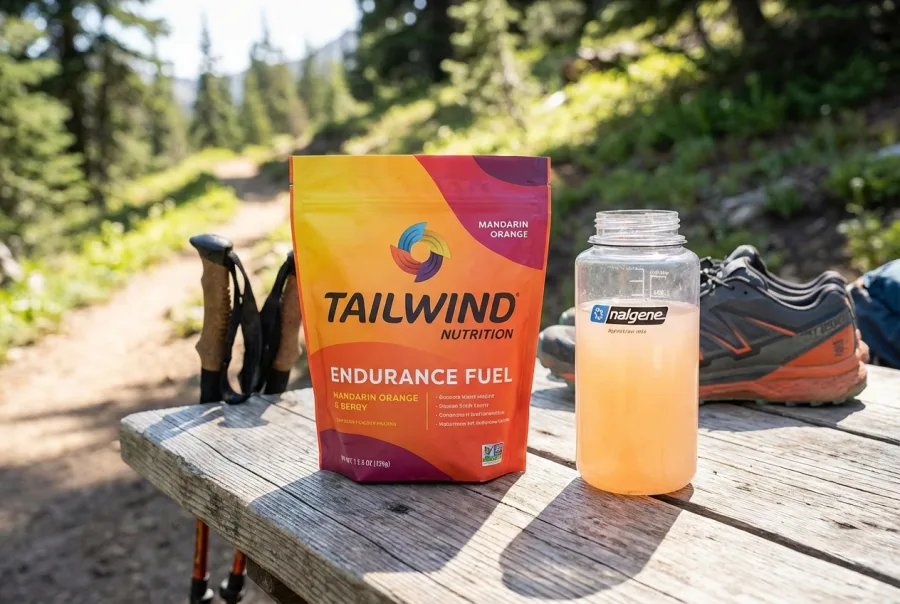
7. Tailwind Nutrition Endurance Fuel
Tailwind's entire pitch is radical simplicity: put this powder in your bottle, add water, and you're done. No gels. No chews. No complicated fueling schedule. Each serving delivers carbohydrates, sodium, potassium, magnesium, and calcium — the complete electrolyte spectrum — in a formulation built around a 2:1 glucose-to-sucrose ratio (rather than fructose, which tends to cause GI distress in sensitive athletes). There are no artificial sweeteners and no complicated additives.
In practice, Tailwind works remarkably well for athletes who struggle with the logistics of solid fueling on the bike or who have sensitive stomachs. The taste is mild and not cloying — a common critique of many drink mixes — and it mixes cleanly without clumping. The calculus is straightforward: 2 scoops per hour, carried in your aero bottle or frame bag, and you're covered for both calories and electrolytes simultaneously. For long-course triathlon especially, simplifying your fueling stack is often the smartest move, and Tailwind makes that case convincingly.
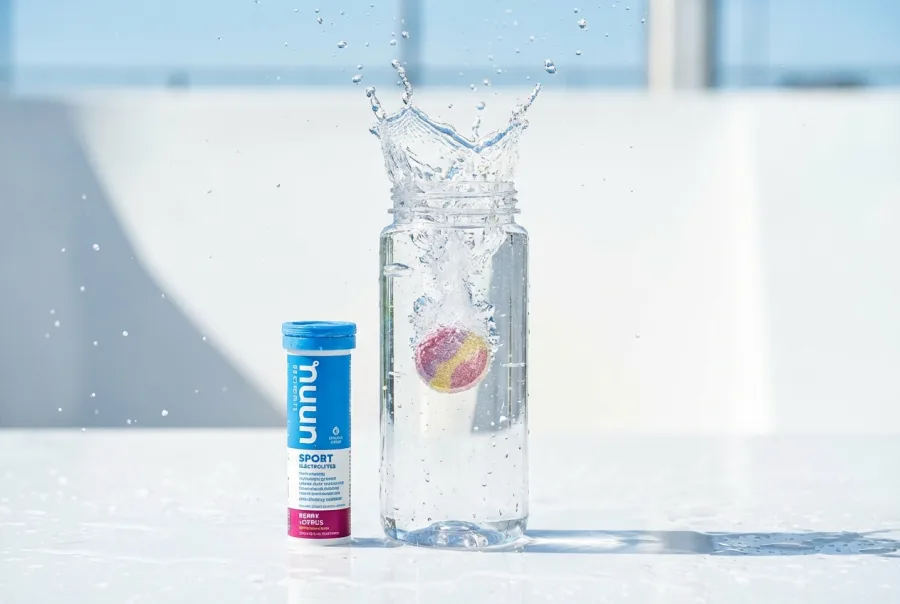
8. Nuun Sport Electrolyte Tablets
Nuun Sport is not a fueling product — it's an electrolyte product, and the distinction matters. Each fizzy tablet dropped into 16oz of water delivers sodium, potassium, magnesium, and calcium with just 1 gram of sugar and 15 calories. There are no meaningful carbohydrates. If you're relying on Nuun for energy, you'll bonk. What Nuun excels at is electrolyte replacement in scenarios where you're getting your calories elsewhere — pairing with food-based fueling, supplementing a gel stack with added sodium, or hydrating post-race.
For triathletes, Nuun is most valuable in hot-weather racing where sweat losses are high and plain water quickly dilutes blood sodium levels. A tube weighs almost nothing and slips easily into a transition bag or back jersey pocket. The tablet format also means you can dial electrolyte concentration to conditions — one tab in hot weather, two tabs in extreme heat — in a way that pre-mixed solutions don't allow. Think of Nuun as your electrolyte insurance policy, not your energy source.
9. Skratch Labs Sport Hydration Mix
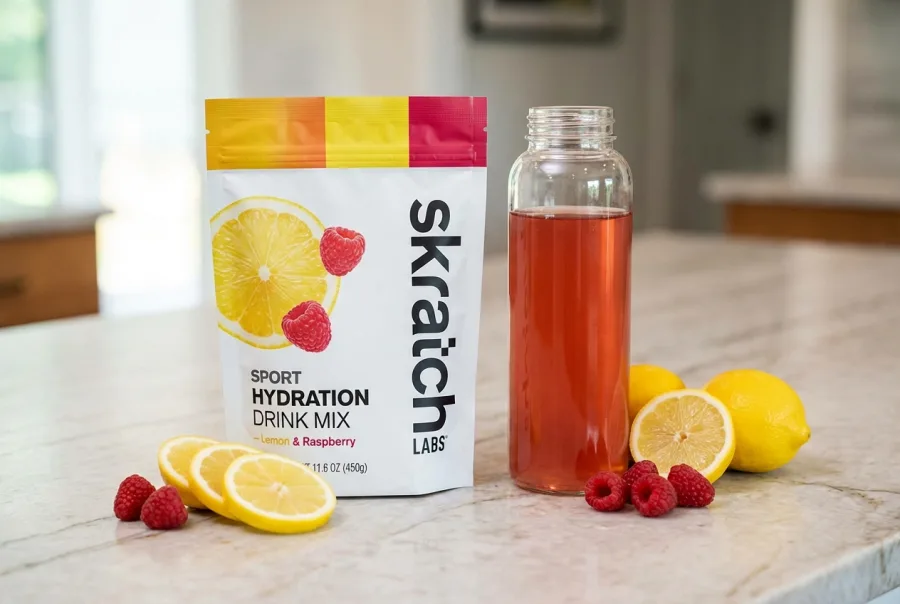
Skratch Labs was founded by Dr. Allen Lim, a sports scientist and former Tour de France team physiologist who grew frustrated with the artificial flavors and stomach-wrecking sweetness of conventional sports drinks. His answer was a drink mix built around real fruit flavoring, a lighter sugar profile, and a complete electrolyte formula. The result is one of the most pleasant-tasting hydration mixes available — subtle, slightly fruity, and not at all cloying.
Each serving delivers 80 calories and 19 grams of carbohydrates alongside sodium, potassium, magnesium, and calcium. The osmolality is calibrated to facilitate rapid absorption, making it a genuine isotonic drink mix rather than a glorified sugar solution. For athletes who find Gatorade or heavy gel-water combos too sweet to stomach in the late miles of a run, Skratch is a revelation. It's particularly popular in the age-group Ironman community for exactly this reason: when everything else tastes like dessert, Skratch tastes like a real drink.
How to Build Your Race-Day Nutrition Plan
The products above cover nearly every fueling scenario a triathlete might face. The challenge isn't finding good options — it's building a coherent system from them. Here's a framework that works for most athletes at Olympic distance and beyond:
Calculate your hourly carb target first. Most athletes can absorb and utilize 60–90g of carbohydrates per hour during sustained effort, depending on gut training and racing intensity. Start at 60g/hour if you're new to structured nutrition and work up from there in training.
Choose your format for each discipline. On the swim, there's nothing to do — focus on pre-race fueling. On the bike, liquid nutrition (Tailwind, Skratch) or easy-to-unwrap solid food (Honey Stinger Waffles) works well at lower intensities. On the run, gels and chews are most practical when your stomach is compressed and pace demands fast absorption.
Electrolytes aren't optional. Every longer race day needs a sodium strategy. Whether that's built into your drink mix (Tailwind, Skratch), added via Nuun tabs, or delivered through high-sodium gels, don't skip it — especially in warm conditions.
Train your gut. Whatever products you choose, practice with them in training at race intensities. The gut is trainable, and the worst time to discover a product doesn't agree with you is at mile 80 of the bike. Build your nutrition plan in training, then execute it on race day with confidence.


