
Burned Out or Just Broken Down? How to Tell If You're Done With Triathlon or Just Need a Nap
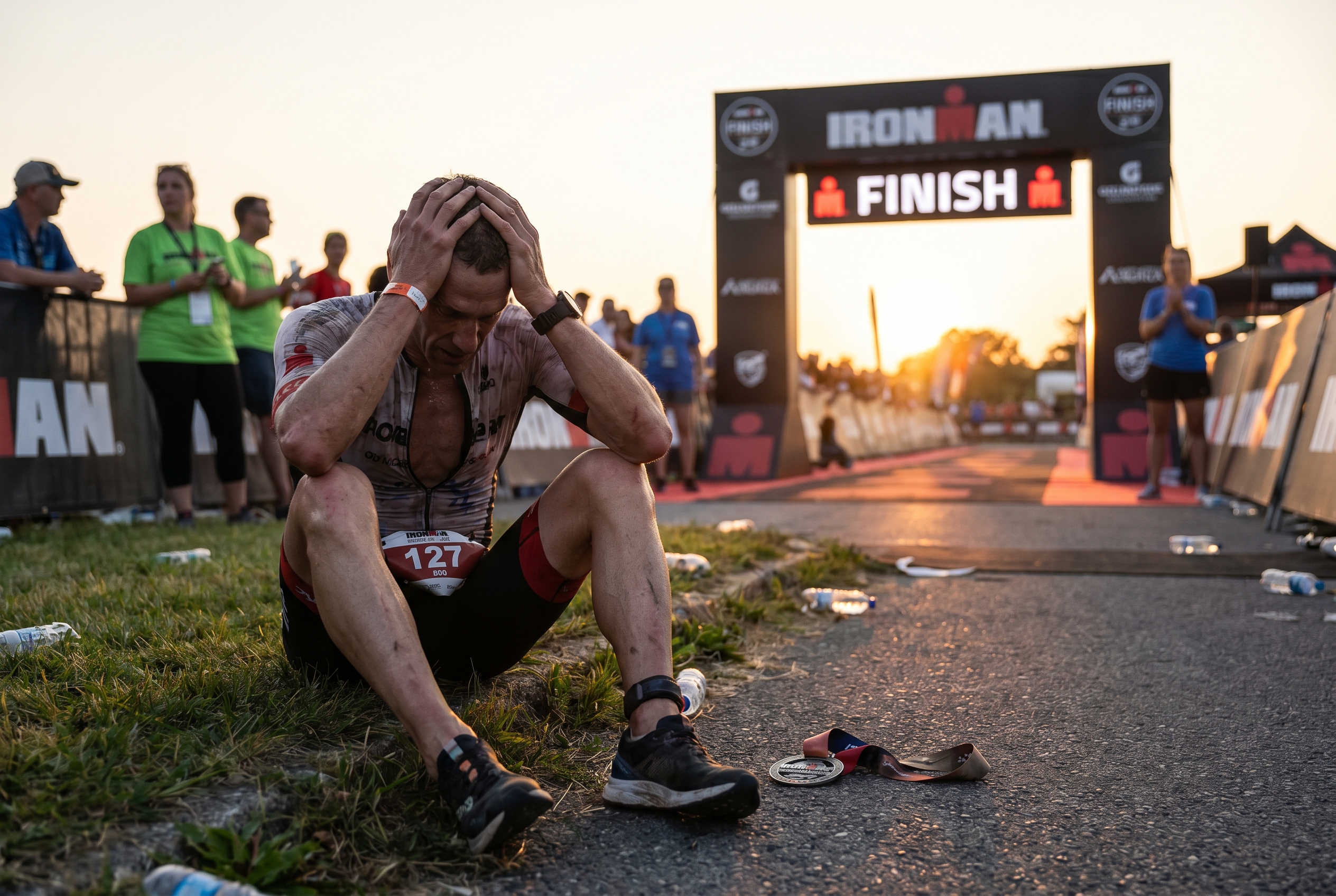
Every April, the internet predictably floods with a specific kind of post. The race just finished. The medal is on the kitchen table. The legs are destroyed. And somewhere between the finish line pizza and the third day of not being able to sit down without making a noise, the question arrives with unsettling clarity: Am I actually done with this?
It happened after IRONMAN Texas this year. It happens after every major race. Athletes who have trained for months — who have sacrificed weekends, mornings, relationships, and several layers of skin — arrive at the finish line and feel not triumph but a deep, hollow exhaustion that somehow goes deeper than physical. And then they start making decisions. They tell their partner they're quitting. They defer next year's entry. They write the Reddit post about burnout. Some of them mean it. Most of them don't. The hard part is figuring out which category you're in before you do something you'll regret.
This article is not here to tell you to push through. It is also not here to tell you to quit. It is here to give you the actual framework for distinguishing between two things that feel identical but are completely different: genuine burnout, and normal post-race exhaustion that requires approximately ten days of sleep and a functioning pancreas.
First, Understand What You're Actually Feeling
The sports psychology literature is unusually clear on this one: burnout and fatigue are not the same thing and cannot be treated the same way. Treating fatigue like burnout makes you take unnecessary breaks and lose fitness. Treating burnout like fatigue makes you grind yourself into something that requires six months and a therapist to fix. Getting the diagnosis right matters.
Normal post-race fatigue is your body's invoice for the work you just did. It's temporary. Your muscles are wrecked, your glycogen is depleted, your nervous system is overstimulated, and your hormonal axis needs a week to recalibrate after months of chronic stress. The defining characteristic of normal fatigue: it resolves with rest. Give it seven to fourteen days. Most athletes feel meaningfully better within two weeks of a major race and start thinking about training again on their own.
Overtraining syndrome (OTS) is fatigue that doesn't resolve. You rest for two weeks and still feel terrible. Performance has been declining for weeks or months. Resting heart rate is elevated. Sleep is disrupted. You're catching every illness that moves through the office. OTS is a physiological condition requiring significant recovery time — sometimes months — and a careful, structured return to training. It's often the product of too much volume, not enough sleep, and the culturally rewarded delusion that more is always better.
Burnout is different from both. Burnout is primarily psychological. It's the endpoint of prolonged emotional and motivational depletion, and its hallmarks are not tiredness — they are cynicism, detachment, and a collapsed sense of meaning. The athlete experiencing burnout doesn't just feel tired of training. They feel nothing about training. Or worse: they feel contempt for it. For something that used to define their identity and fill them with purpose.
The Three-Question Diagnostic
You don't need a sports psychologist to run an initial self-assessment. You need three honest answers.
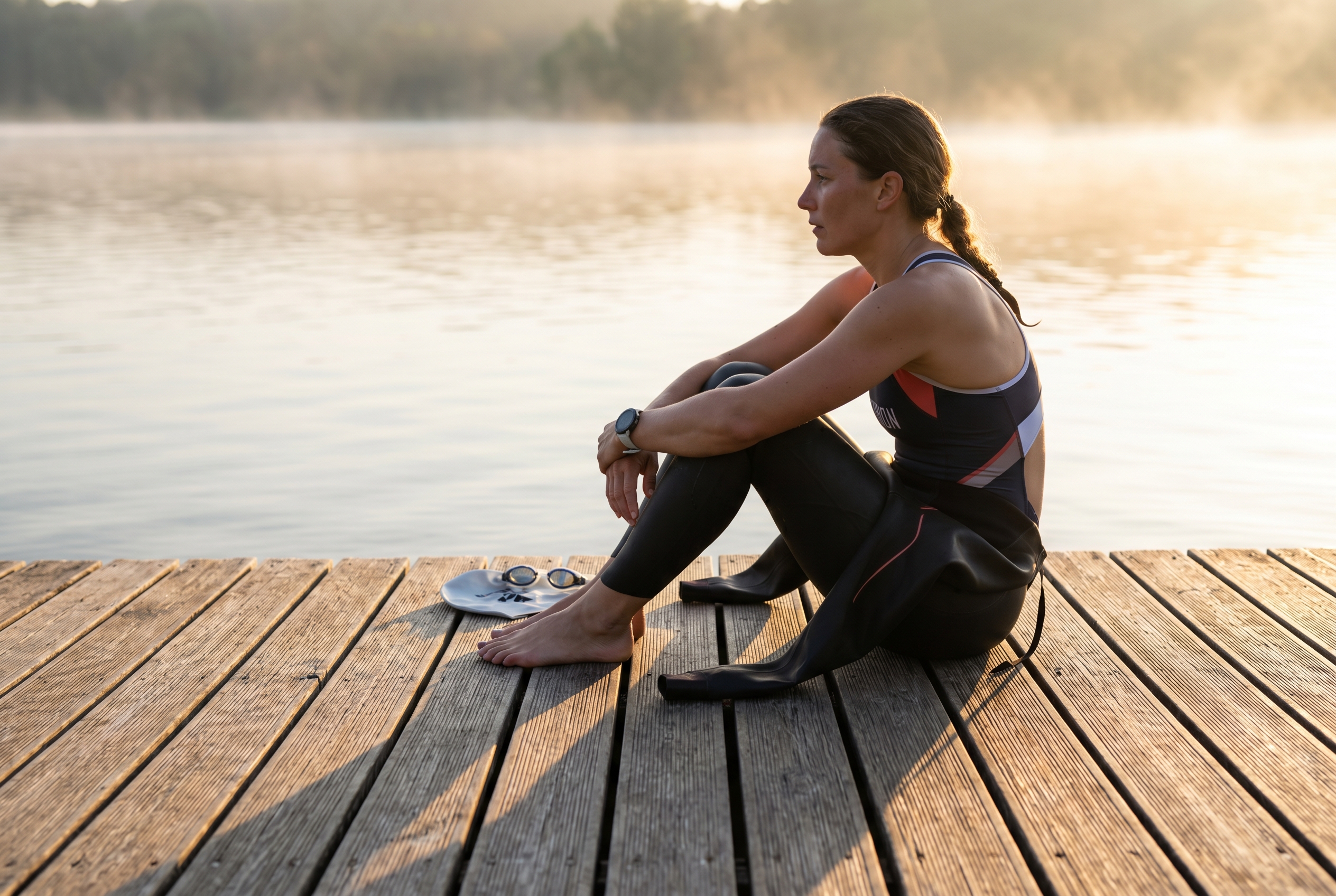
Question 1: How do you feel about triathlon when you're NOT thinking about training? Not when you're looking at your training plan and calculating the suffering ahead. Not when you're in the middle of a long ride wondering why you do this. When you're at dinner, watching something on TV, not actively engaged with the sport — do you feel neutral about it? Nostalgic? Looking forward to getting back at it? Or do you feel a faint, low-grade dread at the thought of it? If the dread is present even in the absence of immediate training demands, that's meaningful.
Question 2: Can you identify what specifically feels wrong, or is it everything? Fatigue is specific: my legs are destroyed, my motivation is low, I can't face another long run. Burnout tends to be diffuse: I'm tired of the alarm clock, tired of the gear, tired of the community, tired of my identity being tangled up in race results. If you can point to specific things — this training block was too long, I hated this particular race format, I need a break from my coach — you probably have information that points toward adjustments rather than exit.
Question 3: If you had three weeks completely free with zero obligation to train, would you want to come back? This is the question most athletes avoid because they're afraid of the answer. But it's the most diagnostic one available. Genuinely rested athletes almost always return to the sport with renewed appetite. Athletes in genuine burnout often use those three weeks to realize that the sport has been serving as an obligation, an identity crutch, or a compulsion rather than a genuine source of joy and meaning. Both outcomes are valid information.
The Physiological Markers Worth Monitoring
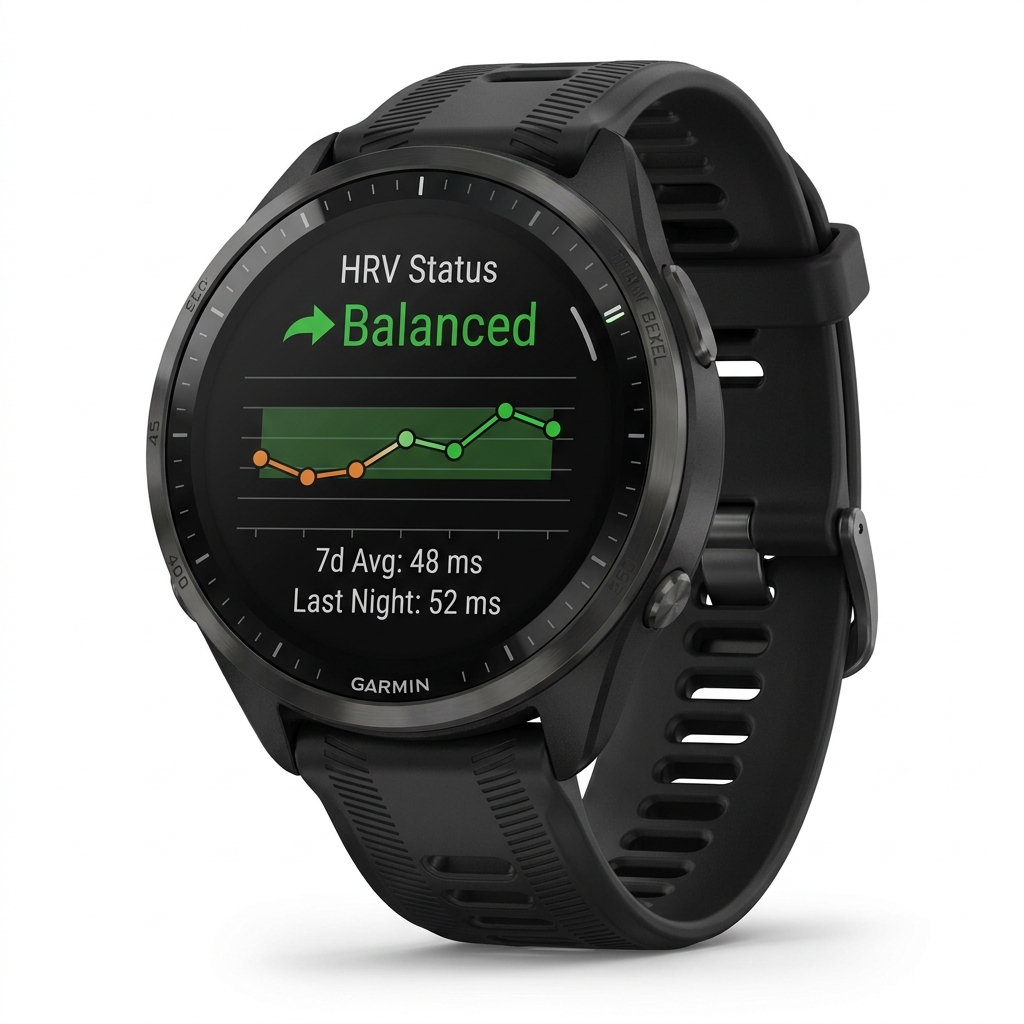
One advantage modern athletes have over previous generations is objective physiological feedback. Your feelings are important data. They're also unreliable narrators. The following markers give you something more concrete to work with.
Heart Rate Variability (HRV): HRV measures the variation in time between your heartbeats, which reflects the state of your autonomic nervous system. High HRV = good recovery, parasympathetic dominance. Suppressed HRV over multiple days = your body is under chronic stress and not recovering. If your Garmin's HRV Status has been showing "Unbalanced" or "Low" for two or more weeks, you are physiologically not recovered — regardless of what your training plan says. The Garmin Forerunner 965, Polar Vantage V3, and the Whoop 4.0 all track HRV continuously. Use this data. It is not a suggestion.
Resting Heart Rate: A resting heart rate elevated 5–10+ beats above your personal baseline for consecutive days is a reliable signal of accumulated fatigue. This is free data available on any GPS watch that does overnight monitoring.
Sleep Quality: Overtraining disrupts sleep architecture in a paradoxical way: exhausted athletes often sleep poorly, with reduced deep sleep and more nighttime wakefulness. If you're physically exhausted but sleeping badly, your nervous system is dysregulated and more rest is required before you can make any clear-headed decisions about whether you're burned out or just tired.
The Two-Week Rule: If you take two full weeks of genuine rest — no training, minimum stress, solid sleep, real food — and still feel no improvement in mood, motivation, or energy, you've crossed the threshold from normal recovery into something that requires more attention. At that point, the conversation is no longer just about training load.
What Burnout Actually Looks Like (It's Not What You Think)
Pop culture burnout is dramatic — the athlete who throws their Garmin in a lake and posts a philosophical Instagram story about rediscovering themselves through pottery. Real burnout is quieter and more insidious. It often looks like this:
- You complete training sessions but feel nothing. Not tired after, not accomplished — nothing.
- Your performance has been declining for months despite consistent training, and you've stopped caring about why.
- When other athletes talk about races, you feel a low-grade contempt rather than enthusiasm or competitive instinct.
- You've started using training as an obligation you resent rather than a choice you make.
- The things you used to love about the sport — the community, the physical challenge, the ritual of it — feel hollow or irritating.
- You've been injured more frequently, or you've been ignoring pain signals that you previously would have taken seriously.
Sports psychologist Dr. Jim Taylor, who has written extensively on triathlon psychology, describes burnout as "a loss of enthusiasm, energy, and confidence in the sport itself — not just a temporary decrease in motivation." The key word is enthusiasm. You can be exhausted and still love something. Burnout removes the love.
The Honest Answers to Common Self-Diagnoses
"I just need a week off." Maybe. If this is after a major race, yes — take ten days to two weeks completely off, then reassess. If this is in the middle of a training build and you've been saying it for the last six weeks, you have a structural problem, not a rest-week problem.
"I'm just not motivated right now." Motivation is a terrible guide for endurance training. If athletes only trained when motivated, no one would finish a 70.3. Low motivation is normal. Absent motivation that doesn't return after rest is different.
"I think I need a new goal to get excited again." This is sometimes correct and sometimes the performance of enthusiasm rather than the real thing. Registering for a new race when you're burned out is like buying a new guitar when you hate music. The gear arrives and you still don't want to play.
"I think I'm overtrained." You might be. Take the two weeks. Measure your HRV. Eat actual food. Sleep. Then reassess. True overtraining syndrome takes months to recover from, but the first intervention is always the same: stop, rest, and give your body a fighting chance before you decide anything.
What To Do Based on Your Honest Assessment
If it's fatigue: Rest. Genuinely rest — not active recovery, not easy spins, not "just a gentle swim." Stop the sport entirely for ten to fourteen days. Eat well. Sleep like it's your job. At the end of those two weeks, you should feel the spark returning. If you do, reduce volume for another two to four weeks before returning to normal training load.
If it's overtraining syndrome: Longer break — four to eight weeks minimum of significantly reduced or suspended training. Work with a coach to restructure your training approach when you return. Overtraining is almost always the product of a training philosophy that needs revision, not just a rest period. The problem will return if the approach doesn't change.
If it's burnout: The prescription is both longer and less structured. It's not "rest for X weeks and come back at Y percent volume." It's "step back, stop treating recovery as a transaction, and figure out why the sport stopped feeding you." This might mean:
- A full season off from racing (not necessarily from movement, just from race cycles and training plans)
- Working with a sports psychologist — not because something is wrong with you, but because your relationship with the sport needs maintenance
- Finding other physical activities you do purely for enjoyment, with no performance agenda
- Being honest with your partner, your coach, and yourself about whether you want to continue, and letting the answer be whatever it is
One last thing: the athletes who return from genuine burnout with the most sustainable relationship to the sport are almost always the ones who were honest about it at the time rather than grinding through it and making the decision later from an even more depleted state. The sport will still be there. The race you planned will have another edition. There is no version of this where training through burnout leads somewhere good.
The Finish Line Isn't the Answer
Here is the part that's uncomfortable to write and necessary to say: IRONMAN finishes are seductive as goals because they are absolute. You cross the line or you don't. The exhaustion they produce is similarly absolute — there's a clarity to feeling completely emptied out that can feel like an answer to questions you didn't know you were asking. But post-race exhaustion is not clarity. It is not a verdict on whether you want to continue. It is your body presenting its invoice for seven months of work, and it needs to be paid before you can see anything clearly.
Give yourself the rest. Get through the invoice. Then ask the question again from a place of recovered capacity — rested legs, recalibrated hormones, two weeks of actual sleep. The answer that comes from there is the real one. And if it turns out to be "I'm actually done," that's okay too. But make sure it's the answer and not just the exhaustion talking.


