
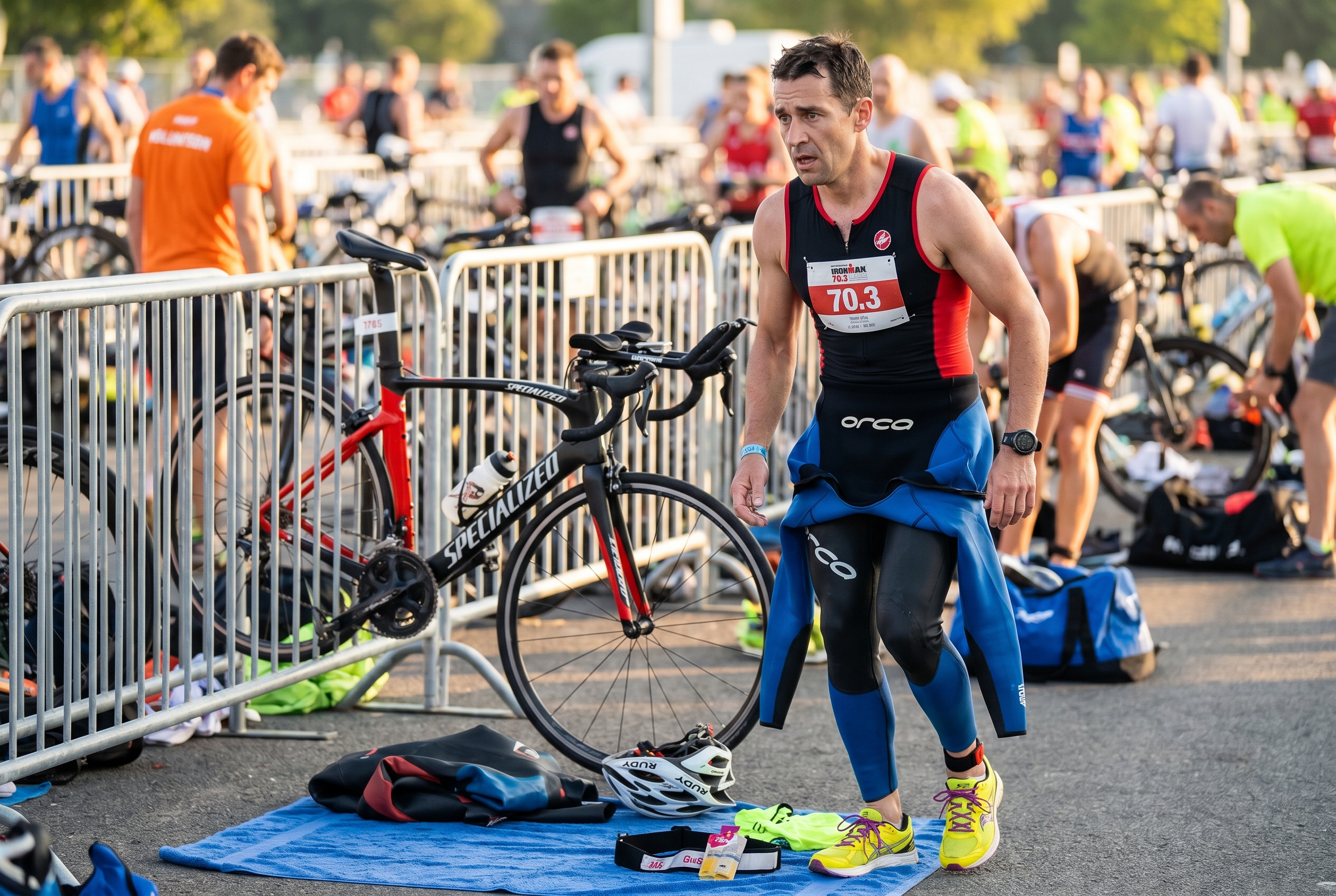
Your First 70.3: The Only Gear Checklist You Actually Need (And What You Can Leave at Home)
You signed up for a 70.3. Congratulations. Now you've spent forty-seven hours reading forum threads written by people who race with $12,000 bikes, three separate hydration systems, and strong opinions about carbon-soled shoes, and you've arrived here slightly more confused than when you started. Here's the good news: your first 70.3 does not require everything those people have. It requires a specific, manageable set of gear that keeps you safe, legal, and moving forward across 70.3 miles. This is that list.
We've organized it the same way your day will be organized: swim, bike, run, and the transition gear that stitches all three together. At the end, we tell you what is truly optional for race one, and what the triathlon industry wants you to believe is essential but is really just excellent marketing. Save the carbon wheels conversation for race two.
The Swim: Three Things That Actually Matter
The swim leg of a 70.3 is 1.2 miles of open water, and the gear list for it is genuinely short. The confusion comes from the internet making it seem complicated.
1. A Triathlon Wetsuit (If Water Temperature Allows)
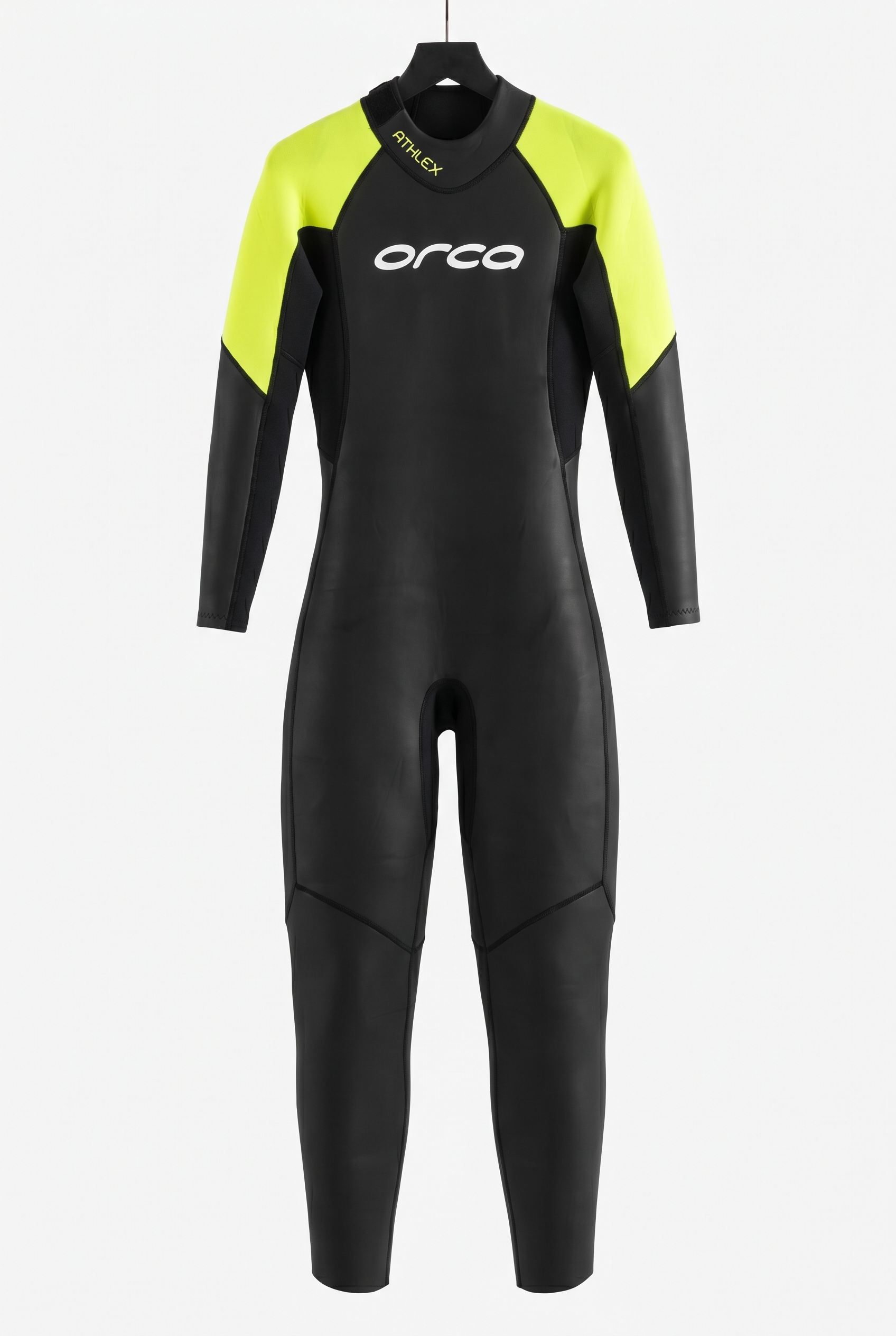
If the water is below 76.1°F (24.5°C) at race time, wetsuits are permitted and you should wear one. If it's above 83.8°F (28.8°C), they're typically prohibited. In between, they're usually optional but legal. Check your specific race rules.
Why wear one? Buoyancy. A good triathlon wetsuit lifts your hips and legs to a flat, hydrodynamic position that most recreational swimmers can't achieve on their own. You will swim faster with less effort. For a first-timer already anxious about the open water, that buoyancy is both a performance upgrade and a psychological lifeline. You float better than you think you will. The suit is the reason.
What to look for in a first wetsuit: flexibility in the shoulders (you don't want to feel like you're fighting the suit every stroke), an appropriate buoyancy level (more leg lift is usually better for non-elite swimmers), and a fit that's snug but not strangling. Brands worth your time: Orca Athlex Flex, Zone3 Aspire, ROKA Maverick Comp. All three sit in the $250–$450 range and will get you through multiple races without embarrassing you. Apply Body Glide around the neck seam before you put it on. Without it, you will arrive at T1 looking like you lost a fight with a cheese grater.
2. Open Water Goggles
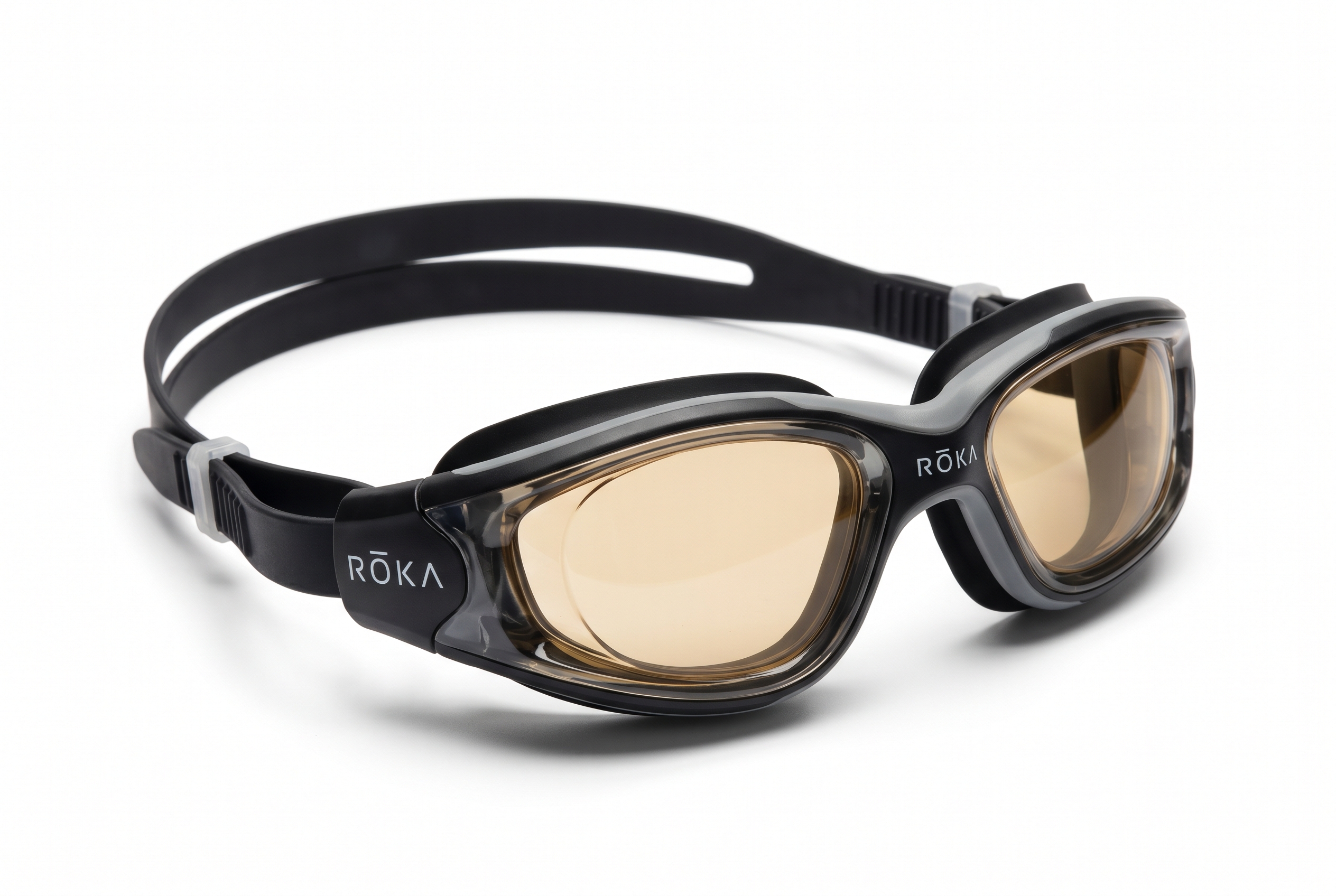
Your pool goggles might work. Your pool goggles might also flood the second someone splashes near them, which at a 70.3 mass start is going to happen within the first sixty seconds. Get goggles designed for open water. The key features: wide field of vision for sighting buoys, UV protection, and a reliable seal in choppy conditions.
The ROKA R1 Open Water is an excellent first choice — its forward-tilted lens geometry was built specifically for the sighting motion you'll use every fifteen strokes. The Aqua Sphere Kayenne is a reliable, budget-friendly alternative. Bring two pairs on race day in case something goes wrong at the start. A spare set of goggles weighs nothing and has rescued more races than any piece of carbon equipment ever will.
Lens color: tinted or mirrored for a sunny morning start, clear for overcast or pre-dawn conditions. When in doubt, a pair in each is twenty dollars and the correct answer.
3. Your Tri Suit
A one-piece or two-piece tri suit is what you wear under your wetsuit and for the entire race. It has a small chamois pad for the bike that's thin enough to run comfortably in, dries quickly, and doesn't require a wardrobe change in transition. This is not optional. Racing in a swimsuit and then changing into cycling shorts is a transition nightmare and also the source of the only full-nakedness-in-transition story in your future if you skip this advice. Get a tri suit. Wear the tri suit. Wear it in training so you know how it fits before race day.
The Bike: What You Need, What You Don't
The bike leg is 56 miles, which is long enough that the wrong equipment choices compound into significant suffering. But "wrong equipment" for a first 70.3 does not mean "anything less than a $7,000 TT bike." It means equipment that isn't safe, doesn't fit, or breaks.
4. A Safe, Properly Fit Bike
You can finish a 70.3 on a road bike. You can finish a 70.3 on a hybrid bike. People have done it on mountain bikes. The bike matters less than the bike fit, and the bike fit matters less than the engine (that's you). What your bike needs before race day: functioning brakes, properly inflated tires, a chain that doesn't skip, and a saddle height that doesn't destroy your knees. A basic service at your local bike shop costs $75 and is non-negotiable. Show up on race morning with a maintained bike or prepare to spend a lot of time on the side of the course wondering what that noise was.
If you're on a road bike, a set of clip-on aerobars is one of the highest-ROI upgrades available to you at any price point. More on those next.
5. Clip-On Aerobars (Recommended, Not Mandatory)
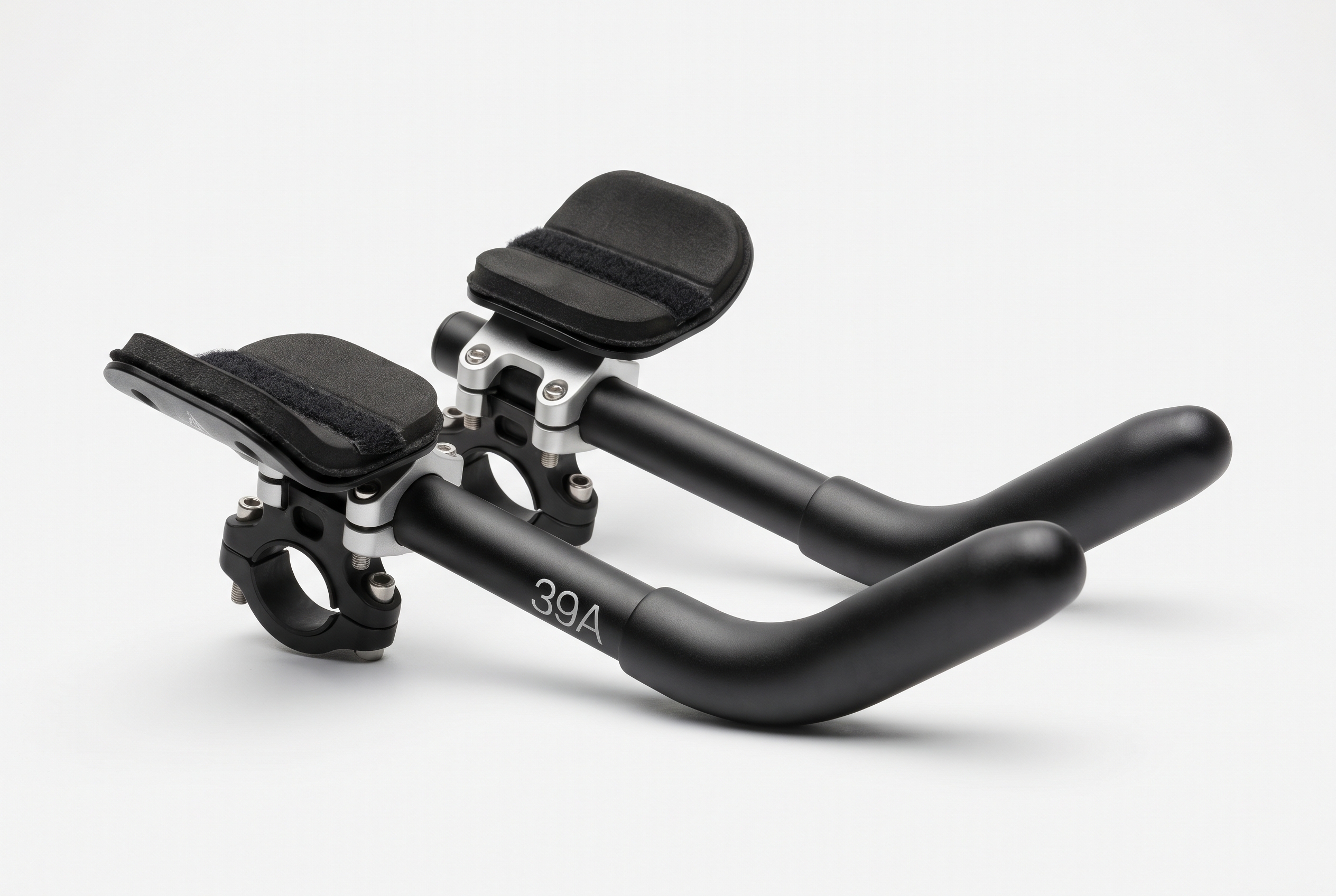
If your bike doesn't have integrated aerobars, clip-ons attach to your existing handlebars and allow you to drop into a low, aerodynamic position by resting your forearms on padded rests and gripping forward extensions. The aerodynamic benefit at 70.3 speeds (20–25 mph) is significant: studies consistently show 5–10% power savings versus an upright road position.
The important caveat: practice riding in them before race day. Clip-on aerobars put your hands further from the brakes and require core stability to hold the position safely. If you bolt them on the night before and show up on a technical course, you are going to have a bad time. Get them on your bike at least 8–10 weeks out and train in them regularly. The Profile Design Sonic Ergo 39A and the Zipp Vuka Clip are both solid choices in the $100–$200 range.
Are they required? No. Are they worth it for almost every beginner? Yes. The time savings are real, the cost is accessible, and the aero position also reduces fatigue by offloading weight from your arms and back onto your skeleton. If you're going to upgrade one thing, upgrade this.
6. A Helmet — Any Helmet
Your helmet must be CPSC or similar safety certified and must be buckled before you touch your bike in transition. That's it. An aero helmet is nice and does provide meaningful drag reduction at 70.3 speeds, but a standard road helmet is legal, safe, and perfectly adequate for race one. Don't let anyone make you feel bad about a $60 helmet. The most aerodynamic position you can achieve is more valuable than any helmet shape.
7. Bike Shoes + Flat Repair Kit
If you have clipless pedals, race in your normal cycling shoes. Elastic lace inserts make getting in and out faster in transition. Pack a flat kit: two CO2 cartridges, one spare tube, tire levers, and a small multi-tool. Stuff them in a small saddle bag. Practice changing a flat before race day — not because flats are likely, but because fumbling with an unfamiliar tube change for twenty-five minutes while other athletes roll past is a specific kind of misery that a ten-minute practice session eliminates entirely.
The Run: Keep It Simple
8. Running Shoes You've Actually Trained In
This is not the place for new shoes. The 13.1 miles at the end of a 70.3 will expose every blister, every hot spot, every seam that you didn't notice during a forty-five minute training run. Race in shoes you've put at least 50 miles on. If you want elastic laces (and you do — they save 30–60 seconds in T2 and require zero skill to use), install them several weeks out and train in them.
Racing in socks is a personal choice. Many triathletes go sockless for sprint races, but a 70.3 run is long enough that most find socks worth the extra fifteen seconds in transition. Test both in training and make an actual decision rather than a race-morning guess.
9. Hat or Visor + Sunglasses
A hat or visor keeps the sun out of your face and gives you a vessel for aid station ice, which at any 70.3 run in warm weather is one of the underrated pleasures of the sport. Dump ice under the brim, dump ice down your tri suit collar, feel briefly human again. Sunglasses protect your eyes from sun, dust, and wind on both the bike and run. Both of these items weigh nothing and make a measurable difference over 13 miles in the sun.
Transition Essentials
10. A Race Belt
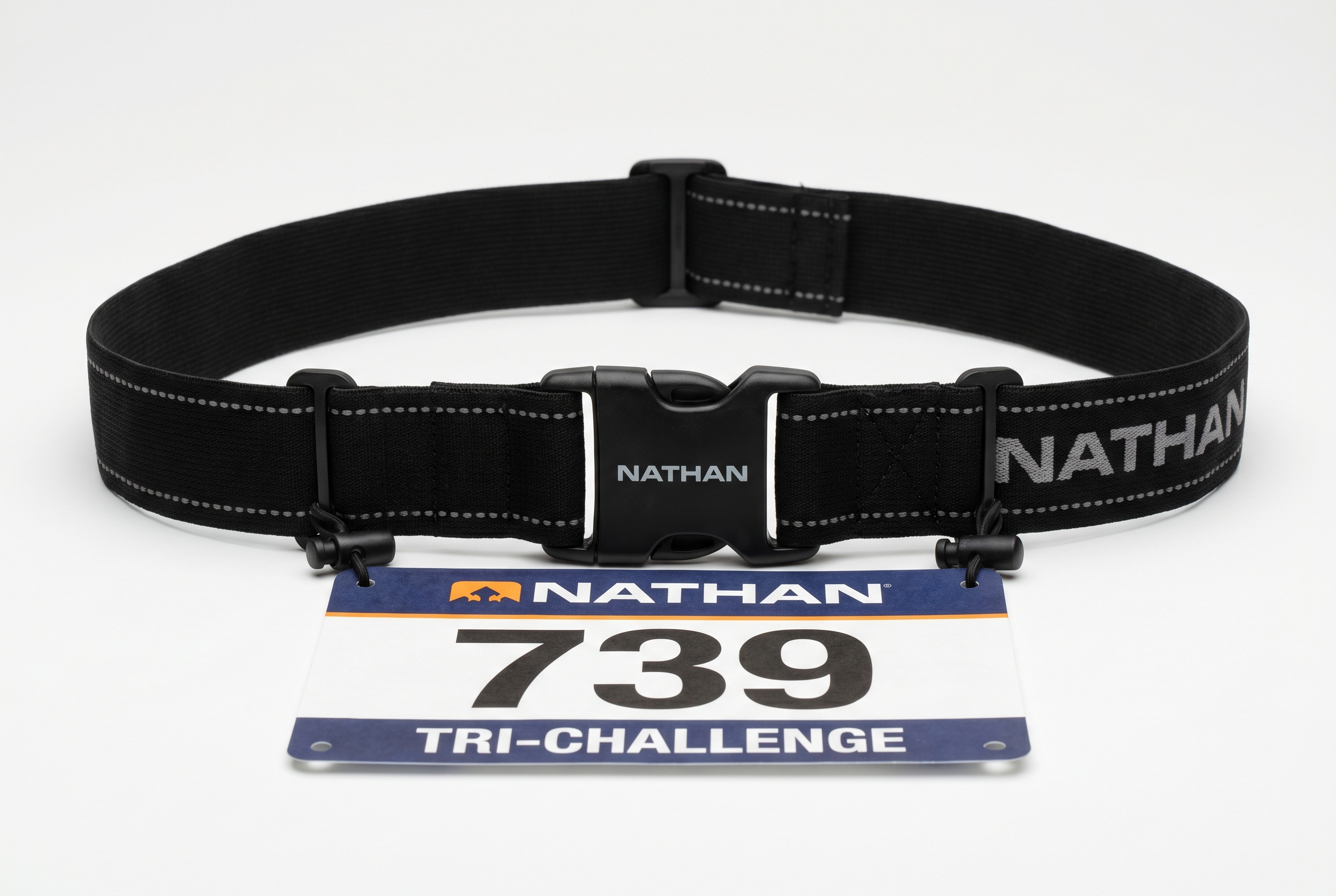
A race belt is a thin elastic band that clips around your waist and holds your race bib. You spin it to your back for the bike (where bibs typically need to be displayed) and rotate it to your front for the run (where race officials need to see your number). Without a race belt, you're safety-pinning a bib onto your tri suit in transition, which takes 90 seconds you will desperately want back. With one, it's a two-second clip. They cost $10. There is no earthly reason not to own one.
11. Body Glide / Anti-Chafe
Apply it everywhere. Wetsuit neck seam, inner arms, inner thighs, nipples if applicable, anywhere a seam meets moving skin. The consequences of skipping this are not subtle and they arrive around mile 8 of the run when your mood is already fragile. Carry a small stick in your transition bag.
12. A GPS Multisport Watch
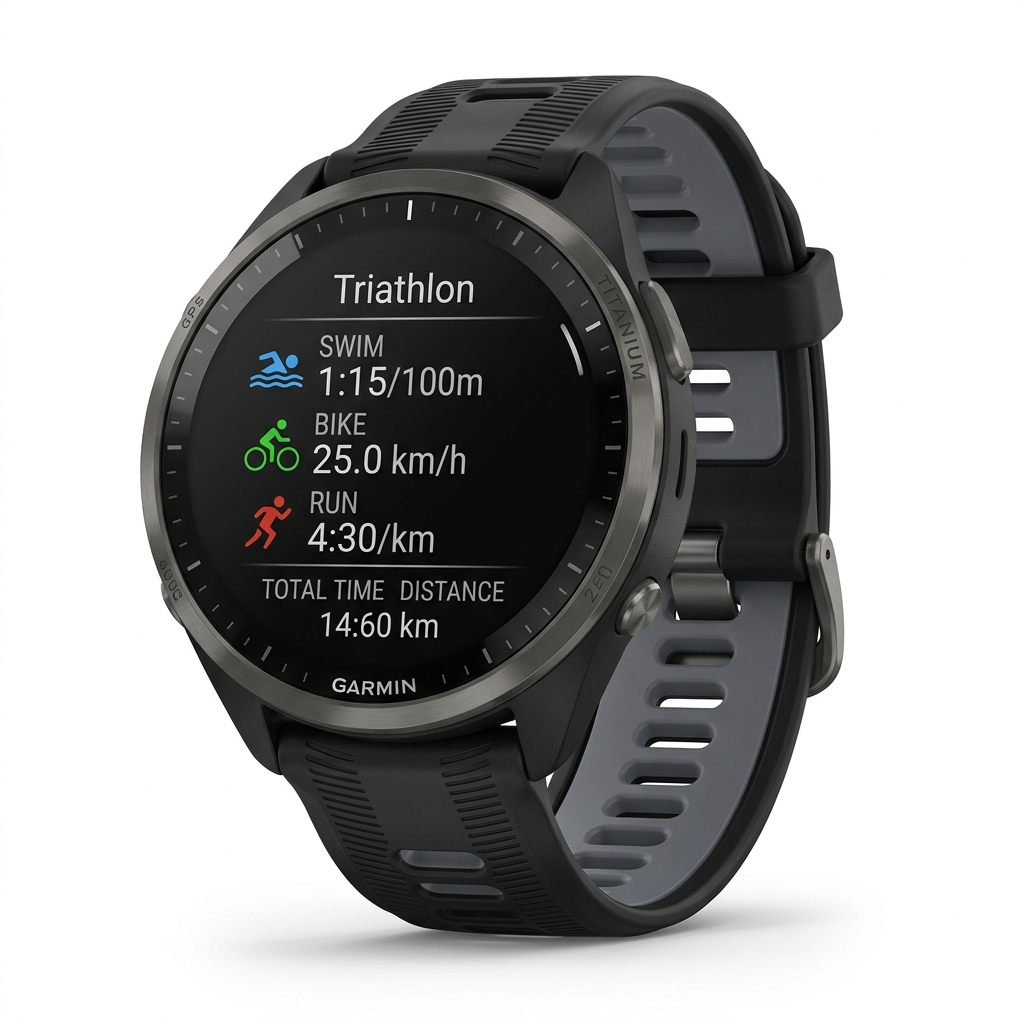
You want a watch that can handle swim, bike, and run as separate activities and auto-transition between them. The Garmin Forerunner 965 is the current benchmark for serious triathletes. The Garmin Forerunner 745 or Polar Vantage V3 are excellent mid-tier options. The Apple Watch Ultra 2 will also handle 70.3 distance if that's what you have.
The real function of the watch for a first-timer is pacing — specifically, not going out too hard on the bike and arriving at T2 unable to run. A power meter on the bike is the gold standard for pacing, but heart rate monitoring through the watch gives you enough information to avoid the classic beginner mistake of biking at 95% and then wondering why the run leg feels like the world is ending. Charge it the night before. Don't forget the charger at home.
What You Can Leave at Home for Race One
To save you from yourself, here is a clear list of things that are genuinely optional for a first 70.3:
- A dedicated triathlon bike: A road bike with clip-on aerobars gets you there. A TT bike is a meaningful upgrade for race 3 or 4 when you know your position and know the sport is staying in your life.
- Aero helmet: A road helmet is legal and fine. The difference in drag is real but not race-altering at your current speed.
- Carbon race wheels: Heavy wheels slow you down. Carbon race wheels will make you marginally faster. For your first 70.3, the return on a $1,000+ wheel investment is measured in minutes that your fitness already controls. Train more. Buy wheels later.
- Power meter: Genuinely useful for pacing. Also $500–$1,200. Heart rate works fine for race one.
- Behind-the-saddle hydration: A standard water bottle cage setup handles hydration for 56 miles at beginner-to-intermediate pace. An integrated aero hydration system is for athletes who are also managing watts and race-day nutrition to the decimal point. You're not there yet. Take the free bottles from aid stations.
- Race-specific nutrition system: Aid stations at every 70.3 carry water, Gatorade, bananas, gels, and cola. Practice your nutrition in training so you know your stomach, bring a few of your preferred gels on the bike, and let the aid stations do the heavy lifting. Don't spend $200 on a bespoke nutrition rig before you've done one race.
Your First 70.3 Gear Budget, Realistically
If you already own a bike and running shoes — which is where most 70.3 first-timers start — here's what completing your gear kit actually costs:
- Triathlon wetsuit (entry-level Orca/Zone3): $200–$350
- Open water goggles: $30–$80
- Tri suit: $80–$200
- Clip-on aerobars: $100–$200
- GPS multisport watch (if needed): $300–$500
- Race belt: $10
- Body Glide: $8
- Flat repair kit: $25
- Extra goggles pair: $20
Total additional investment: roughly $800–$1,400 if you're starting from zero on the swim and transition gear. That's real money. It's also significantly less than what the forums will have you believe is the minimum ante to toe the line at a 70.3, and it will get you to the finish line on the same course as people who spent ten times that.
One Last Thing
Test everything. Every single item on this list should be used in training before race day. Wetsuits should be swum in multiple times. Goggles should be worn in choppy conditions. Race belt should be practiced in transition drills. Running shoes should have miles on them. The athletes who have gear malfunctions on race day are almost exclusively the athletes who showed up with something they'd never used before. The triathlon expo the day before your race is a trap lined with shiny new products and extremely persuasive salespeople. Walk through it. Look at things. Buy nothing. Go eat carbohydrates and go to bed.
Your first 70.3 finish line is close enough to taste. The gear on this list gets you there. Everything else is a story for your second race.


