

Move Better, Race Faster: The Complete Stretching and Mobility Playbook for Triathletes
Every triathlete has a version of this story: the training was going perfectly. Long rides consistent, run pace dropping, swim feeling smooth. Then — nothing dramatic, no single defining moment — something just started to hurt. The left hip. The right knee. The lower back on long bike rides. And within three weeks, the entire race season was in question because of an injury that, with thirty minutes of weekly maintenance work, probably never happens.
Stretching and mobility are the perennial orphans of triathlon training. Athletes log their swim yardage, track their bike power, obsess over run cadence, and then sprint to the car after training because they have somewhere to be. The cool-down goes unfinished. The hip flexors never get touched. The thoracic spine — which spends six hours a week compressed into an aero position — gets zero attention. And the body keeps a running tab.
This is the complete guide to not getting that bill. We cover what stretching and mobility actually are (they're not the same thing), when to do each type, the specific routines that matter most for triathlon's three disciplines, and the recovery tools worth your money. It's thorough because the topic earns thoroughness. But the core message is simple: athletes who consistently do mobility work get hurt less, recover faster, and race better than athletes who skip it. The research is not ambiguous on this.
First, Get the Terminology Straight
Most athletes use "stretching," "flexibility," and "mobility" interchangeably. They're not interchangeable, and understanding the difference changes how you approach the work.
Flexibility is the passive range of motion of a muscle — how far it can lengthen under external force (like a stretch). A rubber band is flexible. A rubber band is not necessarily mobile.
Mobility is the ability of a joint to move actively through its full range of motion with control, stability, and strength at end range. A mobile hip can generate power at full extension. A merely flexible hip might reach the same position but can't do anything useful when it gets there. Mobility requires strength, stability, and motor control — not just length.
Stretching is the practice of elongating muscle tissue, which can improve both flexibility and, indirectly, mobility. But stretching alone — especially the passive, hold-for-thirty-seconds variety — doesn't build the motor control and strength components that make mobility actually useful for athletic performance.
The takeaway: you need both. Stretching improves tissue length and flexibility. Mobility work improves how your joints function in motion. The combination is what prevents injuries and improves movement efficiency in sport.
The Two Main Types of Stretching (And When to Use Each)
This is the most commonly misunderstood area of stretching science, and getting it wrong is actively counterproductive.
Dynamic Stretching: Before Training
Dynamic stretching involves continuous, controlled movement through a full range of motion. Leg swings. Arm circles. Walking lunges. High knees. Cat-cow. These are not held — they move. The purpose of dynamic stretching is to increase body temperature, enhance blood flow to working muscles, improve nerve conduction velocity, and prime the neuromuscular system for the demands ahead.
Research consistently shows that a 5–10 minute dynamic warm-up before training improves power output, reduces injury risk, and enhances athletic coordination. The 2025 Journal of Strength and Conditioning Research meta-analysis of pre-exercise stretching protocols found that dynamic stretching produced measurable improvements in subsequent sprint performance, while static stretching before activity produced either no improvement or small decrements in power and speed output. This is not a minor finding. Static stretching before high-intensity effort can temporarily reduce the force-producing capacity of the muscle you just stretched. Save it for later.
Dynamic stretching for triathlon warm-up:
- Leg swings forward/backward (hip flexors, hamstrings) — 15 reps each leg
- Leg swings lateral (groin, glutes) — 15 reps each leg
- Walking lunge with torso rotation (hip flexors, thoracic spine) — 10 per side
- Arm circles forward and back (shoulder joint, swimming) — 20 each direction
- Cat-cow (thoracic spine, core) — 10 reps
- High knees running in place (hip flexors, neuromuscular priming) — 30 seconds
- Hip circles (hip mobility in all planes) — 10 each direction per hip
Static Stretching: After Training
Static stretching — holding a position for 20–60 seconds — is most effective after training when muscles are warm and tissue is pliable. It improves long-term flexibility, reduces post-exercise soreness, and helps the body transition from sympathetic (fight/flight) to parasympathetic (rest/digest) nervous system dominance. This is not a small thing for athletes who are chronically over-stimulated from high-volume training.
Static stretching does not meaningfully reduce next-day muscle soreness (the research on this is clear and slightly disappointing), but it does reduce stiffness accumulation over time and maintains the tissue length that mobility work builds. Think of static stretching as maintenance, not repair.
Post-training static stretches for triathletes:
- Kneeling hip flexor stretch — 45 seconds per side (critical for cyclists and runners)
- Standing hamstring stretch — 45 seconds per side
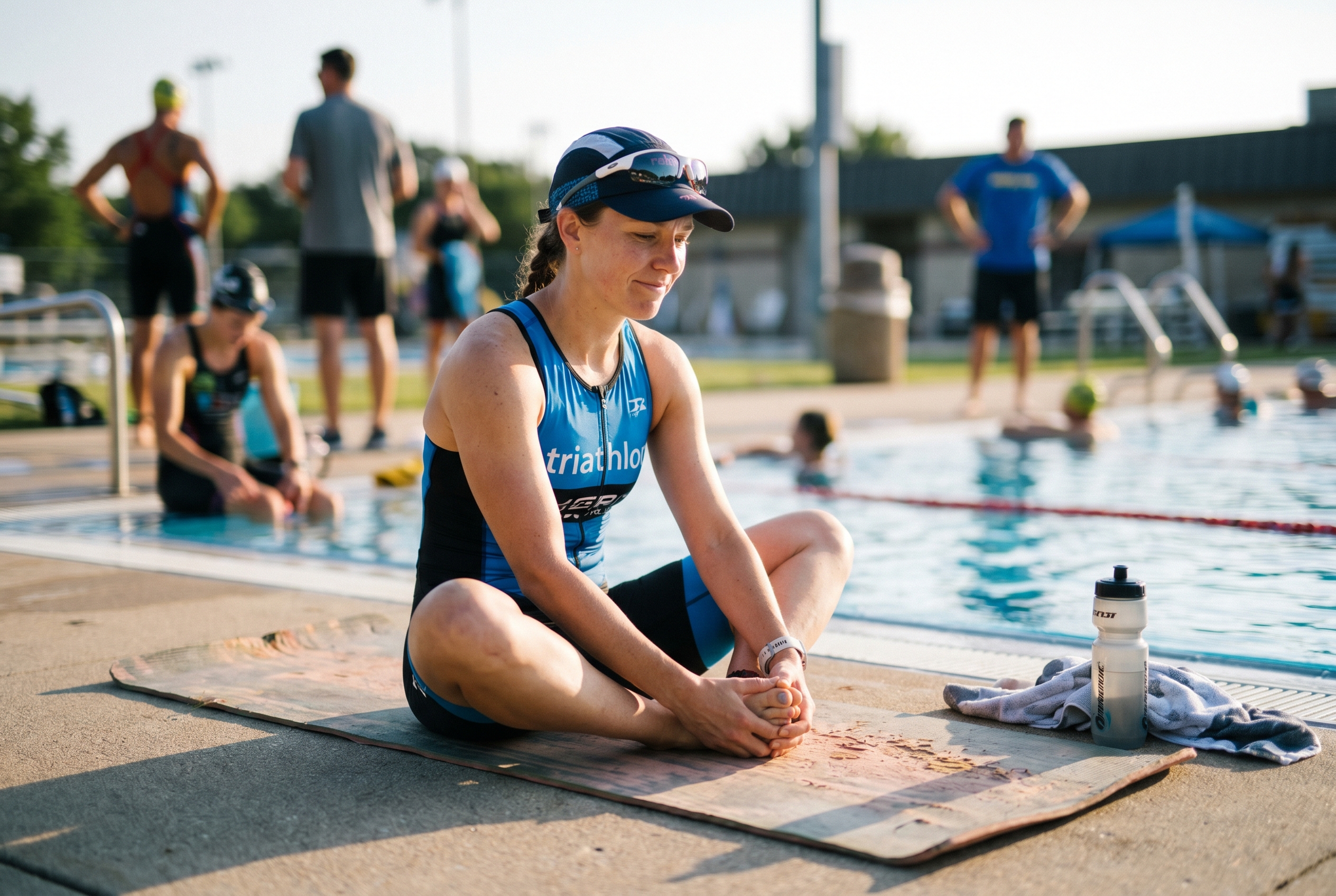
- Seated butterfly stretch — 60 seconds (hip internal rotators, adductors)
- Pigeon pose or lying glute stretch — 60 seconds per side
- Doorframe or band chest opener — 45 seconds each side (swimmers, cyclists)
- Lying spinal twist — 45 seconds per side (lower back, cycling posture)
- Calf stretch (both bent and straight knee) — 45 seconds each position per leg
The Triathlete Mobility Crisis: Three Disciplines, Three Problem Areas
Each of triathlon's three disciplines creates specific mobility demands — and specific deficits when those demands aren't addressed. Here's where the damage accumulates.
Swimming: Thoracic Spine and Shoulder Internal Rotation
Freestyle swimming requires thoracic rotation — the ability of the upper spine to rotate fully with each stroke. Triathletes who spend hours in a compressed aero position on the bike develop thoracic stiffness that restricts that rotation, which forces the shoulder to compensate with increased impingement risk. Shoulder injuries are among the most common overuse injuries in triathlon, and a majority of them have a thoracic mobility component.
Additionally, the catch and pull phase of freestyle requires substantial shoulder internal rotation and behind-back reach capacity. If your thoracic spine can't rotate, your shoulder can't reach that position cleanly, and something else absorbs the force. That something else has a name, and it usually ends with "-itis."
Fix it: Thread-the-needle stretch (5 reps each side), seated thoracic rotation with arm reaching (10 each side), foam rolling the thoracic spine (2 minutes), and doorframe chest stretch (60 seconds each side). Do this daily if you swim more than three times per week.
Cycling: Hip Flexors and Thoracic Extension
The cycling position is the mobility enemy of the hip flexor. An aero tuck keeps the hip flexors in a shortened, contracted position for hours at a time. Hip flexors that are chronically shortened don't extend fully during running, which means the glutes can't fire properly, which means you're running less efficiently on power your own body already produced and then blocked from using. This is the hip flexor's most effective revenge for being ignored.
Thoracic extension is the second casualty of the aero position. Sustained flexion in the upper spine leads to stiffness in extension, which compounds the shoulder rotation issue above and contributes to lower back pain that most triathletes attribute to "the bike." Often it's the spine's response to never being moved in the other direction.
Fix it: Kneeling hip flexor lunge stretch with back leg extended (90 seconds per side, every day), sphinx pose (90 seconds), foam rolling mid-back over a roller perpendicular to the spine (2 minutes), and cat-cow (daily, not just as warm-up).
Running: Hip Mobility and Ankle Dorsiflexion
Running efficiency is built on hip extension — the back leg driving behind center to generate propulsion. Limited hip extension (from those same shortened hip flexors) means shorter stride, reduced power, and compensatory overreach in front. It also means the glutes are contributing less than they should, shifting load to the hamstrings and calves in ways that produce the entirely predictable injury patterns of hobbyist runners: hamstring tendinopathy, plantar fasciitis, and IT band syndrome.
Ankle dorsiflexion — the degree to which the foot can flex upward toward the shin — is the other underappreciated variable in run mechanics. Restricted dorsiflexion causes the foot to pronate excessively at landing, which rotates the tibia inward and puts the knee in a compromised position with every stride. This matters a lot over 13.1 miles. The fix is both stretching (calf and Achilles work) and joint mobilization, which requires some targeted single-joint work rather than just passive stretching.
Fix it: Hip flexor lunge stretch (covered above), standing calf stretch against a wall with both bent and straight knee (this targets both the gastrocnemius and soleus — different muscles, different positions), ankle circles (neuromuscular), and pigeon pose for hip external rotation.
Foam Rolling: What It Actually Does
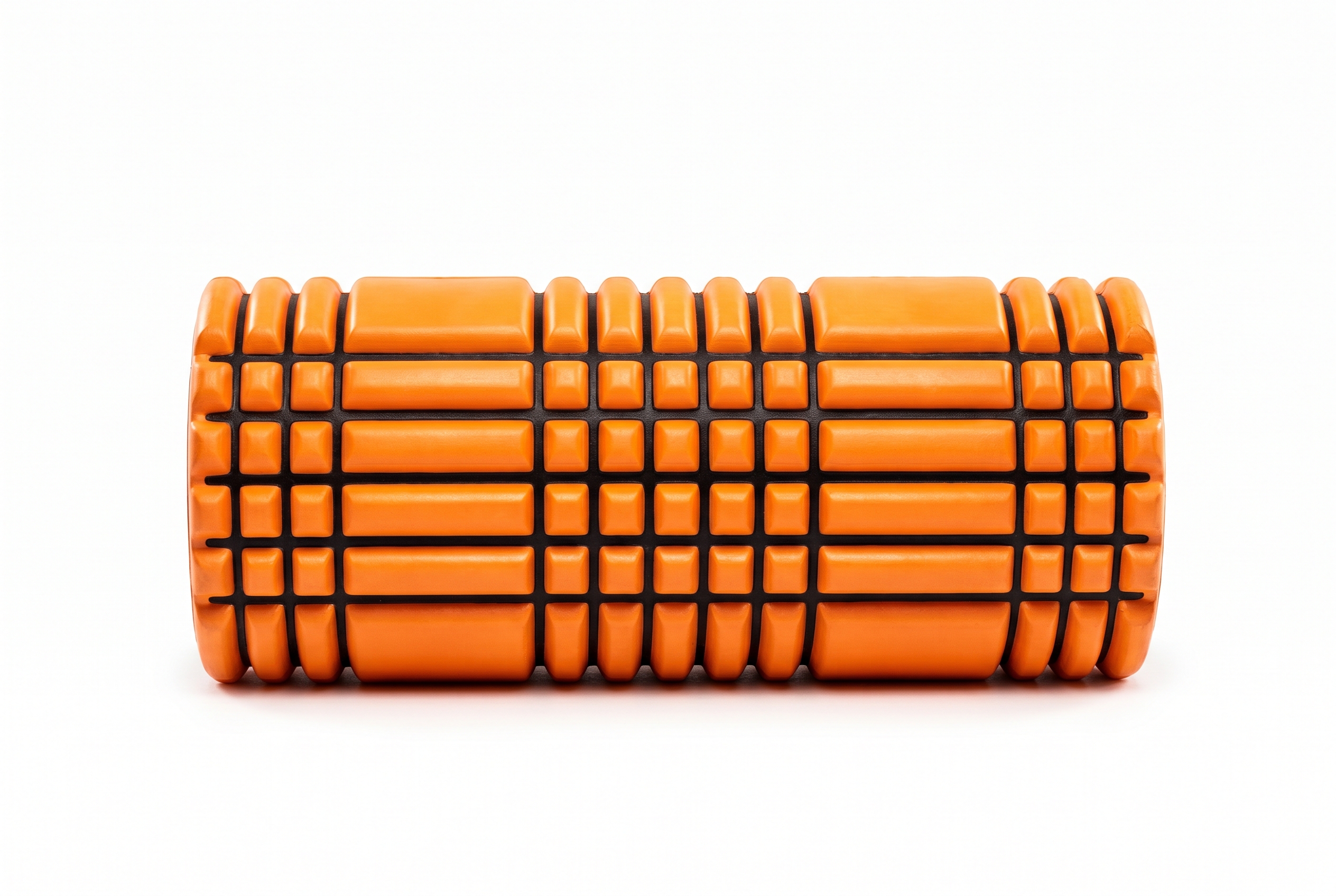
Foam rolling belongs to a category called self-myofascial release (SMR) — using pressure applied to muscle and connective tissue to release tension, break up adhesions in the fascia, and improve blood flow to target areas. The mechanism isn't fully settled in the research literature, but the outcomes are reasonably consistent: foam rolling before training improves range of motion without the performance decrements of static stretching, and foam rolling after training reduces next-day soreness and improves perceived recovery quality.
The TriggerPoint GRID is the benchmark foam roller — its multi-density surface (firmer grids, softer channels) mimics manual therapy pressure more effectively than a uniform-density pool noodle. It's the foam roller most physical therapists recommend and most serious athletes use because it actually provides differentiated pressure rather than just uncomfortable sitting.
How to foam roll effectively:
- Roll slowly — 1 inch per second maximum. Fast rolling is just uncomfortable massage that accomplishes nothing.
- When you find a tender spot, pause on it for 30–90 seconds rather than rolling through it. The discomfort should decrease during the hold.
- Don't roll directly on the IT band. Roll the quads and glutes around it. The IT band itself is a thick sheet of connective tissue with essentially no blood supply — pressing a foam roller directly into it produces pain with no therapeutic benefit.
- 1–2 minutes per muscle group is sufficient.
Priority targets for triathletes: thoracic spine, quads, hip flexors, calves, glutes, and IT band surrounds (lateral quad and lateral hamstring).
Percussive Therapy: The Upgrade Worth Considering
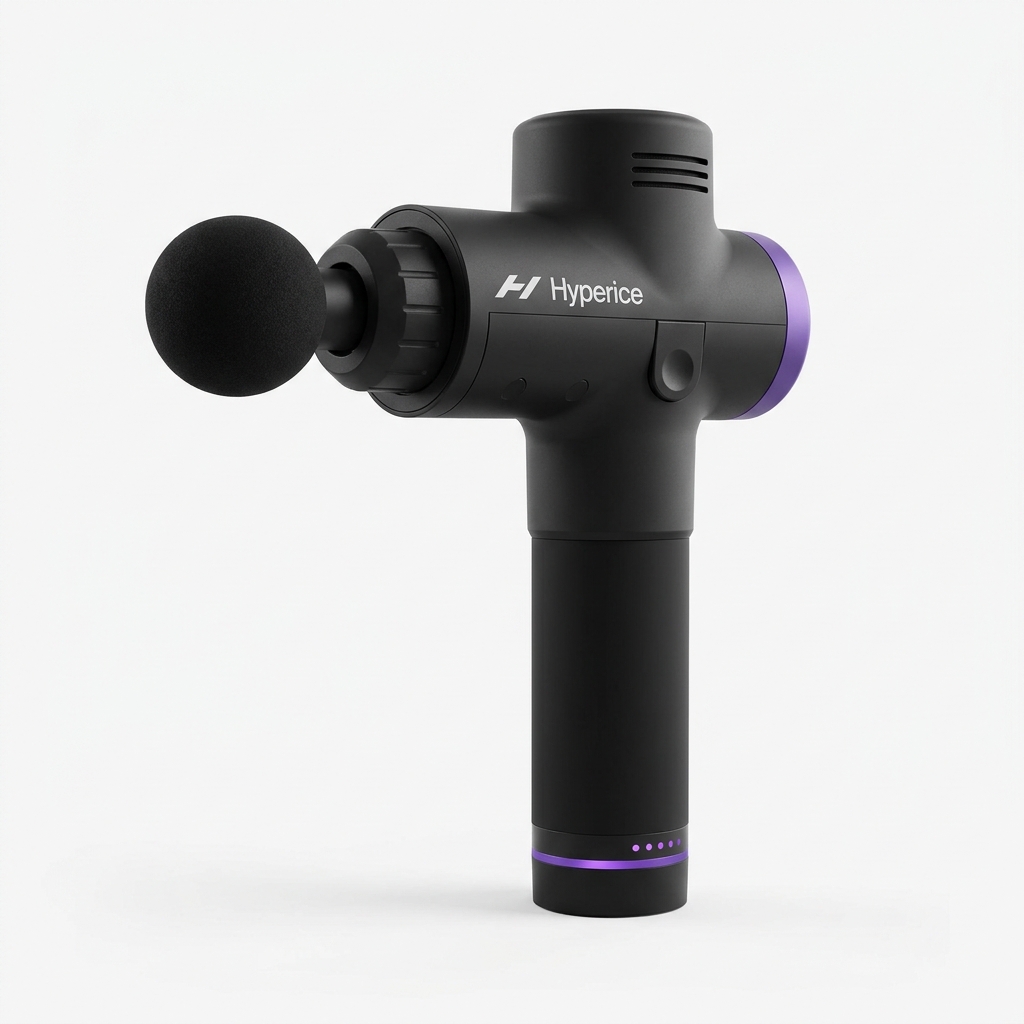
Percussive therapy devices — led by the Hyperice Hypervolt 2 Pro and the Theragun PRO — apply rapid, targeted vibration to muscle tissue. The mechanism is different from foam rolling: percussive therapy works more through the nervous system (reducing muscle spindle sensitivity and promoting relaxation) than through direct fascial pressure. The practical result is faster, more targeted release of specific muscle tension, particularly useful for the hip flexors and thoracic erectors that foam rolling reaches imprecisely.
The research on percussive therapy is relatively young but consistent: it provides measurable improvements in range of motion and perceived recovery. Whether it outperforms foam rolling depends on the tissue and the athlete. For high-volume triathletes training more than 10 hours per week, having both tools gives you the flexibility (pun entirely intended) to use the right approach for the situation. The Hypervolt 2 Pro retails around $299. For athletes managing the tissue demands of 70.3 and Ironman training, it earns its place.
The Weekly Mobility Schedule That Actually Works
The most common failure mode in mobility work is treating it as optional — something that happens when training doesn't run long. Here is a structure that fits into the margins of a triathlon training week without adding meaningful time burden:
Every training day (5–10 minutes):
- Before: 5-minute dynamic warm-up sequence (leg swings, arm circles, hip circles, walking lunges)
- After: 5-minute foam rolling of the primary muscle groups used in that session
Three times per week (15 minutes, post-training):
- Full static stretching sequence focusing on hip flexors, hamstrings, calves, and upper back
- Hip mobility drills: pigeon pose, butterfly, lying spinal twist
Once per week (20–30 minutes):
- Dedicated mobility session — thoracic work, full hip sequence, ankle mobility, shoulder capsule work
- This is your maintenance session. It's what prevents the accumulated deficits from becoming the injury that derails your season
Total time investment: roughly 90 minutes per week across all sessions, most of it piggy-backed onto training you're already doing. This is less time than you'll spend dealing with a preventable overuse injury.
The Hard Truth About Stretching and Performance
Stretching will not make you faster in any direct sense. It doesn't improve your VO2 max, raise your lactate threshold, or build cycling power. What it does is remove the ceiling. Hip flexor restriction caps your running economy. Thoracic stiffness limits your swim rotation and aero position comfort. Ankle dorsiflexion deficits compromise your run mechanics over long distances. Every one of these ceilings costs time. Removing them doesn't add performance — it reveals the performance that was always there, blocked by tissue that wasn't getting maintained.
The athletes who consistently report the biggest gains from adding a mobility practice to their training are almost always athletes who were measurably restricted before they started. If your hip flexors are normal and your thoracic spine moves freely, the marginal benefit of additional mobility work is smaller. But if you've been training for more than a year, spending most of your waking hours sitting, and fitting in three disciplines of high-repetition movement, the chances that you're operating at optimal joint mobility are essentially zero.
Start the practice. Do it consistently. The benefit arrives slowly and quietly — which is exactly how prevention is supposed to work.


