
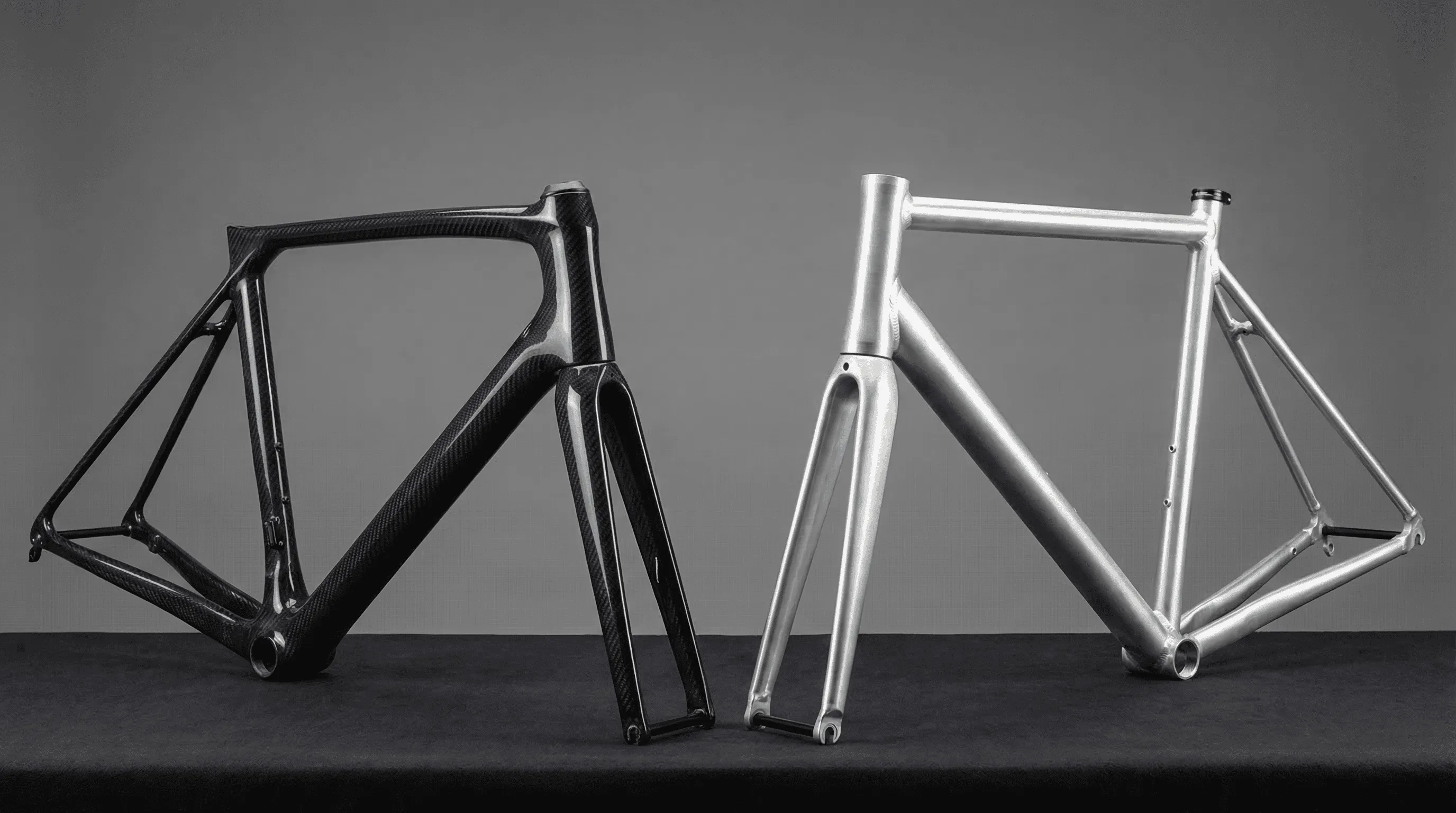
The carbon fiber sales pitch is compelling: lighter, stiffer, faster, more aerodynamic. The price tag is less compelling — anywhere from $2,500 for entry-level carbon to $12,000+ for the flagship builds. For the age-grouper trying to figure out where to spend their training budget, the question is legitimate: does the frame actually matter that much, or is it marketing wrapped in exotic fiber?
We put seven bikes under $4,000 through a 12-week test period across three riders of different fitness levels and body types. The results were instructive — and in some cases, surprising.
The Test Field
Our seven bikes, all in the $2,000–$4,000 range (street price, including build kit):
- Trek Domane AL 5 (aluminum endurance road bike, $2,200)
- Cannondale Synapse Carbon 3 (carbon endurance, $2,800)
- Giant Contend AR 1 (aluminum aero road, $2,100)
- Specialized Allez Sprint Comp (aluminum race, $2,300)
- Trek Émonda SL 5 (carbon climbing/all-round, $2,900)
- Canyon Endurace CF SL 7 (carbon endurance, $3,200)
- Cervelo Soloist Ultegra (carbon aero, $3,800)
Testing methodology: riders completed standardized 40km time trial efforts on each bike across multiple sessions, recorded power output, heart rate, and perceived effort, and completed long endurance rides (3–5 hours) to assess comfort and fatigue. All riders were fitted appropriately on each bike before testing.
What Carbon Actually Gives You
Weight
The carbon bikes in our test averaged approximately 800g lighter than the aluminum equivalents at similar component specs. On a flat 40km TT, this matters very little — weight is largely irrelevant on flat ground. On a hilly course or a gran fondo with significant climbing, 800g becomes more noticeable but still represents seconds, not minutes, over typical age-group distances.
Verdict on weight: Meaningful for climbers and hilly courses. Marginal for flat racing and most age-group triathlon bike legs.
Vibration Damping and Comfort
This is where carbon genuinely earned its reputation in our testing. On chip seal roads and rough pavement, the carbon bikes — particularly the Canyon Endurace and Cannondale Synapse — delivered noticeably less high-frequency vibration to the hands and seat. Over 3+ hours of riding, this translates to real fatigue reduction. Our test riders consistently reported lower levels of hand numbness and upper back fatigue on the carbon endurance bikes compared to the aluminum equivalents.
Verdict on comfort: Real and meaningful for long-distance athletes. The best carbon endurance bikes are measurably more comfortable than aluminum over long rides.
Stiffness and Power Transfer
Here's where the marketing often outpaces the reality. Modern aluminum bikes — especially the Specialized Allez Sprint in our test — are extraordinarily stiff and efficient in power transfer. The stiffness-to-weight ratio of high-quality aluminum has improved dramatically in recent years, and our test riders could not reliably identify which frame material they were riding based on power feel alone when tested blind.
Verdict on stiffness: The gap between good aluminum and good carbon has narrowed significantly. For most age-groupers, it's not perceptible in normal riding.
The Surprise: Best Overall Value
The bike that generated the most consensus among our test riders was the Canyon Endurace CF SL 7 at $3,200. Its combination of genuine vibration compliance, a stiff bottom bracket area, and competent Shimano 105 Di2 groupset made it the most complete package in the test. Riders reported the lowest fatigue scores after 4-hour rides and competitive power outputs on the 40km efforts.
The runner-up was the Cannondale Synapse Carbon 3 — slightly slower on flat efforts due to its more upright endurance geometry, but supremely comfortable for long-distance riding and significantly cheaper at $2,800.
Best Performance Pick
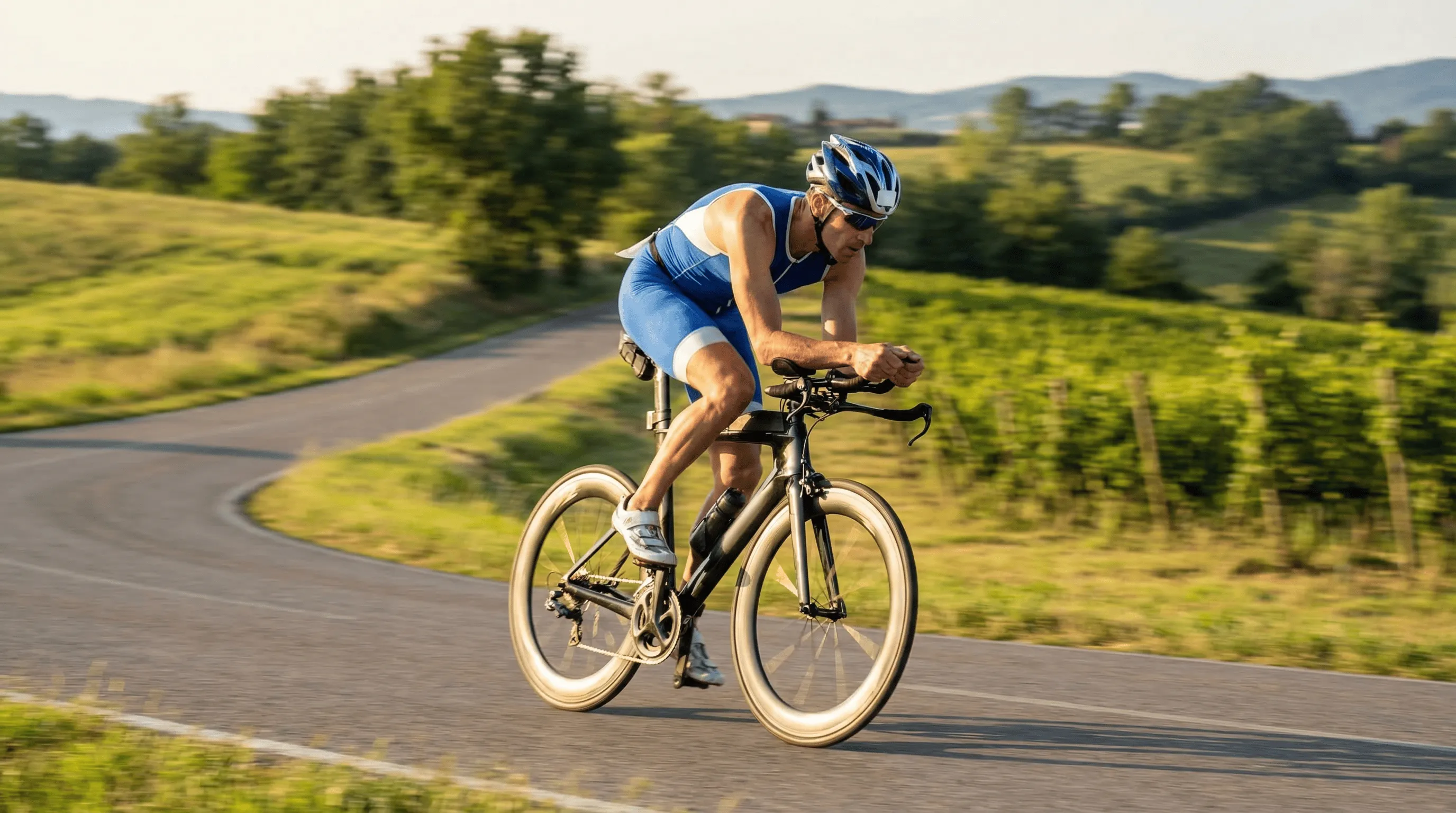
For riders prioritizing race performance over comfort, the Cervelo Soloist was the fastest bike in the test on flat and rolling terrain. Its aero tube shapes and stiffer overall frame made it notably quicker in our 40km TT tests, with average power-to-speed conversions suggesting a 1–2% speed advantage over the endurance bikes at equivalent power output. At $3,800, it's the most expensive bike in the test — but it's also clearly optimized for performance rather than all-day comfort.
The surprise performance standout was the Specialized Allez Sprint Comp — an aluminum bike that matched the carbon competition in power transfer and was clearly faster than its price ($2,300) suggests. If you're willing to sacrifice some comfort and don't care about material prestige, this bike punches well above its weight class.
Does Carbon Frame Material Actually Make You Faster?
The honest answer: it depends on the rider and the race. For flat-course triathlons and criteriums, the material of the frame is a minor factor compared to the rider's fitness, position, and wheel selection. For hilly road racing and gran fondos where comfort over 5+ hours matters, a quality carbon endurance frame provides meaningful benefits in reduced fatigue.
For age-groupers specifically, the research is fairly consistent: a $500 improvement in aerodynamic position (a bike fit, better aerobars, an aero helmet) delivers more speed per dollar than upgrading from aluminum to carbon at equivalent component levels.
The Bottom Line
Carbon is not magic. A well-made aluminum bike with a great fit will outperform a poorly fitted carbon bike every day of the week. The things that matter most — your position, your fitness, your wheels — are independent of frame material.
That said, the best carbon bikes in this test were genuinely better to ride for long distances. If your budget allows for it, the comfort dividend from a quality carbon endurance frame is real and worth having — particularly if you're targeting half-iron or full iron distances. If your budget is tight, don't compromise on fit or components to get a carbon frame. Spend that money on training instead.
The fastest bike is the one with the best-trained rider on it. Everything else is optimization.


