
Here's a training secret that will immediately offend your inner grinder: the athletes putting up the fastest times might be working out at a pace where they can hold a full conversation about the weather, their weekend plans, and their neighbor's suspicious landscaping choices. Welcome to polarized training — the method that sounds like cheating but is backed by a mountain of peer-reviewed science.

What Is Polarized Training, Exactly?
Polarized training — sometimes called the 80/20 method — is a training intensity distribution model developed and popularized by exercise physiologist Dr. Stephen Seiler, who spent years studying how elite endurance athletes around the world actually train. What he found surprised a lot of coaches: the best marathon runners, cross-country skiers, rowers, and yes, triathletes, weren't grinding away in the moderate "threshold" zone. They were doing roughly 80% of their training at low intensity and 20% at genuinely high intensity. Almost nothing in the middle.
The "polarized" name comes from the two poles: easy and hard. There's no mushy middle. That moderate zone — the one where you're working hard enough to feel tired but not hard enough to actually stimulate serious adaptation — is where most recreational triathletes live. And it's quietly destroying your potential.
The Science: Why Zone 2 Isn't for Wimps
Let's get into the physiology for a second, because this is where it gets interesting. Your aerobic system — the engine that fuels 90%+ of triathlon racing — is built at low intensities. When you train in Zone 1 and Zone 2 (below your first lactate threshold, roughly 65-75% of max heart rate), you're triggering mitochondrial biogenesis. Translation: you're building more mitochondria, the cellular powerhouses that burn fat and glucose for fuel. More mitochondria = more engine. It takes time, but it works.
A systematic review and meta-analysis comparing polarized training to threshold training found a moderate but consistent effect favoring polarized training for time-trial performance in trained endurance athletes. Studies have also documented superior improvements in VO2 peak, time to exhaustion, and peak power output compared to training models that hammer the moderate zone.
Here's the kicker: high-volume moderate-intensity training (a.k.a. the "gray zone") accumulates fatigue faster than it delivers adaptation. You end up chronically tired, slightly slower, and inexplicably scrolling through form advice at 11 PM. Polarized training breaks that cycle by keeping your easy days genuinely easy — which means you can actually go hard when the training calls for it.
The Strava Problem (And How to Survive It)
Let's address the elephant in the room wearing a Garmin watch. Polarized training requires you to slow down — sometimes dramatically. For athletes accustomed to staring at pace numbers, this is a psychological gut-punch. Your Zone 2 run might be a full 90 seconds per mile slower than your "comfortable" pace. Your Strava kudos will dip. Your training partners will lap you. Your ego will file a formal complaint.
Here's the deal: ignore it. The research doesn't care about your average pace on Tuesday's recovery jog. Elite Norwegian triathletes aren't grinding Zone 3 on their easy days because it makes a better Strava segment. They go embarrassingly slow so they can go legitimately fast when it counts. That's the trade. Take it.
If social validation is a real concern, set your Strava activities to private on easy days. Or rename them. "Active recovery shuffle" hits differently than "6-mile run @ 10:30 pace." You're protecting your training, not hiding it.
How to Restructure Your Triathlon Week
Implementing 80/20 polarized training across three sports sounds complicated, but the framework is straightforward. Here's how to think about it for a typical 10-12 hour training week:
Calculate Your Zones First
You can't execute polarized training without accurate zones. Use heart rate (not pace) as your primary guide, especially for running and cycling. The aerobic threshold — the upper limit of Zone 2 — is roughly the point at which you can speak in full sentences but wouldn't want to give a TED Talk. For most athletes, this is 130-145 bpm. Get a proper field test done, or use the nose-breathe test as a rough proxy.
The 80% Easy Block
The bulk of your training week looks like this:
- Long slow run: 60-90 minutes, fully conversational, heart rate locked in Zone 1-2. You should feel almost guilty about how easy it is.
- Long easy ride: 90-180 minutes, same story. If you're using a power meter, this is under 75% of FTP.
- Aerobic swim sets: Steady, controlled effort, focus on form. Not hammering 100s on the clock.
- Recovery bricks: Short combos at easy effort, building transition fitness without digging into your fatigue debt.
The 20% Hard Block
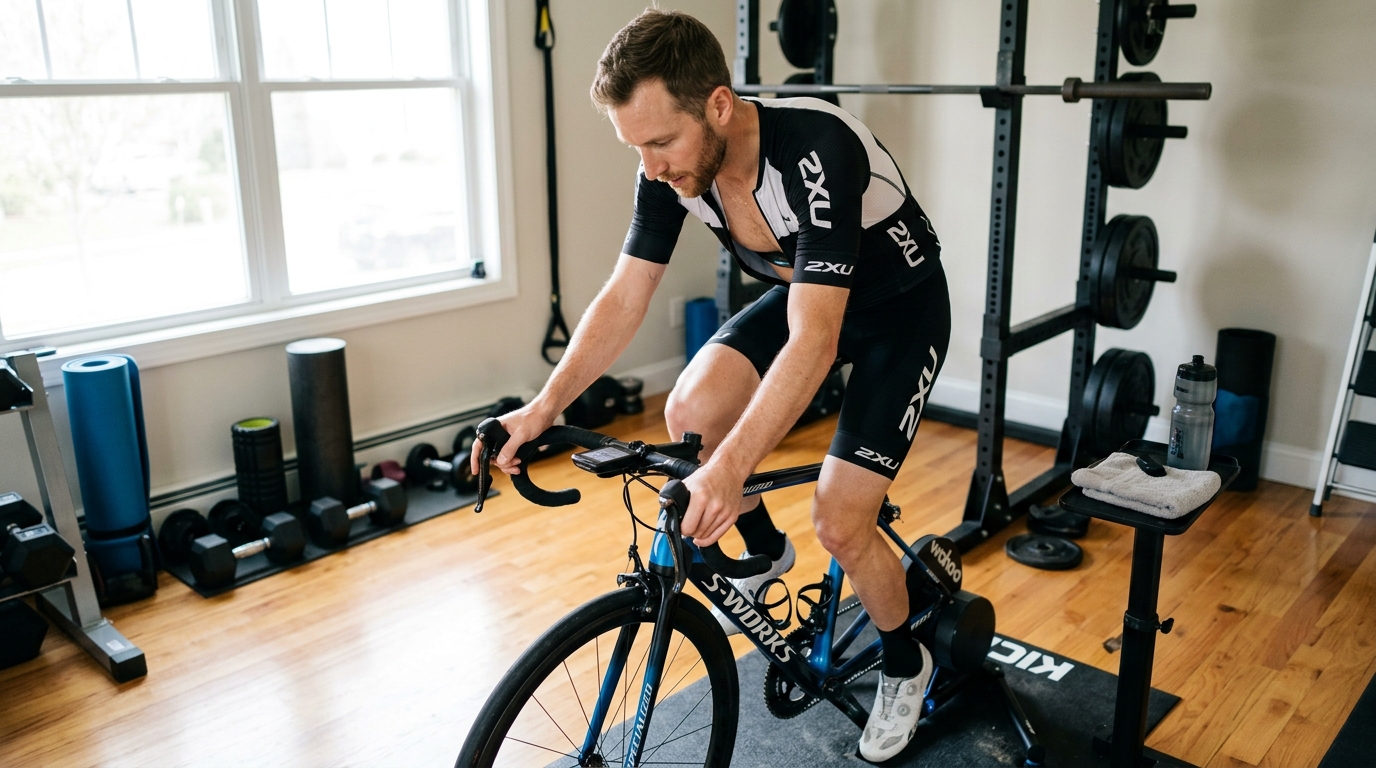
Two or three sessions per week go genuinely hard — not threshold, but hard. Zone 4 and 5 work. These sessions are short in duration but not negotiable in intensity. Half-hearted intervals defeat the entire purpose.
- Run intervals: 6-8 x 400m at 5K effort or faster, with full recovery between reps. Not jogging recovery — walking if needed.
- Bike VO2 efforts: 4-6 x 3-4 minutes at 110-120% FTP. These should feel like you're negotiating with your own body to keep going.
- Swim speed sets: 8-10 x 50m at race pace or faster, full rest. Quality over quantity.

Common Mistakes That Will Torpedo Your Polarized Plan
Mistake #1: Not Going Easy Enough on Easy Days
This is the number one mistake, full stop. Most athletes' "easy" runs are actually Zone 3 efforts. They feel easy because you're fit — but they're not stimulating the right adaptations and they're eating into your recovery. If people aren't asking if you're okay during your easy runs, you're probably still going too hard.
Mistake #2: Not Going Hard Enough on Hard Days
The flip side: if your hard days feel like "moderate-hard," you're back in the gray zone. High-intensity work needs to be high intensity. Zone 4+ intervals should feel uncomfortable in a very specific way — sustainable for the interval, not a pace you'd choose if given the option.
Mistake #3: Abandoning It After Two Weeks
Polarized training has a lag. Aerobic base adaptations are slow. Most athletes who try it for two weeks, don't see immediate speed gains, and bail are making a classic mistake. Studies showing polarized training superiority typically run 12 weeks minimum. Commit to at least one full training block — 12 to 16 weeks — before drawing conclusions.
Is Polarized Training Right for Every Triathlete?
Nearly — with a caveat. The research is strongest for trained athletes with an existing aerobic base. If you're a complete beginner, almost any structured training will improve performance. As you become more trained, the specificity of polarized training becomes increasingly important.
It's also worth noting that some elite athletes use a pyramidal distribution — slightly more Zone 2 volume than a strict polarized model — and see excellent results. The non-negotiable across all models: the gray zone (Zone 3, the moderate grind) should represent a minority of your training, not the core of it. That much is consistent across the literature.
The Bottom Line
The 80/20 polarized method is not a hack or a trend. It's a scientifically validated framework that explains how endurance athletes have been training for decades without knowing it had a name. Going slow — deliberately, intentionally, embarrassingly slow — is what builds the engine to go fast. The hard 20% is where you express that engine. Together, they produce results that moderate-intensity grinding simply can't match.
So slow down on Tuesday. Really slow down. Your race-day self will not be mad about it.
Now go find a quiet road and have a completely unnecessary conversation with your training partner about nothing important. That's Zone 2. That's the work.


