
You clicked "register." You paid the entry fee. You told your family. You posted on Instagram. And then someone in your local tri club said, "Nice — you'll probably spend another $8,000 before race day." You laughed. Then you Googled it. And now you're here.
The uncomfortable truth about Ironman is that the entry fee — already a substantial $850–$950 for a full-distance event — is almost the smallest line item in your first-year budget. By the time you're standing on the start line at dawn with your transition bags racked and your nutrition sorted, a typical first-timer has spent between $5,000 and $15,000. Some spend more. Very few spend less.
Here's the complete, no-BS breakdown — what it actually costs, where the money goes, and where you can trim without hurting your race.
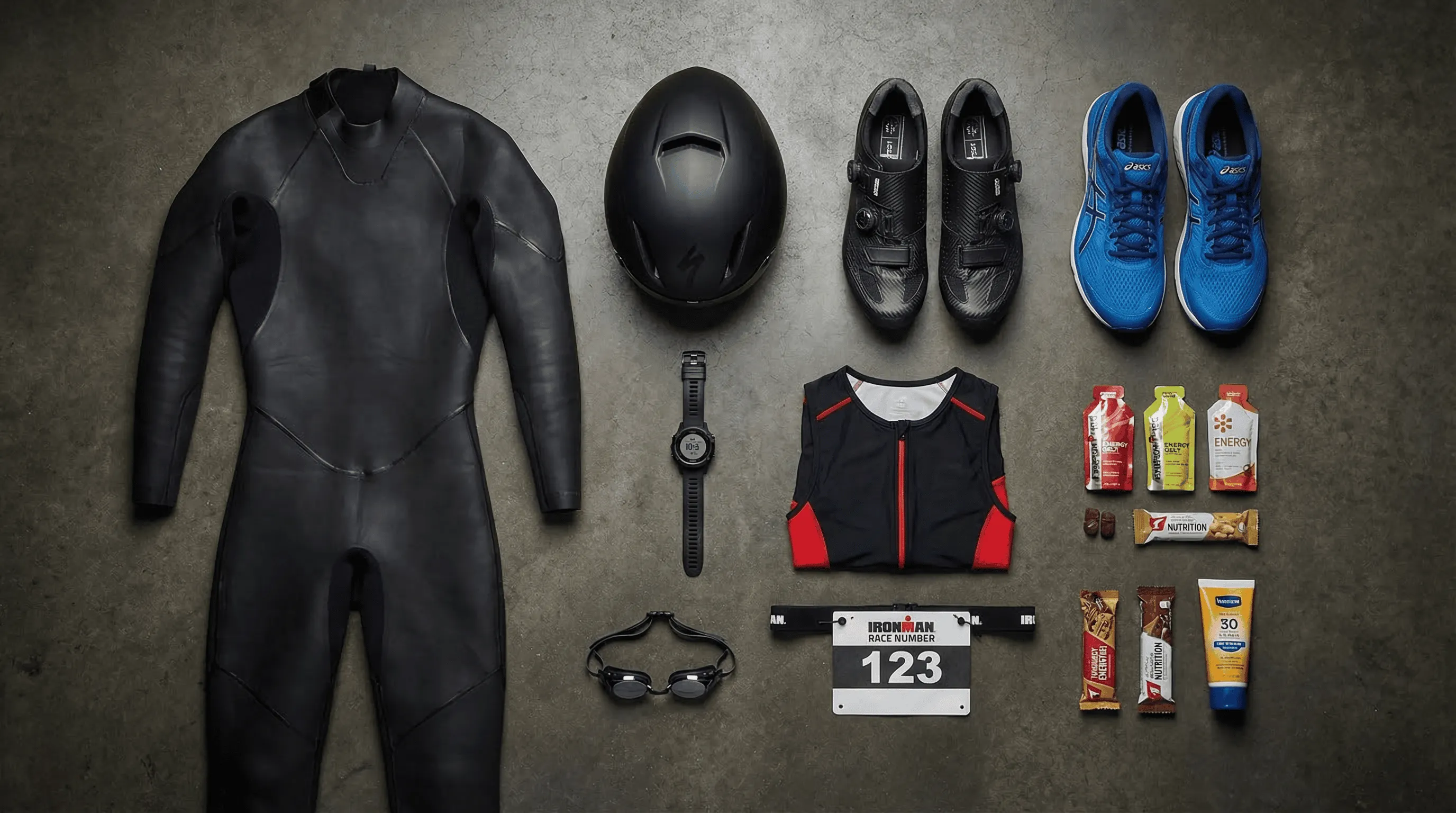
The Registration Fee: $850–$950
Let's start with the obvious. Ironman full-distance entry fees have climbed steadily and now sit at around $850–$950 for most North American events, and often higher for marquee races like Kona, Boulder, or Chattanooga. Registration opens months (or years) in advance, and popular events sell out in hours.
On top of the base entry, budget for a roughly $60–$80 timing chip / membership fee if you're not already a Ironman/WTCS member. Total: ~$900–$1,050.
The Bike: $1,500–$8,000+
This is the biggest purchase most first-timers face, and the one with the widest variance. Your options:
- Road bike with clip-on aerobars: If you already have a decent road bike, $80–$200 for a set of clip-on bars (Profile Design, Zipp) gets you racing in a semi-aero position. Not ideal, but it absolutely works for a first Ironman.
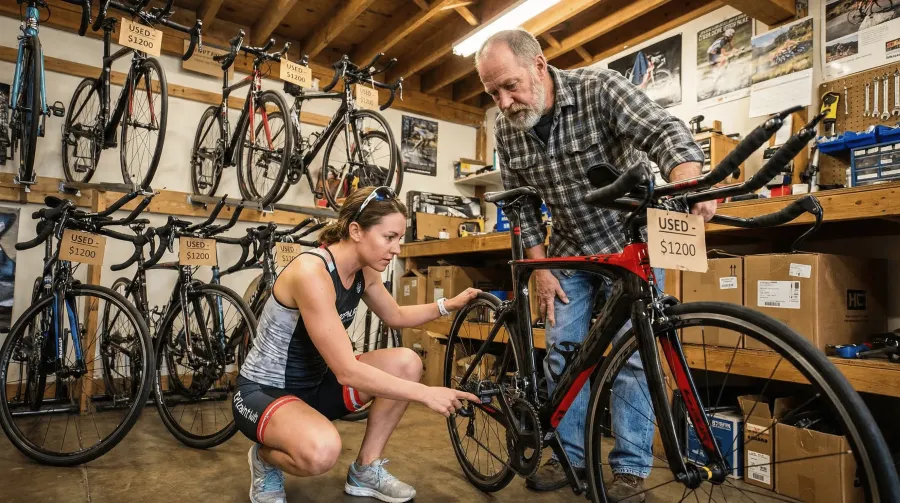
- Used entry-level TT bike: $1,500–$3,500 for a used Cervelo P2, Trek Speed Concept, or Felt IA. This is the sweet spot for most first-timers. You get a purpose-built TT geometry without the heart-stopping price tag of new.
- New mid-range TT bike: $3,000–$6,000 for a new Canyon Speedmax CF, Cervelo P-Series, or similar. Significant upgrade in aerodynamics and fit options, but hard to justify financially if this is your first race.
- Full aero weapon: $7,000–$15,000+ for a Specialized Shiv S-Works, Trek Speed Concept SLR, or Cervelo P5. These are exceptional bikes. They are not what first-timers need.
Honest recommendation: find a clean used TT bike in your budget, get it professionally fitted, and ride it. The person who shows up trained and well-rested on a $2,500 used Cervelo will outperform the under-trained athlete on a $10,000 bike every single time.
Wetsuit: $150–$700
A triathlon wetsuit is non-negotiable for most open-water swims. It provides buoyancy, warmth, and meaningful speed gains — studies suggest 60–90 seconds per kilometer compared to swimming without one.
- Entry-level (Xterra Vector Pro, Zone3 Advance): $150–$250. Totally fine for a first Ironman. You'll outgrow it as your technique improves, but it does the job.
- Mid-range (Blueseventy Reaction, Zone3 Vanquish): $300–$500. Better flexibility, better buoyancy panels, more durable. This is where most serious age-groupers land.
- Premium (Blueseventy Helix, Orca Predator): $500–$700+. Excellent suits. Meaningful marginal gains. Hard to justify for your first race.
One tip: rent before you buy if you're unsure about swimming in open water. Many events have wetsuit rentals. And always try before buying — a suit that doesn't fit will actively slow you down.
Helmet: $60–$400
You need a helmet to race. A safe road helmet in the $60–$120 range is legally fine. But if you're on a TT bike and care about aero, a dedicated aero helmet in the $120–$400 range is worth considering. The Giro Aerohead, Lazer Bullet, and Bell Javelin are popular mid-tier options. The marginal aero gain over a standard road helmet is real — roughly 5–30 watts depending on head position — but for a first-timer, it's a lower priority than the bike fit and position.
GPS Watch / Garmin: $300–$700
You need a multi-sport GPS watch to track pace, heart rate, power (if you have a power meter), and manage transitions. The Garmin Forerunner 955 (~$500) is the current sweet spot — capable, reliable, and with enough battery for a full Ironman. The Forerunner 745 (~$350 used) is a solid budget option. The Fenix and Enduro lines offer more features but are overkill for most age-groupers.
If you already have a quality GPS watch, check whether it supports multi-sport modes before upgrading. Many do.
Race Wheels: $500–$3,000+
Aero wheels are one of the most impactful performance upgrades on the bike — potentially saving 2–5 minutes on the 112-mile Ironman bike leg at amateur speeds. But they're expensive, and for a first race, they're optional.
- Budget option: Rent wheels for race day. Many bike shops and some race expos offer aero wheel rentals for $100–$200/day.
- Used entry-level aero wheels (Zipp 404, Enve 4.5): $500–$1,000 for a used set. Substantial gains, more manageable price.
- New mid-range: $1,500–$3,000. Flo Cycling, Hunt, Zipp 303 — all excellent. This is a later-year upgrade for most.
First-timer recommendation: skip the wheel upgrade entirely for your first race. Ride the wheels that came with your bike, focus on the fitness, and revisit wheels for race #2.
Nutrition: $400–$1,200/year
People underestimate this one. Ironman training means 15–20 hours of weekly volume at peak — and you need to fuel every session above about 90 minutes. Budget for:
- Training nutrition (gels, bars, electrolytes, recovery drinks): $50–$100/month during base and build phases
- Race-day nutrition (your specific tested protocol): $30–$80 for race-day products
- Nutrition testing over long training rides: this is genuinely important and often overlooked. Race with what you train with.
Tri Kit and Accessories: $200–$500
A good triathlon suit (tri kit) that you can wear for the full swim-bike-run is essential. Budget $80–$200 for a decent one. Add in swim cap, goggles ($20–$60), running shoes (if you need new ones: $120–$200), cycling shoes ($80–$250), and a race belt ($10–$30). All in: $200–$500 for kit and accessories.
Training Costs: $300–$2,400/year
Depending on your setup:
- Pool membership: $30–$80/month
- Coaching: Online coaching ranges from $100–$400/month; good self-coached athletes using platforms like TrainingPeaks or Garmin Connect can do it for much less
- Trainer subscription (Zwift, etc.): $15–$20/month
Travel and Lodging: $500–$3,000+
This one depends heavily on where your race is. If it's a drive from home: $200–$500 (hotels near the race are always booked 12+ months out, so plan early). If it's a fly-in destination race: $1,000–$3,000 for flights, 3–4 nights of lodging, bike shipping or rental, and meals.
The Budget Tiers at a Glance
- Budget first-timer (road bike + clip-ons, entry-level wetsuit, no aero wheels): $3,000–$5,000 total
- Typical first-timer (used TT bike, mid-range wetsuit, decent kit, local race): $5,000–$8,000
- Goes-all-in first-timer (new TT bike, aero wheels, premium kit, destination race): $10,000–$15,000+
Where to Save Without Hurting Your Race
- Buy used — aggressively. The triathlon upgrade cycle is constant. There are excellent used TT bikes, wetsuits, and wheels available at significant discounts. Check eBay, Slowtwitch classifieds, and local tri club groups.
- Skip the aero wheels for year one. Fitness beats aero at your current level. Train more, spend less.
- Self-coach. There are excellent free and low-cost training plans (Matt Fitzgerald, Joe Friel, Triathlete's free plans) that will get you to the finish line without paying $300/month for a coach.
- Book accommodation early. Ironman host hotels sell out fast and the prices spike. Book the moment registration opens.
What You Absolutely Cannot Cheap Out On
- Bike fit. A proper fit on whatever bike you're riding is the highest-ROI investment you can make. $150–$300 for a professional fit will save your back, knees, and minutes over a 112-mile course.
- Race nutrition. Do not experiment on race day. Spend the training months testing your nutrition strategy — what gels, how often, what electrolytes. A GI blowup at mile 60 on the run will cost you far more than the gel you chose to save money on.
- A safe helmet. Don't race in a broken or expired helmet. This is non-negotiable, full stop.
The Bottom Line
Ironman is an expensive sport. The costs are real and it's worth going into your first race with eyes open. But here's the thing that the gear forums won't tell you: the people who cross that finish line at midnight — the ones who are sobbing and barely moving — most of them are not riding $12,000 bikes. They're riding whatever they could afford, in whatever kit they could find, with months of training in their legs and a very clear sense of why they signed up in the first place.
Spend smartly. Train consistently. And when race day comes, trust the process — not the gear. The finish line is the same distance away regardless of how much you paid to get there.


