
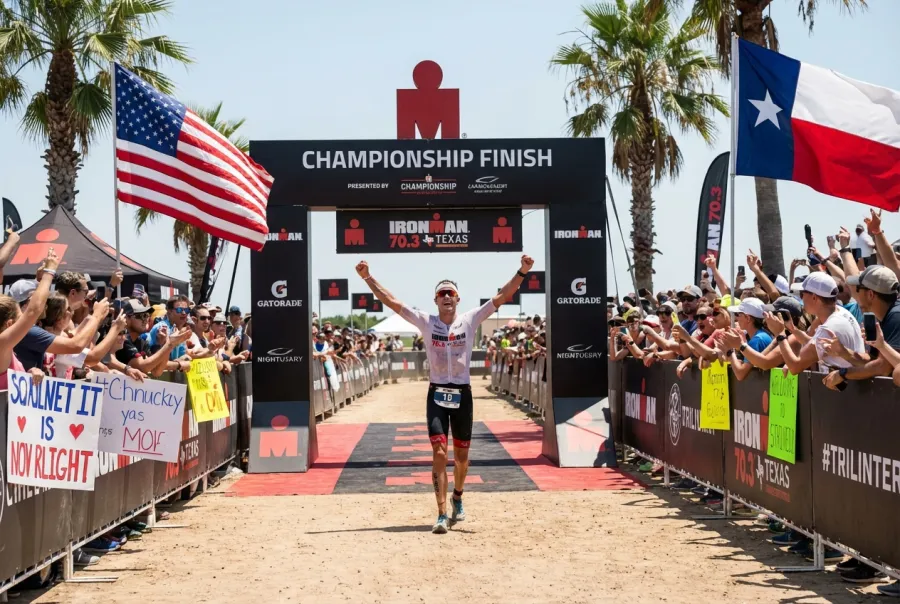
On a blustery Texas morning, with winds strong enough to rearrange your race plan and potentially your soul, Lionel Sanders announced himself as the man to beat in 2026 — and he did it at the inaugural IRONMAN 70.3 Dallas-Little Elm with a performance so dominant it made a 2:28 gap look polite.
Welcome to March 15, 2026, where the weather threw everything at the pro field and Lionel Sanders essentially said, "Cool, I train in Canada." Here's what happened, what it means, and why the rest of the IRONMAN Pro Series field should be mildly terrified heading into the season.
When Nature Canceled the Swim (Sort Of)
Let's start with the elephant in the room — or more accurately, the gale-force winds in the lake. Strong winds and currents at Lewisville Lake forced race officials to pull the plug on the standard 1.9-kilometer professional swim, replacing it with a shortened 350-meter time-trial format. Age-groupers had their swim canceled entirely, which, honestly, some of them probably count as a win.
For Sanders, this was manna from heaven. Swimming has historically been the crack in his otherwise formidable armor — the man's a diesel engine on two wheels and can run like the devil's on his heels, but open water has occasionally been where he gives time away. A 350-meter splash instead of a 1.9km slog? Consider the field warned: the world's most relentless bike-run combination was now arriving at T1 with everyone essentially equal.
The Bike: A 56-Mile Statement
The 56-mile bike leg through rural Texas is where Sanders went to work. Within the first 10 miles, he was already threading his way through the field. By mile 23, he'd moved into second, sitting just 11 seconds behind Germany's Leonard Arnold. It didn't stay that way long.
Sanders took the lead and began to build. By the time he and Arnold arrived at T2, they had carved out a nearly three-minute gap over the pursuing pack — a gap that tells you everything about what Sanders' training block looked like over the winter. His final bike split was enough to leave the field staring at his rear wheel (metaphorically — drafting is not the vibe).
- Sanders' finish time: 3:17:12
- Ben Kanute (USA): +2:28 back
- Andrea Salvisberg (SUI): +2:33 back
- Jannik Schaufler (GER): +2:42 back
- Sam Appleton (AUS): +4:16 back
That gap doesn't happen by accident. A 12-week training block leading into a season opener, a course that rewarded raw power over swim fitness, and the mental composure of someone who has raced at the very top of this sport for a decade — it's a recipe for a statement performance, and Sanders delivered.
The Run: In Case You Forgot Who He Is
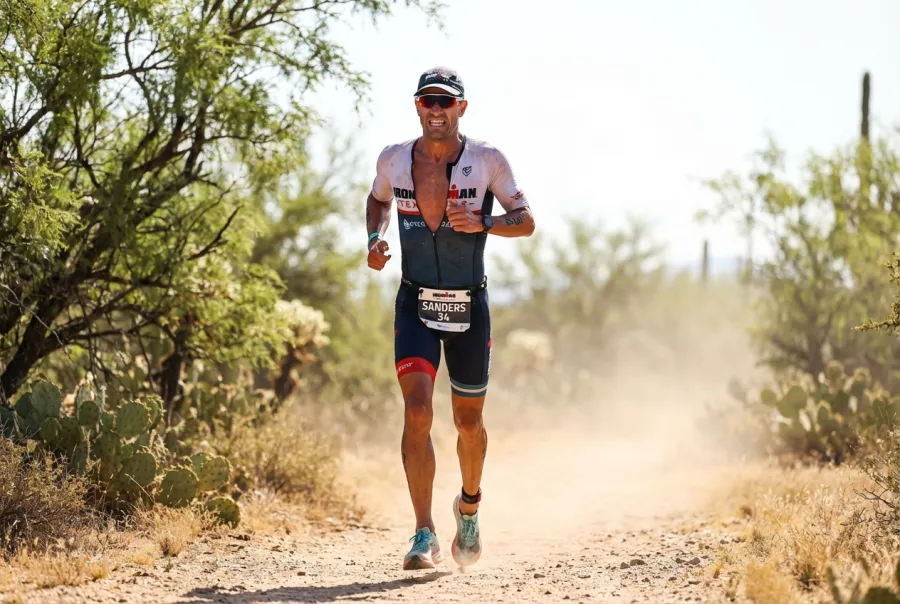
If the bike was a warning, the half marathon was the closing argument. The 13.1-mile run wound along the Little Elm nature trail system — scenic in photos, brutal in practice, the kind of terrain that whispers sweet nothings to your legs while quietly destroying them. Sanders ran a 1:11:53 half marathon split. On trails. After hammering a 56-mile bike ride. In Texas wind.
He surged early, steadily extended the lead, and crossed the line with the kind of margin that doesn't invite speculation about "what if" scenarios. The win was comprehensive. There's no asterisk, no caveat, no "well, the swim was shortened." He simply outbiked and outran a world-class field on a day that was physically demanding for everyone.
The Women's Race: Hering's Penalty-Defying Masterclass
While Sanders was methodically disassembling the men's field, the women's race was delivering a proper thriller — complete with a villain twist, a dramatic chase, and a finish line moment that will live in Dallas triathlon lore for approximately as long as it takes someone to Google "inaugural IRONMAN 70.3 Dallas results."
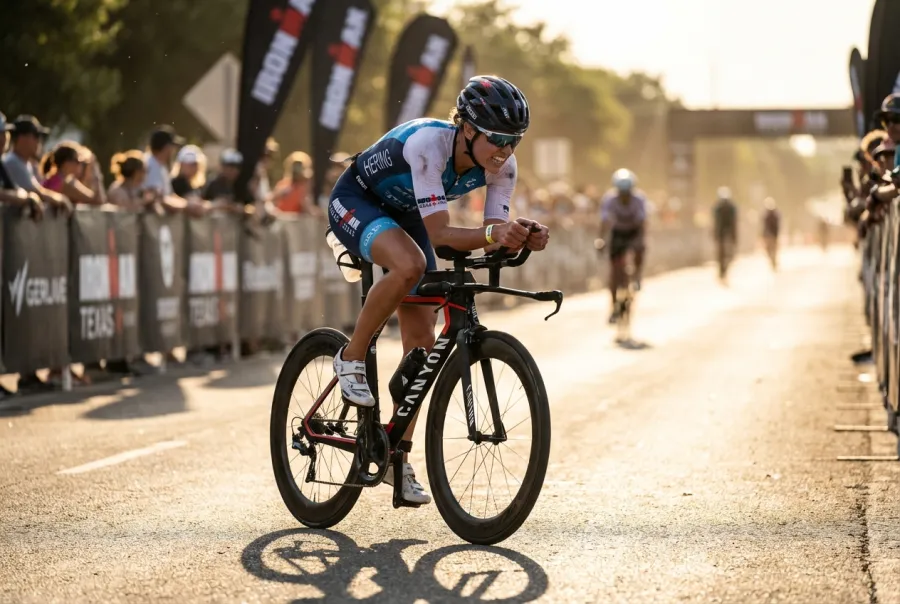
Jackie Hering (USA) won. But first, she had to survive a two-minute drafting penalty on the bike.
Here's how it happened: strong wind gusts caused Hering and Germany's Anna Buettner to involuntarily drift closer together on the bike course. A race referee flagged Hering for a drafting infraction, and she had to pull over and serve the full two minutes — watching precious time tick away while Buettner and others rode on. Most athletes would have mentally unraveled. Hering filed it away and got back to work.
"She didn't fold. She served the time, and then she went out and showed every athlete who's ever DNF'd on a bad penalty day what composure actually looks like."
Hering ran her way back into contention, tracking Buettner through the half marathon while the German athlete held a 20-30 second lead for most of the run. With 3 kilometers to go, Hering noticed Buettner beginning to crack. She pounced. With everything left in the tank, she ran Buettner down and crossed the line 18 seconds clear — final time 3:49:57. Buettner finished second (+0:18), with Annamarie Strehlow (USA) taking third (+3:03).
The margin was 18 seconds. She was given a 2-minute penalty. You do the math.
What These Results Signal About 2026
Sanders has publicly stated his primary target for 2026 is the IRONMAN World Championship in Kona. He's chasing the one title that has remained stubbornly out of reach for one of the sport's most dedicated competitors. Everything he does this season — every race, every training block, every tactical decision — is building toward that October date in Hawaii.
What Dallas tells us is that the platform is solid:
- The bike-run engine is firing: A dominant 56-mile bike and a 1:11:53 trail half marathon are not warm-up numbers. The fitness is there in March, which bodes well for a peak effort in October.
- Race savvy is intact: Sanders managed his effort intelligently, built a gap when it mattered, and didn't leave anything to chance. This is a veteran athlete in full control of his race.
- The field is legit: Kanute, Salvisberg, Schaufler, and Appleton are no pushovers. Beating them by over two minutes in conditions that tested everyone isn't a soft win.
For Hering, the question now is whether she can carry this form — and more importantly, this mental toughness — through the season. Any athlete who can absorb a two-minute penalty mid-race and still find the legs to outsprint her nearest rival to the line has something that can't be coached. That's the kind of psychological armor that wins championships.
The Bottom Line
The inaugural IRONMAN 70.3 Dallas-Little Elm didn't just give us a race. It gave us a preview. Sanders is locked in, Hering is dangerous, and the 2026 IRONMAN Pro Series is setting up to be genuinely compelling. If you think Kona is going to be business as usual, watch what happens when a man who trains through Canadian winters finally peaks on the Big Island.
The season is one race old. Take notes.


