
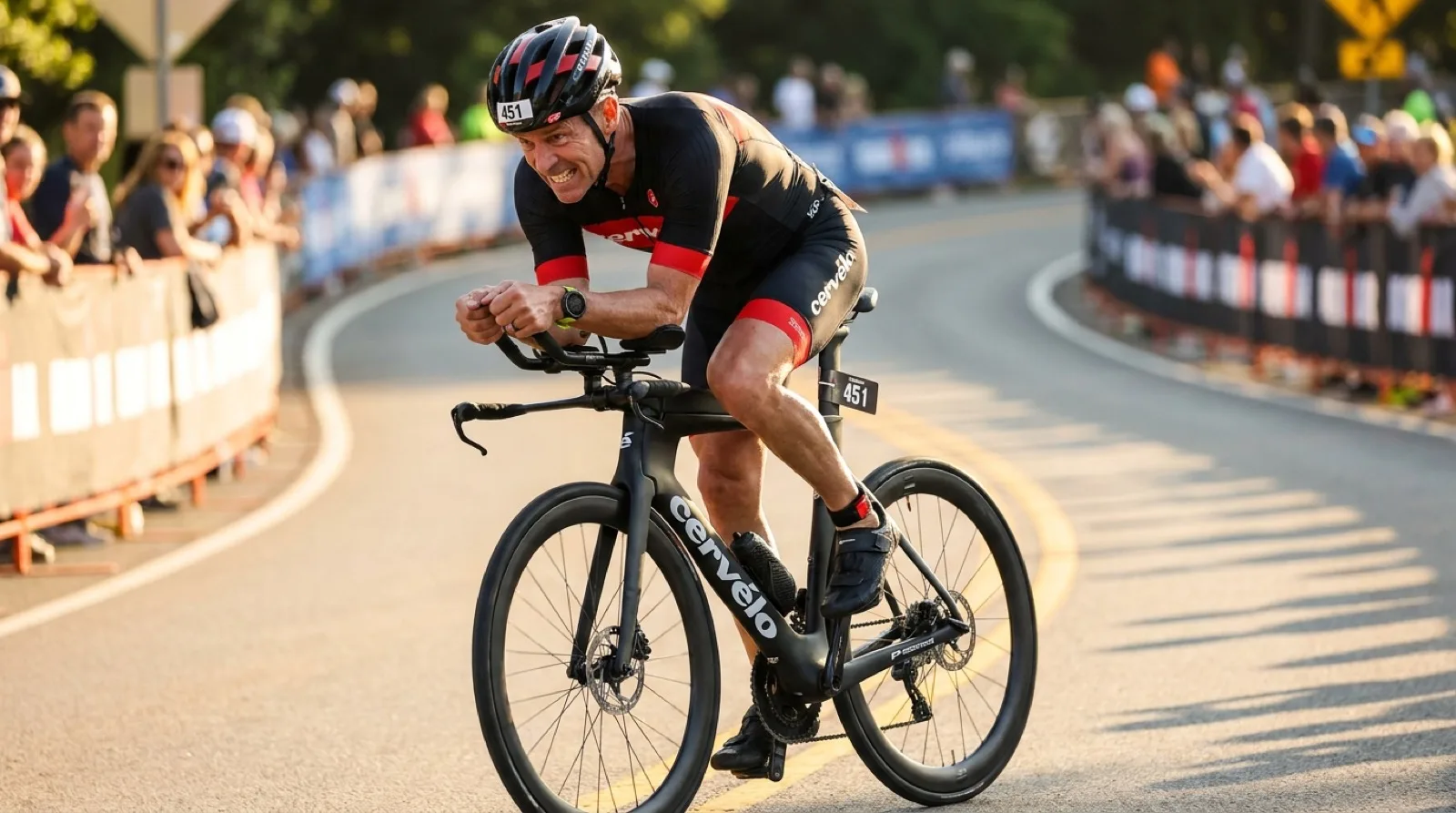
You've been racing since before some of your age-group competitors were born. You know how to suffer. You know your body. You've probably got more race finishes than most coaches you'd hire have years in the sport. And yet — something's different. The Tuesday intervals that used to leave you tired and sharp now leave you wrecked for three days. The 18-hour training weeks aren't buying you what they used to. Your times have slipped and you can't figure out if you should push harder or back off.
Here's the honest answer: neither. You need to train differently.
Masters athletes — broadly defined as 40+, but the real physiological shift hits around 50 — are the fastest-growing demographic in triathlon. And they're almost completely underserved by training science communication. Most guides, plans, and coaching protocols assume a 30-year-old recovery window. They're not wrong for that athlete. They're just not written for you.
This guide is.
What Actually Changes After 50 (With Numbers)
Understanding the physiology isn't about accepting limitations — it's about knowing the battlefield. Here's what's happening in your body that you need to account for:
VO2max Decline
After age 25, VO2max declines at roughly 1% per year in sedentary individuals. In trained athletes, that rate is slower — closer to 0.5–0.7% per year through the 40s. But after 50, research from the Journal of Applied Physiology shows the rate often accelerates to 1–2% per year, even in well-trained masters athletes. By your mid-50s, you may be working with a VO2max that's 10–15% lower than your peak, regardless of training volume.
What this means practically: your ceiling for sustainable race pace is lower. Fighting this with more volume is like trying to fix a fuel efficiency problem by driving faster.
Hormonal Shifts
Testosterone (in men) declines approximately 1–2% per year after age 30, with the slope often steepening after 50. In women, the menopausal transition causes estrogen and progesterone to drop sharply — estrogen affects not just recovery but also bone density, joint lubrication, and thermoregulation during exercise.
These aren't excuses — they're levers. Lower anabolic hormones mean your body is less efficient at rebuilding after hard efforts. You produce the stress signal; you just can't respond to it as fast.
Muscle Protein Synthesis (MPS) Slowdown
Studies from the University of Exeter and others show that MPS rates in response to resistance exercise decline by roughly 30–40% after age 60 compared to younger adults, with measurable changes beginning around 50. This is sometimes called "anabolic resistance." Your muscles still adapt — they just need more stimulus and more recovery time to do it.
Longer Recovery Windows
Research published in the International Journal of Sports Physiology and Performance found that masters athletes (50+) required on average 48–72 hours to return to baseline performance metrics after a high-intensity session, compared to 24–36 hours for athletes under 35. In practical terms: the Tuesday/Thursday hard session structure that works brilliantly for a 35-year-old will grind a 52-year-old into the ground within three weeks.
The Three Training Adjustments That Actually Move the Needle
1. More Recovery Days (Not Fewer Hard Days)
The instinct when performance drops is to add volume or intensity. Resist it. The adjustment that masters athletes resist most — and benefit from most — is building mandatory recovery into the weekly structure rather than treating it as something you earn by performing well.
A framework that works: cap hard sessions at 2 per week per discipline, down from 3. Add a minimum of one full rest day and two active recovery days (easy spin, walk, mobility). This feels like you're doing less. You are doing less — and you'll race faster because of it.
The science backs this up. A 2019 study in Frontiers in Physiology found that masters endurance athletes who reduced training frequency (while maintaining intensity) saw better performance outcomes than those who maintained high frequency. Quality over quantity is not a consolation prize at 50 — it's optimal strategy.
2. Strength Training Is No Longer Optional
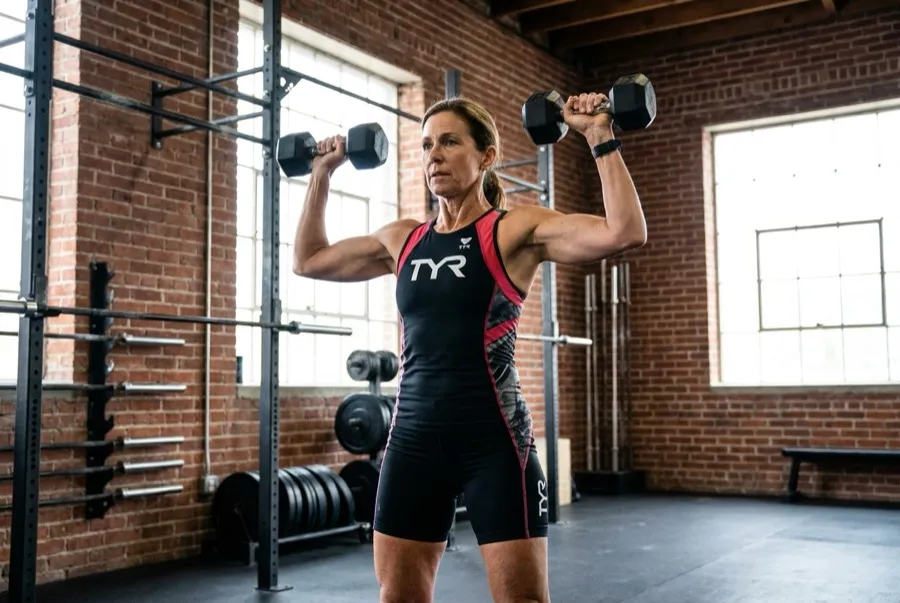
If you're still treating the weight room as something you do in the off-season or when injured, that needs to change immediately. For masters athletes, strength training is not cross-training — it's primary training.
Here's why: sarcopenia (age-related muscle loss) accelerates after 50, with untreated individuals losing up to 3–5% of muscle mass per decade. In a sport where power-to-weight ratio determines your bike split and run economy, this is catastrophic if left unaddressed.
Two strength sessions per week, year-round, is the evidence-backed standard. Focus on compound movements: trap bar deadlifts, Bulgarian split squats, single-leg Romanian deadlifts, hip thrusts. Heavy enough to challenge — 3–5 sets of 4–6 reps at 75–85% of 1RM for the primary lift. Pair with upper body pulling and core anti-rotation work. Get it done in 45–60 minutes.
3. Intensity Distribution: More Polarized, Less Gray Zone
The "moderate hard" zone — around 75–85% of max heart rate, the zone where most self-coached athletes spend most of their time — is the worst zone for masters athletes. It's too hard to recover from quickly and not hard enough to drive the adaptations you're chasing.
The evidence increasingly favors a polarized model: approximately 80% of sessions at genuinely easy intensity (Zone 1–2, conversational pace, nose breathing) and 20% at genuinely high intensity (Zone 4–5, race pace or faster). The Norwegian system of double-threshold training is getting attention, but for most masters athletes the simpler insight is: go easy enough on your easy days to go hard enough on your hard days.
A practical test: if you can't hold a full conversation, you're not in Zone 2. Most athletes' perceived Zone 2 is actually Zone 3. Slow down. It will feel wrong at first. It works.
Sleep: The Most Underrated Performance Lever After 50
At 30, you could train hard, sleep 6 hours, and mostly get away with it. At 52, you cannot. Sleep is when the majority of growth hormone is released — and growth hormone is one of the primary drivers of tissue repair and muscle protein synthesis. After 50, GH secretion is already reduced; cutting sleep compounds the problem dramatically.
Research from Matthew Walker's lab at UC Berkeley and others shows that sleep deprivation (under 7 hours) increases cortisol, impairs glucose metabolism, and reduces testosterone — creating a hormonal environment that is essentially the opposite of what a masters athlete needs for recovery.
The standard: 8–9 hours per night during heavy training blocks. Not a recommendation — a training variable. Miss two nights of good sleep before a key session and that session is compromised before you start.
Practical tactics: consistent wake time (even on weekends), cool room (65–68°F / 18–20°C), no screens 30–60 minutes before bed, and if alcohol is in your life, understand it crushes sleep architecture even when it doesn't feel like it does.
Nutrition Shifts That Matter for Masters Athletes
Higher Protein Requirements
The old RDA of 0.8g protein per kg of bodyweight is inadequate for masters athletes. Current sports nutrition research suggests 1.6–2.2g per kg per day for active individuals, with some evidence pointing toward the higher end specifically for masters athletes dealing with anabolic resistance.
Timing matters too. Distribute protein across 4–5 meals at 35–40g per meal rather than the classic endurance-athlete pattern of carb-heavy meals with protein as an afterthought. Post-training protein consumption within 30–60 minutes remains important — leucine-rich sources (whey, eggs, meat) are most effective at triggering MPS.
Creatine: The Evidence Is Compelling
Creatine monohydrate is one of the most studied supplements in exercise science, and its benefits for masters athletes are increasingly documented. A 2021 meta-analysis in the Journal of the International Society of Sports Nutrition found significant benefits for muscle mass retention, strength, and cognitive function in adults over 50.
Standard dosing: 3–5g per day, no loading phase necessary, taken consistently. It's not a performance-enhancing drug in the doping sense — it's a nutrient your aging muscles are increasingly inefficient at synthesizing themselves. Worth adding if you haven't.
Anti-Inflammatory Foods
Chronic low-grade inflammation increases with age and compounds training-induced inflammation. Consistently prioritizing anti-inflammatory foods — fatty fish (omega-3s), turmeric, berries, leafy greens, olive oil — isn't a wellness cliché for masters athletes; it's a recovery tool. Tart cherry juice (480ml/day) has legitimate research behind it for reducing exercise-induced muscle damage. Consider it in heavy training blocks.
A Sample Masters Training Week
This is a moderate-volume week during a build phase. Adjust based on your A-race timeline:
- Monday: Full rest or 20-min easy walk. Sleep 8+ hours.
- Tuesday: Swim — technique + threshold sets (main set: 8×100 at CSS pace, 20 sec rest). 45–60 min total.
- Wednesday: Strength training (45–60 min) + easy 30-min run (Zone 1–2 only).
- Thursday: Bike — long Zone 2 ride (2–2.5 hrs). No intensity. Truly easy. Fueled throughout.
- Friday: Run — hard session. 4×8 min at Zone 4 with 3 min jog recovery. Strength optional (light, not to failure).
- Saturday: Long ride (3–4 hrs, 85% Zone 2, final 20–30 min at race pace). Followed by 15-min easy brick run.
- Sunday: Long run (90 min easy, Zone 1–2). Optional swim in PM — easy, technique-focused.
Total weekly hours: approximately 12–14. That's intentionally moderate. A well-recovered masters athlete at 12 hours will outrace an overtrained masters athlete at 18 hours every time.
You Can Still PR. You Can Still Podium.
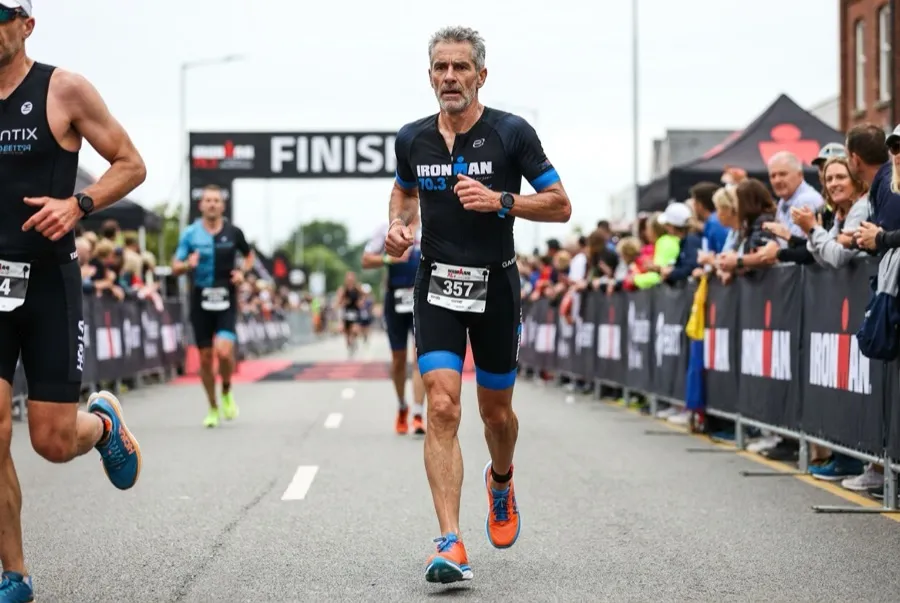
Here's the thing no one says enough: masters athletes are not on a slow slide into irrelevance. Lorraine Lorblanchet set a world record in the 55–59 age group at Kona at age 57. Jan Frodeno, at 43, is still racing elite. Countless age-groupers post their fastest 70.3 times in their 50s — not by training harder, but by training smarter and recovering completely.
The athletes who struggle after 50 are typically those who refuse to adapt. They train like they're 38 and wonder why they're always injured or tired. The athletes who thrive are the ones who treat recovery as training, take sleep seriously, make strength work non-negotiable, and race with the patience that only comes from actually knowing how to suffer.
That's you. You've got the experience. Now you have the framework to match it.
The sport still owes you some fast races. Go get them.


