
Here's the thing about the gun going off at the start of a triathlon: your body doesn't care how many training miles you logged. It cares about whether your nervous system thinks it's ready. And in 2026, the gap between good triathletes and great ones isn't just in watts-per-kilo or swim splits — it's happening six inches behind your eyeballs.
Mental visualization has been the not-so-secret weapon of elite athletes for decades. But what's changed recently is that it's no longer just a fuzzy "picture yourself winning" suggestion from a motivational poster. It's become a structured, science-backed discipline — and with AR/VR course previews now accessible to age-groupers, the mental training revolution is officially democratized.
Why Your Brain Doesn't Know the Difference
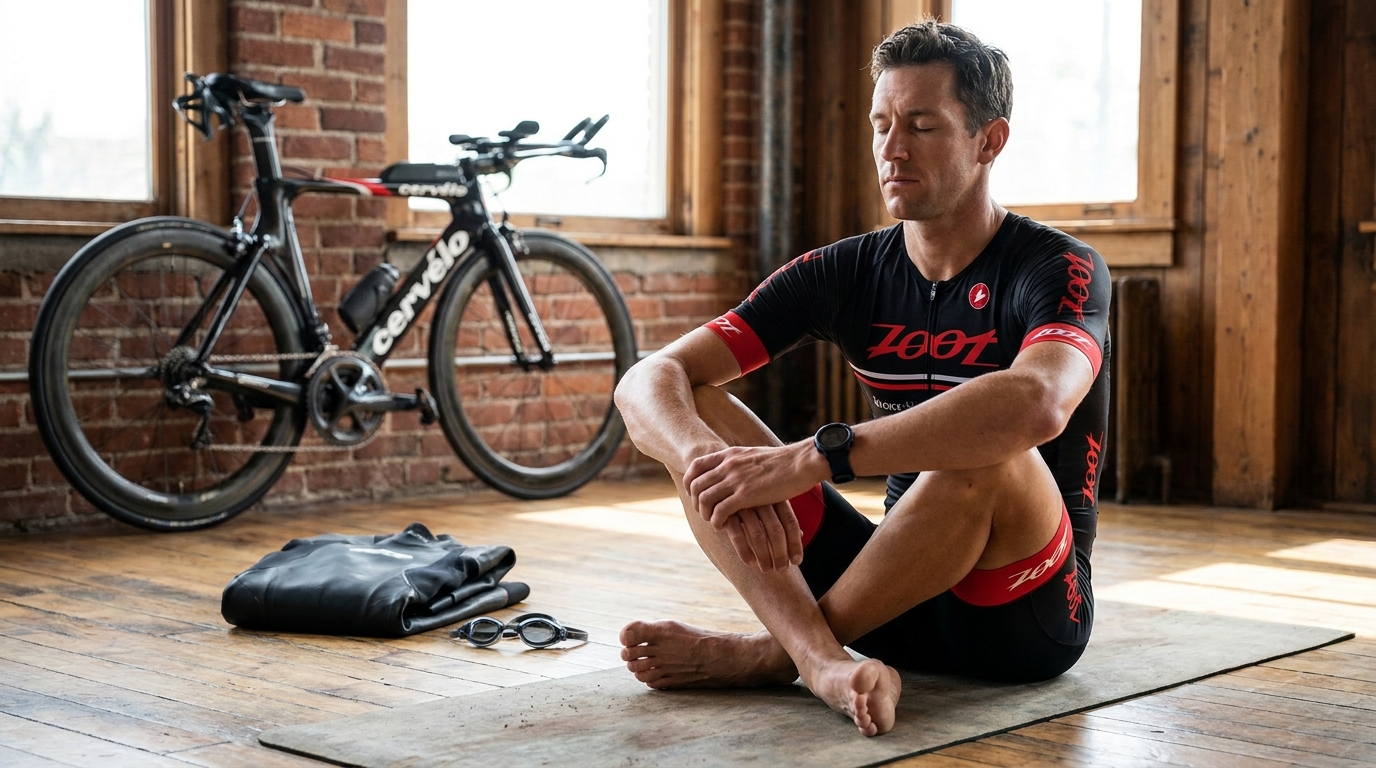
This is the wild part: when you vividly imagine performing a physical action, your brain fires many of the same neural pathways as when you actually do it. Functional MRI studies have confirmed this for decades. Your motor cortex, your cerebellum, your sensory cortex — all lighting up, all rehearsing, all getting reps in while you're sitting on your couch in compression socks.
For endurance athletes, this translates into something genuinely powerful. Every mental rep is low-impact cross-training for your nervous system. You're not building lactate tolerance from your couch, obviously, but you are programming your automated responses, your decision-making pathways, and — critically — your emotional regulation under pressure.
"I use mental visualization to prepare for races. Rio is a very tough bike course — there are big hills, and there's a technical descent that will be a major factor." — Gwen Jorgensen, two-time triathlon world champion
Jorgensen didn't just imagine a nice race. She used a 360-degree VR recording of the Rio Olympic bike course — filmed from car height to match a cyclist's eye-line — to study every pothole, every turn radius, every hill gradient. Her competitors had to physically travel to Brazil to preview the course. She loaded it on a Samsung headset and did it from wherever she happened to be training that week.
VR and AR Course Previews: No Longer Just for Olympians
In 2026, consumer VR hardware is cheap enough and good enough that age-group triathletes are starting to use course preview technology that would've required an Olympic budget five years ago. Most major races publish course footage — many in 360-degree formats. Google Street View covers most bike and run routes. Platforms like Rouvy and Zwift offer immersive course simulations with actual gradient data baked in.
If you're racing Kona or IRONMAN 70.3 World Championships, there's rich video content of every segment available. But even your local sprint tri can be previewed via satellite imagery, athlete Strava flyovers, and YouTube race-day footage. The resources exist. The question is whether you're using them.
A practical pre-race VR/visualization stack:
- Course recon video: Watch 2-3 race-day videos from athlete POVs on YouTube. Pay attention to T1/T2 layouts, run aid station positions, and bike turns that look sharper than they appear on the map.
- 360° walkthroughs: Google Street View the run and bike segments. Zoom in on anything that looks technically demanding.
- Rouvy / Zwift simulation: If the course is available, ride it virtually at race-day effort. Feel the gradient changes before you're eight hours into an IRONMAN.
- Mental replay sessions: Once you have the visuals loaded in your brain, do 10-minute eyes-closed replay sessions. First-person. Full speed. All senses engaged.
Building Your Pre-Race Mental Routine
Visualization without structure is just daydreaming. Here's how to build a routine that actually does something.
The Full Race Walkthrough (Days 3–1 Before Race)
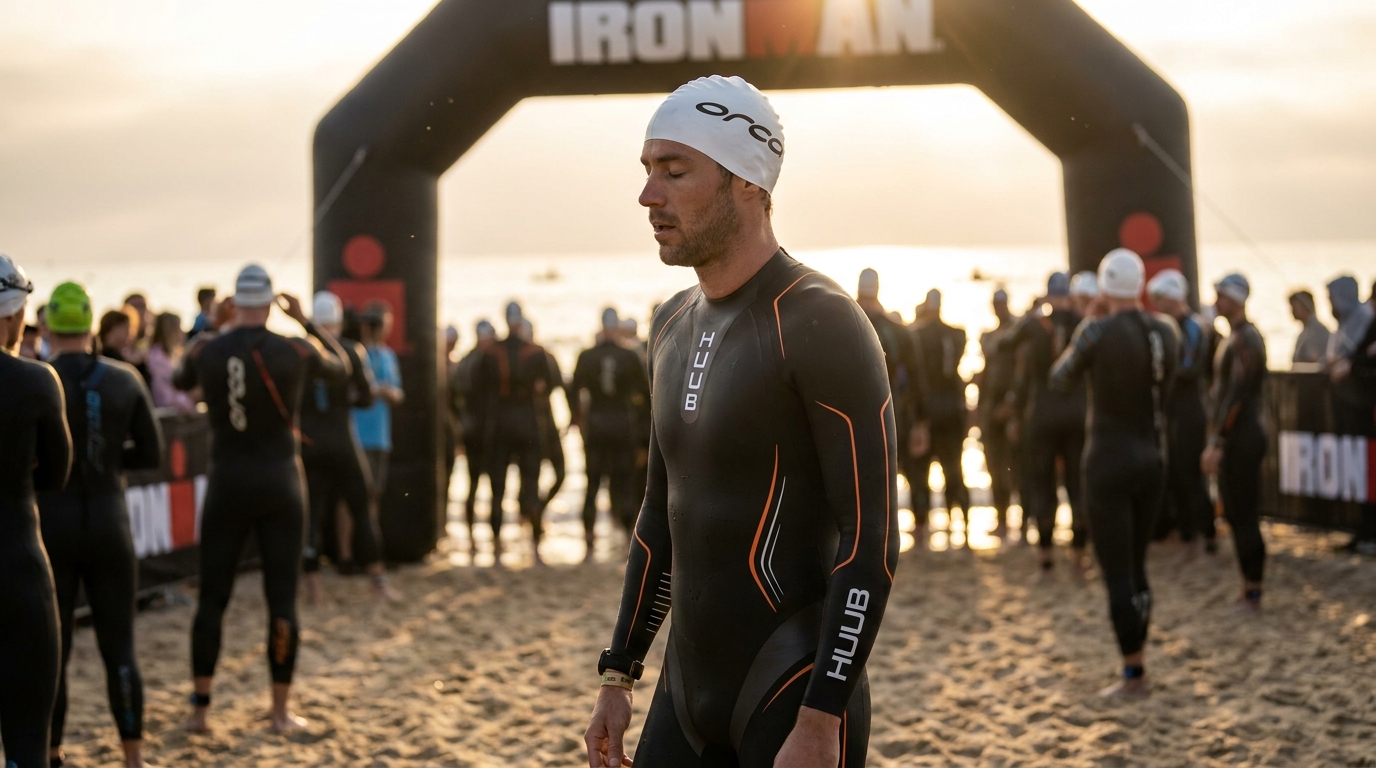
In the final days before your race, set aside 15–20 minutes for a complete mental walkthrough. Not a highlight reel — the whole thing. From your alarm going off in the dark to the feel of your wetsuit zipper to the cold shock of the water to T1 to the first pedal stroke. You're not watching yourself from above like a drone operator. You're in your body, experiencing it.
Include the uncomfortable parts on purpose. The moment at mile 4 of the run when your legs feel like wet cement. The crosswind section on the bike. The swim buoy that's harder to sight than it looks on a calm day. Rehearse your response to those moments — not panic, not "I knew this would happen" doom-spiral, but the practiced calm of someone who has already navigated this exact situation a hundred times. In their head. But still.
Segmented Visualization (For Long Course Athletes)
Full-distance athletes, take note: you cannot meaningfully visualize an entire IRONMAN in one sitting without losing focus and wandering into thinking about what you want to eat post-race. Break it up.
- Day 5: Swim start through T1
- Day 4: Bike course in two halves
- Day 3: T2 through run finish
- Day 2: Full race condensed — key moments only, each segment's emotional peak
- Race morning: 5-minute activation run-through at the start line
The Multi-Sensory Lock-In
This is where most athletes get lazy. They visualize in black-and-white with the sound off. Don't. The more vivid and multi-sensory your mental imagery, the stronger the neural encoding.
What does the water taste like at your race venue? Is it a lake, river, or ocean? What does T1 smell like — sunscreen, rubber, anxiety? What does the crowd sound like as you come through town on the run? What's the texture of the pavement under your racing flats? The more detail you bake in, the harder it becomes for your nervous system to distinguish rehearsal from reality. That's exactly the point.
Adversity Scripting
The athletes who fall apart on race day are usually the ones who only visualized the perfect race. Don't be that person. Spend at least 20% of your visualization time on things going wrong — and more importantly, on how you handle it.
Flatted tire? You've practiced this. Mentally slow down, stay calm, execute the change, get back on. Goggle fill with water at the start? You've done this scenario. Breathe. Clear them. Regroup. Run cramping at mile 18? You have a mantra ready. You've rehearsed the lean-into-it response. You know what it feels like to not quit.
The goal isn't to visualize perfection. The goal is to visualize yourself handling imperfection.
The Race Morning Activation Protocol
Most athletes waste race morning wandering around transition checking their tire pressure seventeen times and stress-eating gels. Instead, find five minutes of quiet — in your car, on a bench, behind the porto-potties if you have to — and do a final mental activation run.
Close your eyes. Take three slow breaths. Run through your race start: the water entry, the first 200m of the swim, your breathing settling, your stroke finding its rhythm. Hear the crowd. Feel the buoy turn. Then let it go. You've done the work. The race you've already run in your head is ready to be run for real.
The Bottom Line
Physical training makes you capable. Mental training makes you actually perform to that capability on race day. The research is clear: structured visualization improves performance outcomes, reduces pre-race anxiety, and increases self-efficacy under pressure. It's not mystical. It's neuroscience with good shoes on.
In 2026, the tools are better than ever. VR headsets, 360-degree course footage, immersive simulation platforms — they're all available to you if you want them. But even without the tech, the foundational practice is free: close your eyes, build the race in your mind in vivid, uncomfortable detail, and show up on race day having already done it once before.
The gun goes off. Your nervous system knows exactly what to do. Because you already raced it in your head.
Now go suffer productively.


