
Here's a dirty secret about long-distance triathlon: most age-groupers don't lose their race on the run. They lose it on the first 20 miles of the bike, when adrenaline is flowing, legs feel fresh, and the temptation to hammer is irresistible. By the time the marathon starts, the damage is already done — and no amount of mental toughness will fix what bad pacing wrecked three hours earlier.
New research from the University of Lausanne, drawing on data from thousands of Ironman Hawaii finishers across multiple decades, has put numbers to what coaches have been saying for years: the athletes who pace consistently — who resist the early urge to go fast — don't just finish better. They race better, with far less performance degradation across the three disciplines.
What the Lausanne Data Actually Shows
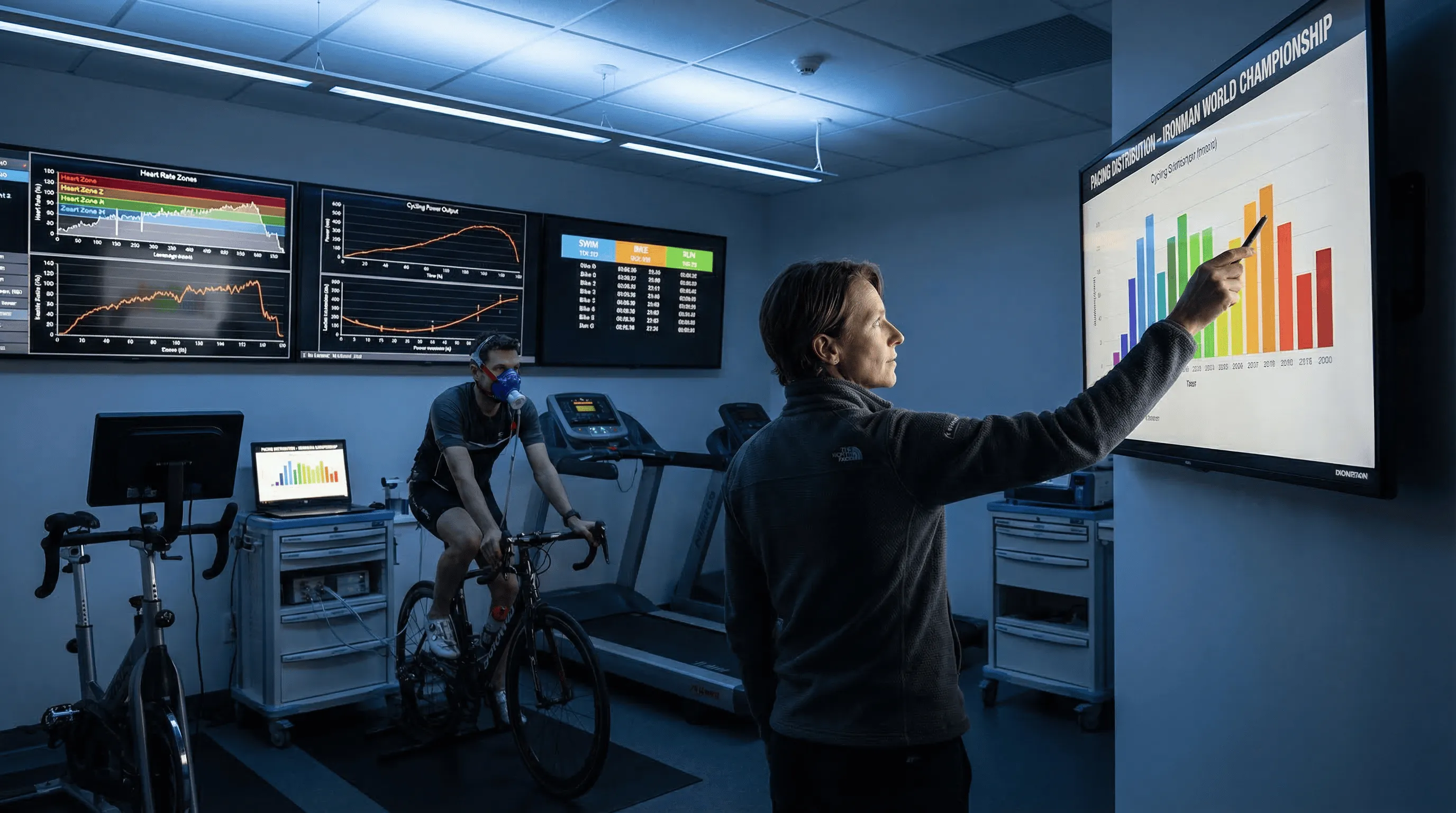
The research team analyzed split data from Ironman Hawaii across age groups and finish times, looking for patterns in how athletes distributed effort. Their key findings:
- Athletes who went out harder than their average pace in the first half of the bike lost significantly more time in the run compared to athletes who maintained even or slightly negative splits
- The performance degradation on the run correlated strongly with how aggressive the bike split was relative to the athlete's ability
- Elite athletes showed the most consistent pacing profiles — the variability in their splits was far lower than age-groupers at equivalent percentage-of-capacity effort
- The "blow up" pattern — a fast first half followed by a dramatically slowing second half — was far more common in the 10–14 hour finisher range than in either the elite or the very back of the field
The last finding is worth sitting with. The "blow up" is most common in the athletes who are trying hardest to race well — and who have just enough fitness to get into trouble.
The Physiology Behind the Fade
Why does going out too hard on the bike destroy your run? The mechanism is well understood. Sustained effort above your aerobic threshold depletes muscle glycogen at an accelerated rate, accumulates lactate, and begins the process of cellular fatigue that no amount of nutrition can fully offset. You can take gels every 30 minutes and still "bonk" — because the problem isn't calories in, it's the rate at which you're burning through your available glycogen stores.
At Ironman pacing, the goal is to stay predominantly aerobic for as long as possible — drawing on fat oxidation to spare glycogen for the moments when you genuinely need it (the second half of the run). The moment you push significantly into anaerobic territory, you're borrowing against a glycogen account that already has limited funds.
"Pace for the run you want, not the bike split you're capable of." — the single most-repeated piece of coaching advice in long-course triathlon, and the most frequently ignored.
Practical Pacing: The Tools That Actually Work
Power Meters
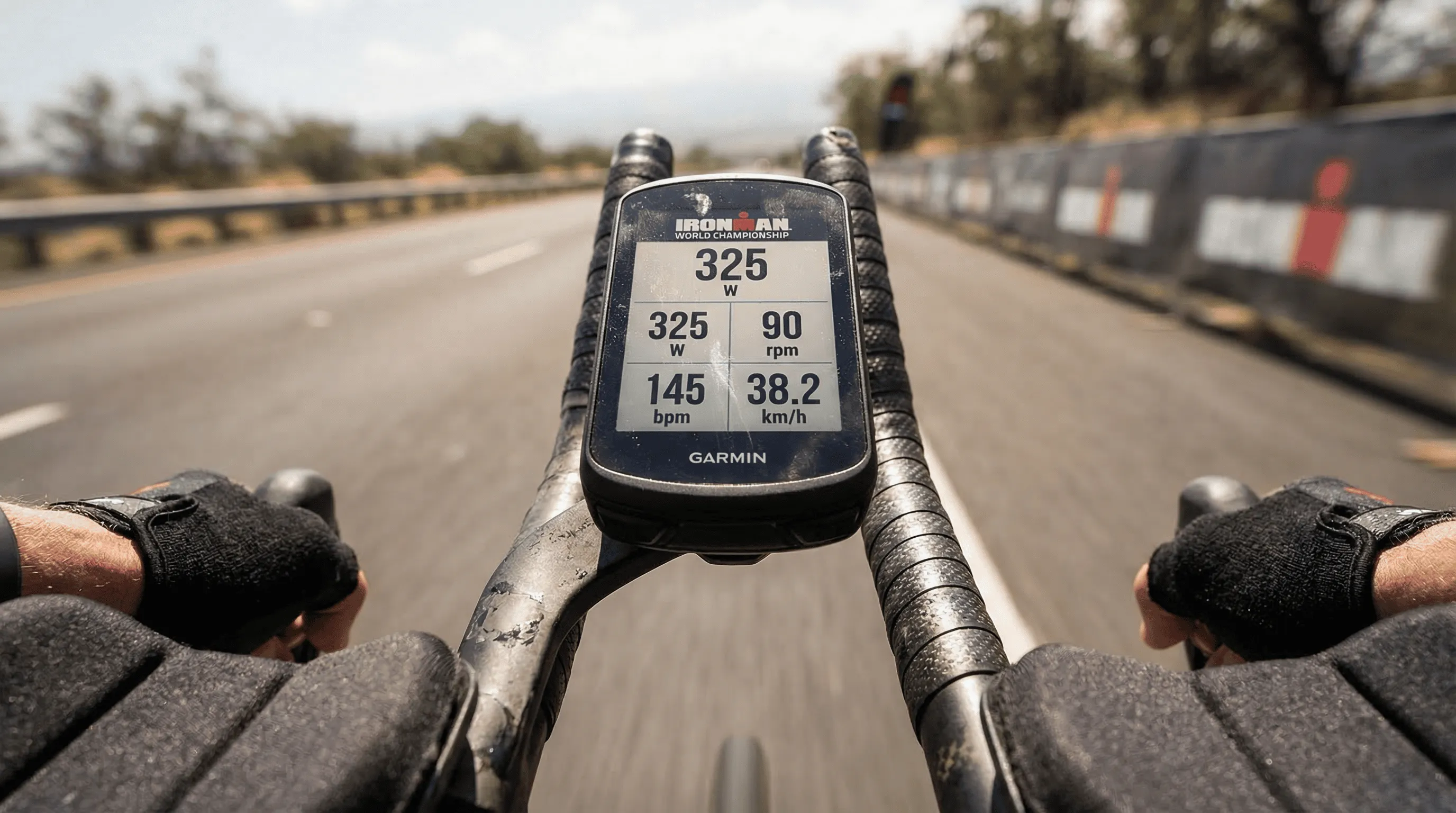
If you're serious about Ironman, a power meter on your bike is the single most valuable pacing tool you can own. Unlike heart rate (which drifts upward even at constant effort as you fatigue and dehydrate) and perceived effort (which is notoriously unreliable under race-day adrenaline), power output is objective and immediate.
The standard framework: identify your Functional Threshold Power (FTP) through a 20-minute test, then target 68–75% of FTP for the Ironman bike leg. At 72% FTP, you'll feel like you're going too easy for the first two hours. You're not. You're banking energy that will pay dividends over the marathon.
Heart Rate Zones
If you don't have a power meter, heart rate is your next best tool — with caveats. Establish your lactate threshold heart rate and target 75–80% of that number for the Ironman bike. Expect cardiac drift: as the ride progresses and you dehydrate slightly, heart rate will rise even at the same effort. Account for this by being more conservative in the first hour.
Perceived Effort (Rate of Perceived Exertion)
Even with power and heart rate data, RPE is an important secondary signal. On the Ironman bike, your RPE should be around 4–5 out of 10 for most of the leg — a pace that feels almost embarrassingly easy. If it feels like you're racing, you're going too hard.
Split Strategy: Negative Splits and Why They Matter
A negative split means the second half of a segment is faster than the first. In theory, it's ideal. In practice, even splits (first half = second half time) are a reasonable and often more realistic goal for age-groupers.
The key principle: whatever you do, don't positive-split by more than 5–8% on the bike. A 2:30 first 56 miles followed by a 2:42 second 56 miles is a modest positive split and entirely manageable. A 2:20 first 56 followed by a 3:00 second 56 is a disaster in progress.
For the run, the walk-run strategy is not shameful — it is optimal for many age-groupers. Athletes who implement a planned walk-run protocol (e.g., run 9 minutes, walk 1 minute) from the very start of the marathon consistently outperform athletes who run the first 13 miles and are forced to walk the second half. Start conservative. Finish strong.
What Pros Do Differently
Elite triathletes don't just have better fitness — they have better self-awareness. Years of training have calibrated their internal effort gauge with extraordinary precision. When Jan Frodeno says he "knows his pace," he means it literally: his perceived effort at a given wattage is accurate to within a few percent of what his power meter shows.
Age-groupers don't have that precision — especially on race day, when excitement, crowd energy, and the pressure of the day distort effort perception. This is why data-driven pacing tools (power, heart rate) are more valuable for age-groupers than for elites. Use the technology. Trust the numbers over your feelings, especially in the first two hours.
Pre-Race Pacing Preparation
- Know your numbers. Test your FTP 6–8 weeks before your race, not during taper. Have a specific power or heart rate target for each discipline.
- Practice race-pace riding. Do at least 2–3 long rides at your target Ironman wattage before race day. Your legs need to know what "right pace" feels like.
- Write your plan on your arm. Literally. A waterproof marker with your target watts/km/min written on your forearm is more reliable than your memory at hour nine.
- Build in a "patience budget." In the first 30 minutes of the bike, you will feel like you're going too slow. You almost certainly are not. Resist the urge to respond to fast riders passing you. They are not your race.
The Takeaway
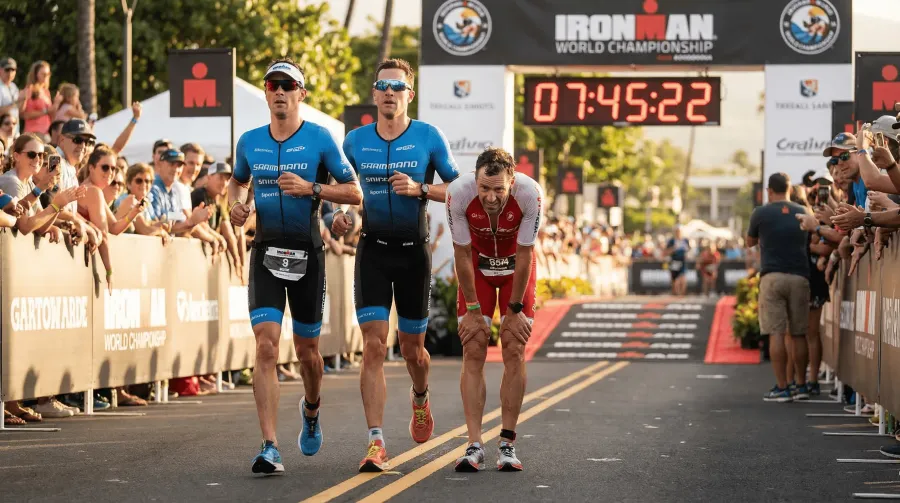
Ironman is not a race you can win on the bike. But it is absolutely a race you can lose there. The Lausanne data confirms what decades of coaching experience already knew: consistent, controlled pacing is the single most reliable predictor of a strong overall performance — more so than swim fitness, bike power, or running economy.
Go out easy. Stay patient. And trust that the runner who passes you at mile 20 of the marathon is the person who listened to the data and rode smart. You want to be that person.


