
Let's be honest: when most age-groupers think about "training," they picture early mornings, chlorine-soaked lane lines, and the sweet anguish of a long brick session. What they don't picture is sitting quietly in their living room with their eyes closed, mentally rehearsing a perfect race. And that, right there, is why they're leaving serious performance on the table.
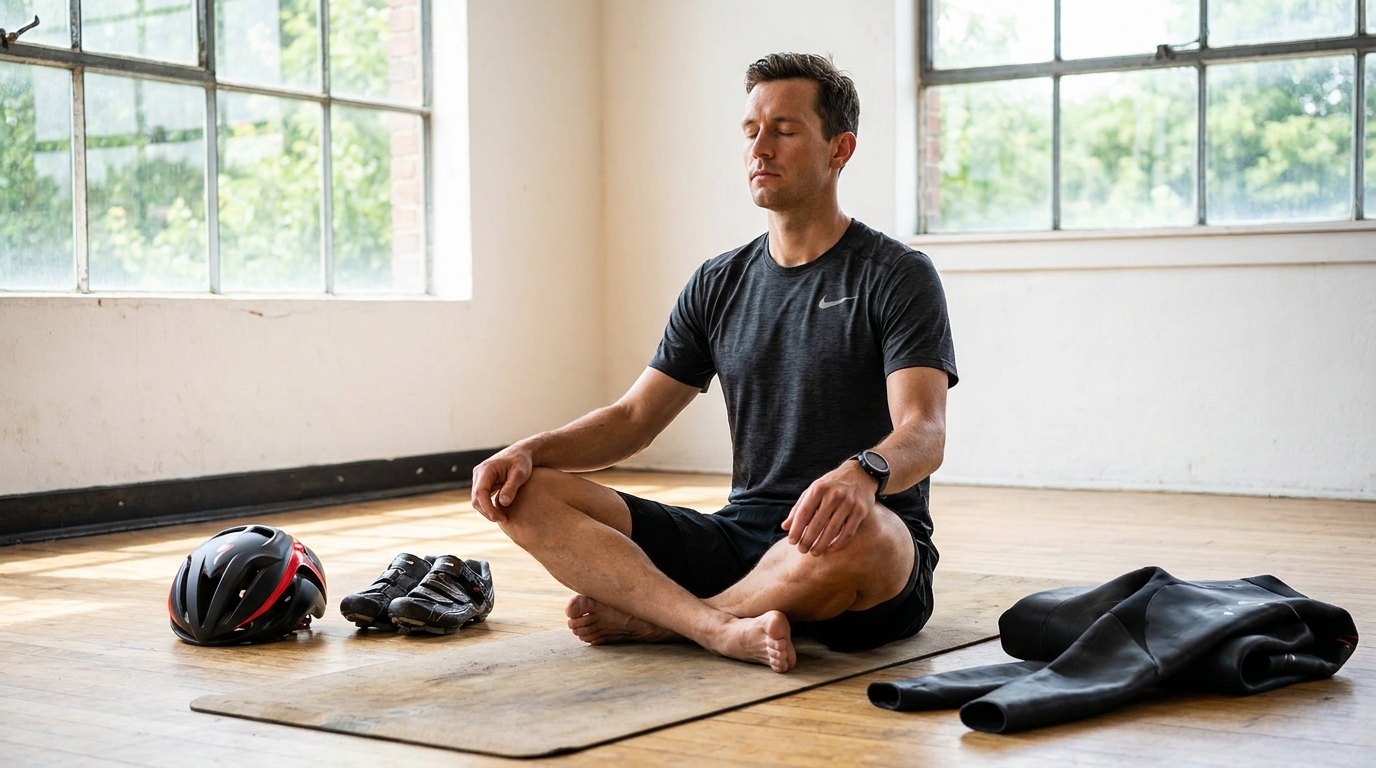
Mental training is officially 2026's hottest trend in endurance sports, and the science behind it is rock solid. A study often cited in sports psychology circles found that athletes who combined physical training with structured mental rehearsal improved performance significantly more than those who relied on physical training alone. Your brain, it turns out, doesn't fully distinguish between a vividly imagined action and actually doing it. The same neural pathways fire. The same motor patterns get grooved. Which means every minute you spend visualizing your race is, quite literally, training.
What Visualization Actually Is (And Isn't)
Visualization isn't daydreaming. It isn't lying in a hammock fantasizing about a podium finish while sipping a smoothie (though that sounds lovely). Real visualization — what sports psychologists call "mental imagery" or "mental rehearsal" — is deliberate, structured, and almost uncomfortably detailed.
Think multi-sensory immersion. You're not just seeing yourself swim; you're feeling the cold water rushing past your fingertips, hearing the chaotic churn of 200 athletes around you, smelling the sunscreen and seaweed, feeling the rhythm of your breath. The more vivid and real you make it, the more your nervous system treats it as actual practice.
There are two flavors to know:
- Internal visualization: First-person. You're inside your own body, feeling every sensation as if it's happening now. Best for skill refinement and building race feel.
- External visualization: Third-person, like watching race film of yourself. Useful for analyzing form and seeing yourself execute perfectly from the outside.
Elite athletes mix both. You should too.
How the Pros Actually Use It
Sara Hall — one of America's most decorated distance runners and a master of mental toughness — doesn't just train her legs. She trains her mind with the same obsessive consistency. Hall uses mantras as mental anchors during hard efforts, breaks long workouts into psychological "chunks" to prevent overwhelm, and famously reframes even terrible training days as valuable data. Her philosophy: there are no bad runs, only lessons in resilience. That mindset doesn't happen by accident. It's rehearsed.
Tim O'Donnell, multi-time Ironman champion and a man who literally came back from a heart attack during a race, has spoken extensively about the mental game. His approach centers on process-focus rather than outcome-focus — obsessing over cadence, form cues, and fueling windows rather than fixating on finish times. During races, O'Donnell runs a mental script: "Run tall, shoulders back, chest forward, feet under hips, cadence, cadence, cadence." That's not improvisation. That's a rehearsed mental program executing under extreme pressure.
The pattern is clear: elite endurance athletes treat their mental game as a training system, not an afterthought.
Pre-Race Mental Scripting: Your Secret Weapon
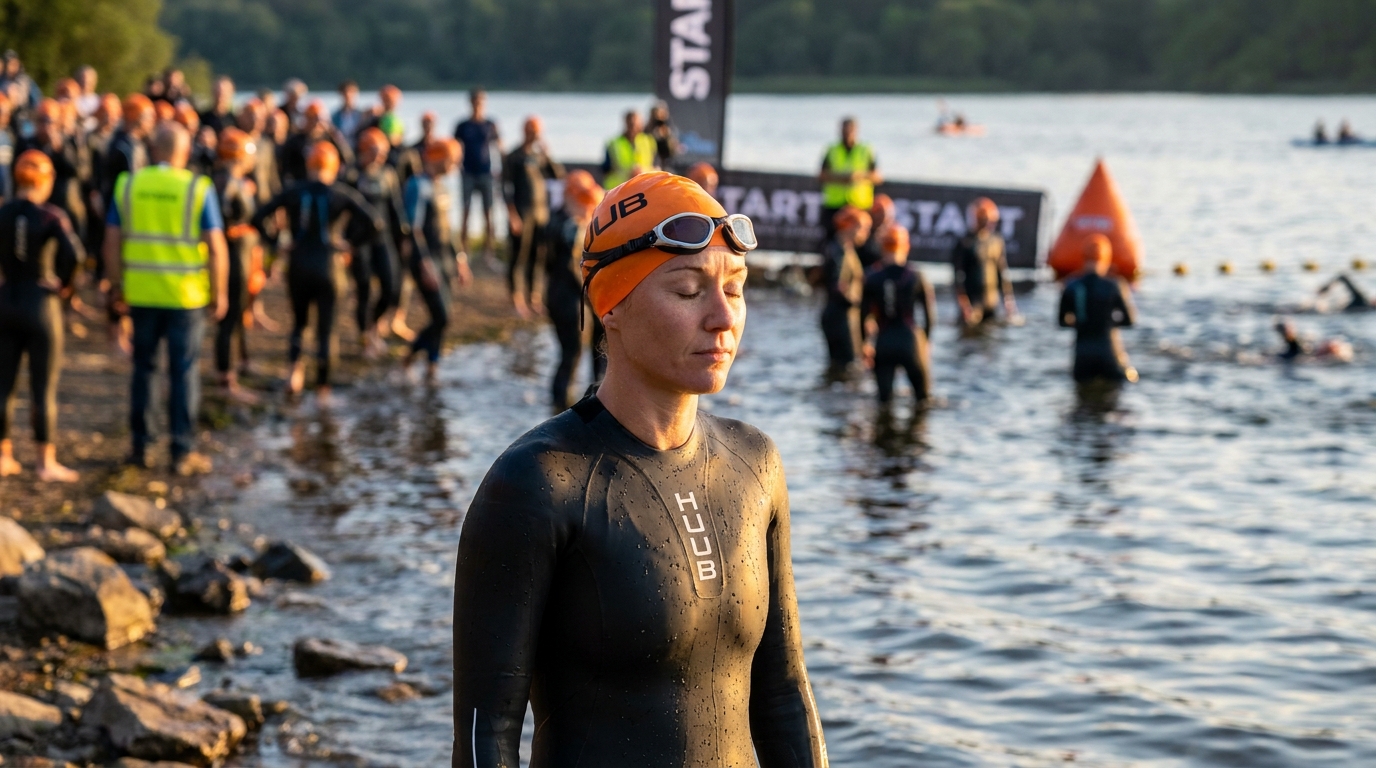
Pre-race mental scripting is visualization taken to its most tactical level. The idea is simple: before race day, you write (and rehearse) a detailed mental script of your entire race — from the moment you wake up to the moment you cross the finish line.
Your script should include:
- Morning routine: Alarm goes off, you feel nervous but ready. Breakfast. Gear check. Drive to venue.
- Transition setup: You rack your bike, lay out your gear methodically, walk the transition area. Calm and deliberate.
- Swim start: The gun fires. You find your rhythm. You navigate contact without panic.
- Challenge moments: Here's the key — script the hard parts. What happens when you hit mile 18 on the run and your legs are screaming? You've already rehearsed this. You know exactly what you'll say to yourself, how you'll adjust your form, where you'll find the extra gear.
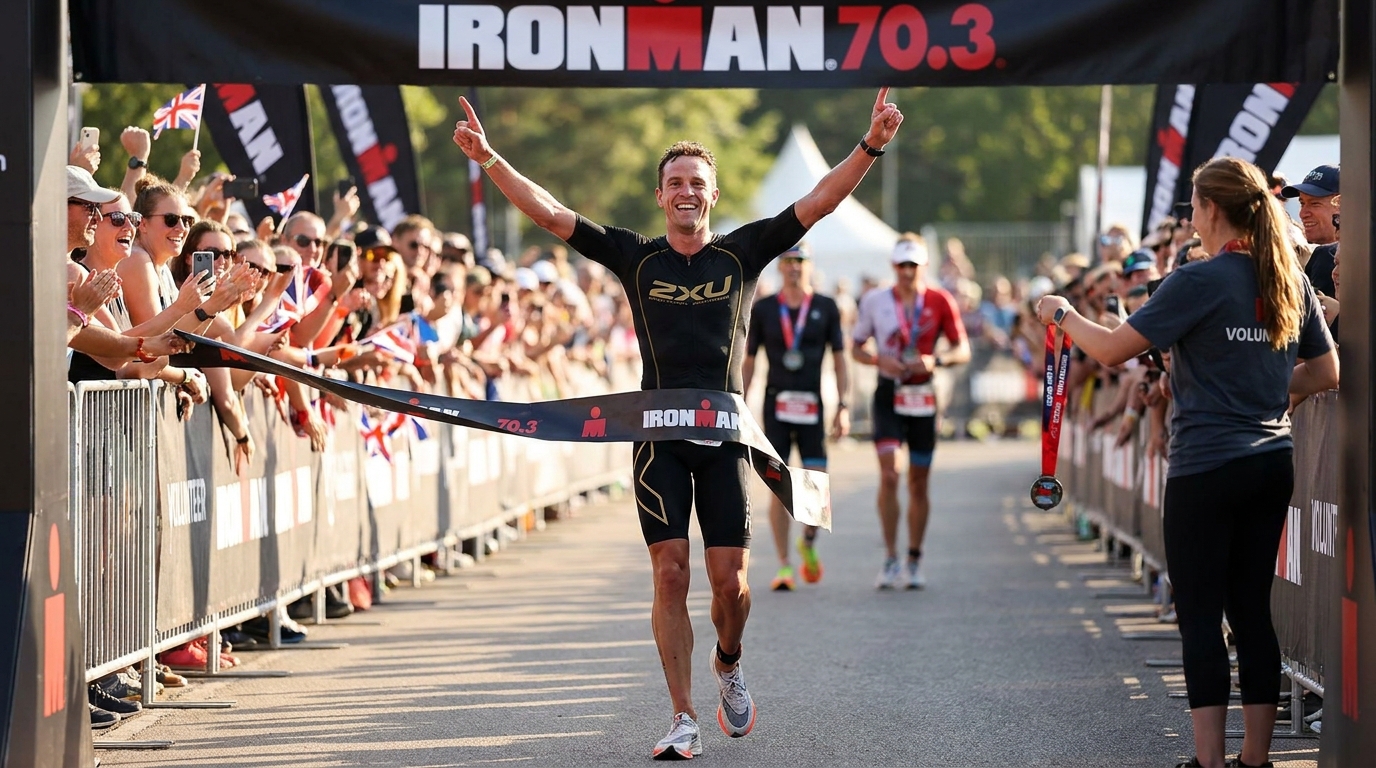
- Finish line: You cross. What does that feel like? Let yourself feel it — before it happens.
The research on this is compelling. Athletes who mentally rehearse specific adversity scenarios — not just perfect-race fantasies — perform significantly better when those scenarios actually unfold. Your brain has already solved the problem. It's just executing a cached solution.
The Goggins Factor: Embracing the Dark Places
David Goggins didn't build his mental fortress by imagining easy runs. He built it by deliberately rehearsing suffering — mentally and physically putting himself in the worst-case scenario and choosing to continue anyway. For triathletes, this translates into a specific practice: visualize the hard moments.
Don't just script a perfect race. Script the race going sideways. Flat tire at mile 40. Swim start chaos. Running out of your nutrition. Your mental script needs to include the moment everything falls apart — and your calm, methodical response to it. Because the athletes who win aren't the ones who never face adversity. They're the ones who've already decided how they'll respond to it.
VR Race-Course Simulation: The Future Is Already Here
Here's where things get properly interesting. Virtual reality is rapidly becoming a legitimate mental training tool for endurance athletes. Platforms are now offering immersive VR environments where athletes can "pre-ride" actual race courses — visualizing every corner, climb, and descent of an Ironman bike leg before they ever set wheel on the real road.
The psychological benefits are substantial. Familiarity breeds confidence. Athletes who've virtually raced a course report significantly less anxiety and better pacing decisions on race day. They've already solved the course — at least in their mind. When race day arrives, it's not new territory; it's a familiar route they've traveled dozens of times in the lab.
While VR race simulation is still emerging, early adopters are gaining a genuine edge. And as hardware costs drop and content libraries expand, this will move from elite novelty to standard training tool faster than you might expect.
Your 5-Minute Daily Visualization Practice
You don't need a VR headset or a sports psychologist to start. You need five minutes and a quiet space. Here's a simple framework to start this week:
- Set the scene. Sit or lie comfortably. Close your eyes. Take three slow, deep breaths. Let the day's noise fade.
- Choose your focus. Pick one specific race scenario or skill: your swim start, a key climb, your T2 transition.
- Go multi-sensory. What do you see? Hear? Feel physically? Smell? The more detail, the better.
- Run it in real time. Don't fast-forward. Experience it at race pace, with the emotions and sensations of the real thing.
- Include adversity. Add one challenging moment and visualize your calm, effective response.
Do this daily. Make it as non-negotiable as your swim sets. Five minutes every morning before your feet hit the floor, or ten minutes before bed. Track it like any other training metric. Give it six weeks before you judge it.
The Bottom Line
Every serious triathlete obsesses over their swim stroke, their bike fit, their run cadence. But the mental game — the thing that determines whether all that physical work actually shows up on race day — gets almost no structured attention from age groupers. That's a massive gap, and it's one of the easiest to close.
Your competitors are swimming more laps, riding more miles, and logging more run volume. Fine. Let them. Meanwhile, you're going to train the one thing they're ignoring: the six inches between your ears. Because at the end of a long-distance race, when your legs have nothing left and the finish line is still a mile away, the athlete who wins isn't the one who trained harder. It's the one who trained smarter — and mentally rehearsed that exact moment a hundred times before it arrived.
Now close your eyes. Let's get to work.


