
You just spent somewhere between "ouch" and "I need to lie down" on your first TT bike. You've got aero wheels, a new helmet that makes you look like a space alien, and now you're standing in your garage at 10 PM Googling whether you need a $15 bottle cage or a $120 integrated hydration system. Welcome to triathlon.
Let's cut through the noise. Both options work. Both have real trade-offs. And the right choice depends on things nobody in the forums is asking you about — your race distance, your budget, your mechanical patience, and honestly, how much you enjoy cleaning gear at 11 PM the night before a race.
What We're Actually Comparing
BTA (Between the Arms) Bottle — A standard water bottle mounted in a cage positioned between your aero bars. Simple. Familiar. You grab it, you sip, you put it back. The cage typically mounts to your stem or bar extensions.
Integrated Aero Hydration System — A purpose-built unit (think Profile Design Aero HC, Torhans Aero, or the Specialized SWAT-style built-ins) that sits low between your arms, often with a long drinking straw that routes up to your mouth. You sip without lifting your head or changing position. Very aero. Somewhat fussy.
Both live in roughly the same real estate on the bike. The difference is in execution — and that's where things get interesting.
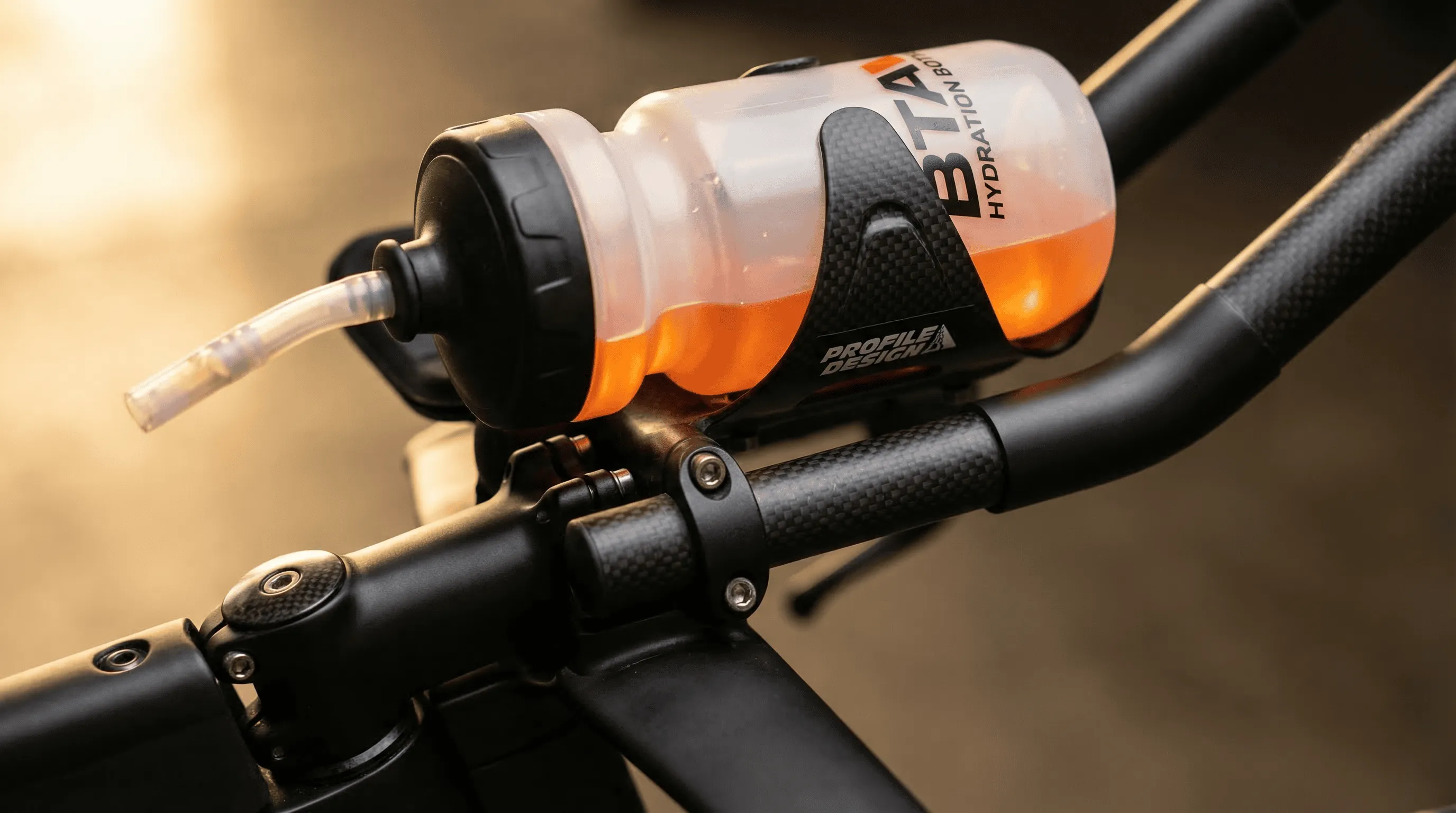
The Case for BTA Bottles
It's Dumb Simple (and That's a Compliment)
A BTA cage setup is exactly what you already know. Bottle goes in. Bottle comes out. You drink. You can grab it without thinking, which matters more than you'd expect when you're 60 miles into a race and your brain is running on gels and stubbornness. For first- and second-year triathletes, cognitive load on race day is very real. The fewer new skills you're deploying simultaneously, the better.
Price
This is where BTA wins without breaking a sweat.
- Basic BTA cage + mount: $15–$40 (Profile Design, Xlab, Minoura)
- Mid-range setup with adjustable mount: $40–$75
- Your existing water bottles: $0
Total damage: under $60 in most cases. Compare that to integrated systems and you've just freed up money for race entry fees. Or beer. No judgment.
Flexibility
BTA bottles accept any standard 24 oz or 28 oz water bottle. You can use whatever's in your kitchen. You can pick up a bottle at a race aid station and it'll fit. You can swap in a warmer bottle mid-race if you've pre-staged nutrition. That last-mile flexibility is massively underrated.
Easy Maintenance
Wash bottle. Done. The cage wipes down in 20 seconds. There are no crevices harboring last week's electrolyte science experiment. There are no straws requiring a pipe cleaner and a prayer.
The Cons
- Less aero than an integrated system — you have to reach forward to grab the bottle, disrupting your position momentarily
- Easier to drop, especially on rough pavement or when you're fatigued and fumbling
- Some bottle profiles sit high and catch more wind than you'd like
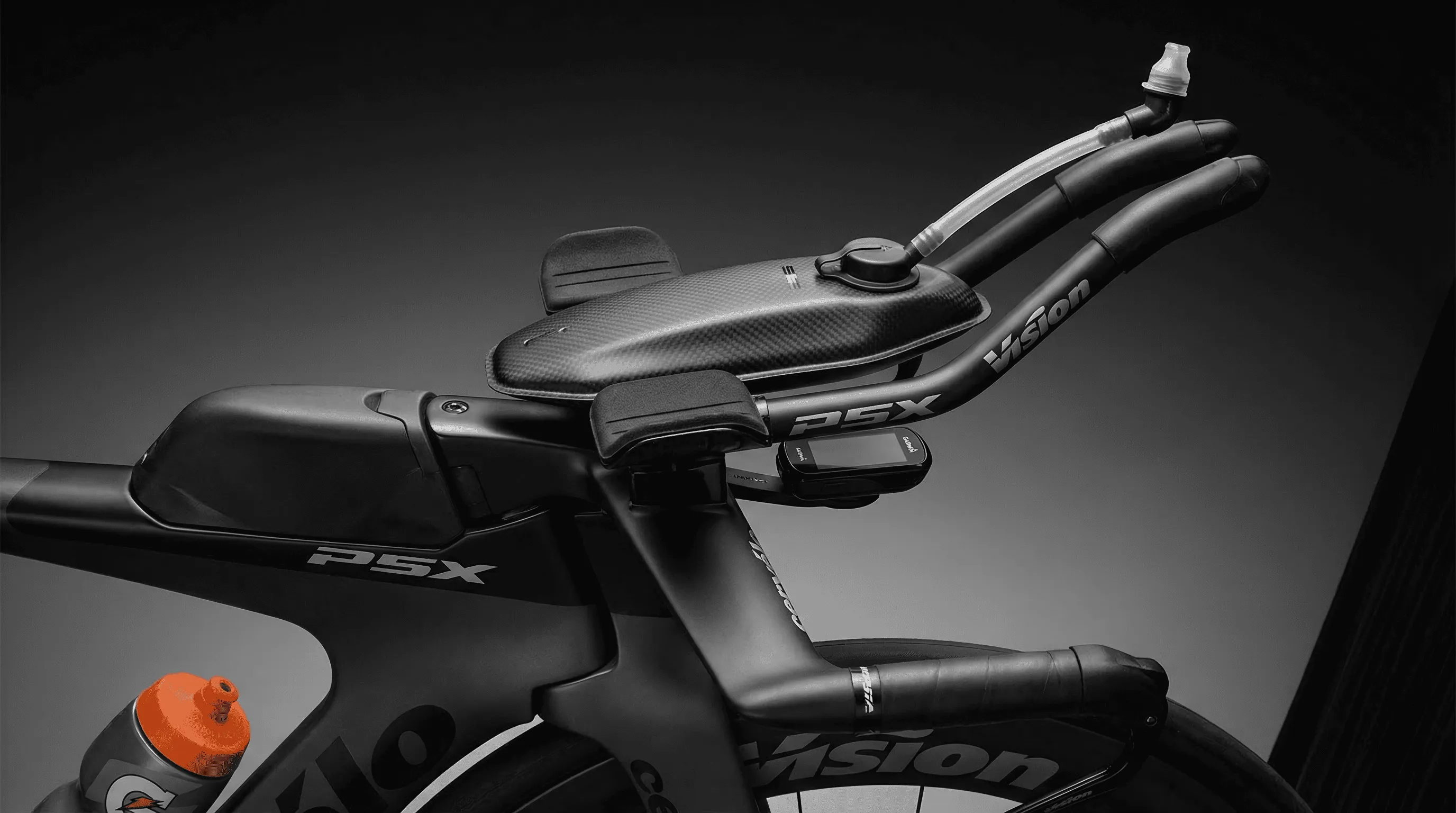
The Case for Integrated Hydration Systems
Aero Is Real (But Maybe Not as Real as You Think)
Here's the honest truth: yes, integrated systems are more aerodynamic than a bottle bobbing between your bars. But the gains are measured in watts, not minutes, at most amateur race speeds. If you're going 20 mph, the aerodynamic penalty of a BTA bottle is roughly 1–3 watts depending on bottle shape and position. That's real, but it's not going to be the difference between a podium and a DNF for a first-timer. That said, if you're already dialed on everything else and want to squeeze out every gain, integrated is the move.
Position-Locked Drinking
The big functional advantage: you never have to break your aero position to drink. The straw routes directly to your mouth. Eyes forward, back flat, keep pedaling. For long-course racing (Half-Iron and Ironman distances), staying locked in your aero position longer adds up. Even saving a couple of minutes of sub-optimal positioning over 112 miles is meaningful.
Price
Here's where it gets uncomfortable.
- Entry-level integrated system (Profile Design Aero HC, Torhans Aero 20): $60–$90
- Mid-tier with better mounting and volume (Redshift, Profile Design F-19): $100–$160
- Premium or bike-manufacturer integrated (Cervelo, Specialized built-ins): $150–$300+
You'll also want to budget for replacement straws and valves ($5–$15/year) because they degrade, crack, and occasionally go missing at the worst possible moment. Total to get started properly: $80–$150.
The Maintenance Reality Check
Let's talk about the thing nobody mentions until you've lived it. After a race — especially a hot one — your integrated hydration system contains a warm, dark, sugary residue that is basically a five-star resort for mold and bacteria. The straw has nooks. The reservoir has crevices. The bite valve has… layers.
If you don't clean it immediately and thoroughly after every ride or race, you will open it before your next training block and deeply regret your life choices. Cleaning properly requires a bottle brush, a dedicated straw brush (yes, they make these), actually disassembling the bite valve, and rinsing with hot water plus a denture tablet solution if you've let it sit. It takes 10–15 minutes if you do it right. That's not a dealbreaker, but at 9 PM after a long race day, it feels like one.
Race Day Logistics
Integrated systems also require more setup attention at transition. You need to pre-fill them, check the straw routing, make sure the valve is open (ask me how I learned this one), and confirm nothing got bumped loose in transport. It's not complicated, but it's another thing on the 5 AM checklist — and that checklist is already longer than it should be.
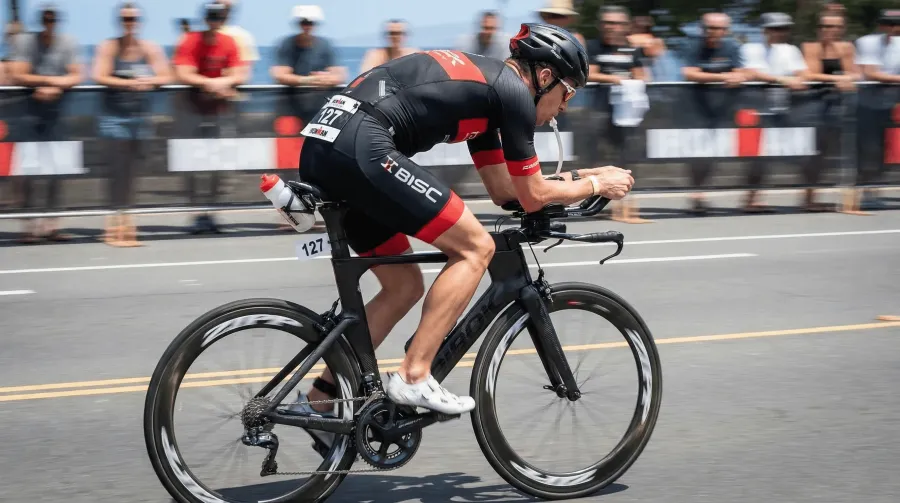
Aero Position Consideration
Here's a nuance worth flagging: your aero position matters more than your hydration system choice. If you're new to riding in aero position, you'll spend more time sitting up than you think — at turns, on technical descents, when you're mentally cooked. The aero gain from an integrated system is only realized when you're actually in position. Spend time on the trainer dialing in your fit and building comfort in aero before you obsess over which hydration system shaves two watts.
That said, once you're comfortable, the straw-to-mouth design does encourage staying lower for longer. There's a behavioral nudge built in: drinking is easier when you don't have to break position, so you drink more consistently. That's not nothing, especially for longer races where dehydration compounds everything.
The Recommendation: Based on Who You Actually Are
Go BTA if:
- This is your first or second triathlon
- You're racing Sprint or Olympic distance
- Your budget is under $75 all-in
- You hate fiddling with gear
- You want maximum flexibility (aid station bottle grabs, nutrition swaps mid-race)
- You're still dialing in your aero position
Start here. Seriously. Get a $25 cage mount, use your existing bottles, and go race. You can always upgrade later, and you'll know exactly what you're upgrading for.
Go integrated if:
- You're targeting Half-Ironman or full Ironman distance
- You're comfortable in aero and staying there for hours
- You're willing to spend $80–$150 upfront and maintain the system properly
- Marginal aerodynamic gains matter to you (and that's a valid choice)
Recommended entry-level integrated picks: Profile Design Aero HC (~$70), Torhans Aero 20 (~$80). Both are proven, widely used, and won't require a mechanical engineering degree to clean.
The hybrid approach:
Run a BTA bottle for training and short races. Test an integrated system on longer training rides before committing to it on race day. And for the love of everything holy — never debut new equipment on race day. Never.
Bottom Line
Your hydration system is not going to make or break your race. Your fitness, your pacing, and whether you remembered to put sunscreen on the back of your neck will have a much bigger impact than the $80 difference between a bottle cage and an integrated unit.
Start simple. Race more. Upgrade when you know what you actually need — not because someone on a forum told you that your setup looks slow. The fastest hydration system is the one you'll actually use correctly at mile 70, slightly delirious and still moving forward. Pick that one.


