
You've done everything right. You've stretched. You've foam-rolled. You've taken the rest days, done the strength work, booked the physio appointments. And yet the pain is still there — that nagging IT band, the hip flexor that never quite loosens up, the lower back that seizes somewhere around mile 70 of every long ride. It's become such a fixture of your training life that you've started planning around it rather than addressing it.
Here's an uncomfortable question: what if the foam roller isn't working because the problem isn't in your muscles at all?
The emerging science of mind-body pain — and a growing number of sports medicine practitioners — suggests that a significant portion of chronic overuse injuries in endurance athletes aren't primarily structural. They're neurological. And the solution isn't in your training plan. It's in your head.
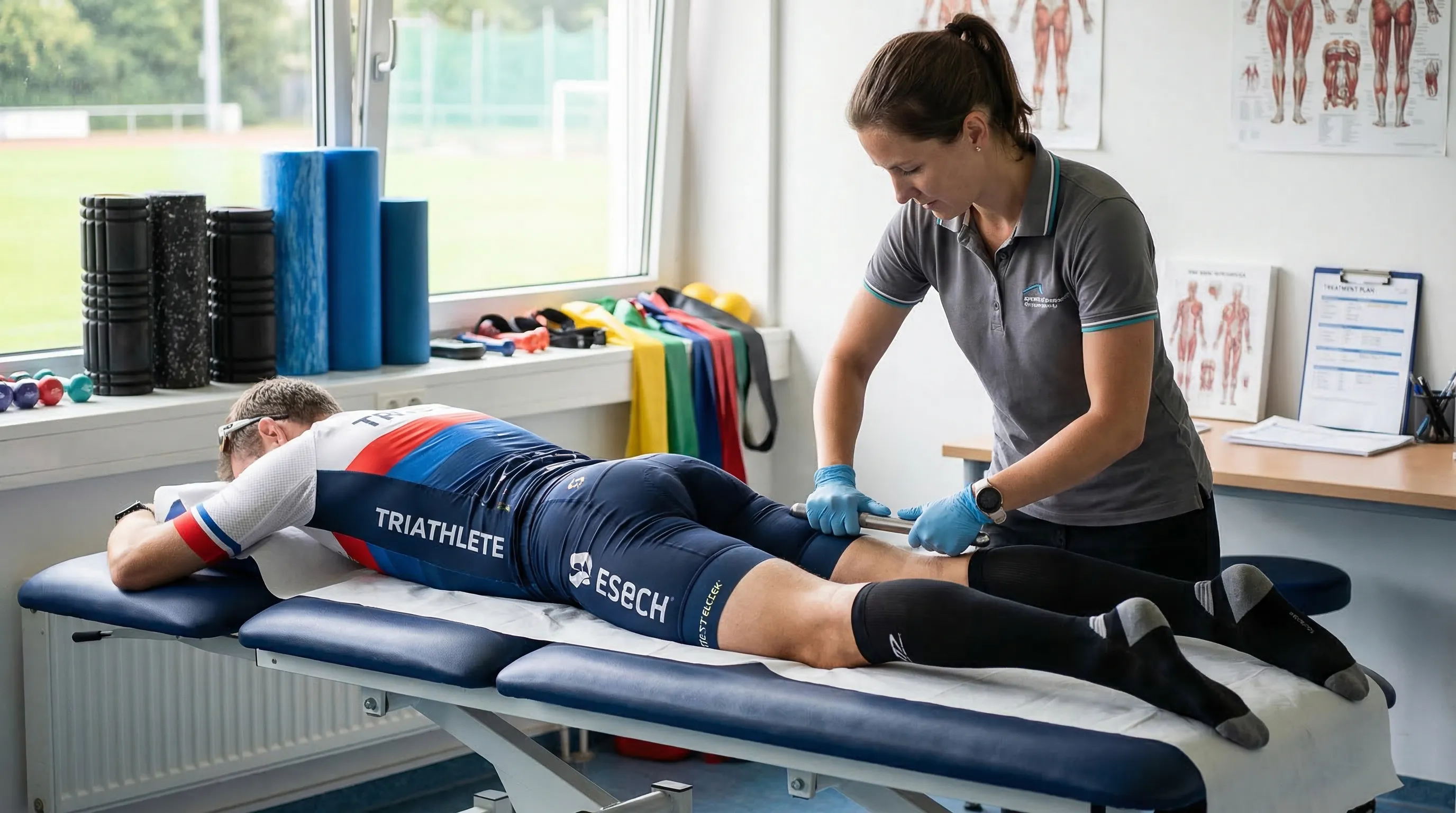
The Pain Science Shift
For most of the 20th century, pain was understood as a direct signal from damaged tissue. You hurt your knee; your knee sends a pain signal; you feel pain. Simple cause and effect. The job of medicine was to find the damaged structure and fix it.
That model has been substantially revised by modern pain neuroscience. The current consensus — built on decades of research and summarized accessibly by researchers like Lorimer Moseley and David Butler — is that pain is an output of the brain, not an input from the body. Your brain constructs the experience of pain based on a vast array of signals: tissue damage signals, yes, but also stress levels, sleep quality, emotional state, past experiences with pain, and perceived threat.
This isn't to say that pain isn't real. It absolutely is. But it explains several phenomena that the old model couldn't:
- Why people with significant structural damage on MRI (herniated discs, torn labra) often have zero pain
- Why people with minimal structural damage have severe, chronic pain
- Why pain often persists long after tissue has healed
- Why stress, anxiety, and life circumstances so reliably correlate with pain flare-ups in athletes
For triathletes — a population that tends to be highly driven, chronically under-recovered, and operating under significant self-imposed pressure — this last point is particularly important.
Dr. Sarno and the Triathlete
John Sarno was a rehabilitation medicine physician at NYU who spent decades treating patients with chronic back pain and other pain conditions that didn't respond to conventional treatment. His central thesis, developed across several books including Healing Back Pain and The Mindbody Prescription, was that a significant category of chronic pain — which he called Tension Myoneural Syndrome (TMS) — was caused by the brain restricting blood flow to muscles, nerves, and tendons as a way of diverting attention from repressed emotional stress.
Sarno's work was controversial in medical circles (and remains so), but his clinical outcomes were remarkable, and his ideas have found a new generation of proponents in the form of modern pain neuroscience researchers who, while using different mechanisms and terminology, arrive at similar practical conclusions: chronic pain is frequently maintained by the nervous system, not the tissue, and addressing the psychological dimension is essential to recovery.
For endurance athletes, the Sarno framework resonates in specific ways:
- Perfectionism and self-criticism — common traits in triathletes — are strongly associated with chronic pain persistence in the research literature
- Training anxiety (fear of missing sessions, fear of losing fitness) creates a neurological environment conducive to pain amplification
- The injury-guilt cycle — feeling guilty about injury, training through pain, re-injuring — is a behavioral loop that the nervous system learns and reinforces
None of this means your IT band isn't real. It means the experience of pain around your IT band may be substantially amplified — or even generated — by a nervous system that has learned pain as a response to certain stimuli, regardless of whether significant tissue damage is present.
What the Research Actually Shows
You don't have to take Sarno's word for it. The broader field of pain neuroscience has produced robust evidence for the mind-body connection in chronic musculoskeletal pain:
Psychological factors predict chronic pain better than physical ones. A landmark study in Spine found that psychological variables — specifically fear-avoidance beliefs and catastrophizing — were stronger predictors of chronic low back pain disability than any physical measurement. This holds across multiple pain conditions.
Stress directly increases pain sensitivity. Elevated cortisol and sympathetic nervous system activation (the physiological state of chronic stress) lower pain thresholds and amplify pain signals. Athletes in heavy training blocks are already running elevated stress physiology — add life stress on top of that and the pain system becomes hair-trigger sensitive.
Pain education reduces pain. Multiple randomized controlled trials have shown that simply educating patients about pain neuroscience — explaining that pain is a protective output of the nervous system, not a reliable indicator of tissue damage — produces significant, lasting reductions in chronic pain. The knowledge itself is therapeutic.
Graded motor imagery and visualization reduce pain. These techniques, which involve mentally rehearsing movement without actually performing it, have been shown to reduce chronic pain in conditions including complex regional pain syndrome and phantom limb pain. The mechanism is neural — you're literally rewiring the brain's threat response to movement.

Practical Mind-Body Tools for Triathletes
Here's where this stops being abstract and starts being actionable. None of the following replaces appropriate medical assessment — if you have acute injury, structural damage, or pain that is new, worsening, or accompanied by neurological symptoms, see a doctor. But for the chronic, nagging, recurring pain that defines so many athletes' training lives, these tools have real evidence behind them.
1. Pain Education — Know What You're Dealing With
The single most evidence-backed intervention is simply understanding pain neuroscience. Read Moseley and Butler's Explain Pain (written for patients, not academics). Understand that your pain does not necessarily mean your tissue is damaged. Understand that the brain's pain output can be dramatically disproportionate to actual tissue status, especially in chronic conditions.
This isn't positive thinking. It's recalibrating your threat assessment. When your brain understands that the pain signal it's generating is being over-amplified by a sensitized nervous system rather than reflecting structural catastrophe, the pain signal itself often diminishes.
2. Stress Audit — The Training Load You Can't Measure
Your Garmin tracks your physical training load. Nobody tracks your psychological training load — the work stress, the relationship friction, the financial worry, the self-criticism after a bad session. But that load is real, and it directly affects your pain sensitivity and recovery capacity.
During heavy training blocks, actively audit your non-training stressors. Reduce where you can. Be honest about total load — not just the miles. A 20-hour training week that coincides with a high-stress period at work is physiologically different from a 20-hour week during a calm period, even if the training metrics look identical.
3. Catastrophizing Interruption
Catastrophizing — the cognitive tendency to interpret pain as dangerous, permanent, and identity-threatening ("my season is ruined," "I'll never run again," "this is getting worse") — is one of the most reliable predictors of chronic pain persistence. It's also extremely common in competitive athletes who have invested enormously in their sport.
The intervention is cognitive: when you notice catastrophic pain thoughts, interrupt them with accurate reframes. Not false positivity ("it's fine!"), but accurate assessment: "This is uncomfortable. Discomfort is not always damage. My body has healed from pain before. I will work with appropriate guidance to address this." The goal is accurate, not positive.
4. Mindfulness Practice
Mindfulness-based stress reduction (MBSR) has been studied extensively in chronic pain populations and consistently shows meaningful reductions in pain intensity and pain-related disability. The mechanism is multi-layered: mindfulness reduces baseline sympathetic activation, improves pain acceptance (which paradoxically reduces suffering), and builds the meta-cognitive capacity to observe pain without catastrophizing.
For athletes, the access point is usually breath-based meditation: 10–20 minutes daily of focused attention on breathing, observing when the mind wanders to pain or anxiety, and gently returning attention to breath. Apps like Waking Up, Headspace, or Insight Timer provide structured entry points. The research requires consistency — 8 weeks of regular practice is where the studies show meaningful effects.
5. Graded Return to Movement
Avoidance of painful movement is a natural protective response, but in chronic pain conditions it becomes part of the problem. The nervous system learns that movement is dangerous and amplifies pain to prevent it, even after any actual tissue risk has resolved.
Graded motor imagery and progressive, calm re-exposure to feared movements — ideally guided by a physiotherapist trained in pain neuroscience — help desensitize the nervous system's threat response to movement. The key is gradual, non-threatening exposure: not pushing through pain aggressively, but not avoiding it entirely either.
When to See a Specialist
Mind-body approaches work best for chronic, recurrent pain that has been medically assessed, has no ongoing structural cause requiring intervention, and hasn't responded adequately to conventional treatment. They are not a substitute for appropriate diagnosis.
Look for physiotherapists, sports medicine physicians, or pain specialists who are trained in pain neuroscience and understand the psychological dimension of chronic pain. The field is growing — practitioners who describe themselves as practicing "pain science" or "biopsychosocial" approaches are your starting point.
If you're in the US, the Pain Reprocessing Therapy (PRT) model — developed by Alan Gordon and studied in a notable 2021 JAMA Psychiatry RCT — is worth investigating for persistent pain. The trial showed 66% of participants with chronic back pain were pain-free or nearly pain-free after treatment, compared to 20% in the control group. Those are extraordinary numbers for a condition that conventional medicine often manages rather than resolves.
The Bottom Line
Chronic pain in triathletes is not inevitable, and it is not always primarily a structural problem. The nervous system's role in generating and amplifying pain — particularly under the conditions of high training load, perfectionism, and life stress that characterise most competitive age-groupers — is increasingly well-established in the research.
Foam rolling has its place. So does physiotherapy, appropriate load management, and strength work. But if you've done all of those things and the pain keeps coming back, it's worth asking a different question: not "what's wrong with my IT band?" but "what is my nervous system trying to protect me from, and is that protection still serving me?"
The answer — and the path out — might be less about your body than you think.


