
You've decided to do a triathlon. Maybe a friend dared you. Maybe you watched Kona on YouTube at 2 a.m. and had a moment of athletic delusion. Maybe you just want to see if you can. Doesn't matter. The decision is made. Now stop refreshing Reddit threads about whether you need a $4,000 carbon bike and listen up — because this is the only guide you need.
A sprint triathlon is your target: a 750-meter swim, a 20km bike ride, and a 5km run. It sounds scary. It isn't. Millions of regular, non-superhuman people finish one every year. You will too — if you follow a sane plan and don't do something stupid like train 14 hours a week right out of the gate.
First: The Gear Reality Check
You don't need to spend $3,000 before your first race. Anyone trying to convince you otherwise is sponsored by someone. Here's the actual list:
Non-Negotiables
- A bike with two working wheels and a functional drivetrain. Road bike, hybrid, mountain bike — anything goes for a sprint. Yes, people have done triathlons on a Walmart bike. No, it's not ideal. But it works.
- A helmet. Mandatory. Full stop. No helmet, no race. Get one that fits.
- Goggles. Bring two pairs to the race — one for outdoor light, one for overcast. They cost $15. Do it.
- Running shoes. Go to a specialty running store. Get fitted. Don't cheap out here — your knees will write you angry letters.
- A swimsuit or tri suit. A tri suit lets you race in one outfit the whole time. It's not required for your first race but worth considering if you hate changing wet clothes in a parking lot.
Stuff You Can Skip (For Now)
- Aero helmet ($200+). You're not trying to beat Alistair Brownlee.
- Carbon-soled cycling shoes. Save it for race #3.
- A GPS watch with 47 data fields. A basic Garmin or just your phone works.
- A wetsuit — unless your race is in open water below 68°F. Check race rules.
"The best triathlon gear is whatever gets you across the finish line. The worst gear is the gear you bought and never trained in."
The 90-Day Blueprint
Ninety days is twelve weeks. Three clean phases. Each one builds on the last. If you're already running 5Ks and can swim a lap or two without drowning, this plan will get you to the finish line comfortably. If you're starting from zero, it'll still work — just be honest with yourself about your starting point.
Phase 1 (Weeks 1–4): Just Show Up
The entire goal of Phase 1 is consistency. Not speed. Not distance. Consistency. You're training your body to handle three different sports without breaking down. You're also discovering which of the three disciplines is your weakness (spoiler: it's probably swimming).
- Swim: 2x/week, 20–25 minutes. Don't think about pace. Focus on not stopping. Use pull buoys, fins, whatever — just get comfortable in the water.
- Bike: 2x/week, 30–45 minutes at a conversational effort. You should be able to talk. If you can't, slow down.
- Run: 2–3x/week, 20–30 minutes. Run-walk is completely fine. Alternate 2 minutes running with 1 minute walking if needed.
- Rest days: At least 2 per week. Non-negotiable. Sleep is training.
Phase 2 (Weeks 5–8): Build the Engine
Now we start actually working. Distances creep up. You'll introduce your first brick workout — a bike ride followed immediately by a run. The first time you do a brick, your legs will feel like they've been replaced with bags of wet concrete. That's normal. That's what training is for.
- Swim: 2–3x/week, 30–35 minutes. Start swimming in longer continuous blocks. Aim for sets of 200–300m without stopping.
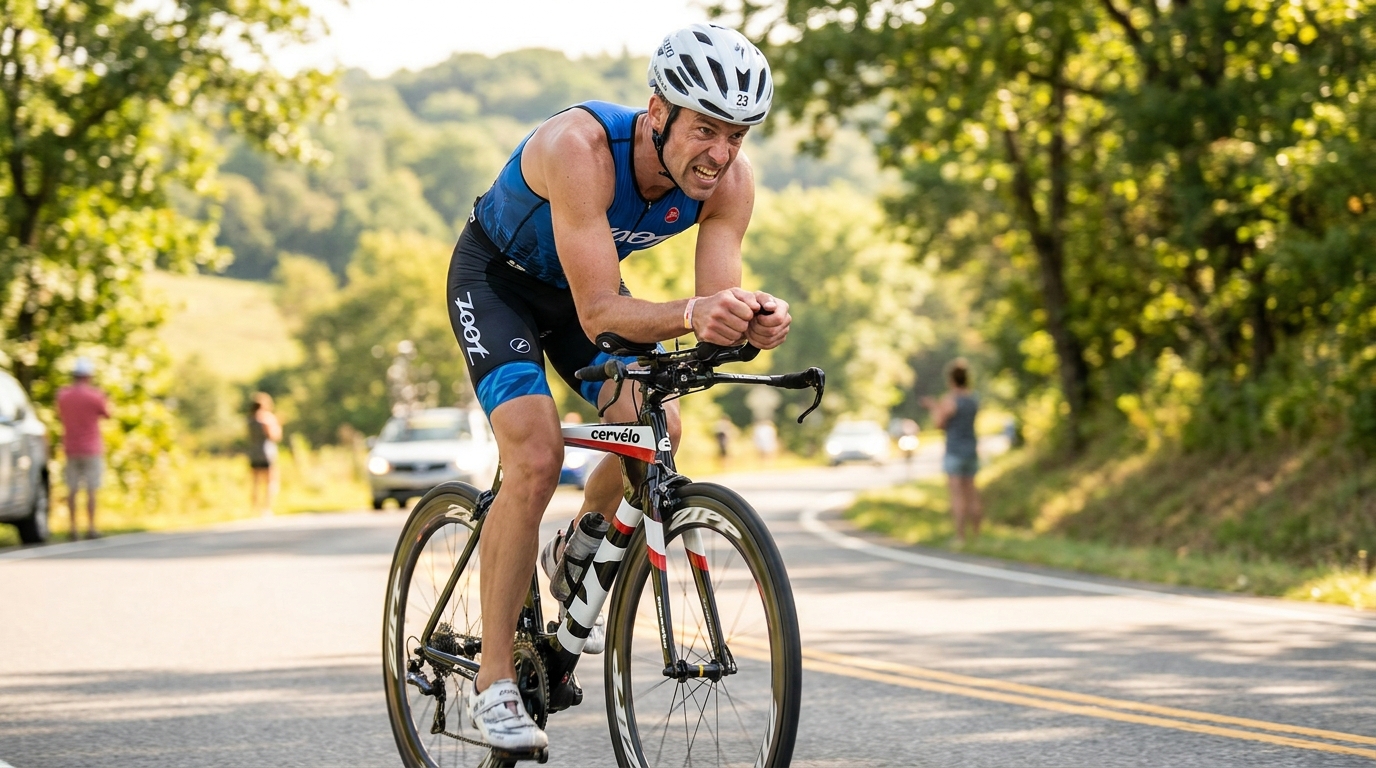
- Bike: 2–3x/week. One longer easy ride (60 min), one with short harder efforts (intervals of 30–60 seconds faster pace).
- Run: 2–3x/week, 30–40 minutes. Start increasing the running portions. By week 8, you should be running 25–30 minutes continuously.
- Brick workout: Once per week starting week 6. Start small: 25-minute bike → 10-minute run. Build to 45-minute bike → 15-minute run.
This phase is where people either get hooked or get injured. The difference is ego management. 80% of your training should feel easy. Yes, really. The Goggins energy is for race day — save it.
Phase 3 (Weeks 9–12): Sharpen and Taper
Weeks 9–11 push you to near race distances. Week 12 is your taper — you reduce training volume to let your body peak. Most beginners panic during taper week and over-train. Don't. Trust the process. The fitness is already there.
- Week 9–10: Your long ride should be 60–75 minutes. Your swim should hit 600–750m continuous. Your run should be a clean 30–40 minutes.
- Week 11 (Peak): Consider a mock triathlon at shorter distances to practice transitions.
- Week 12 (Taper): Cut volume by 40–50%. Short, easy sessions. Get sleep. Hydrate. Eat like a grown adult.
The Mental Game Nobody Warns You About
Here's the part that separates finishers from DNFs (Did Not Finish): the brain quits before the body does. Every single time.
Around week 5 or 6, you will have a bad training week. You'll feel slow. Your swim will feel like you've forgotten how to exist in water. Your legs will be heavy on the bike. Your mind will whisper, "Maybe this was a bad idea." That's not a sign to quit. That's adaptation happening. Your body is literally rebuilding itself.
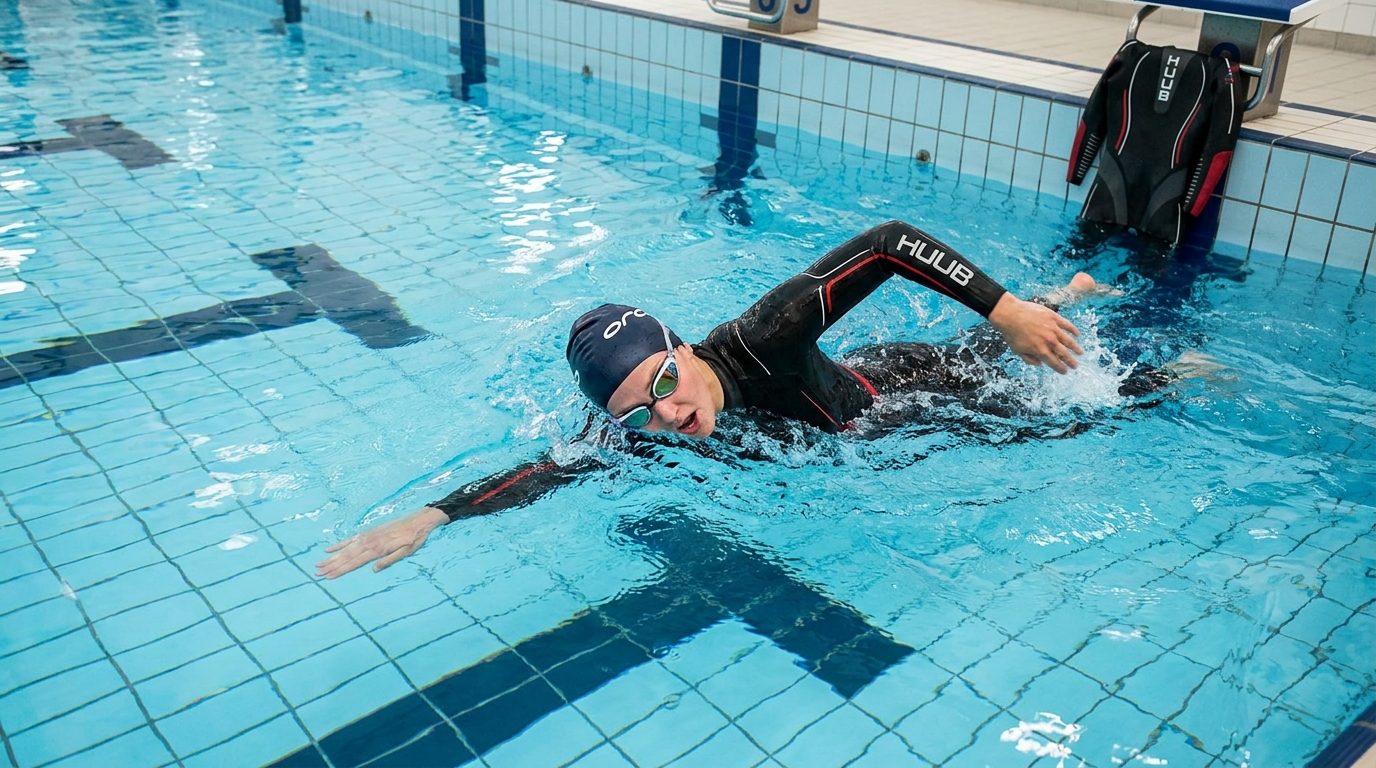
On race day, you'll probably panic in the swim — especially if it's open water. Everyone does. Here's the fix: go to the outside of the swim wave, start easy, and focus on your breathing. If you feel overwhelmed, roll onto your back, take three breaths, and keep moving. You cannot sink in a triathlon wetsuit. You are physically incapable of it.
Race Day: What Actually Matters
You've done the training. Now don't blow it with rookie logistics.
T1 and T2 (Transitions)
Transitions are the "fourth discipline" of triathlon. Set up your gear the night before. Practice racking your bike. Know exactly where your spot is. A brightly colored towel helps you find it in a sea of identical bikes. Put your helmet on before you touch your bike. It's the rule. Violate it and you're disqualified.
Pacing
Go out slow. Seriously. The energy of race day will make you feel like a superhero in the first 200 meters of the swim. Resist it. Everyone who sprints the first half pays for it in the second half. Negative splits — getting faster as the race goes on — feel way better than crawling to the finish line.
Nutrition
For a sprint triathlon, you don't need elaborate fueling strategies. Eat a normal meal 2–3 hours before. Bring a gel or two for the bike if you want. Stay hydrated. That's it. This is not an Ironman.
The Bottom Line
Ninety days. Three phases. One race. You're not trying to podium — you're trying to finish with a smile on your face and the knowledge that you did something most people only talk about.
The gear doesn't matter as much as the training. The training doesn't matter as much as consistency. And consistency doesn't matter unless you actually start.
Sign up for the race first. That's the move. Once there's a bib number with your name on it, the excuses disappear. Registration fees are a powerful motivator.
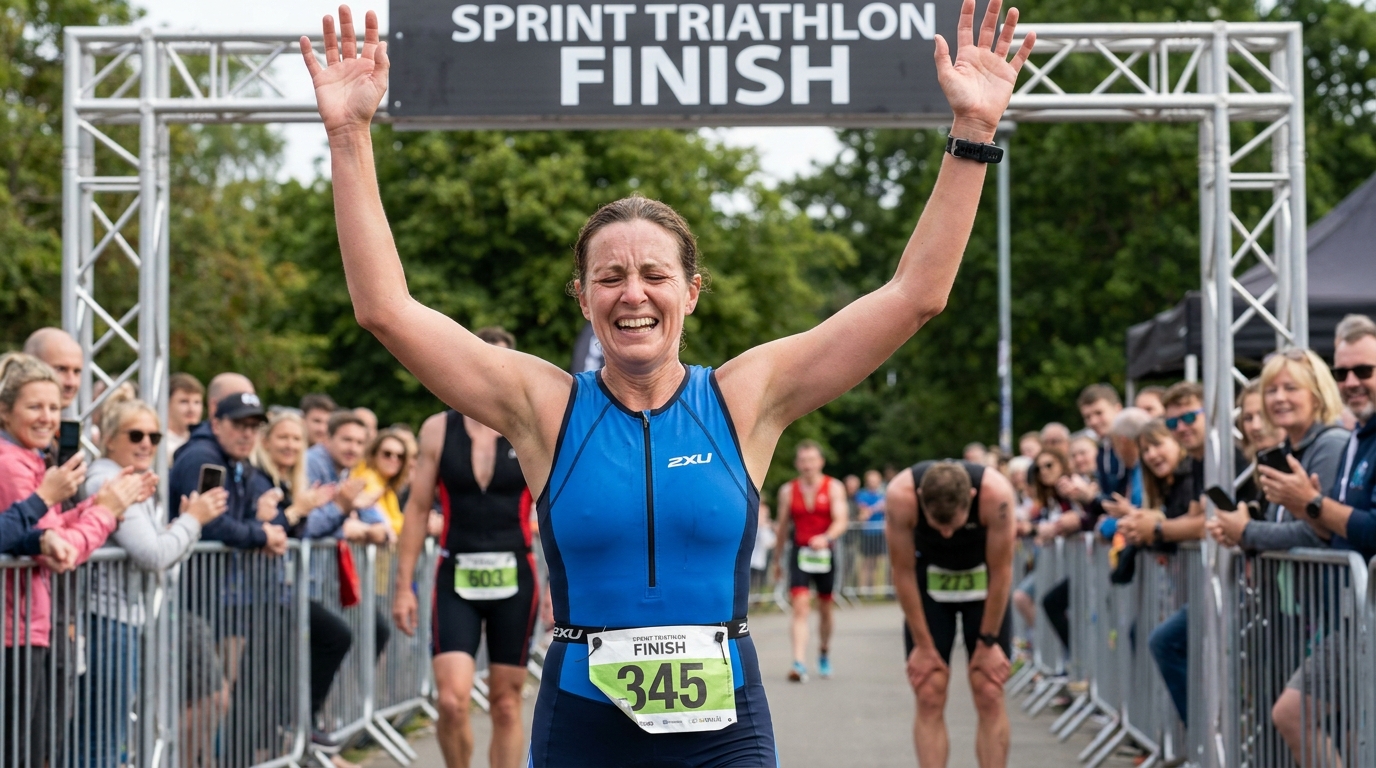
See you at the finish line.


